Quick Summary
- Plan your budget from the customers you want and what each one costs to win.
- Many small businesses budget 5 to 10% of revenue, with new ones often going higher.
- Hidden costs such as creative, tools and your own time need a 10 to 15% buffer.
- Spend where you can track leads, and review the numbers monthly.
Small business marketing cost is not a single number. It depends on what you sell, how fast you want to grow and how much you do yourself. If you want an outside view of the number for your business, small business marketing consulting often begins with exactly this budget conversation.
Below I show the ranges I see in my client work, a simple formula, a worked example and the traps that make budgets leak. Treat every figure as a planning range. Your quotes and your market will differ.
The Budget Formula I Use With Small Businesses
I plan budgets backward from the customers you want. The formula has four inputs and gives you a number you can defend:
Marketing budget = new customers wanted × cost to win one customer
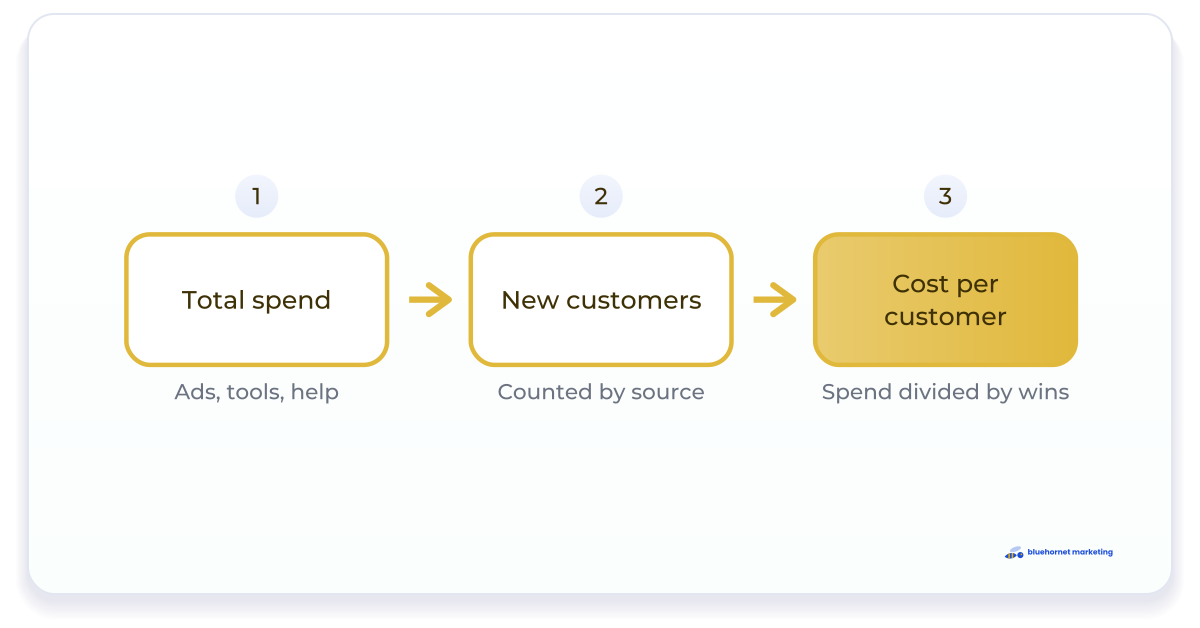
Cost to win one customer is the number most owners do not know. Divide what you spent on marketing last quarter by the new customers you gained. If you spent $4,500 and gained 18 customers, each one cost $250. Then check it against what each customer is worth to you over time. If a customer brings in $1,200 of profit across a year, a $250 cost is healthy. If they bring in $200, you have a pricing or channel problem, not a budget problem.
A Worked Example: A Home-Services Company Planning for 2026
A home-services company with $600,000 in yearly revenue wants 15 extra jobs per month. Its average job brings in $1,100 and around $400 of profit. Based on past results, it knows a lead costs about $60 and one in four leads books a job. So each job costs about $240 in lead spend.
Fifteen jobs at $240 is $3,600 a month. That equals 7.2% of the monthly revenue of $50,000, inside the usual range. Each job makes $400 of profit, so the paid part of the plan is profitable even before repeat work. The breakdown looks like this:
| Line | Monthly cost |
|---|---|
| Paid search ad spend | $1,500 |
| Landing page and website upkeep | $200 |
| Email platform | $60 |
| Content (two articles) | $800 |
| Call tracking and analytics | $40 |
| Consultant retainer (strategy and reporting) | $1,000 |
| Total | $3,600 |
Notice what the example does not include: social posting, video and brand design. They might make sense later. At this stage, every dollar sits in a channel with a measurable lead. If a first quarter shows the real lead cost is $90, the owner knows to fix the landing page or search terms before adding budget.
What Each Part of Marketing Typically Costs
The table below shows monthly ranges I see for small businesses in the US market. Your own quotes may fall outside, especially in expensive metro areas or niche industries.
| Budget line | Typical monthly range | What it buys | Watch for |
|---|---|---|---|
| Paid search and social ads | $500 to $5,000 in ad spend | Immediate traffic and leads | Waste on broad targeting; spend stops, leads stop |
| Content and SEO | $500 to $4,000 | Articles, service pages and links that compound | Slow start; weak writers cost more later |
| Email and automation software | $0 to $300 | Newsletters, welcome series, follow-up | Pricing jumps with list size |
| Website and landing pages | $100 to $1,500 (or a one-off build) | The place where every channel lands | Cheap templates that load slowly |
| Social media management | $300 to $3,000 | Regular posting and community replies | Activity without a lead goal |
| Design and creative | $100 to $1,000 | Ads, graphics, short video | Rework when briefs are vague |
| Marketing consultant or agency | $1,500 to $8,000 for retainers; one-off audits cost less | Strategy, setup, reporting | Unclear scope; no named owner |
| Tools for tracking | $0 to $200 | Analytics, call tracking, reporting | Tracking that nobody reads |
Two caveats matter. Ad spend is not the same as management cost, so a $1,500 ad budget run by an agency adds a fee on top. And tools get expensive as your contact list grows. HubSpot, for instance, offers a free tier but its Marketing Hub Professional plan starts around $800 per month with a one-time onboarding fee, according to HubSpot's pricing page, so check the plan you really need. My ranking of small business marketing tools covers free and cheap options.
How Much to Spend at Each Stage
Where your business stands changes the right percentage. A new business needs to buy awareness, while a mature business with strong referrals can spend less on acquisition.
| Business stage | Spend as a share of revenue | Where the money goes first |
|---|---|---|
| New business (first year) | 10 to 20% | Website, Google Business Profile, a small paid test |
| Established, steady | 5 to 10% | Search, email, reviews, one growth channel |
| Growth push | 10 to 15% | Paid acquisition plus content, with a tested offer |
| Mature, referral-led | 3 to 6% | Retention, email, case studies |
Do not read the percentages as targets. Margins matter more. A business with 70% gross margins can afford to spend more on acquisition than one with 20%. In my experience, owners who ignore margin end up either underspending or paying for growth they cannot afford.
Costs That Surprise Small Business Owners
Most budgets fail on items nobody planned. These are the ones I see most often.
- Creative production that takes longer than expected, such as photos, video and landing page copy
- Software that doubles in price when your list or contact count grows
- Your own time, which is real money even when nobody invoices you
- Setup work that makes paid ads and tracking function from day one
- A six-month wait before content and search work show returns, with bills running meanwhile
Set aside about 10 to 15% of the budget as a buffer for these. Several of them are also on my list of small business marketing mistakes, because underbudgeting is a common reason good plans stop halfway.
DIY, Freelancer, Agency or Consultant
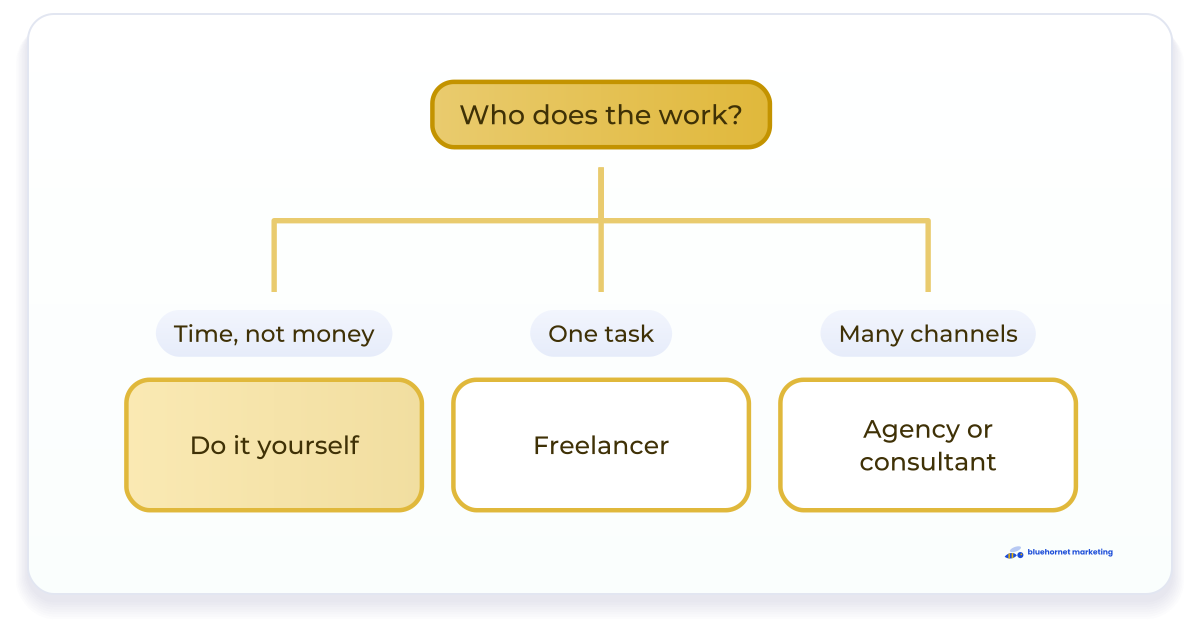
You can buy marketing help in four ways, and the right one changes as you grow.
| Option | Typical cost | Best when | Main risk |
|---|---|---|---|
| Do it yourself | Your time plus tools | You have more time than money and a simple offer | Inconsistency; no outside check |
| Freelancer | $30 to $150 per hour, by skill | You need one task done well | One person, one skill, limited strategy |
| Agency | $1,500 to $8,000 per month retainer | You want execution across channels | Contracts that outlast the results |
| Consultant | One-off audit or monthly advisory | You want a plan and someone to review it | You still need people to execute |
A common path is to hire a consultant for a plan, then split execution between a freelancer and yourself. That keeps fixed costs low and puts one person in charge of the strategy. The tactics inside that plan should fit your budget. The small business marketing examples I collected show what small teams do with modest money.
Ways to Lower Your Cost Per Customer
Raising the budget is the obvious move and often the wrong one. Before you add money, look at the three places where cost per customer usually hides.
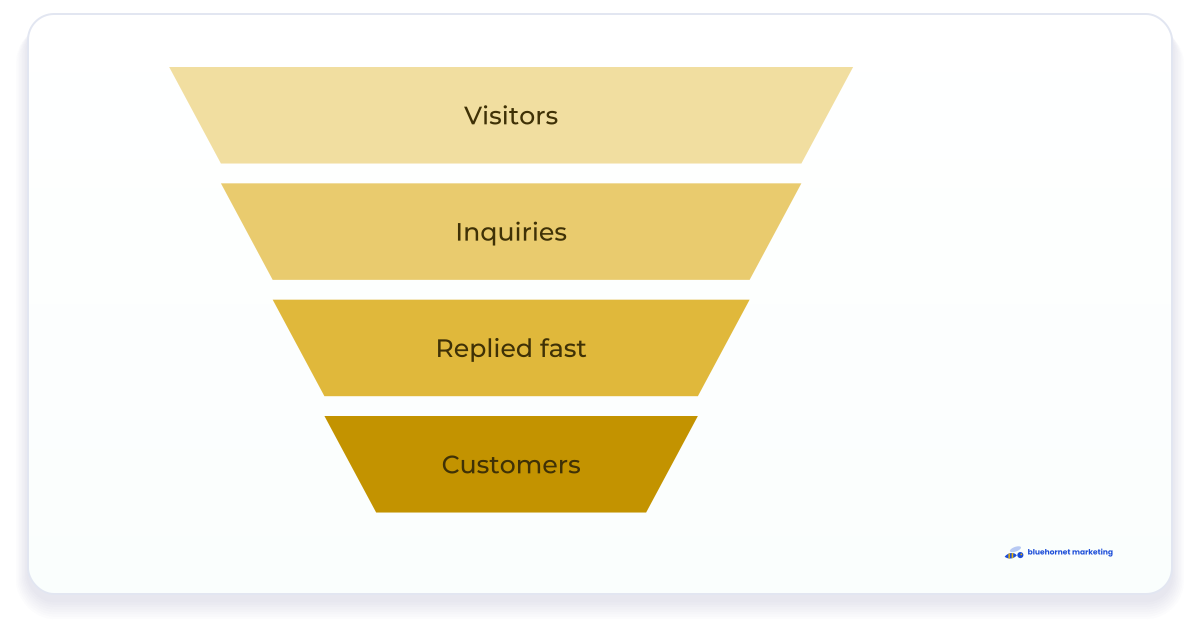
The first is the page people land on. If 100 visitors produce two inquiries, doubling traffic doubles your cost. Improving the page to produce four inquiries halves it. A clear headline, a phone number that is easy to tap and one proof point near the form can change results within a few weeks.
The second is follow-up speed. A lead that gets a reply within an hour books far more often than one contacted the next day. In my client work, fixing response time has cut cost per customer by a quarter or more without touching ad spend. A simple automatic reply and a daily check of the inbox is enough to begin.
The third is the mix of channels. Your cheapest customers often come from referrals, reviews and email to past clients. Moving a small share of paid budget into those channels, for example a thank-you offer for referrals, usually lowers your blended cost. Then check your current setup against what other small businesses do in my examples of tactics that delivered.
How to Read a Marketing Quote
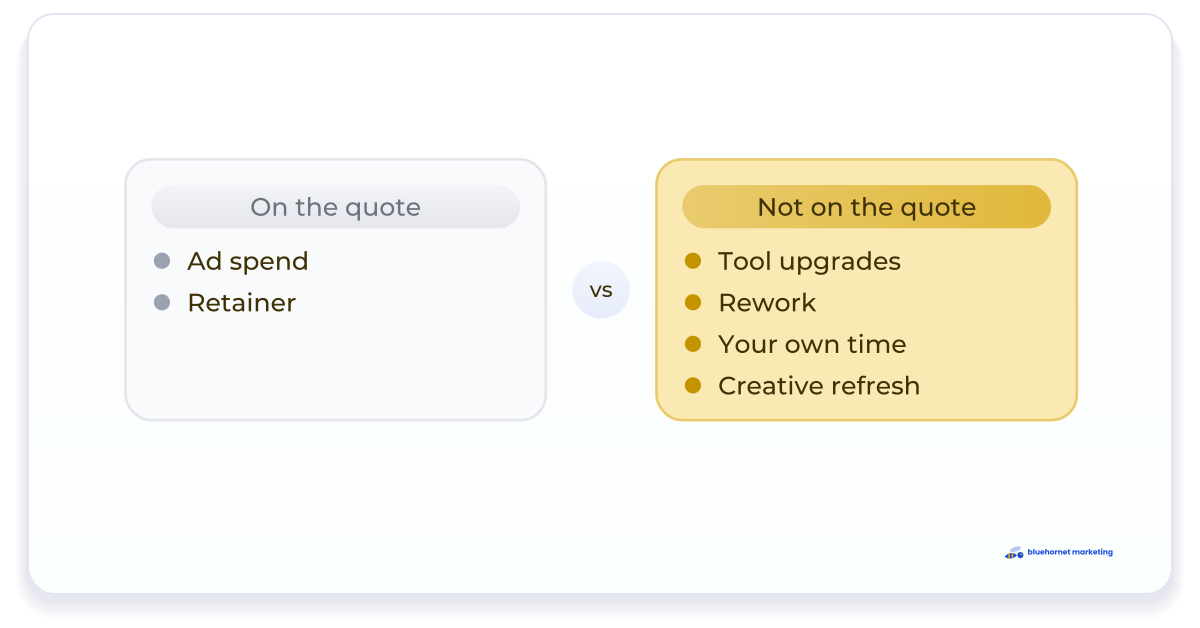
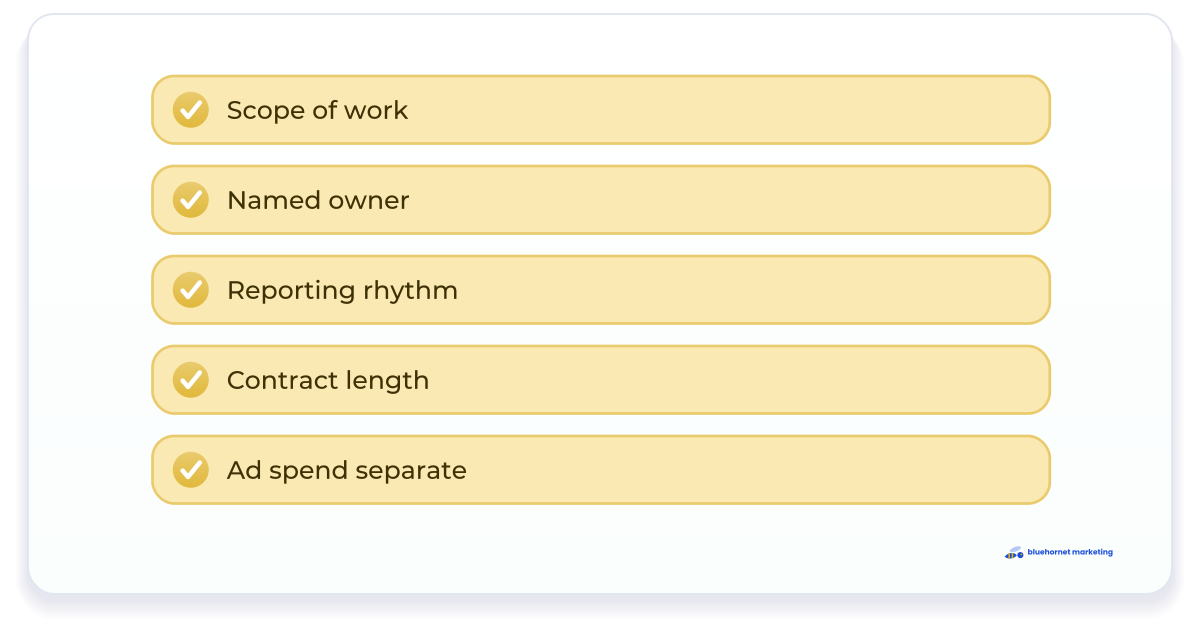
When an agency or freelancer sends you a price, five questions tell you whether it is fair. What exactly will I receive each month? Who does the work and who answers my questions? How will you measure results and how often do I see them? What is not included, such as ad spend, tools or creative? How long is the contract and how do I leave?
A good quote answers every one of these in writing. A vague quote that promises growth and shows no deliverables is expensive at any price, because you cannot hold anyone to it. If a provider refuses to name the metrics they will report, walk away. I would also be wary of any quote that asks for a long contract before showing a single month of work.
How to Plan Your Budget Step by Step
- Calculate your current cost to win a customer, even if the number is rough.
- Decide how many new customers you want in the next six months.
- Multiply to get a first budget, then compare with the percentage ranges above.
- Assign money to the channels you can track, and keep a 10 to 15% buffer.
- Set a monthly review and one number per channel, so you can move money on facts.
Before you start spending, run your plan against the small business marketing checklist to catch anything missing, and compare notes with the small business marketing best practices before you commit to a channel.
Questions About Small Business Marketing Cost
How Much Does Small Business Marketing Cost per Month?
Many small businesses spend between $1,000 and $5,000 per month all-in, including ad spend, tools and help. Very small or local businesses can start below that with a profile, reviews and a small test. The right number comes from the customers you want and what each one costs to win.
What Percentage of Revenue Should a Small Business Spend on Marketing?
A common rule of thumb is 5 to 10% of revenue for an established business and more for a new one. It is only a ceiling to sanity-check your plan. Margins and your cost per customer decide what you can afford.
Is It Cheaper to Do Marketing Myself?
Cash costs are lower, but your time has a price. Doing it yourself works for simple tasks and a single channel. It becomes expensive when you cannot keep it consistent or spend months on tactics that do not work.
How Much Should I Pay a Marketing Consultant?
Prices vary by experience and scope. One-off audits and strategy sessions cost much less than monthly retainers. Always ask for a written scope, the deliverables and how you will measure the results.
How Much Should I Spend on Google Ads as a Small Business?
Start with a test budget you can afford to lose for two months, then judge by cost per lead. Many local service businesses begin with a few hundred to a couple thousand dollars of monthly ad spend, depending on how competitive the search terms are.
Are Free Marketing Tools Enough?
Often yes at the start. Google Business Profile, a basic analytics tool and a free email tier cover a lot. Upgrade only when a limit slows your results, for example list size or missing automation.
How Do I Know If My Marketing Spend Is Working?
Track leads and customers by source, then compare cost per customer with what a customer is worth. If you cannot connect spend to customers, fix tracking before you raise the budget.
Disclaimer: This article is general information, not legal, tax or financial advice. Prices, ratings and platform features change, so check current details with each provider before you decide.
Was this guide helpful?
Thanks for your feedback.
Warren Albright
Warren leads the Blue Hornet editorial team and works with the consultants to turn real client projects into practical guides on content, paid media, marketing automation, CRM and analytics. He comes from content and demand generation work, edits every article before a working marketing consultant reviews it, and draws on strategies, channel plans and audits from client projects to keep the advice grounded in real numbers.