Quick Summary
- Start with one clear customer and a clear offer, then choose one or two channels.
- Reviews, a complete profile and fast follow-up pay back sooner than most paid tactics.
- Track the source of every customer so you can judge channels by results.
- Review results monthly and test one change at a time.
These small business marketing best practices come from what I see work, and fail, across small clients. If you want a second set of eyes on how your business stacks up, small business marketing consulting usually starts with the same checks. Each practice has a "Do this" and an "Avoid this", so you can use the list as a quick review.
I kept the practices ordered roughly by how soon they pay back. The first few cost almost nothing, and the later ones need steady habits. Do not try all eleven at once. Pick the two or three where you are weakest.
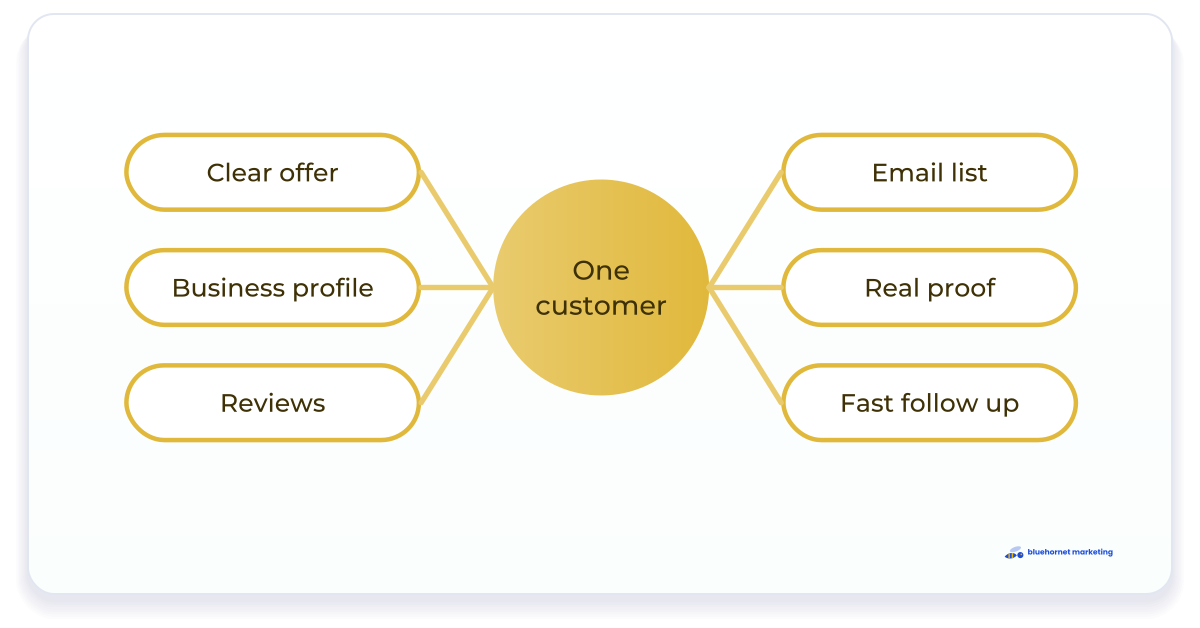
The Eleven Practices at a Glance
| Practice | Do this |
|---|---|
| 1. Define One Customer Before You Spend a Dollar | Write a half-page description of your best three customers, using their own words from emails and calls. |
| 2. Make Your Offer Clear in Five Seconds | Put a plain headline, a one-line proof point and one main button above the fold. |
| 3. Own Your Google Business Profile | Update photos, services and posts monthly, and respond to every review. |
| 4. Ask for Reviews on a Schedule | Send a direct link by text or email within hours of a good experience. |
| 5. Build an Email List You Control | Offer something useful in exchange for an address and send a welcome email immediately. |
| 6. Pick One or Two Channels and Do Them Well | Match the channel to your sales cycle, such as search for urgent needs and email for repeat buyers. |
| 7. Track Leads and Customers by Source | Record the source of every new customer, even if you must ask directly. |
| 8. Use Your Own Proof, Not Generic Claims | Collect testimonials and one detailed case study, and place them on service pages. |
| 9. Write for Questions Customers Actually Ask | Turn your ten most common questions into pages with direct answers. |
| 10. Follow Up Fast and Consistently | Reply within an hour during business days, and send two or three follow-ups over two weeks. |
| 11. Review Results Every Month and Test One Thing | Keep a short log of what you changed, why and what happened. |
Eleven Practices That Pay Off for Small Businesses
Many of the "Avoid this" lines match the small business marketing mistakes I keep running into, so read the two together if you are fixing an existing setup.
Define One Customer Before You Spend a Dollar
Most weak small business marketing starts with a vague audience. When I ask owners who their best customer is, the answer is often everyone. Pick the one type of customer who pays well, stays and refers others, and write down what they search for, what worries them and where they look.
Do This
Write a half-page description of your best three customers, using their own words from emails and calls.
Avoid This
Targeting 'small businesses' or 'homeowners' with no detail.
Make Your Offer Clear in Five Seconds
Visitors decide quickly. If your homepage does not say what you do, who it is for and what to do next, most will leave. Clarity beats clever slogans every time, and it improves every channel at once, because every channel sends people to the same page.
Do This
Put a plain headline, a one-line proof point and one main button above the fold.
Avoid This
Rotating banners, vague taglines and five competing buttons.
Own Your Google Business Profile
For local businesses, this profile is often the highest-return free asset. Complete it fully, choose the right categories, add real photos and answer questions. Keep hours accurate, especially on holidays.
Do This
Update photos, services and posts monthly, and respond to every review.
Avoid This
Leaving duplicate or outdated listings with wrong phone numbers.
Ask for Reviews on a Schedule
Reviews build trust before a customer talks to you and influence local rankings. Build the ask into your process, so it happens after every completed job rather than when you remember.
Do This
Send a direct link by text or email within hours of a good experience.
Avoid This
Buying reviews or asking only your friends and family.
Build an Email List You Control
Social reach changes with each algorithm update, but an email list stays yours. Even a small list of a few hundred engaged people can produce steady repeat business and referrals.
Do This
Offer something useful in exchange for an address and send a welcome email immediately.
Avoid This
Mailing rarely, then sending a long promotion once a year.
Pick One or Two Channels and Do Them Well
Small teams stretch thin across six platforms and do none well. Choose the channels where your customers already look for you, and give them enough time to show results, usually 90 days.
Do This
Match the channel to your sales cycle, such as search for urgent needs and email for repeat buyers.
Avoid This
Opening every new social account because a competitor did.
Track Leads and Customers by Source
Without tracking, you will credit the wrong channel and cut the right one. A simple method works: a tracked phone number, a form field asking how people found you and a monthly spreadsheet.
Do This
Record the source of every new customer, even if you must ask directly.
Avoid This
Relying on traffic or followers as proof of results.
Use Your Own Proof, Not Generic Claims
Customers believe other customers. A short story with real numbers and a named client beats adjectives about quality. Place proof near the buying decision, not on a page nobody visits.
Do This
Collect testimonials and one detailed case study, and place them on service pages.
Avoid This
Stock photos, anonymous quotes and unverified superlatives.
Write for Questions Customers Actually Ask
Content works when it answers real questions in plain language. Your sales calls and emails already contain the best topics. Each answer can become a page that attracts and pre-qualifies buyers.
Do This
Turn your ten most common questions into pages with direct answers.
Avoid This
Publishing daily posts with no clear search or customer purpose.
Follow Up Fast and Consistently
Speed of response decides many small business sales. A fast, helpful reply often wins over a better price, and most leads need more than one contact.
Do This
Reply within an hour during business days, and send two or three follow-ups over two weeks.
Avoid This
Letting inquiries sit overnight or giving up after a single message.
Review Results Every Month and Test One Thing
Marketing improves through small changes you can measure. Once a month, compare results and choose one change to test, such as a new headline or a different offer. A long list of changes at once teaches you nothing.
Do This
Keep a short log of what you changed, why and what happened.
Avoid This
Changing everything after one slow week.
Putting the Practices Into Your First 90 Days
A list of practices only helps if it turns into a calendar. This is the sequence I give small clients who are starting from a weak base. It keeps the early work cheap and quick, so you see movement before you spend much.
| Period | Focus | What you should have at the end |
|---|---|---|
| Weeks 1 to 2 | Customer, offer, profile | A written customer description, a clear homepage headline, a complete Google Business Profile |
| Weeks 3 to 4 | Tracking and reviews | A tracked phone number, a source field on every form, a review request sent after each job |
| Weeks 5 to 8 | One main channel | Search ads, email or founder content running at a small, steady level |
| Weeks 9 to 12 | Proof and follow-up | One case study, a faster reply routine and a first monthly review of numbers |
Notice that the plan does not ask for a bigger budget at any point. The first month fixes how you present and measure. The second tests one channel. The third adds proof and speed. At the end you can decide, with real numbers, whether to spend more and where.
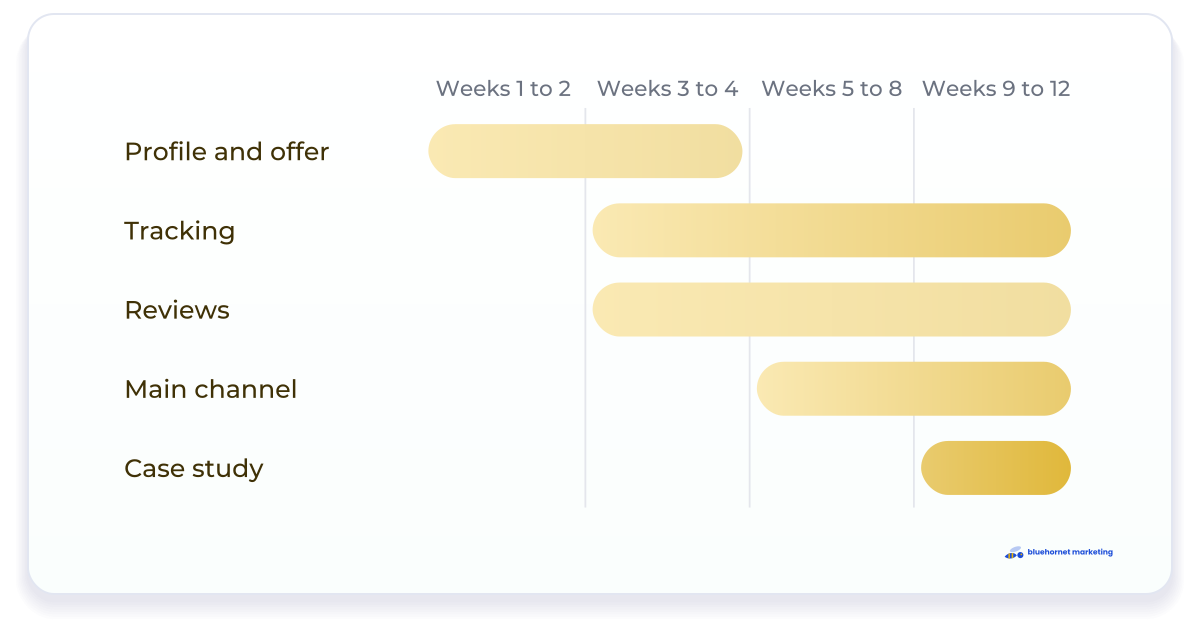
Expect some friction. Owners often skip the tracking step because it feels dull, and then cannot tell which channel worked. Others add a second channel in week four because the first looks slow. Both habits cost money. If you feel the urge to change direction early, write the reason down and wait for the monthly review. Many of the best decisions I have seen were simply the ones made on the scheduled date, with the numbers in front of the owner.
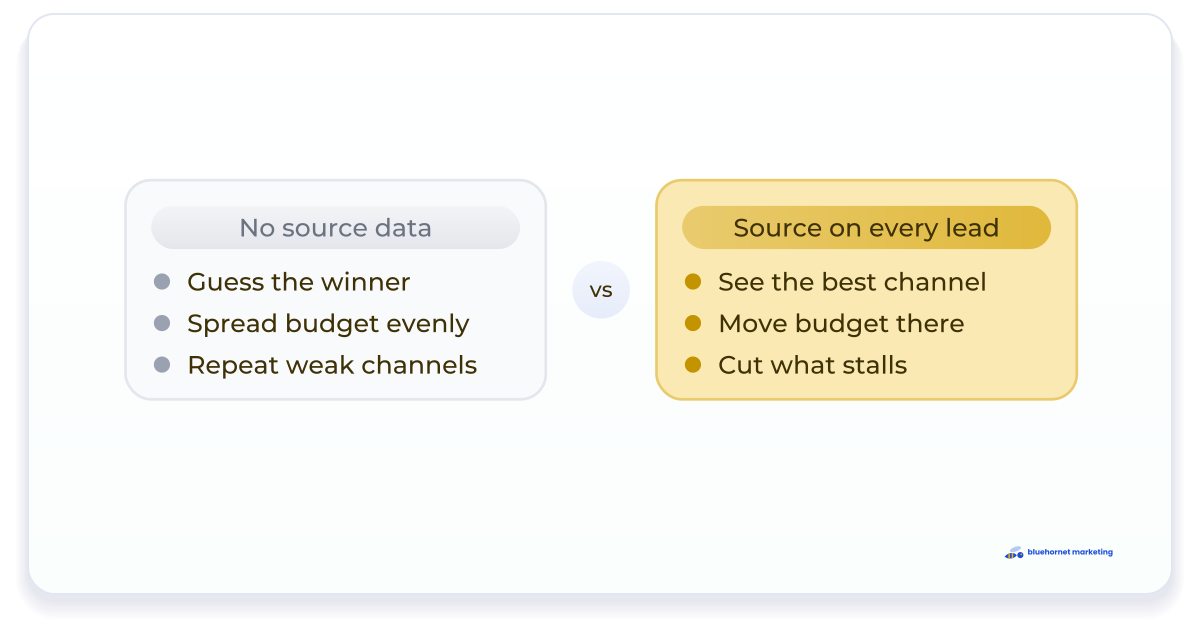
Which Practices to Start With
Your starting point depends on what you have today. If you have no profile, no reviews and no tracking, begin with practices 2, 3 and 7, which take a day or two and fix the basics. If your basics are fine but leads are thin, work on practices 5, 9 and 10. If leads are fine but you are unsure what works, practices 7 and 11 matter most.
Cost shapes the order too. If your budget is tight, my guide to small business marketing cost shows where small amounts of money go furthest. And once you have started, the small business marketing checklist helps you confirm that nothing important is missing.
How to Choose Practices for Your Business
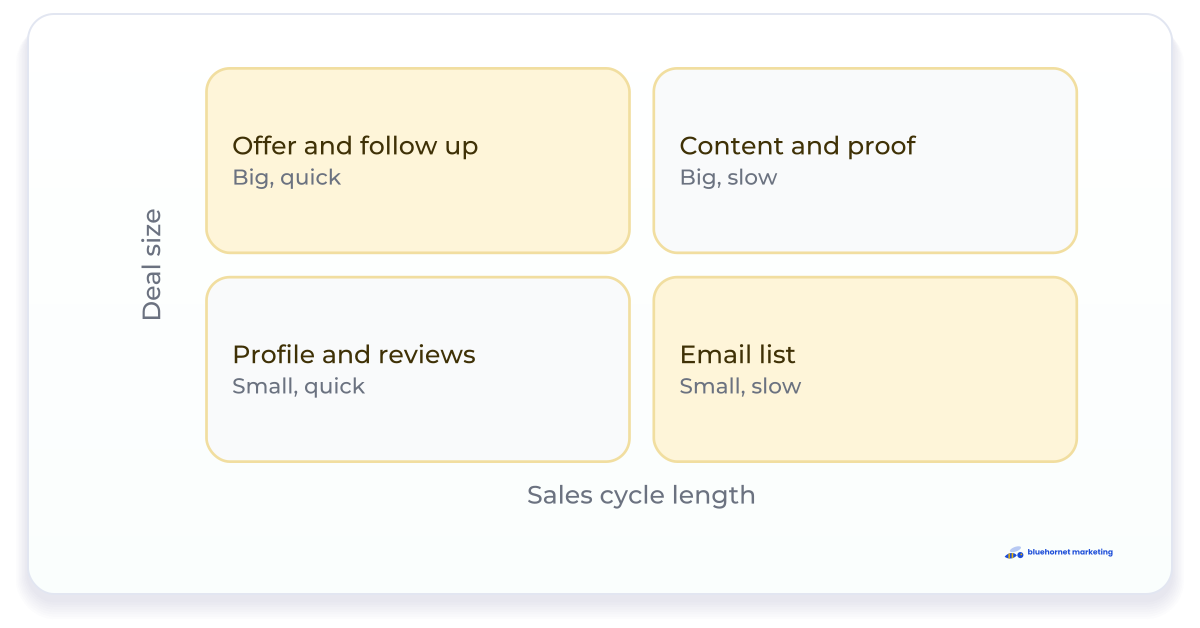
A practice is only good if it fits how your customers decide. Ask yourself three questions. Do my customers buy in a hurry or after weeks of thought? Do they find me through search, referrals or social platforms? How many hours can I spend per week?
Urgent local buyers respond to profile, reviews and fast follow-up. Considered B2B buyers respond to proof, content and email. Visual, impulse-led businesses can use social more. Compare your answers with the small business marketing examples that match your situation, and tools can wait until you know what you need: my list of small business marketing tools helps then.
Questions About Small Business Marketing Best Practices
What Are the Most Important Marketing Best Practices for a Small Business?
Know your best customer, make your offer clear, keep your Google Business Profile current, ask for reviews and track where customers come from. Those five fix most of the problems I see.
How Many Marketing Channels Should a Small Business Use?
One or two to start. Choose where your customers already look for you, give each at least 90 days and add another only when the first runs smoothly.
How Often Should I Post on Social Media?
As often as you can keep up for six months. A steady pace of a few useful posts per week beats a burst followed by silence. Post only if your customers are active on that platform.
Is Email Marketing Still Worth It for Small Businesses?
Yes. An email list is an asset you own, and it often produces repeat business and referrals at low cost. A monthly message with one useful tip and one clear offer is enough to begin.
How Do I Get More Online Reviews?
Ask at the moment of peak satisfaction with a direct link, by text or email. Reply to each review. Never buy reviews or reward only positive ones.
How Do I Know If My Marketing Is Working?
Record the source of every new customer and compare cost per customer with what a customer is worth. Traffic and followers are not proof. Leads, calls and sales are.
When Should I Hire a Marketing Consultant?
When you are spending money without knowing what works, cannot choose between channels or keep starting and stopping. A short strategy session can save months of wasted spend.
Disclaimer: This article is general information, not legal, tax or financial advice. Prices, ratings and platform features change, so check current details with each provider before you decide.
Was this guide helpful?
Thanks for your feedback.
Warren Albright
Warren leads the Blue Hornet editorial team and works with the consultants to turn real client projects into practical guides on content, paid media, marketing automation, CRM and analytics. He comes from content and demand generation work, edits every article before a working marketing consultant reviews it, and draws on strategies, channel plans and audits from client projects to keep the advice grounded in real numbers.