Quick Summary
- Keep strategy, final approval and reporting in-house, and outsource production where you need capacity or skills.
- Freelancers suit steady article production, while agencies suit teams that need strategy, writing and reporting together.
- Most disappointing outsourced content comes from weak briefs, not weak writers.
- Run a paid two-piece trial with every new writer or agency before you sign a long contract.
Sooner or later every content program hits the same question: should you hire people, hire freelancers or hand the whole thing to an agency? The honest answer is that most programs end up with a mix, and the real decision is which parts stay inside the company. I help clients draw that line through content marketing consulting, and the same logic applies whether you publish four posts a month or forty.
Below you will find the trade-offs in plain terms, a comparison table, a hybrid model that works for most teams and a checklist for briefing outside writers. I am not neutral on one point: strategy and final judgment should stay with you, even when everything else is outsourced.
In-House vs Outsourced: The Comparison
| Factor | In-house team | Freelancers | Agency |
|---|---|---|---|
| Cost structure | Salaries, benefits and tools, fixed each month | Pay per piece or per hour, flexible | Monthly retainer or project fee, often the highest per piece |
| Speed to start | Slow, hiring takes months | Fast, days to weeks | Fast, but onboarding takes a few weeks |
| Product knowledge | Deepest over time | Varies, needs good briefs | Moderate, depends on account team |
| Volume flexibility | Limited by headcount | High, add or drop writers | High within the contract |
| Quality control | Direct and constant | Your editing time is needed | Handled by the agency, but you still review |
| Best for | Core strategy, expert content, brand voice | Steady article production | Full programs that need strategy, writing and design together |
When In-House Makes Sense
Keep content in-house when it depends on knowledge that cannot be briefed in a day: deep technical topics, regulated advice, original research or opinions from your leaders. Customers and search engines both reward writing that shows real experience, and an employee who talks to customers every week has plenty of it.
The cost is time to hire and a ceiling on output. A full-time content marketer cannot also be an editor, a designer, an SEO analyst and a distribution manager, even if the job description says so. I have seen good writers burn out in a year because they were asked to be a whole department.
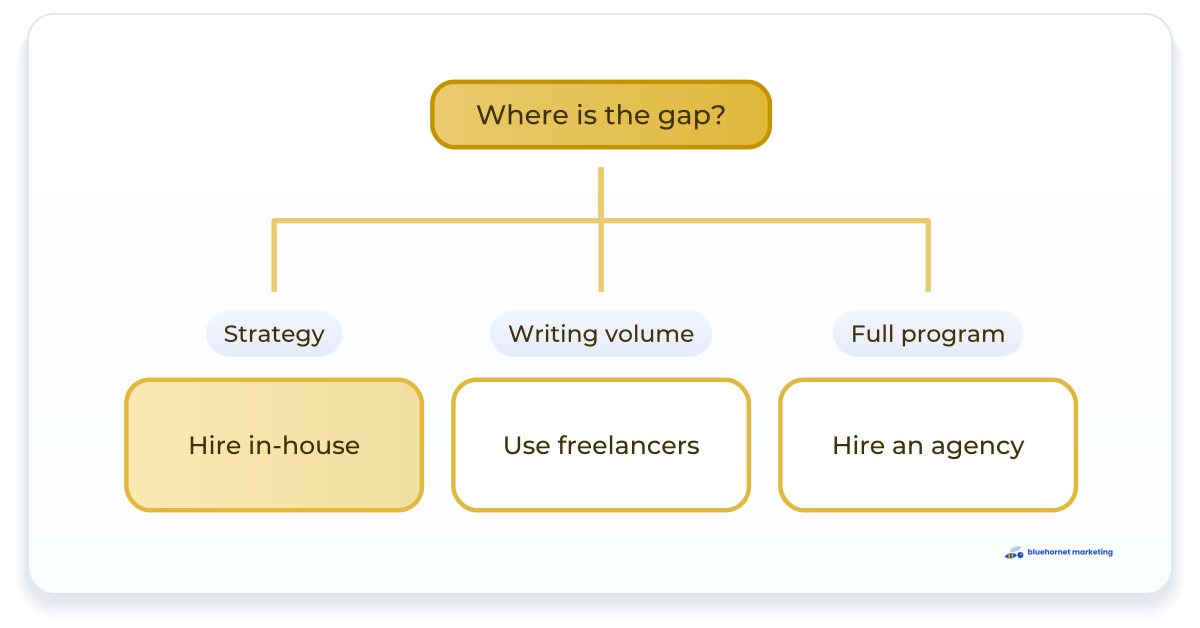
Roles worth hiring first
If you hire, start with a content lead who owns strategy, editing and reporting. Writing can come from others. An editor who can say no to weak drafts adds more value than another writer, because quality is the thing outside help often lacks.
When Outsourcing Makes Sense
Outsource when you need capacity quickly, when a skill is missing, such as video, design or technical SEO, or when demand changes through the year. Freelancers work well for articles that follow a clear brief. Agencies suit teams that want strategy, production and reporting under one roof and have little internal capacity to manage many people.
The biggest risk is distance from your buyers. An outside writer who has never spoken to a customer will produce something that reads well and says little. You reduce that risk with interviews, access to sales calls and a subject-matter expert who reviews each draft for accuracy. It costs time, but it is the difference between a generic article and one that earns trust.
The Hybrid Model That Works for Most Teams
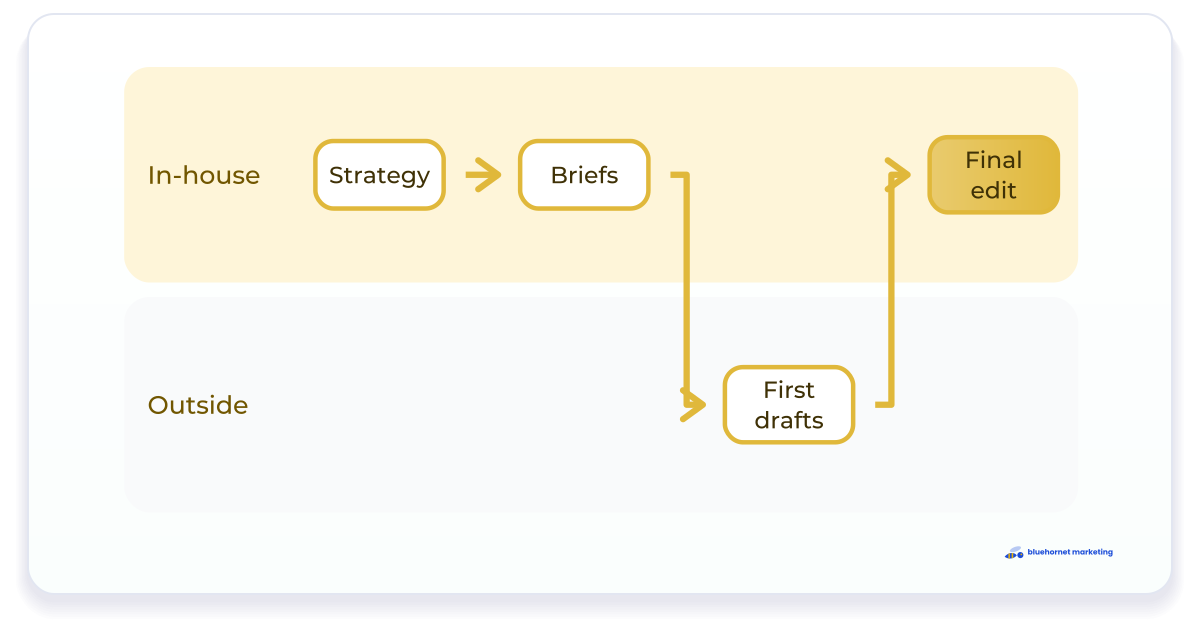
For most companies I work with, the best setup is a small internal core and flexible outside help. A lead or consultant owns strategy and reporting, an internal editor guards quality and experts supply insights, while freelancers write and a designer or video editor is hired per project.
This keeps your knowledge inside the company and still lets you scale up and down. It also protects you from losing everything when one freelancer disappears, because the briefs, the style guide and the calendar belong to you.
How to Brief and Manage Outside Writers
Most disappointing outsourced content comes from weak briefs, not weak writers. A good brief takes twenty minutes and saves hours of rework. Include the reader and the question they ask, the main point, the search term, three to five points to cover, sources to use, examples from your own work and the next step you want the reader to take.
- A written brief for every piece, using the same template.
- A short style guide with voice examples and words to avoid.
- A paid test piece before you sign a long contract.
- An expert review for accuracy, with a fixed turnaround time.
- A shared folder with all briefs, drafts and approved final versions.
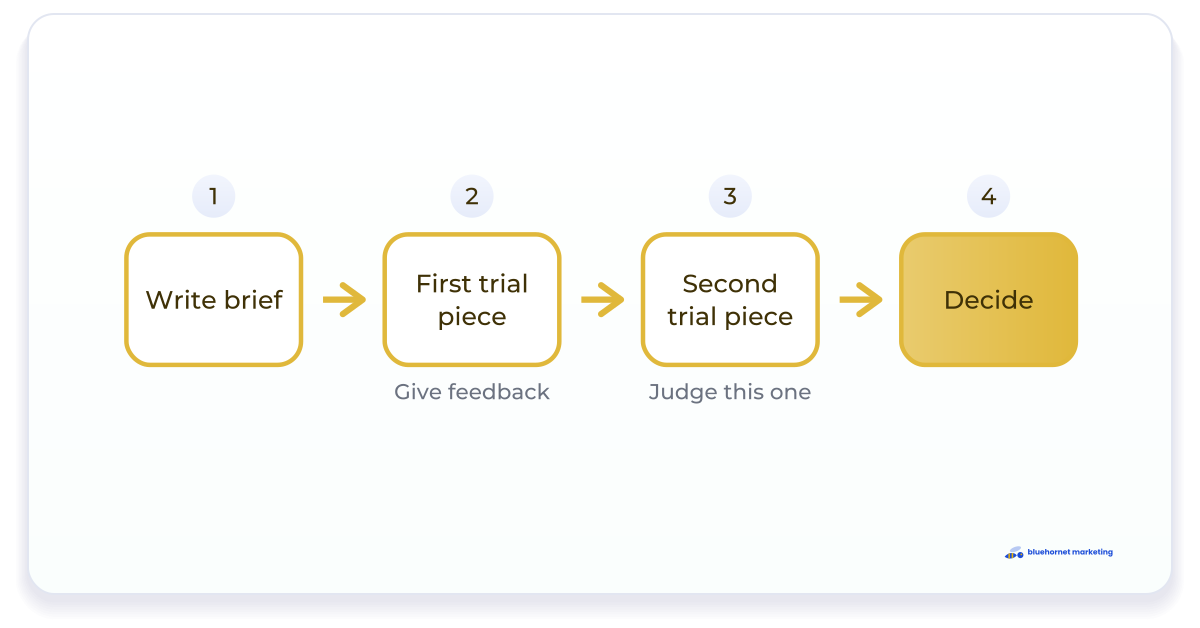
Run a two-piece trial with every new writer or agency. Judge the second piece, because the first shows what they can do with your brief and the second shows whether they listen to feedback. If you want a general audit of how your process holds up, my content marketing checklist covers the rest of the setup.
A Worked Example: Eight Posts a Month
Take a company that wants eight articles a month, each around 1,800 words. Here is how the three models compare once you count the hidden items, with example figures to show the structure. Replace them with your own quotes.
| Cost item | One in-house writer | Freelancers | Agency |
|---|---|---|---|
| Writing | Salary and benefits | Eight pieces at your negotiated rate | Included in the retainer |
| Editing and review | Your editor, a few hours per piece | Your editor, three to five hours per piece | Agency editor plus your approval |
| Strategy and reporting | Content lead | Still yours | Often included |
| Tools | Your subscriptions | Your subscriptions | Usually the agency’s |
| Biggest hidden cost | Time to hire and cover for leave | Management time | Onboarding and a minimum contract term |
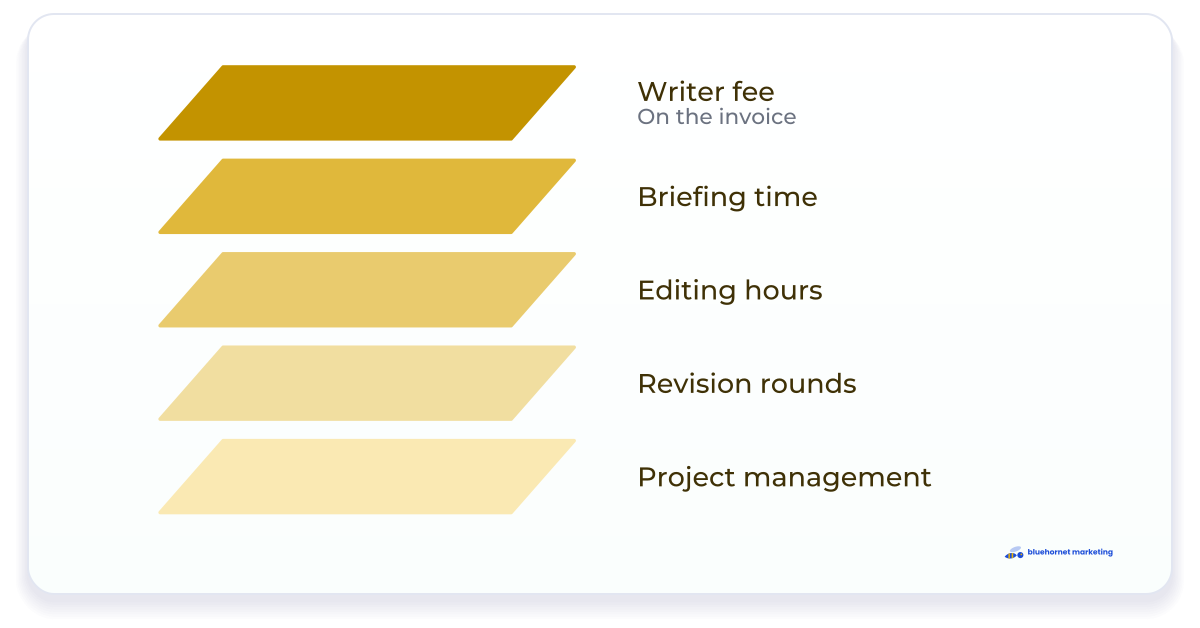
The takeaway is that no model is free of management. A freelancer setup looks cheapest on paper, and it is until you count the editing hours. I tell clients to track those hours for two months before deciding, because the number is usually higher than expected.
What to Ask an Agency Before You Sign
Agencies vary more than any other option, so ask direct questions. Who will actually write my content, and have they worked in my industry? How do you choose topics, and can I see an example plan? What do you report each month, and which numbers do you tie to leads? Who owns the files, accounts and documents if we part ways? What is the minimum term, and how do I exit?
Pay attention to how they answer. A good agency asks about your buyers, your sales process and your numbers before it proposes a package. One that quotes first and asks later is selling a standard offer. You are also entitled to see sample briefs and to speak to a current client, and an agency that hesitates at either request is telling you something.
What Outsourcing Costs Compared With Hiring
Cost per piece is only part of the picture. A freelancer article might cost a few hundred dollars, while a full-time marketer costs a salary plus benefits, tools and management time. Spread over a year, a hire often looks cheaper per piece at high volume and more expensive at low volume.
Do the math with your real numbers: count the pieces you want each month, include your own editing time and add the cost of tools. The detailed ranges are in my guide to content marketing cost. If you are comparing software to support a team, the ranking of content marketing tools shows what each one adds.
Where Outsourcing Goes Wrong
The same issues come up again and again. Teams hand over a topic list with no strategy behind it, skip the trial, accept generic drafts and then wonder why traffic does not turn into leads. Others outsource everything and lose track of what is published and why. A few of these are covered in more detail in my article on content marketing mistakes.
To avoid them, keep four things in your own hands: the goal, the topic list, the final approval and the reporting. Everything else can move outside as your capacity demands. If you are still shaping that plan, the content marketing framework gives you a structure to share with any partner.
Finally, plan for change. Your needs at five posts a month will differ from your needs at twenty, so review the setup every six months. Many teams start with freelancers, add an editor when quality slips and later hire a lead when strategy needs full-time attention. None of those steps is wrong, as long as you take them on purpose and not because a problem forced your hand.
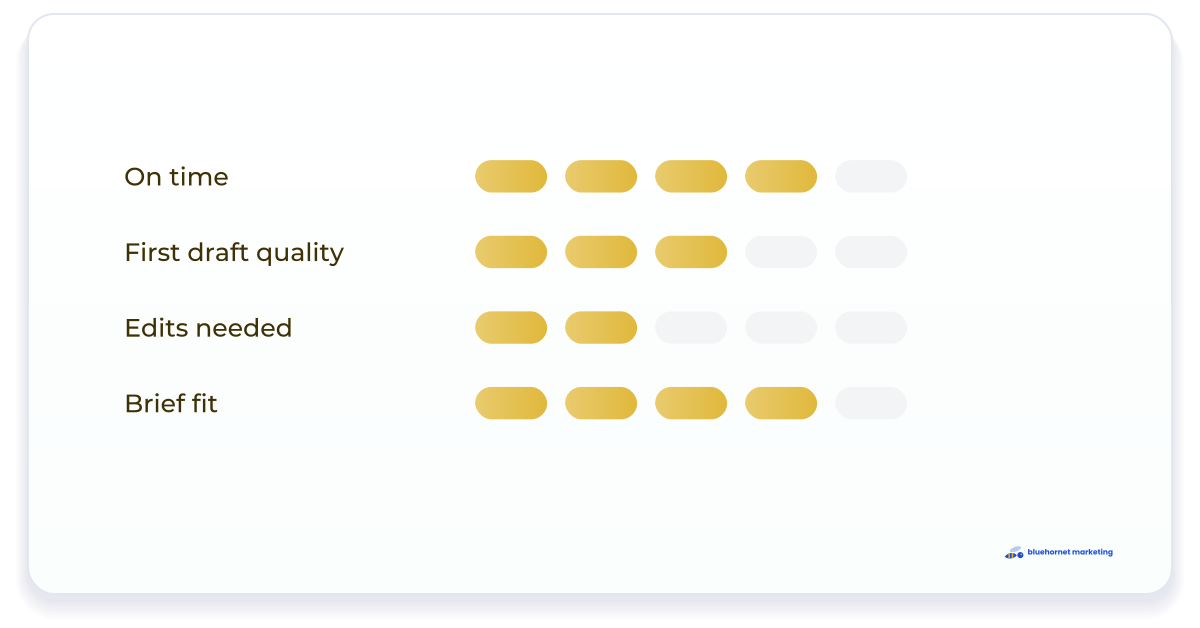
Keep a simple scorecard for every outside writer: on-time delivery, fit with the brief, accuracy and how much editing the draft needed. Reviewing it every quarter tells you who to keep and who to replace, and gives you facts for the conversation.
How to Choose Between the Options
Ask three questions. How much of the content depends on knowledge only your team has? How steady is your volume? How much time can you spend managing outsiders? If expertise is high, volume is steady and management time is short, hire. If volume swings and the topics are broad, use freelancers. If you need strategy, production and reporting together and have little internal bandwidth, consider an agency or a consultant who builds the system with you.
- You know which parts stay in-house: strategy, approval and reporting.
- You have briefs and a style guide ready before the first order.
- You have budgeted time for review, not only for writing.
Questions About Content Marketing Outsourcing
Is It Better to Outsource Content Marketing or Do It In-House?
Most teams do best with a hybrid. Keep strategy, approval and reporting inside the company, and outsource production where you need capacity or skills you lack. The right mix depends on how much expert knowledge each piece needs.
How Much Does It Cost to Outsource Content Marketing?
Costs vary widely with quality and format. Freelance articles range from low hundreds of dollars for simple pieces to well above that for expert-written guides, and agencies charge retainers for strategy and production together. Add your own editing and review time to any estimate.
What Should I Keep In-House?
Keep your goal, your topic priorities, final approval and reporting. Those decide whether content serves the business, and no outside partner can know them as well as you do.
How Do I Find a Good Content Freelancer or Agency?
Ask for work in your industry, check how they handle briefs and feedback, and run a paid trial of two pieces. Judge the second piece, because it shows whether they act on your feedback.
How Do I Keep Outsourced Content on Brand?
Use a short style guide with real examples, a brief for every piece and an editor who reviews drafts before publishing. Share your best pages as models.
Can Outsourcing Hurt My Rankings or Reputation?
Yes, if the content is generic, inaccurate or copied from competitors. Protect yourself with subject-matter review, fact-checking and clear rules about sources and originality.
When Should I Move Content Back In-House?
Consider it when volume becomes steady and high, when your outsiders keep missing the expertise and when training them costs more than hiring. A common step is to hire a content lead and keep freelancers for capacity.
Disclaimer: This article is for general information only and isn’t legal, financial or tax advice. Treat figures as estimates from typical work and confirm details with your providers before you act.
Was this guide helpful?
Thanks for your feedback.
Warren Albright
Warren leads the Blue Hornet editorial team and works with the consultants to turn real client projects into practical guides on content, paid media, marketing automation, CRM and analytics. He comes from content and demand generation work, edits every article before a working marketing consultant reviews it, and draws on strategies, channel plans and audits from client projects to keep the advice grounded in real numbers.