Quick Summary
- The most common content marketing mistake is publishing without one goal and one named reader.
- Choose topics from sales calls and search data, not from brainstorms.
- Plan two distribution channels for every piece before you write it.
- Measure leads and cost per lead, not page views, and refresh old pages every quarter.
Teams rarely fail at content because they lack effort. They fail because the same seven errors keep repeating, and most of them are visible in the first month. In my content marketing consulting audits, I see this list again and again, in companies of every size.
Below, each mistake comes with a plain fix. Work through them in order: the early ones cause the later ones, so fixing item one often removes half the damage.
The Seven Mistakes and Their Fixes
| Mistake | What it costs you | Fix |
|---|---|---|
| 1. No goal or reader | Scattered topics, no authority | One goal, one audience, one number |
| 2. Guessing topics | Posts nobody searches for | Sales calls plus search data |
| 3. No distribution | Good posts that nobody sees | Two channels per piece |
| 4. Measuring traffic | Wrong visitors, wrong decisions | Report leads and cost per lead |
| 5. Old content decays | Falling rankings on top pages | Quarterly refresh |
| 6. Uneven quality | Weak trust, edit-heavy workflow | Briefs and a style guide |
| 7. Tools before plan | Wasted spend, rushed output | Plan first, software second |
7 Content Marketing Mistakes to Fix
1. Publishing Without a Goal or a Named Reader
Most teams I audit can tell me how many posts they published last quarter, and almost none can tell me which of them was meant to produce a lead. The calendar was filled because a gap on the calendar felt like failure. Without a goal, every topic looks equally good, so the loudest opinion in the meeting wins.
The result is a blog with a bit of everything and a point of view on nothing. Readers cannot tell who it is for, and search engines have little reason to treat the site as an authority on any one subject. A plan built on a clear goal and audience, like the one in my content marketing framework, removes most of that drift.
Do This Instead
Write one goal with a number and one primary reader in two sentences before you plan any topic. Check every new idea against both.
Avoid This
Adding topics because a competitor published them, or because a keyword has a high volume.
2. Choosing Topics by Guesswork
A common pattern is a brainstorm followed by a list of titles that sound smart to the team. I have seen months of writing go into subjects that nobody searches for and no buyer ever asks about. The work was good and the audience did not exist.
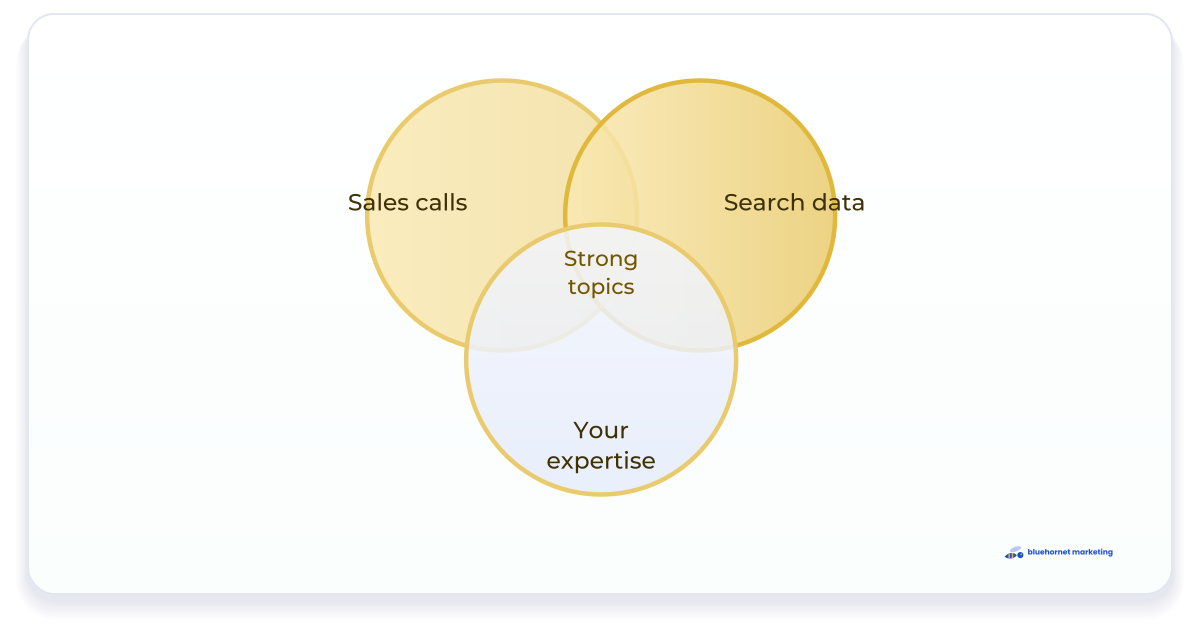
Buyer questions are easy to collect. Read recent sales calls, support tickets and the questions in your inbox, then check search demand and the pages that already rank. Topics that appear in both lists are safe bets, and topics in neither should wait.
Do This Instead
Build the topic list from sales calls and search data, then rank it by value to the buyer and effort to produce.
Avoid This
Picking titles by gut feel or copying a competitor’s blog index.
3. Having No Plan for Distribution
A new post goes live, one social post links to it and the team moves on. Search can take months to deliver anything, so the article sits unseen while the effort has already been spent. Teams often tell me that content does not work, when what they have really done is publish and hope.
Before you write a piece, decide where it will be seen. A short email to your list, a link in sales follow-ups and a post on the channel your buyers use will do more in week one than any amount of waiting for rankings. Give each piece two channels and a date to check results.
Do This Instead
Plan two channels per piece and send every new article to your sales team with a line on when to use it.
Avoid This
Treating the publish button as the finish line.
4. Measuring Traffic and Calling It Success
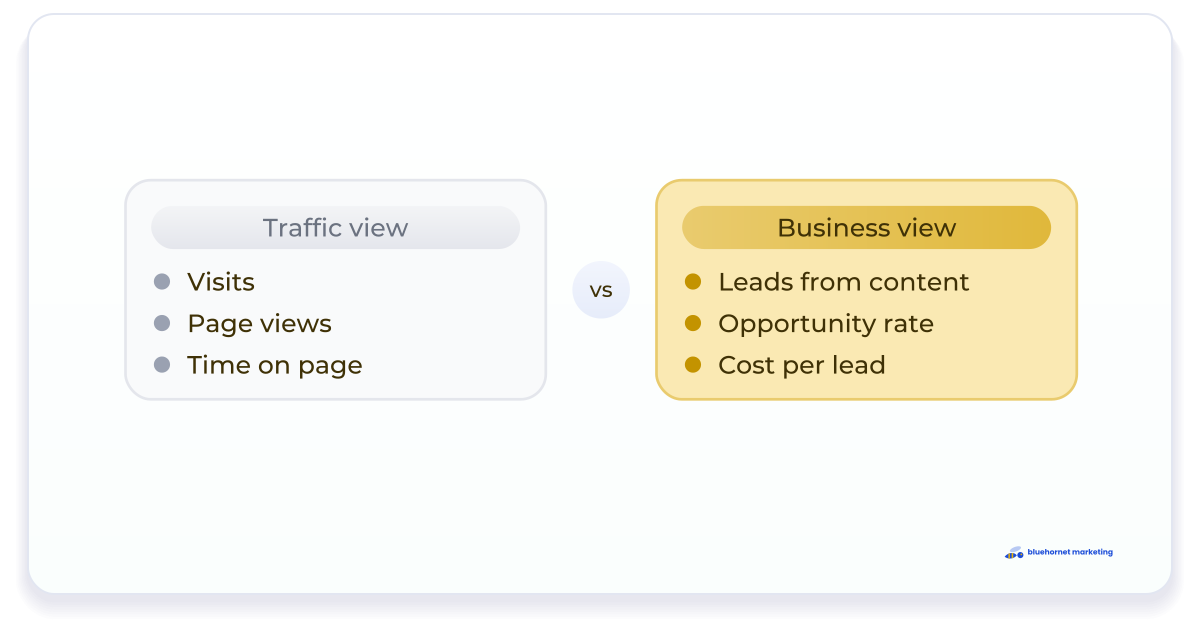
Traffic is easy to see and feels good in a report. I have watched a company celebrate a 60% rise in visits while leads from the site fell, because the new posts attracted students and job seekers. Visits from the wrong people cost you money in tools, editing time and a distorted picture of what works.
Track leads from content, the share that become opportunities and cost per lead. Compare topics by those numbers, not by visits. A post with fifty visits and three demo requests is worth more than one with a thousand visits and none.
Do This Instead
Report leads, opportunities and cost per lead each month, with traffic as supporting context.
Avoid This
Judging posts by page views, social likes or rankings for terms no buyer uses.
5. Letting Old Content Decay
Posts written two or three years ago lose rankings as competitors publish fresher material and facts go out of date. Many teams keep publishing new articles while their best performers quietly slide down the results page. Refreshing a page that already has links and history is often faster and cheaper than writing a new one.
Review your top fifty pages every quarter. Update the numbers, add missing sections, fix broken links and improve the opening. Merge thin posts that compete with each other and redirect the weaker one.
Do This Instead
Reserve about a fifth of your calendar for updates, and start with pages that dropped in rankings or have outdated facts.
Avoid This
Publishing new posts while pages that once brought leads decline.
6. Uneven Quality and a Drifting Voice
When several writers contribute without shared standards, readers notice. One article is conversational, the next reads like a brochure and a third contradicts the first. Quality then depends on who happened to write the piece and how rushed the editor was.
A one-page brief for every piece and a short style guide fix most of this. If you work with freelancers or an agency, standards matter even more, and my notes on content marketing outsourcing cover how to set them up and review the first pieces.
Do This Instead
Give every writer the same brief template, three examples of your voice at its best and a list of words to avoid.
Avoid This
Assuming a good writer will guess your brand voice and your buyers’ questions.
7. Buying Tools or Budget Before the Plan
Teams sometimes sign for an expensive platform before they know what they will publish, hoping the software supplies strategy. A tool can speed up good work, but it cannot decide who to write for. The monthly bill then adds pressure to show results fast, which pushes the team toward the shortcuts above.
Set a realistic budget based on what the plan needs, and expect search content to take months to build. My content marketing cost breakdown shows typical ranges, and the ranking of content marketing tools helps you pick software once the workflow is clear.
Do This Instead
Start with a spreadsheet and your analytics, then add a tool only when one step slows you down.
Avoid This
Judging a program after thirty days or buying a full tool stack in month one.
How the Mistakes Feed Each Other
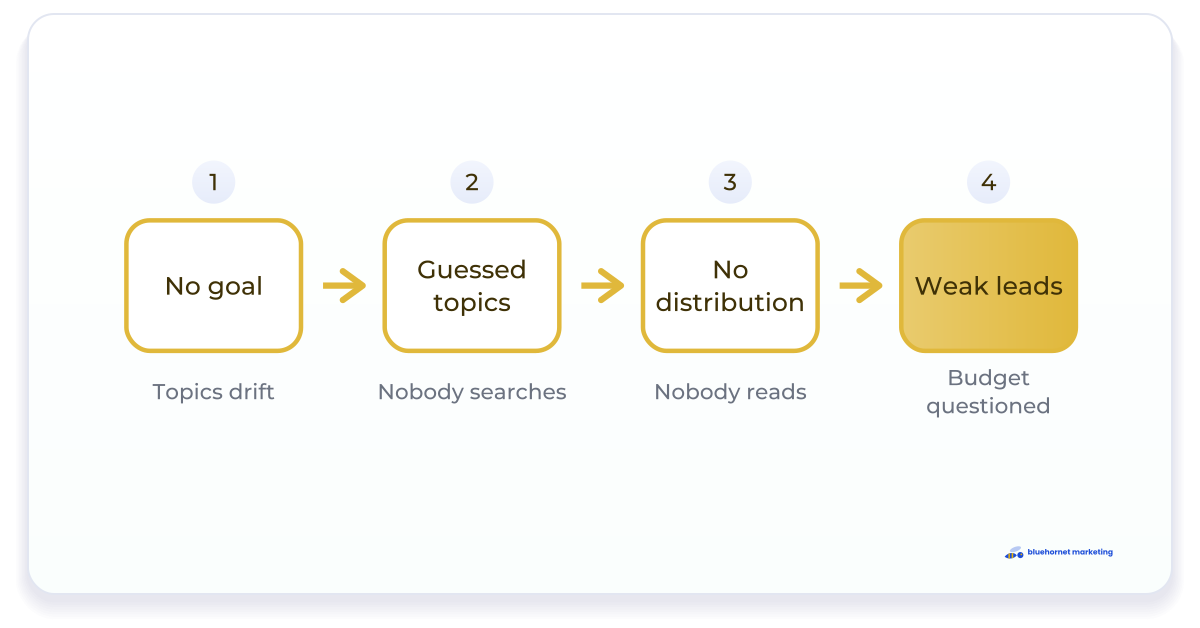
The seven mistakes rarely appear alone. A missing goal leads to guessed topics, guessed topics produce posts that no one reads, and the team then answers low results with more volume, which stretches quality and budget. By month six the program is expensive, and the loudest conclusion in the room is that content does not work.
The reverse is also true. A client I worked with in B2B software fixed only two things in one quarter: they wrote down a goal tied to demo requests and they started reporting leads by article. With those two changes in place, the team dropped four planned topics, updated eleven old pages and sent their best articles to the sales team. Demo requests from content rose steadily over the next two quarters, with no increase in budget.
If you want a fast self-audit, count how many of the seven descriptions sound like your program. One or two is normal. Four or more means a reset will pay back faster than another quarter of publishing, and a short outside review can point to the order that makes sense for your team.
One more point on order. Each fix should be tested before the next one starts. If you change topics, distribution and reporting in the same month, you will not know which change helped, and the team will lose patience with the process. One change per fortnight is slow enough to learn from and fast enough to keep momentum.
Keep a short log of what you change and when. Three months later it tells you which fix moved the numbers, and it gives a new colleague the history without a long meeting.
Finally, share the list with whoever approves your budget. Most of these mistakes are process issues, not talent issues, and a decision maker who understands that is more likely to support the fixes.
Which Fix to Make First
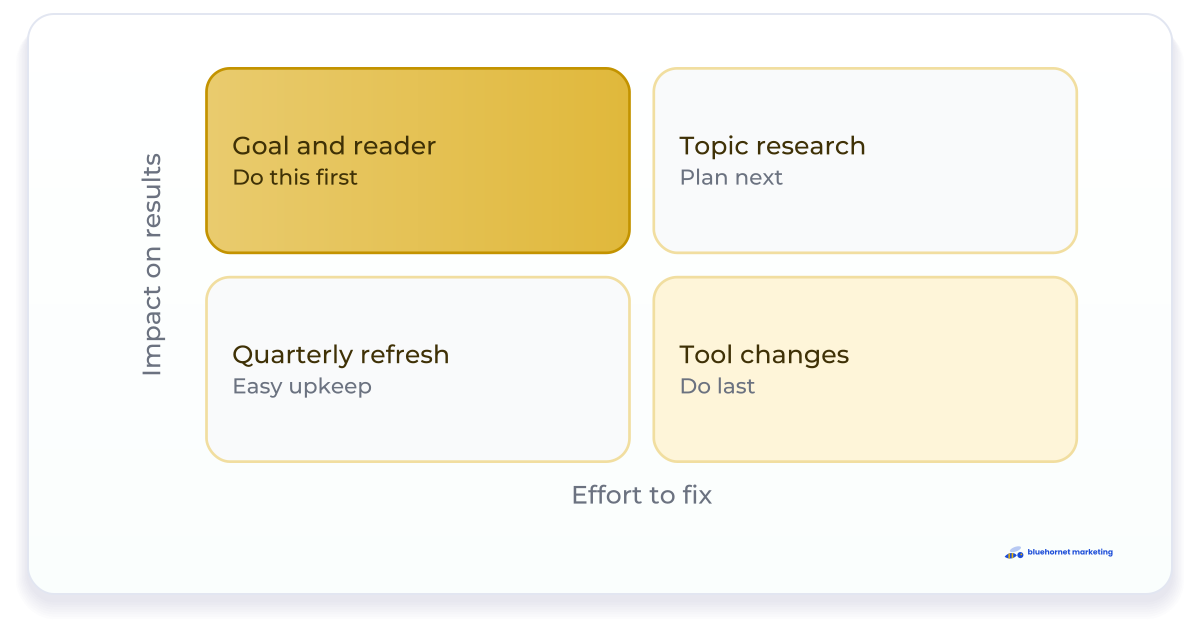
If you can only change one thing this month, start with measurement. Once you see leads by topic, the other problems become easier to spot, because the pages that bring nothing stand out. Then rebuild your topic list and add distribution. Quality standards and a refresh routine come next, and tools come last.
To verify that the basics are in place, run through my content marketing checklist. Every missing point there is a likely source of one of the seven mistakes.
- You can name one goal and one reader.
- Your topics come from buyer questions and search data.
- Each new piece has two planned channels.
- Your report shows leads and cost per lead.
- You update old pages every quarter.
Questions About Content Marketing Mistakes
What Is the Biggest Content Marketing Mistake?
Publishing without a goal or a named reader. It leads to scattered topics and weak results, and it causes several of the other mistakes. Fix it by writing one goal with a number and one primary reader before you plan any topic.
How Do I Know My Content Is Not Working?
Look at leads from content, not traffic. If visits rise while demo requests, calls or sign-ups stay flat after six months, your topics, calls to action or distribution need attention.
How Often Should I Update Old Content?
Review your top fifty pages every quarter and update those with falling rankings or outdated facts. About a fifth of your calendar is a reasonable share for refreshes.
Is It a Mistake to Publish Less Often?
Not if the pieces are strong. Four useful articles a month usually beat twelve rushed ones. Pick a pace your team can keep for a year.
Should I Outsource Content to Avoid These Mistakes?
Outsourcing helps with capacity, but it does not fix a missing strategy. You still need goals, briefs and review standards, or the same mistakes appear with a freelancer’s name on them.
How Long Should I Wait Before Judging Results?
Judge process in the first month, early signals such as impressions in months two and three, and lead numbers after about six months. Search content builds slowly.
What Should I Fix First If My Budget Is Small?
Start with measurement and topic selection. Both cost little, and they stop you from spending money on pages that never bring buyers.
Disclaimer: This article is for general information only and isn’t legal, financial or tax advice. Treat figures as estimates from typical work and confirm details with your providers before you act.
Was this guide helpful?
Thanks for your feedback.
Warren Albright
Warren leads the Blue Hornet editorial team and works with the consultants to turn real client projects into practical guides on content, paid media, marketing automation, CRM and analytics. He comes from content and demand generation work, edits every article before a working marketing consultant reviews it, and draws on strategies, channel plans and audits from client projects to keep the advice grounded in real numbers.