Quick Summary
- Work backward from your lead goal and allowed cost per lead to set a content budget.
- Blog articles typically run from $150 to $800, while expert guides and agency retainers cost much more.
- Volume, expertise, formats, who does the work and distribution drive most of the price.
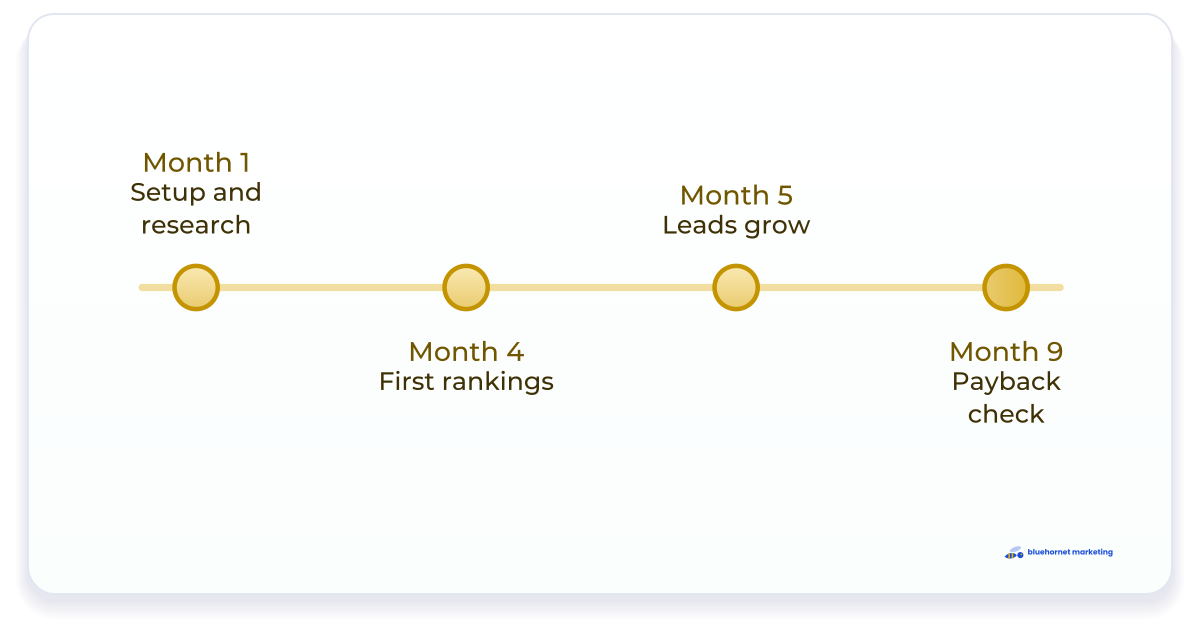
- Search-led content usually takes three to six months to show up and about a year to pay back.
Content marketing cost depends on three things: how much you publish, how good it has to be and who does the work. A founder writing posts on Sundays and a team producing research reports with design and video sit at opposite ends of the same budget scale. The number you need is not an industry average. It is the figure that fits your goal.
In my content marketing consulting work I start from a formula, then test it with a worked example. Below you will find the formula, typical price ranges, a table of cost drivers and the common ways budgets leak. The figures are ranges from my client work and public rate cards, so treat them as a starting point and replace them with quotes.
The Content Marketing Budget Formula
Work backward from the lead goal:
| Step | Formula | Example |
|---|---|---|
| 1. Leads needed | New customers wanted divided by lead-to-customer rate | 12 customers ÷ 10% = 120 leads a year |
| 2. Leads from content | Share you expect from content, such as 30% | 120 × 30% = 36 leads |
| 3. Allowed cost per lead | Customer value × margin × share you will spend, divided by leads per customer | Target of $250 per lead |
| 4. Yearly content budget | Leads × allowed cost per lead | 36 × $250 = $9,000 |
The numbers will differ for you, but the structure holds. If the budget that comes out of the formula is too small to produce the content needed, you have two choices: widen the goal or accept that content will not reach it in the first year. Telling a client that early is cheaper than telling them after twelve months.
Typical Price Ranges for Content Work
Ranges depend on length, expertise and research needs. These are the bands I see most often for US-based work, and quotes outside them usually mean a difference in quality or scope.
| Item | Typical range | What drives the price |
|---|---|---|
| Blog article, 1,000 to 2,000 words | $150 to $800 | Expertise, research, interviews and editing level |
| Expert guide or white paper | $1,000 to $5,000 | Original data, design and subject-matter review |
| Content strategy project | $2,500 to $10,000 | Site size, research depth and number of audiences |
| Monthly agency retainer | $3,000 to $15,000 | Volume, channels and reporting |
| Content lead, in-house | Salary plus about a fifth for benefits and tools | Seniority and location |
| Software stack | $50 to $1,000 a month | Research, editing and scheduling tools |
Tool costs scale with team size, and I compare the main options in my ranking of content marketing tools. The cheapest stack that covers research, editing and scheduling usually costs less than a single freelance article.
What Drives Your Cost Up or Down
Five factors explain most of the gap between a lean and a heavy budget.
Volume and length
Publishing weekly costs about four times more than publishing monthly, and a 3,000-word guide costs far more than a 900-word post. Fewer, deeper pieces often beat many thin ones, especially in competitive topics.
Expertise required
Writing about healthcare, security or finance needs people who know the field, and their time costs more. A cheaper writer plus a paid expert review often lands in the same place and tends to be more accurate.
Formats and design
Text is the cheapest format. Original graphics, video and interactive tools add cost, but they can also earn links and shares that text alone cannot.
Who does the work
In-house, freelance and agency models price differently, and each hides different costs. I compare them in detail in my guide to content marketing outsourcing.
Distribution and promotion
Many budgets spend everything on creation and nothing on getting the piece seen. A rule I use is to set aside about a fifth of the budget for promotion, paid or otherwise.
A Worked Example: Three Budgets
Take a B2B service company that wants more consultation requests. Here is how the same goal looks at three budget levels, using round numbers for comparison.
| Budget | What you get | What to expect in year one |
|---|---|---|
| Lean, about $1,500 a month | Four articles a month, one tool, part-time internal owner | Rankings begin in months four to six, with few leads before that |
| Mid, about $4,500 a month | Eight articles, an editor, refreshes, distribution plan and reporting | Steady lead growth from month five, with a clear view of what works |
| Heavy, about $10,000 a month | Twelve pieces, original research, design and video, dedicated team | Faster growth in competitive topics, with higher risk if the strategy is unclear |
The mid budget is where I see most midsize companies land, and the lean budget works if you pick topics very carefully. The heavy budget pays off only with a tight strategy and clear reporting, because a large budget magnifies weak planning as quickly as strong planning.
When content pays back
Search-led content usually takes three to six months to show up and a year to pay back. Paid promotion and email can produce earlier signals, but they stop when you stop paying. Plan your cash flow for the slow start, or you will cut the program just before it works.
Costs People Forget to Include
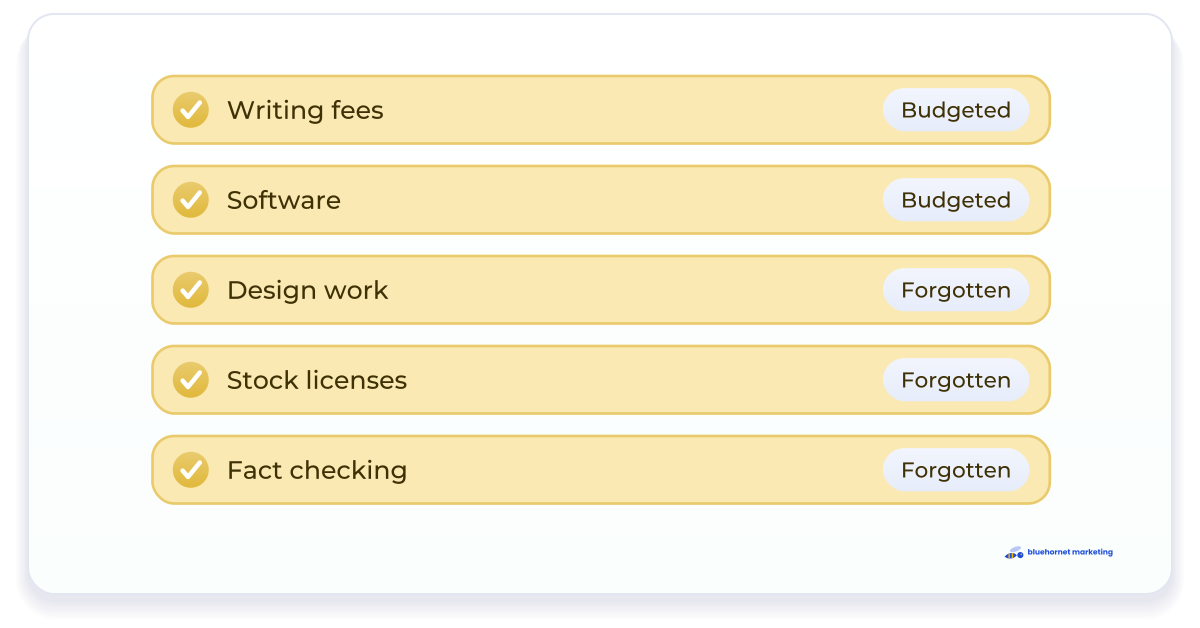
Quotes for writing are easy to compare, and the rest of the bill is easy to miss. Your own time is the largest hidden item: briefing writers, reviewing drafts, collecting expert input and pulling reports can add up to ten hours for every article. Multiply that by your hourly cost, and the cheap option changes shape.
Image and design work comes next, followed by stock licenses, fact-checking, transcription, translation if you publish in several languages and the time to publish and format each piece in your content system. Add a share for updates as well. A library of fifty articles needs a few hours of attention every month just to stay accurate, and that work belongs in the budget from day one.
Last, remember measurement. Reporting tools, tracking setup and the hours spent reading the results are part of the cost, and they are the part that tells you whether the rest was worth it.
Your Own Budget Calculation
Fill in the table below with your own numbers. It takes ten minutes and gives you a range you can defend in front of a finance lead. Keep the assumptions visible, so you can change one number and see how the result moves.
| Input | Your number | Example |
|---|---|---|
| Customers you want from content this year | 6 | |
| Leads needed per customer | 10 | |
| Allowed cost per lead | $250 | |
| Yearly content budget | Customers × leads × cost per lead | 6 × 10 × $250 = $15,000 |
| Monthly budget | Yearly budget ÷ 12 | About $1,250 |
If the monthly figure is below what your plan needs, you have a decision to make. You can raise the allowed cost per lead, lower the customer goal or choose cheaper formats. Often the better move is to cut the number of topics and keep quality up, since a few strong pages beat many weak ones.
Add a buffer of about 15% for surprises, such as a rewrite, an extra expert interview or a tool price increase. Budgets that leave no room for these end up cutting quality in month eight, which is the opposite of what you want.
Ways to Trim a Budget Without Losing Results
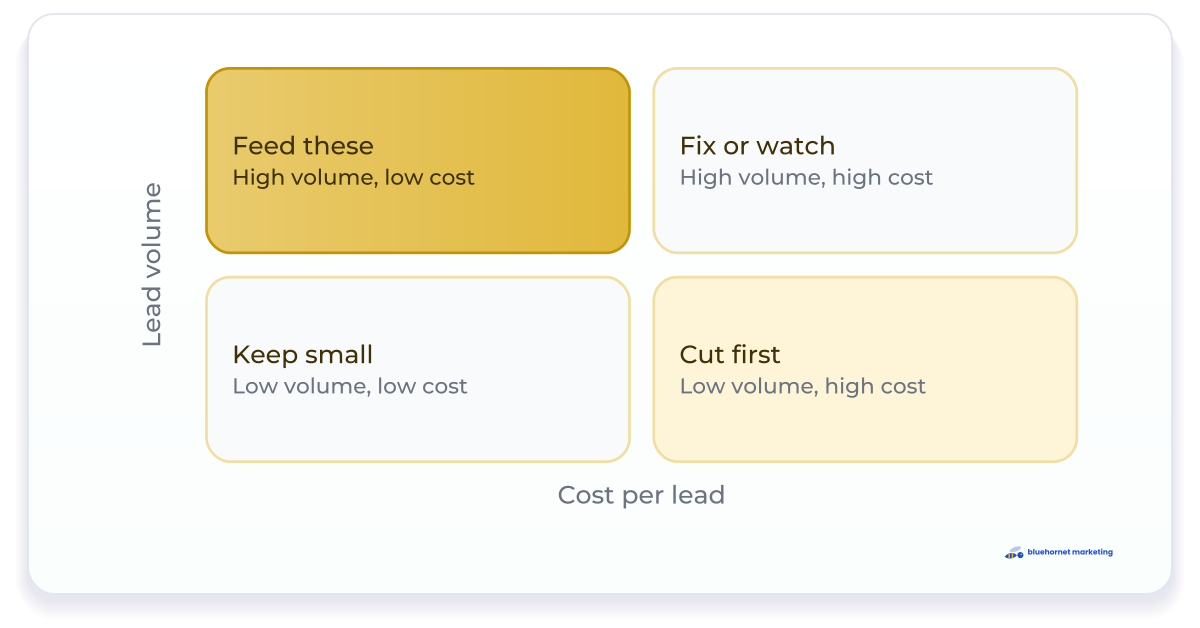
If the number is too high, start with the quiet savings. Merge overlapping tools, refresh pages that already rank instead of writing new ones and shorten review loops with better briefs. Then look at topics: drop the ones that cost the most per lead, and keep the ones that move buyers closer to a decision.
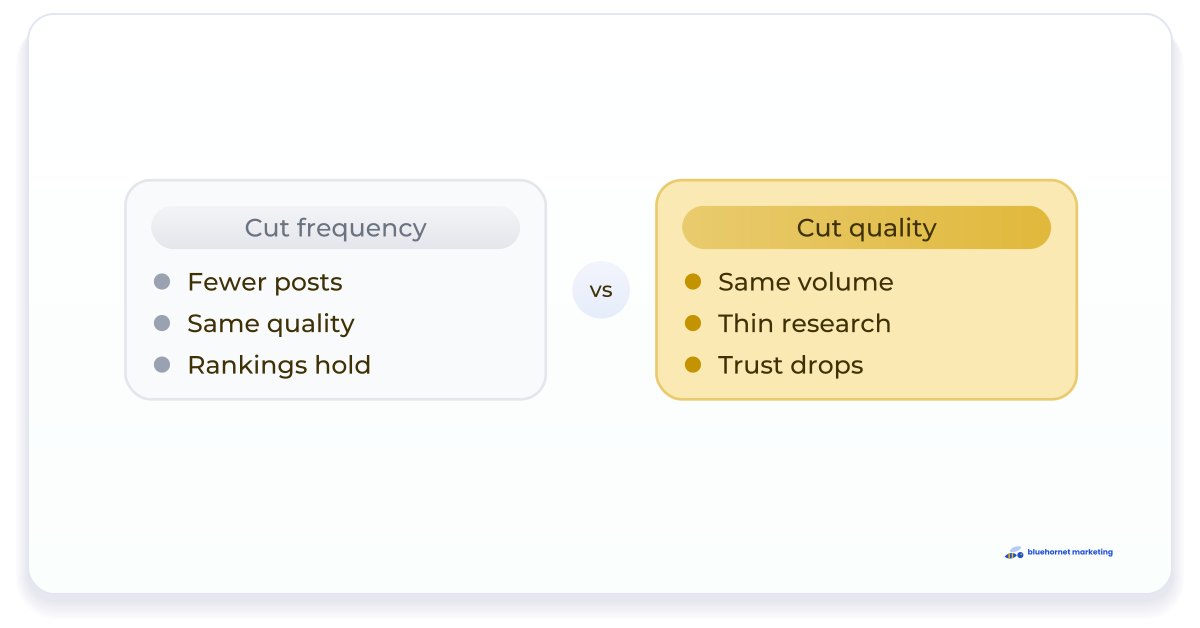
Cutting frequency is a safer move than cutting quality. Moving from eight articles a month to five, with each one sharper, often holds results steady. Cutting distribution is the move I advise against, since it saves little and wastes the work you already paid for.
One last cost note on timing. Spending is front-loaded, because research, briefs and the first batch of pages come before any result. Plan to fund the first quarter without expecting returns, and review the numbers at month three with the team and your finance lead, so the budget conversation happens before it becomes urgent.
Where Content Budgets Leak
Most waste comes from a short list of causes. Topics chosen by guesswork lead to posts nobody searches for, which I describe in content marketing mistakes. Old pages decay without anyone updating them. Tools overlap, and nobody cancels the third subscription. Drafts go through three rounds of review because the brief was thin.
A good habit is to compare cost per lead by topic every quarter. Cut the topics that cost the most per lead and double down on the ones that cost the least. A short audit with the content marketing checklist often finds the first savings in an hour.
How to Set Your Own Budget
Begin with the lead goal and the allowed cost per lead, then compare the result with the ranges above. If the budget is too low for the goal, reduce the number of topics, not the quality of each one. If it is higher than your budget, choose the model that matches it, whether that is a lean in-house setup, a freelancer or an agency. If you want a structure to plan against, use the content marketing framework.
- You have a lead goal and an allowed cost per lead.
- Your budget includes editing, review and promotion, not only writing.
- You can fund the program for at least two quarters.
- You report cost per lead by topic every quarter.
Questions About Content Marketing Cost
How Much Does Content Marketing Cost per Month?
Small programs run from about $1,500 to $3,000 a month, mid-sized programs from $4,000 to $8,000 and larger ones from $10,000 upward. The right figure comes from your lead goal and allowed cost per lead, not from an average.
How Much Should a Small Business Spend on Content Marketing?
Many small businesses spend between a few hundred and a few thousand dollars a month. With a small budget, focus on a handful of decision pages and one distribution channel, rather than a daily blog.
What Percentage of Revenue Should Go to Content Marketing?
There is no single rule. Many B2B companies put a small single-digit share of revenue into marketing overall, with content as one part. Start from the lead goal and check the result against your total marketing budget.
Is Content Marketing Cheaper than Paid Ads?
Over a long period it often is, because content keeps working after you pay for it, while ads stop when the budget stops. In the first months, paid ads usually bring leads faster, so many teams use both.
How Long Before Content Marketing Pays for Itself?
Search-led content usually takes three to six months to show results and about a year to pay back. Plan your cash flow for that, and judge the first quarter on process and early signals.
Why Do Quotes for the Same Article Differ So Much?
Quotes differ by expertise, research, interviews, editing level and rights. A cheap quote can be fine for a simple explainer and a poor choice for an expert guide, so compare scope, not only price.
How Can I Reduce Content Marketing Costs Without Losing Results?
Cut topics with a high cost per lead, refresh old pages instead of always writing new ones, cancel overlapping tools and invest in briefs that reduce editing time.
Disclaimer: This article is for general information only and isn’t legal, financial or tax advice. Treat figures as estimates from typical work and confirm details with your providers before you act.
Was this guide helpful?
Thanks for your feedback.
Warren Albright
Warren leads the Blue Hornet editorial team and works with the consultants to turn real client projects into practical guides on content, paid media, marketing automation, CRM and analytics. He comes from content and demand generation work, edits every article before a working marketing consultant reviews it, and draws on strategies, channel plans and audits from client projects to keep the advice grounded in real numbers.