Quick Summary
- A content marketing framework has six phases: goals and audience, research, topic strategy, production, distribution and measurement.
- Start with decision and consideration topics, because those readers are closest to buying.
- Every piece needs an owner, a brief, a deadline and two planned distribution channels.
- Review results monthly and finish with three decisions: repeat, update or stop.
Most content programs fail for a plain reason: they start with a publishing schedule. A framework starts earlier, with who you want to reach, what they need before they buy and how you will know content is working. When I set up a plan through content marketing consulting, I use the six phases below, in this order, and I rarely skip one.
You can run the framework yourself in about two weeks of focused work for a small site, or over a quarter for a large one. Each phase ends with a decision you can write down, so the plan lives in a document and not in someone’s head.
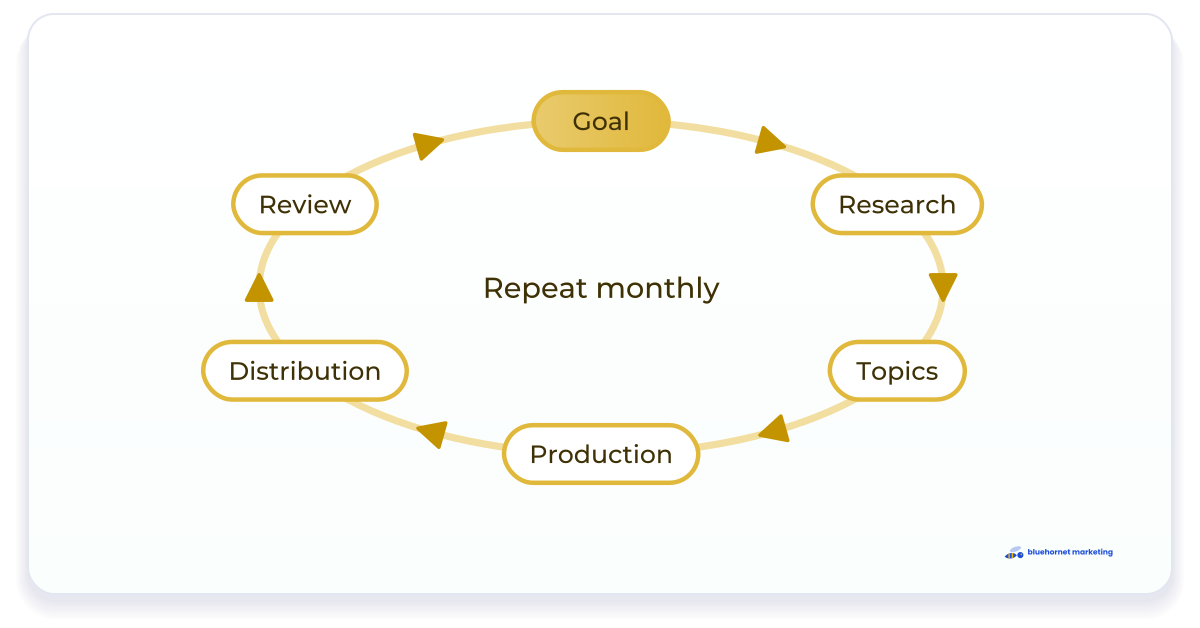
The Six Phases at a Glance
| Phase | Key question | What you write down |
|---|---|---|
| 1. Goals and audience | Who must act, and what counts as success? | One goal, one primary audience, one number |
| 2. Research and position | What do buyers ask, and where can you say something others do not? | Question list and a positioning statement |
| 3. Topic strategy | Which topics earn attention, trust and sales conversations? | A ranked topic map by funnel stage |
| 4. Production system | Who makes what, to which standard? | Briefs, owners and a 90-day calendar |
| 5. Distribution | How does each piece reach people? | Channel plan and repurposing rules |
| 6. Measure and improve | What worked, and what changes next month? | A one-page monthly report |
Phase 1: Set One Goal and One Audience
Pick a single business goal for the next two quarters. Good examples are qualified demo requests, booked consultations or newsletter subscribers who match your buyer profile. A list of five goals produces content that serves none of them.
Then name one primary audience. If you sell to both a CFO and an operations lead, choose the person who starts the buying process. You can add the second audience once the first is working. Attach a number to the goal, such as 40 qualified leads a month from content within a year, and write down the date you will review it.
Phase 2: Research What Buyers Ask and Where You Can Differ
Start with conversations. Read ten recent sales call notes or support tickets and highlight every question a buyer asked before they decided. Those questions are your best topics, because they come from people who were close to paying.
Add search data next. A research tool such as the ones in my ranking of content marketing tools shows how often each question is searched and who ranks for it. Look at the top three results for your main topics and ask what they leave out. Your gap might be real numbers, a clearer process, honest trade-offs or experience in a niche. That gap becomes your positioning statement, one sentence that tells the reader why your take is worth their time.
Phase 3: Build a Topic Map by Funnel Stage
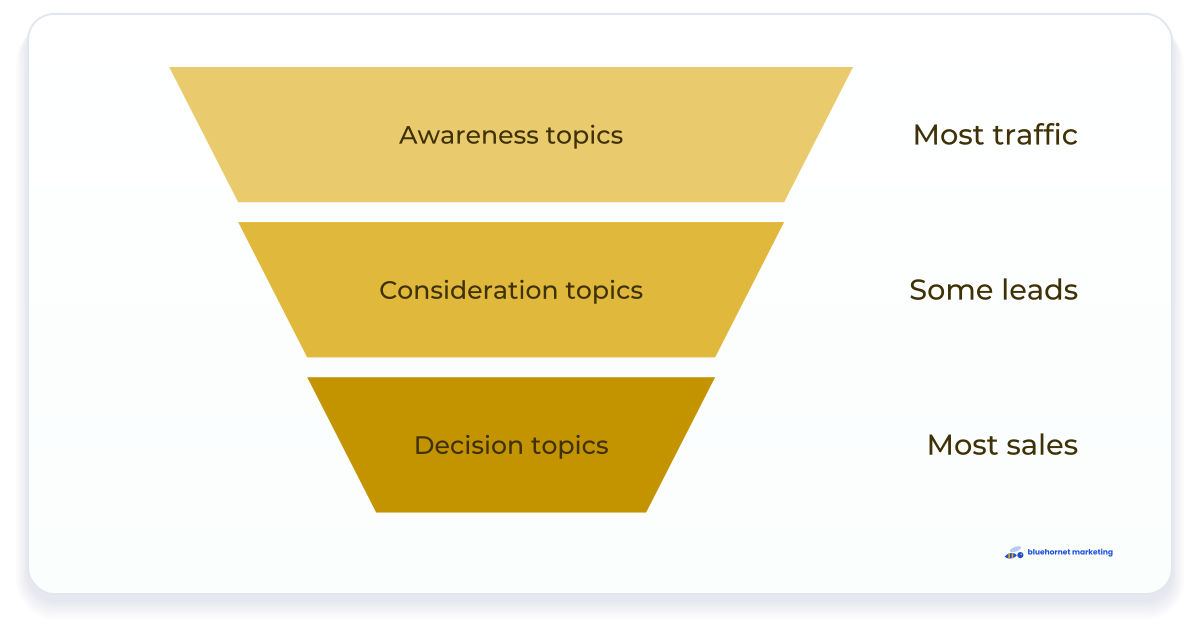
Sort your questions into three groups. Awareness topics explain a problem to someone who has not named it yet. Consideration topics compare options, costs and approaches. Decision topics answer the last doubts, such as pricing, timelines and what working with you looks like.
Most new programs overweight awareness because those topics have the biggest search volume. In my client work the decision and consideration pages produce far more leads per visit, so I start there and add awareness content once those pages exist. Rank each topic by value to the buyer and effort to produce, and take the top ten as your first batch.
A worked topic map
A B2B software firm selling scheduling tools might list the following, in the order I would publish them.
| Stage | Example topic | Format |
|---|---|---|
| Decision | Pricing and what is included | Service or pricing page |
| Decision | Switching from a spreadsheet: timeline and steps | Guide |
| Consideration | Scheduling software compared by team size | Comparison article |
| Consideration | Cost of double-booked shifts | Cost breakdown with example |
| Awareness | Why shift swaps cause overtime | Explainer post |
Phase 4: Set Up the Production System
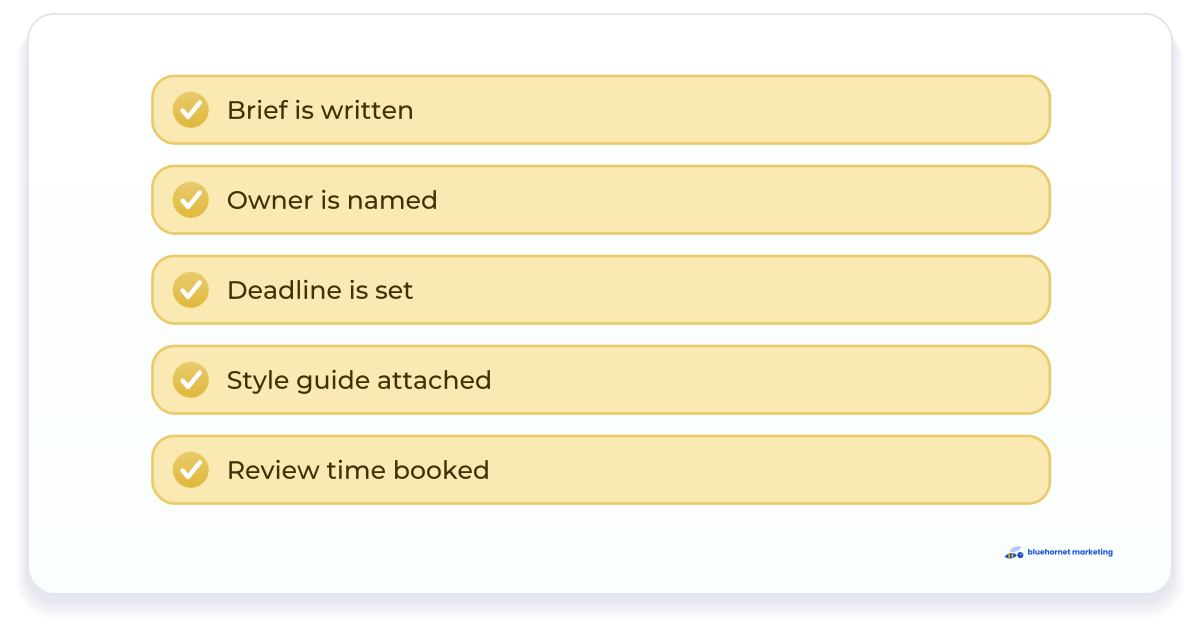
A plan only survives if work gets done on a schedule. Give every piece an owner, a brief and a deadline, and keep a calendar for the next 90 days. The brief is the most useful document in the whole framework. It states the reader, the question to answer, the search term, the points that must be covered, the sources to use and the next step you want the reader to take.
Add a short style guide with five to ten examples of how your brand sounds, plus a list of words you avoid. Decide who reviews facts and who gives final approval, and set a maximum review time, because slow approvals are where most calendars fall apart. If writers come from outside, my guide to content marketing outsourcing explains how to split the work between your team and freelancers.
Phase 5: Plan How Every Piece Reaches People
Publishing is not distribution. For each article, decide before writing where it will be seen: search, your email list, a social channel your buyers use, a sales follow-up or a partner’s newsletter. Pick two channels per piece and do them well.
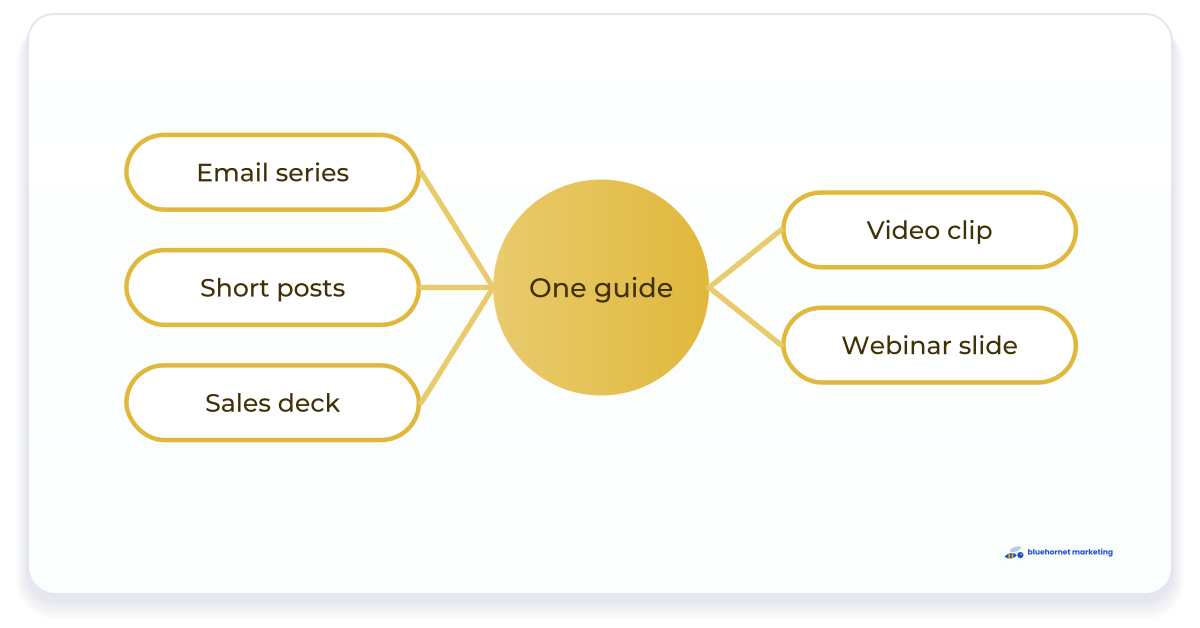
Repurposing makes the effort go further. One guide can become a short email series, three social posts, a one-page sales leave-behind and a section in a webinar. Sales teams are often the most overlooked channel: give them a list of your best articles by buyer question, so they can send the right link in a follow-up email.
Phase 6: Measure, Check and Improve
Review results once a month in one page. Show rankings and traffic for the pages that matter, leads from content, leads that became opportunities, and cost per lead. Traffic alone is a poor measure, because a post with a thousand visits and no leads is worth less than one with fifty visits and three demo requests.
End each review with three decisions: what to repeat, what to update and what to stop. Old posts often respond to a refresh faster than new ones respond to publishing, so reserve a share of your calendar for updates. Teams that skip this step usually repeat the issues I list in common content marketing mistakes.
Adapting the Framework to Your Team Size
The six phases stay the same, but the effort in each one changes with your team. A founder writing alone should keep phases one to three light and spend most of the time on production and distribution. A larger team usually needs the opposite: more time on research, briefs and review rules, because many hands create drift.
| Team | Where to spend extra effort | What to keep light |
|---|---|---|
| Solo owner | Decision pages and one reliable distribution channel | Style guide and approval steps |
| Small team with freelancers | Briefs, style guide and a fixed review time | Channel mix, with two channels only |
| Larger team or agency | Research, ownership rules and monthly reporting | New topics, until the existing library is updated |
One pattern I see often: a small company hires a freelancer, gets six articles in a month and then sees nothing happen. The articles were fine. What was missing was phases one and five, a clear goal and a plan to put the articles in front of buyers. Adding those two cost a week and changed the outcome, because the same articles started to feed sales conversations.
A Realistic 90-Day Timeline
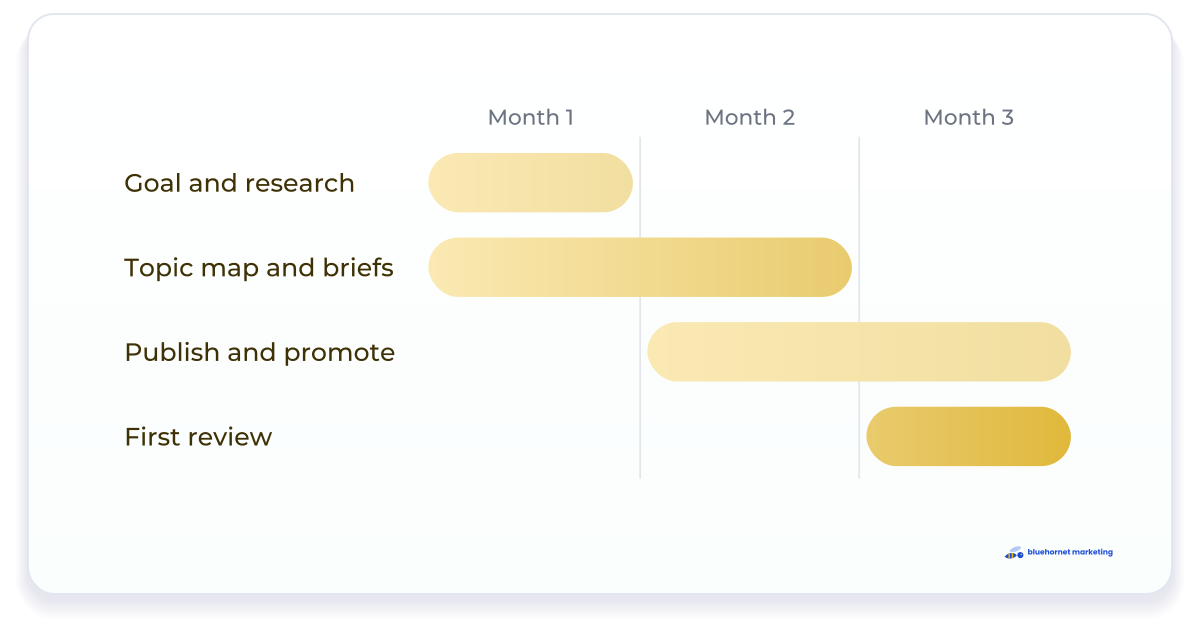
In the first two weeks, finish phases one to three. In weeks three and four, write briefs for your first ten pieces and set up tracking. Weeks five to ten are for production and distribution, at the pace your team can really sustain. Use weeks eleven and twelve for the first full review: leads, rankings, pages that disappoint and a refreshed calendar for the next quarter.
Expect delays. Reviews take longer than planned, a freelancer misses a date and a product launch eats a week. Build in a buffer of about 20% and you will still hit the quarter. Results from search content take longer, usually three to six months, so judge the first quarter on process and early signals such as impressions and rankings, not on final lead numbers.
What the Framework Costs to Run
Budget depends on how much your team produces itself. A lean program with a part-time lead, freelance writers and a few tools can start at a few thousand dollars a month, while a larger program with video and design costs more. I break down typical ranges in content marketing cost, so you can match the framework to a realistic budget.
Before you start, run through my content marketing checklist to confirm that goals, tracking and ownership are in place. Having those basics ready will save you more time than any tool.
How to Choose Where to Start
If you have no content, begin at phase one and work forward. If you already publish, start with phase six: measure what you have, then return to phases two and three to rebuild the topic map around what works. If you have a working plan but results stall, check phase five, because weak distribution is the most common cause.
- You can state one goal, one audience and one number.
- You have a ranked topic map with decision pages first.
- Every piece has an owner, a brief and a deadline.
- Every piece has two planned channels.
- You review results monthly and act on three decisions.
Use the list as a gate. If a point is missing, fix it before you add more content.
Questions About Building a Content Marketing Framework
What Is a Content Marketing Framework?
It is a repeatable model that connects your business goal, your audience, your topics, your production process, your distribution and your measurement. Instead of deciding what to publish week by week, you follow the same steps each time, which keeps the work focused and easy to hand over.
How Many Steps Should a Content Marketing Framework Have?
I use six: goals and audience, research and positioning, topic strategy, production, distribution, and measurement. Fewer steps usually skip something important, such as distribution, while many more become paperwork. The number matters less than finishing each step with a written decision.
How Long Does It Take to Build the Framework?
A small site can finish the first five phases in about two weeks of focused work. A large site with many stakeholders may need a quarter. The final phase, measurement, never ends, because you review and adjust every month.
Do I Need Special Software to Follow the Framework?
No. A spreadsheet, a shared document for briefs and your analytics account are enough to start. Add research, editing and scheduling tools when a clear bottleneck appears, and not before.
How Is a Content Strategy Different from a Content Calendar?
The strategy explains why you publish and for whom, and the calendar says when. A calendar without a strategy fills slots with whatever is available, which is why so many blogs read like a diary.
Which Funnel Stage Should I Start With?
Start with decision and consideration topics, such as pricing, comparisons and how an engagement works. They have smaller audiences, but the readers are closer to buying. Add awareness topics once those pages exist.
How Do I Know If the Framework Is Working?
Look at leads from content, the share of those leads that become opportunities and cost per lead, month by month. If traffic rises and leads stay flat after about six months, the topics or the next steps on the pages need work.
Disclaimer: This article is for general information only and isn’t legal, financial or tax advice. Treat figures as estimates from typical work and confirm details with your providers before you act.
Was this guide helpful?
Thanks for your feedback.
Warren Albright
Warren leads the Blue Hornet editorial team and works with the consultants to turn real client projects into practical guides on content, paid media, marketing automation, CRM and analytics. He comes from content and demand generation work, edits every article before a working marketing consultant reviews it, and draws on strategies, channel plans and audits from client projects to keep the advice grounded in real numbers.