Quick Summary
- An assessment measures readiness across five dimensions: strategy, people, data, process and technology.
- Score each dimension from 1 to 5 and fix your weakest one first, because it caps the value of every tool you add.
- Most failed tool projects trace back to unclear ownership and messy data, not missing features.
- Repeat the assessment once a year so you can show progress and decide what to fund next.
Teams often ask me which tool to buy when the better question is whether they are ready to use it. A powerful automation platform in a team without an owner, clean data or a written process produces busy dashboards and few results. An assessment finds that out before you pay for it.
The method below is a simplified version of what I run in marketing technology consulting engagements. You can use it on your own in a day.
What a Marketing Technology Assessment Measures
People mix up three reviews. An audit counts what you own. An assessment judges how well you can use it. A roadmap sets the order of what to change. This article covers the middle one. If you need the first, my marketing technology audit framework goes through it, and the roadmap plan picks up where an assessment ends.
| Review | Key question | Main output |
|---|---|---|
| Audit | What do we own and what does it cost? | Tool inventory and action list |
| Assessment | Can we use it well? | Readiness score and gap list |
| Roadmap | What do we change, and in what order? | Phased plan with owners and dates |
The Five Readiness Dimensions
I score five dimensions because they are the places projects break. Strategy asks whether marketing goals are clear and measurable. People asks whether you have the skills and time. Data asks whether records are clean, connected and consented. Process asks whether work is documented and repeatable. Technology asks whether the stack fits the job and connects well.
A weakness in one dimension limits the others. A strong stack with weak data gives you confident reports on wrong numbers. A skilled team with no documented process rebuilds the same campaign from scratch each quarter.
How to Score Your Maturity From 1 to 5
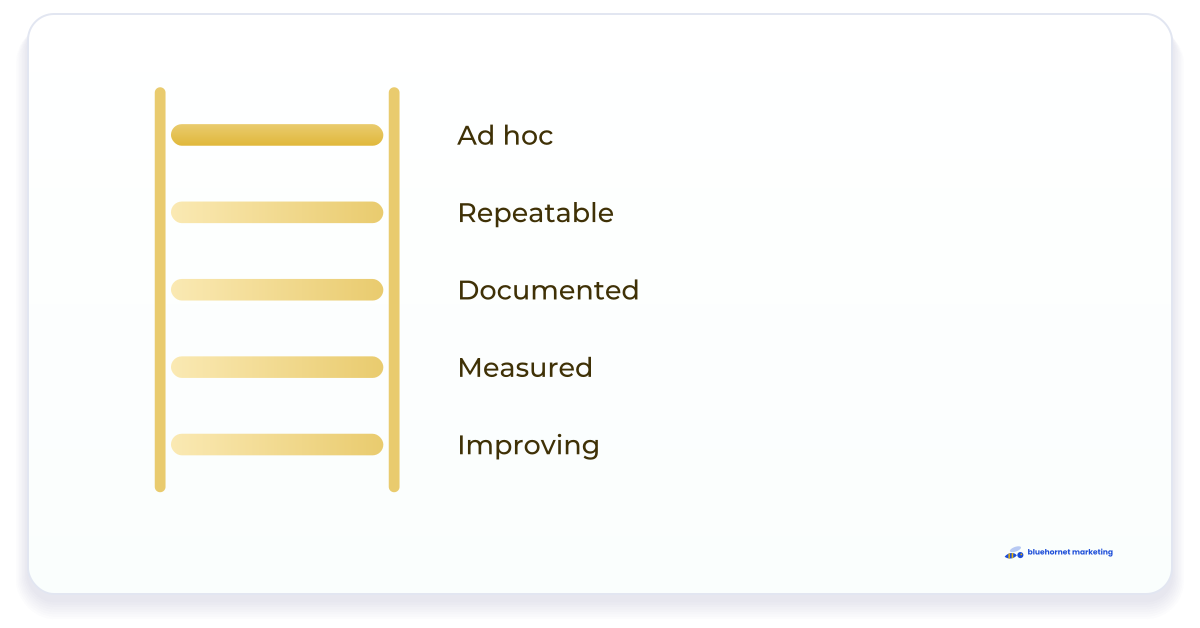
Use the descriptions below as anchors. Pick the level that matches today's reality, not next quarter's plan. If you hesitate between two levels, choose the lower one and note why.
| Dimension | Level 1 | Level 3 | Level 5 |
|---|---|---|---|
| Strategy | Goals are verbal and change often | Written goals with a few shared metrics | Goals tied to revenue and reviewed quarterly |
| People | Tools run by whoever has time | Named owner per tool, basic training | Skills plan, backups and regular training |
| Data | Lists in spreadsheets, many duplicates | CRM is the main source, rules exist but are patchy | Clean, deduplicated, consented, one shared definition set |
| Process | Each campaign built from scratch | Key workflows documented | Documented, measured and improved each cycle |
| Technology | Disconnected tools, manual transfers | Core tools connected, some gaps | Connected stack, reviewed and trimmed yearly |
Total the five scores. As a rough guide from my own client work, 5 to 10 means fix basics before buying anything, 11 to 17 means target the weakest dimension while piloting one new tool, and 18 or more means you can scale and automate with confidence. Treat these bands as conversation starters, not verdicts.
Questions That Reveal the Gaps
Scores come from answers, so ask good questions. For strategy, ask which three numbers marketing is judged on and whether sales agrees. For people, ask who would run a new tool on day one and what they would stop doing to make time. For data, ask how many records are duplicates and where consent is stored.
For process, ask to see the last campaign checklist. If it does not exist, you have your answer. For technology, ask which reports people trust and which ones they rebuild in spreadsheets. The workaround questions are the best ones, because they show where the stack fails in daily use.
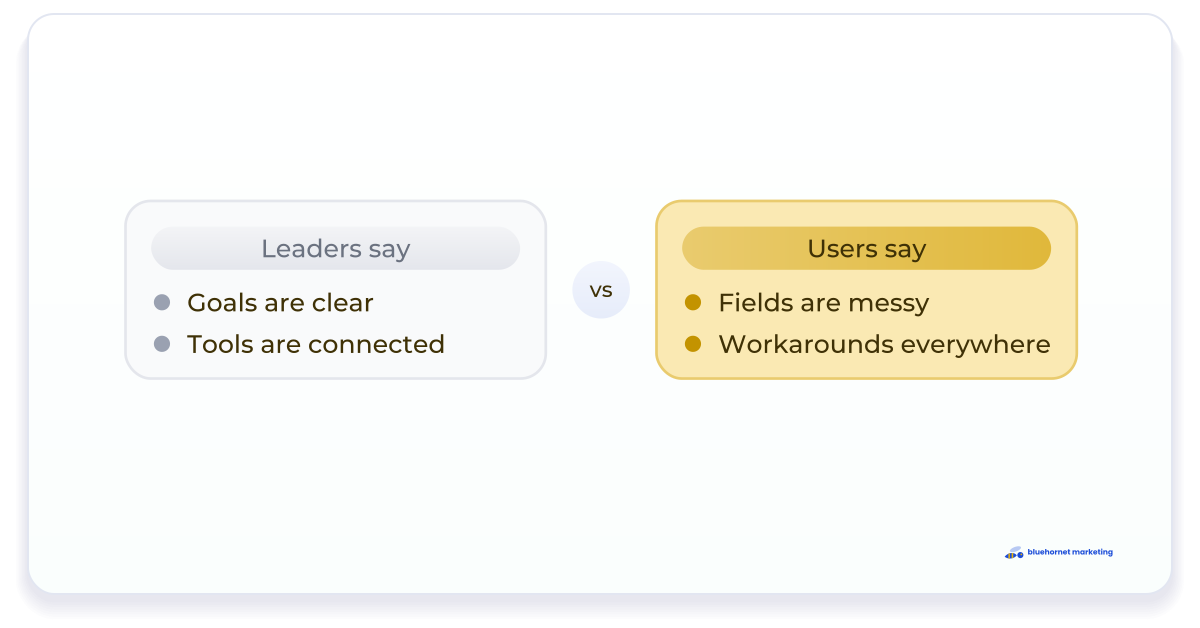
Run these with two groups, leaders and hands-on users, and compare. In my experience leaders score everything about a point higher than the people doing the work, and that gap is a finding in itself.
Why Data Readiness Gets Its Own Check
Data deserves an extra look because it is the dimension teams overrate most. Pull 200 random contact records and check them against five tests: valid email, complete company and role, no duplicate, known source and a consent status. Count how many pass all five. A pass rate below 70 percent means cleanup should come before automation.
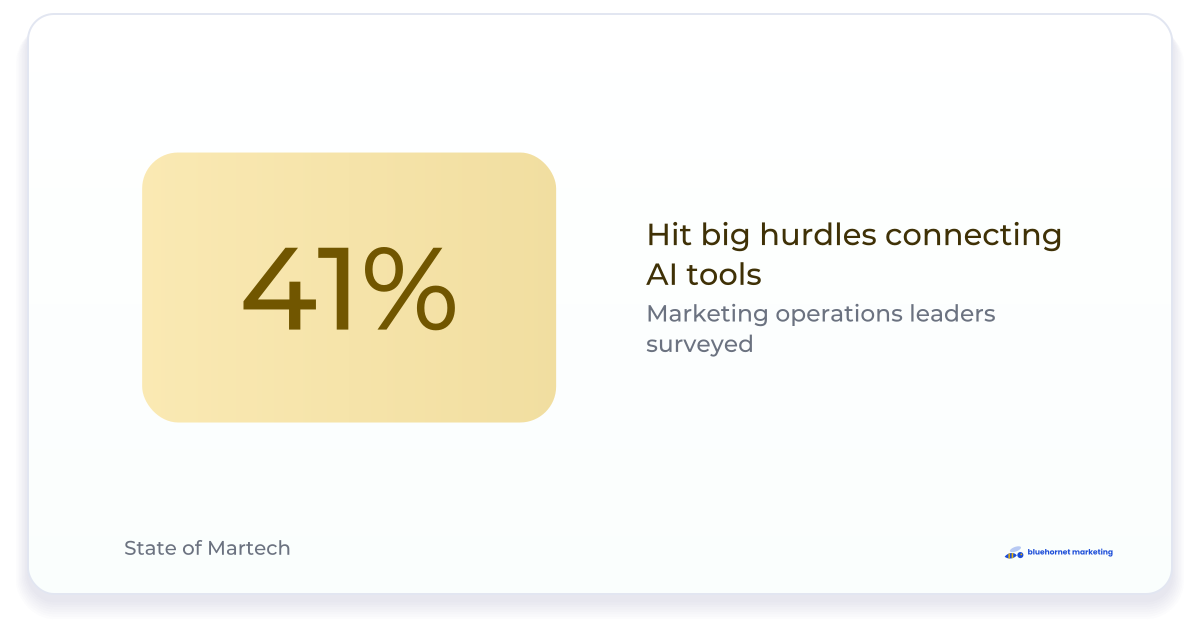
The industry data supports caution. In the State of Martech 2025 survey of marketing operations leaders, 41 percent reported significant hurdles or poor integration when connecting AI tools to their stack, according to the report by Brinker and Riemersma. Readiness work on data and connections pays off before the AI layer does.
A Readiness Checklist You Can Use Today
Run through this list with your team. Each unchecked item is a gap to fix before a major rollout.
- Marketing has two or three written goals that sales agrees with.
- Every tool has a named owner and a backup.
- Someone has time set aside to run a new tool for its first 90 days.
- Contact data has a defined source of truth and a duplicate rule.
- Consent and unsubscribe status flow between your email tool and CRM.
- Your main workflows are documented on one page each.
- You can trace a lead from first click to closed deal in under an hour.
- Your tools are connected, and you know which connections break most.
If you tick six or more, you are ready for a focused pilot. Fewer than four means spend your first quarter on ownership, data and a simple process, then revisit. For ideas on what success looks like once the basics are in place, see these marketing technology examples.
What to Do With Your Scores
Rank your gaps by two factors: how much the gap limits results and how quickly you can fix it. Ownership and goals are quick and powerful. Data cleanup takes longer and pays back for years. Skills take a quarter of training. Technology changes come last, because buying a tool is the fastest step and the one that depends most on the rest.
When you do reach the buying stage, use the martech tools ranking to shortlist, and put numbers behind your case. The marketing technology statistics page gives you benchmarks on budgets, stack size and AI adoption to cite.
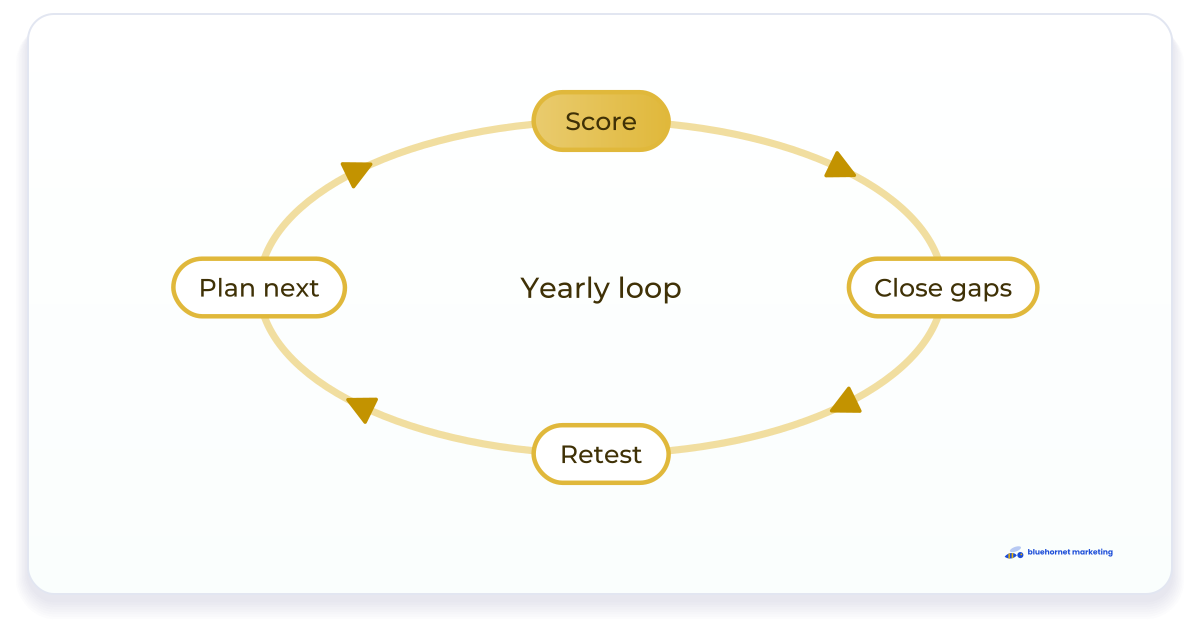
Retest every 12 months. A score that moves from 2 to 3 in data over a year is a result you can show to your leadership, and it makes the next budget conversation easier.
A Worked Example of Scoring
Take a regional services company with twelve marketing staff. In the workshop, leaders scored strategy at 4 and people at 4. The hands-on users scored people at 2, because the one specialist who ran the email platform was also covering paid media and had no backup. Data scored 2 for both groups, since a sample of 200 contacts showed that nearly a third were duplicates or had no source. Process scored 3 and technology 3.
The total was 15 out of 25, which sounds healthy. The profile told a different story: two weak spots in people and data would cap the value of any new platform. The first quarter of the plan therefore had no purchases. It named a backup owner, set a duplicate rule, cleaned the contact list and wrote down the three main workflows. The following quarter began a pilot on a stack that could support it.
The numbers in this example are illustrative and not from a named client. The lesson holds across the assessments I run: the gap between leaders and users, and the lowest single score, matter more than the total.
| Dimension | Leaders | Users | Action |
|---|---|---|---|
| Strategy | 4 | 4 | Keep, review yearly |
| People | 4 | 2 | Name a backup, plan training |
| Data | 2 | 2 | Clean list, set duplicate rule |
| Process | 3 | 3 | Document three workflows |
| Technology | 3 | 3 | Hold new purchases for a quarter |
Common Pitfalls When You Assess Yourself
Three habits spoil self-assessments. The first is scoring aspirations. Teams rate themselves on the process they plan to write, not the one that exists today. Ask for proof: show me the document, the report or the last campaign. If nobody can find it in two minutes, the score drops a level.
The second is letting the tool owner score alone. People rate their own work generously, and they also know the weak spots best, so ask them to explain each score rather than defend it. The third is treating the output as a verdict on people. An assessment measures the system a team works in, and low scores usually point to missing time, training or ownership, not to a lack of effort.
Write the scores and the evidence in one shared sheet and revisit them at your next planning meeting. A readiness score that nobody reads again has no value.
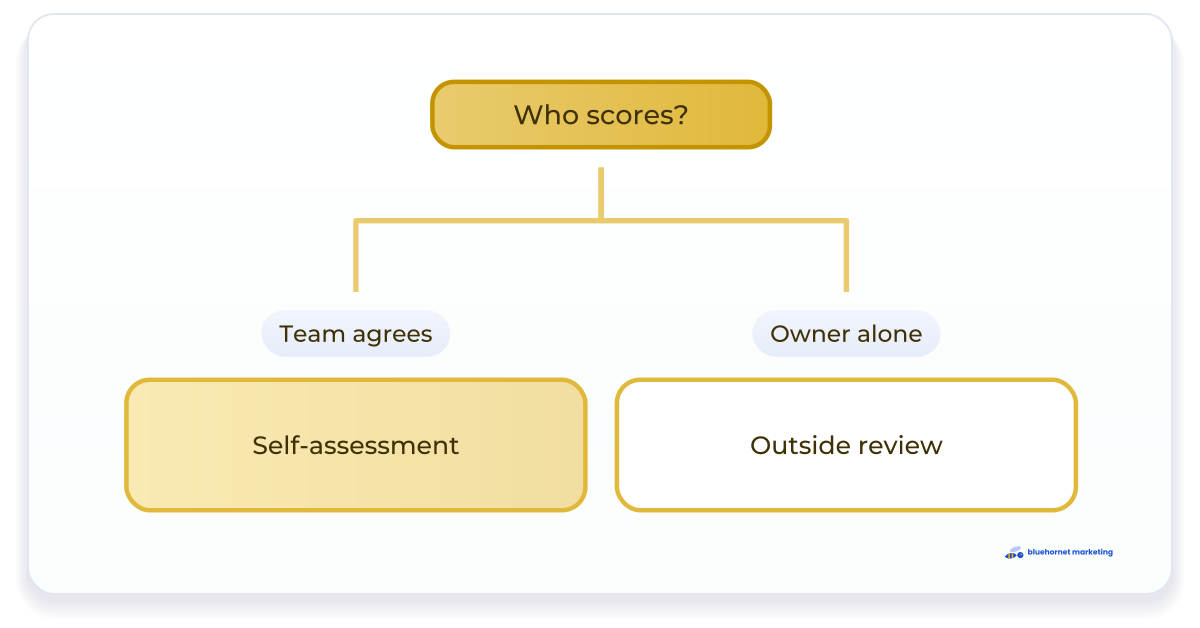
How to Choose Between a Self-Assessment and an Outside Review
A self-assessment works when your team is honest with each other and has done this kind of review before. An outside review earns its cost in three situations:
- Leaders and users disagree about how well the stack works.
- You are about to make a large purchase or migration.
- You need a neutral view to settle internal debates.
If one of these fits, ask for a written scorecard, an interview summary and a ranked gap list, so you keep the findings even if you do the fixing yourself.
Questions About Marketing Technology Assessments
What Is a Marketing Technology Assessment?
It is a review of how ready your team, data and processes are to get value from marketing software. An audit lists the tools you own. An assessment asks whether you can use them well, and what to fix before you buy or roll out anything new.
How Is the Maturity Score Calculated?
Score each of the five dimensions from 1 to 5, using the descriptions in the table. Add them up for a total out of 25, then look at the weakest dimension first. A team with 4s everywhere and a 1 in data is not a 17-point team. It is a data problem waiting to happen.
How Long Is the Assessment?
A self-assessment takes about a day of workshops and a few days of follow-up. A deeper review with interviews and data checks takes two to three weeks. Both give you a ranked list of gaps.
Who Should Answer the Questions?
The marketing lead, the person who runs your tools, a sales or CRM owner and one hands-on user. Ask them separately first, then compare. When scores differ by two points or more, you have found something to talk about.
What Score Means We Are Ready for New Tools?
No score gives a green light. I look for a 3 or better in data and ownership before adding a major platform. A low score on skills or governance can be fixed in parallel with training and a clear owner.
Should I Assess Before or After an Audit?
Run the audit first, because it tells you what you actually have. The assessment then uses that inventory to judge whether your data, team and process can support it. Both together take less time than either does alone, because they share interviews.
Can Small Teams Skip This?
A five-person team does not need a workshop series. A one-hour conversation with the five questions from the checklist still catches the common problems: no owner, unclear data rules and a goal nobody can measure.
Disclaimer: This article is for general information only and isn’t legal, financial or tax advice. Treat figures as estimates from typical work and confirm details with your providers before you act.
Was this guide helpful?
Thanks for your feedback.
Warren Albright
Warren leads the Blue Hornet editorial team and works with the consultants to turn real client projects into practical guides on content, paid media, marketing automation, CRM and analytics. He comes from content and demand generation work, edits every article before a working marketing consultant reviews it, and draws on strategies, channel plans and audits from client projects to keep the advice grounded in real numbers.