Quick Summary
- Twelve months in five phases is a realistic plan for most mid-sized teams.
- Foundation work on data, tracking and lead definitions comes first and decides the speed of everything after it.
- End every phase with a gate: a result you can measure and a decision about what comes next.
- Plan slack for data cleanup and integrations, which cause most delays.
Most automation projects do not fail on day one. They drift. A platform gets bought, a few emails go out and six months later the team has a tool that does less than the spreadsheet it replaced. A roadmap prevents that by giving each stretch of work a result and an end date.
The plan below is the one I adapt for clients, and it sits behind much of my marketing automation consulting work. Treat the timing as a starting point. A small team with clean data can move faster, and a company with three CRMs will need longer.
The Twelve-Month Roadmap at a Glance
| Phase | Timing | Main milestone | Go/no-go check |
|---|---|---|---|
| 1. Foundation | Weeks 1 to 6 | Clean data, tracking and a shared lead definition | A test lead flows correctly from form to CRM |
| 2. First workflows | Weeks 7 to 14 | Welcome series and lead follow-up live | Follow-up time inside the agreed window |
| 3. Scoring and routing | Months 4 to 6 | Lead scoring and sales handoff in use | Sales accepts the scored leads |
| 4. Expansion | Months 7 to 9 | Segmented nurture, events and customer flows | Pipeline influenced is reported monthly |
| 5. Optimization | Months 10 to 12 | Testing program and quarterly review rhythm | Payback figure shared with leadership |
Phase 1: Foundation, Weeks 1 to 6
This phase has no glamour and decides the rest. You audit your contact data, fix the fields your rules will use, connect your website forms and CRM and write down what a qualified lead is. If you have not chosen a platform yet, compare options in my review of marketing automation software while you do this work.
Typical tasks include merging duplicates, setting required fields, agreeing on lifecycle stages and testing form submissions through every system. The checklist in my marketing automation checklist is a good tool for the gate, because it forces you to verify each piece with a real test record.
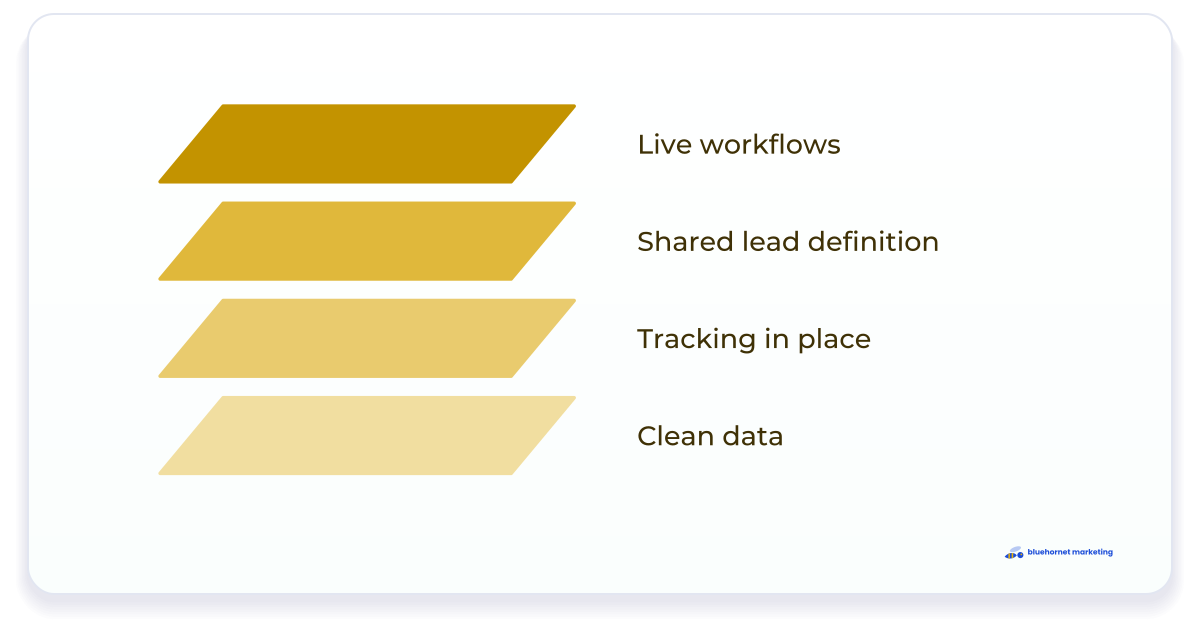
The common delay here is data. On one project, a cleanup that was planned for a week took five because two regional teams used different definitions of the same field. Decide early who has the final say on definitions, and name that person in the plan.
Phase 2: First Workflows, Weeks 7 to 14
Now you build two or three workflows that touch many contacts and prove value fast: a welcome series for new subscribers, a follow-up for form leads and a simple re-engagement path for cold contacts. Keep each one to three to five messages and write the exit rules first.
At the end of the phase, you should be able to answer three questions with data: how fast does a new lead get a response, how many become conversations and what do unsubscribes look like? Record these numbers as your baseline. Later work gets judged against them. The detailed steps for launching each flow are in my guide to marketing automation implementation.
Phase 3: Scoring and Routing, Months 4 to 6
Scoring is where marketing and sales either connect or fall apart. Take your last twenty won deals and twenty lost ones and look for patterns: company size, role, pages viewed, emails answered. Turn the strongest signals into points and set a threshold. Then route leads above the threshold to a person, with context.
Run the new rules quietly for two to three weeks before they trigger anything, and compare what the model would have done to what sales actually did. This shadow period finds most of the problems. Hold a short review with sales at the end and adjust the scores based on their feedback.
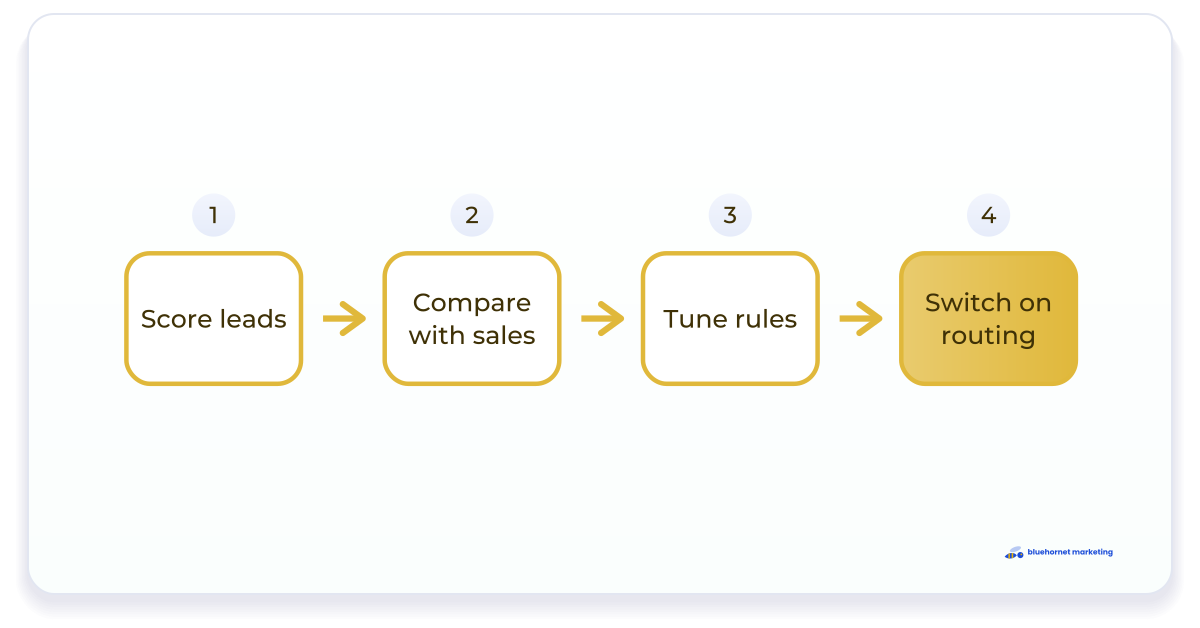
I would not shorten this phase. In my experience, teams that rush scoring end up with a number that sales ignores, and getting that trust back takes longer than doing the work right.
Phase 4: Expansion, Months 7 to 9
With a stable base, you add depth. Typical additions are separate paths by industry or role, event and webinar follow-up, onboarding emails for new customers and a win-back flow. Each addition follows the same pattern: goal, owner, short sequence, exit rules and a review date.
This is also the time to start reporting influence on pipeline, not only opens and clicks. A simple monthly view that shows leads created, leads accepted by sales, opportunities and revenue by workflow is enough. Check that your best practices still hold as the number of workflows grows, using my list of marketing automation best practices.
| Addition | Goal | Main risk |
|---|---|---|
| Industry or role segments | Higher reply rates | Segments too small to learn from |
| Event follow-up | Meetings from attendees | Slow follow-up after the event |
| Customer onboarding | Faster product adoption | Overlap with support emails |
| Win-back path | Reactivate dormant accounts | Mailing contacts who left |
Phase 5: Optimization, Months 10 to 12
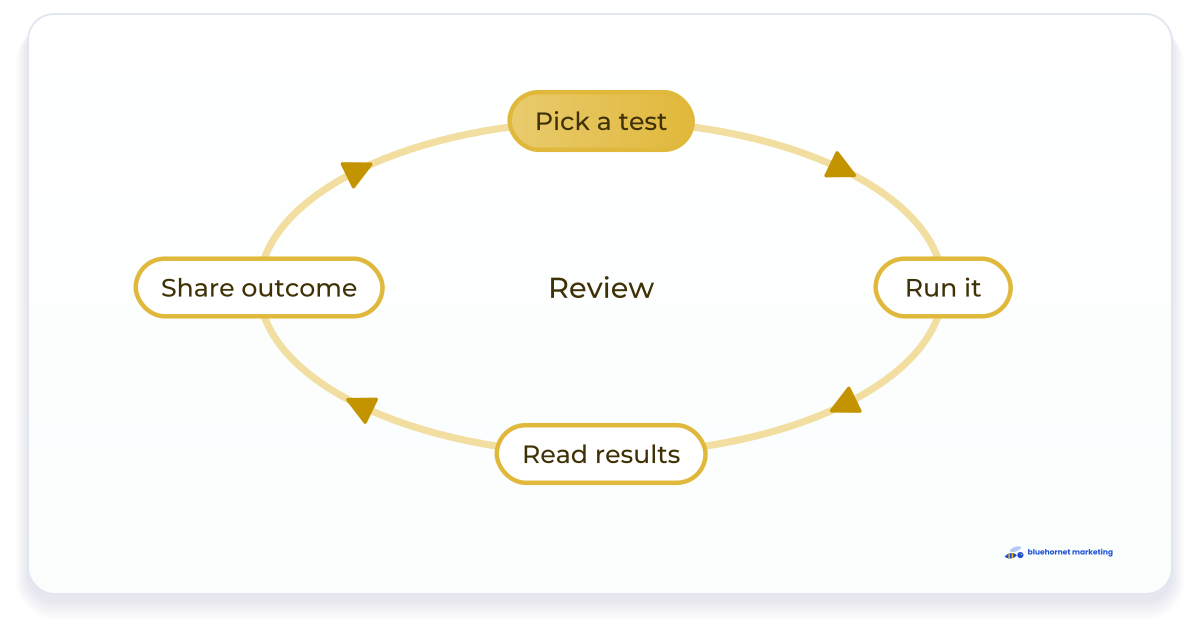
The last phase turns the project into a routine. You set up a testing calendar with one experiment per workflow each quarter, prune flows that no longer serve a goal and hold a quarterly review with sales and leadership. Add AI-assisted drafts or send-time features here as small tests, with a person reviewing the output.
This is also when you put a number on the project. Compare your Phase 2 baseline to today: response time, leads accepted, cost per opportunity and hours of manual work removed. My guide to marketing automation ROI shows how to turn those into a payback period leadership will accept.
Delays to Plan For
Every roadmap I have seen slips somewhere. The useful question is where. These are the usual places, with what I do about them.
| Where it slips | Typical cause | What to do |
|---|---|---|
| Phase 1 | Disputes over field definitions | Give one person the final decision |
| Phase 2 | Content waiting for approval | Set an approval deadline of two business days |
| Phase 3 | Sales has no time to review scoring | Book two 45-minute sessions in advance |
| Phase 4 | Too many new flows at once | Add one new flow per month |
| Phase 5 | Reports nobody reads | Put the review on leadership's calendar |
Add about 20 percent slack to every phase and decide in advance what you would cut. For a small team, the first thing I drop is Phase 4 extras, since a solid Phase 3 does more for revenue than five more flows.
Who Does What Across the Year
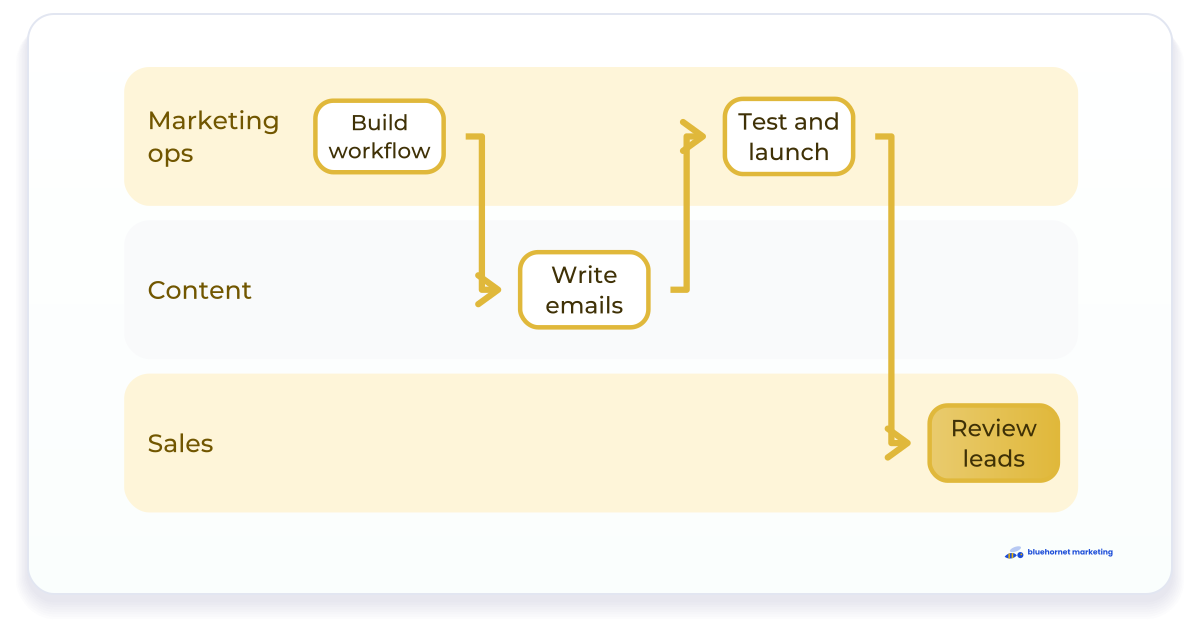
The roadmap needs at least four roles, even if one person holds two of them. A project owner keeps the schedule and the decision log. A marketing operations lead builds and maintains workflows. A sales lead signs off on scoring and routing. A data owner keeps the CRM fields and integrations in good shape.
Small teams often have one person doing most of this. If that is you, plan fewer workflows and longer phases, and protect time in your calendar for the review sessions. Nothing slows a roadmap more than a builder who is also the only person answering every urgent request.
What Each Phase Asks of Your Time
Budget is the question people ask first, and attention is the one that decides success. A rough guide from my projects: Phase 1 takes the most coordination, since several teams must agree on definitions. Phase 2 takes the most writing, because every email needs a draft, a review and an approval. Phase 3 takes the most sales time, since the scoring model only works if reps help shape it.
Phases 4 and 5 are lighter per week but never end. The people who run them need a protected hour or two each week for monitoring and small fixes. When that time is not protected, the setup decays, and a year later you have a platform full of flows that nobody trusts.
| Phase | Heaviest load | Who feels it most |
|---|---|---|
| 1. Foundation | Agreeing on definitions and cleaning data | Marketing operations and the CRM owner |
| 2. First workflows | Writing and approving content | Content writers and approvers |
| 3. Scoring and routing | Reviewing past deals with sales | Sales leads |
| 4. Expansion | Building and monitoring more flows | Marketing operations |
| 5. Optimization | Running tests and quarterly reviews | Marketing lead and leadership |
One last habit helps across all five phases: keep a short decision log. Write down each choice, the date, who made it and the reason, for example why you set the score threshold where you did. Six months later, when someone asks why a rule exists, the log answers in seconds. It also protects the project when people change roles, which in a twelve-month plan they usually do.
How to Adapt the Roadmap to Your Team
Use these questions to stretch or shrink the plan:
- How many people can spend at least a day a week on the project?
- Is your CRM data usable today, or does it need a cleanup first?
- Does your sales team have a defined process for handling inbound leads?
- Do you already own a platform, or do you still need to choose one?
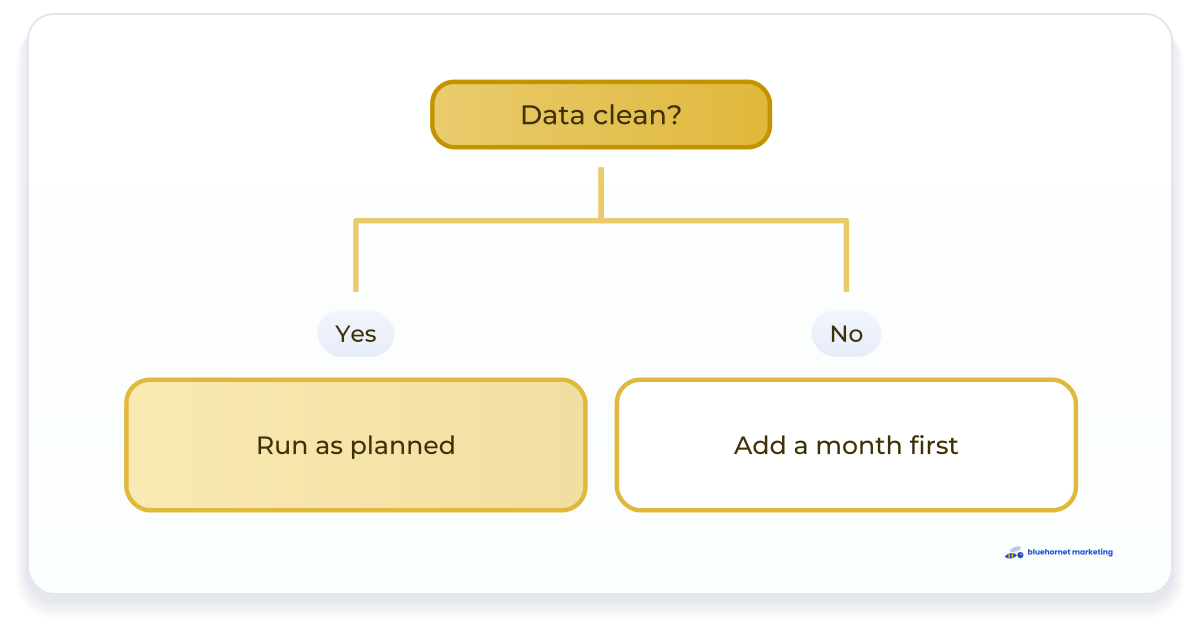
If your answers are mostly no, add a month to Phase 1 and cut Phase 4 down to a single new workflow. If they are mostly yes, you may merge Phases 2 and 3 and finish in nine months.
Questions About a Marketing Automation Roadmap
How Long Does a Marketing Automation Roadmap Take to Complete?
Plan for about twelve months to reach a mature setup, with useful results much earlier. A first welcome sequence and lead follow-up can run within six to eight weeks. The later phases, such as scoring, multi-channel journeys and customer marketing, depend on how clean your data is and how many people can work on the project.
Should I Choose Software Before I Plan the Roadmap?
Plan first, at least in outline. The processes you want to automate decide which features you need. If you already own a platform, the roadmap shows which of its features you will use and which you are paying for without need.
What Is a Realistic Budget for the First Phase?
It depends on your platform, list size and whether you hire help. The largest costs are usually people's time and the software subscription, with data cleanup and integration work as the common surprises. Get a fixed quote for the first phase from any partner you consult, and keep a buffer for fixes.
Who Needs to Be Involved from the Start?
Marketing, sales and whoever owns your CRM data. Add IT or a web developer for tracking and integrations. A project sponsor with the authority to settle disputes between teams is just as important, because lead definitions and ownership rules are decisions, not technical tasks.
How Do I Handle Delays?
Expect them and build slack into the plan. Data cleanup, integration approvals and content writing are the most common causes. Keep each phase small enough to finish in four to eight weeks and decide upfront what you will cut if a phase runs long.
When Should I Add AI Features to the Roadmap?
After the basics work. AI can help with subject line variants, content drafts and send-time choices, but it relies on the same clean data and clear goals as everything else. Add it as a test inside a working workflow, with a person reviewing the output.
Can I Skip Phases?
You can shorten them, but skipping the foundation phase is the one change I advise against. Teams that jump straight to complex journeys tend to spend months later cleaning data and untangling rules. Foundation first makes everything after it faster.
Disclaimer: This article is for general information only and isn’t legal, financial or tax advice. Treat figures as estimates from typical work and confirm details with your providers before you act.
Was this guide helpful?
Thanks for your feedback.
Warren Albright
Warren leads the Blue Hornet editorial team and works with the consultants to turn real client projects into practical guides on content, paid media, marketing automation, CRM and analytics. He comes from content and demand generation work, edits every article before a working marketing consultant reviews it, and draws on strategies, channel plans and audits from client projects to keep the advice grounded in real numbers.