Quick Summary
- Inbound ROI is revenue from inbound leads, minus total cost, divided by total cost. Count staff time or the number lies.
- Most programs need 6 to 12 months to cover their cost, and the gap between traffic and revenue is your sales cycle.
- Cohort tracking beats monthly snapshots, because it matches each month's cost with the revenue it eventually creates.
- When the return is weak, the leak is usually conversion or lead quality, not traffic volume.
Inbound marketing is easy to love and hard to defend in a budget meeting. Articles, search traffic and email nurture all feel productive, yet the payoff arrives months after the spend. In my inbound marketing consulting work, the programs that survive budget reviews are the ones with a clear ROI formula agreed before the first article is written.
This guide gives you that formula, a worked example with realistic costs and a table showing when payback usually arrives. It also covers the measurement traps that make a good program look bad, and a bad one look good.
The Inbound Marketing ROI Formula
The basic formula is short. Add up what inbound earned, subtract everything it cost, and divide by the cost:
ROI = (revenue from inbound customers − total inbound cost) ÷ total inbound cost
An ROI of 100% means you earned back your cost and the same amount again. The hard parts are the two inputs. Revenue has to come from customers you can trace to an inbound source, and cost has to include everything you spent to get them, not just the invoice from an agency.
Gross profit is a better revenue figure than sales whenever your margins vary by product. A program that brings in $200,000 of low-margin sales can look better than one that brings in $120,000 of high-margin sales, until you look at what each left in the bank.
What Counts as an Inbound Cost
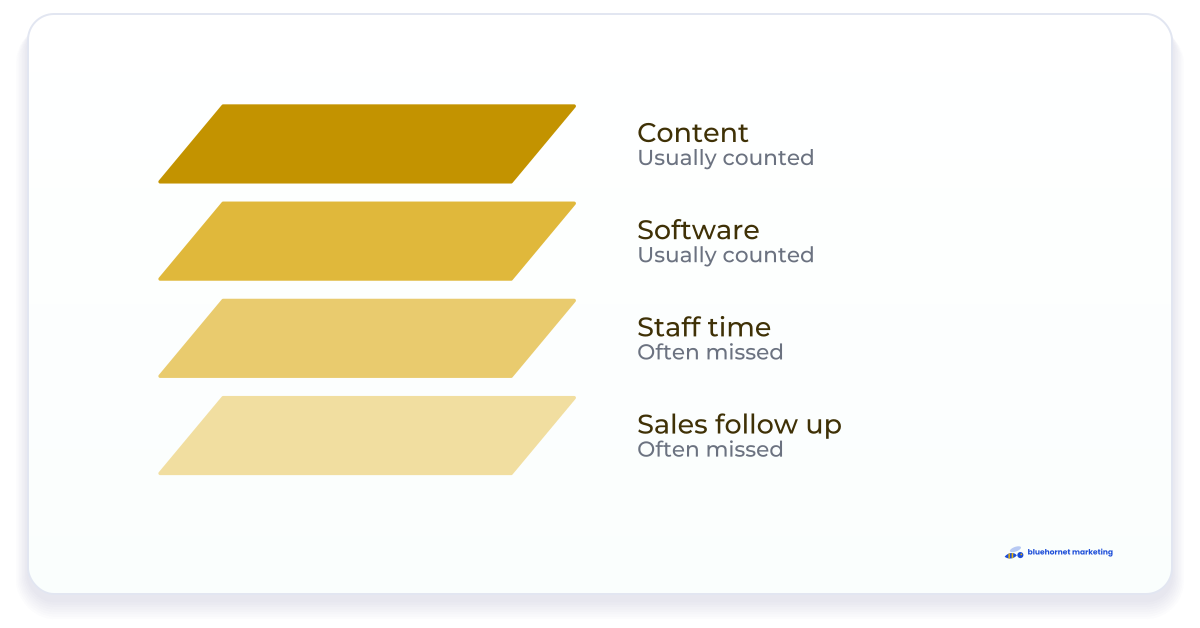
Most ROI calculations I audit leave out between a quarter and a half of the real cost. The list below is what I include, and the reason each line belongs.
| Cost line | Examples | Often forgotten? |
|---|---|---|
| Content production | Writers, editors, designers, video, stock images | Rarely |
| Staff time | Marketing hours for planning, review, publishing and reporting | Yes, very often |
| Software | CRM, email platform, SEO tools, analytics, scheduling | Sometimes |
| Promotion | Paid social to boost content, sponsored newsletters | Sometimes |
| Sales follow-up | Rep time spent on inbound leads, demos and proposals | Yes |
| Outside help | Agency retainers, freelancers, consultants | Rarely |
Staff time deserves a moment. If a marketer spends half the week on inbound, half their loaded salary belongs in the cost line. Leave it out and your ROI will look strong right up to the day someone from finance rebuilds it.
A Worked Example With Real Numbers
Here is a composite based on the kind of B2B services firm I work with: a small company with a 90-day sales cycle and an average first-year deal of $18,000 at a 60% gross margin. The figures are illustrative and rounded, so use them as a template and not as a benchmark.
| Item | Year-one amount |
|---|---|
| Content and design | $42,000 |
| Software | $7,200 |
| Staff time (0.4 of one marketer) | $28,000 |
| Sales time on inbound leads | $12,000 |
| Total cost | $89,200 |
| Customers won from inbound | 9 |
| First-year revenue (9 × $18,000) | $162,000 |
| Gross profit at 60% | $97,200 |
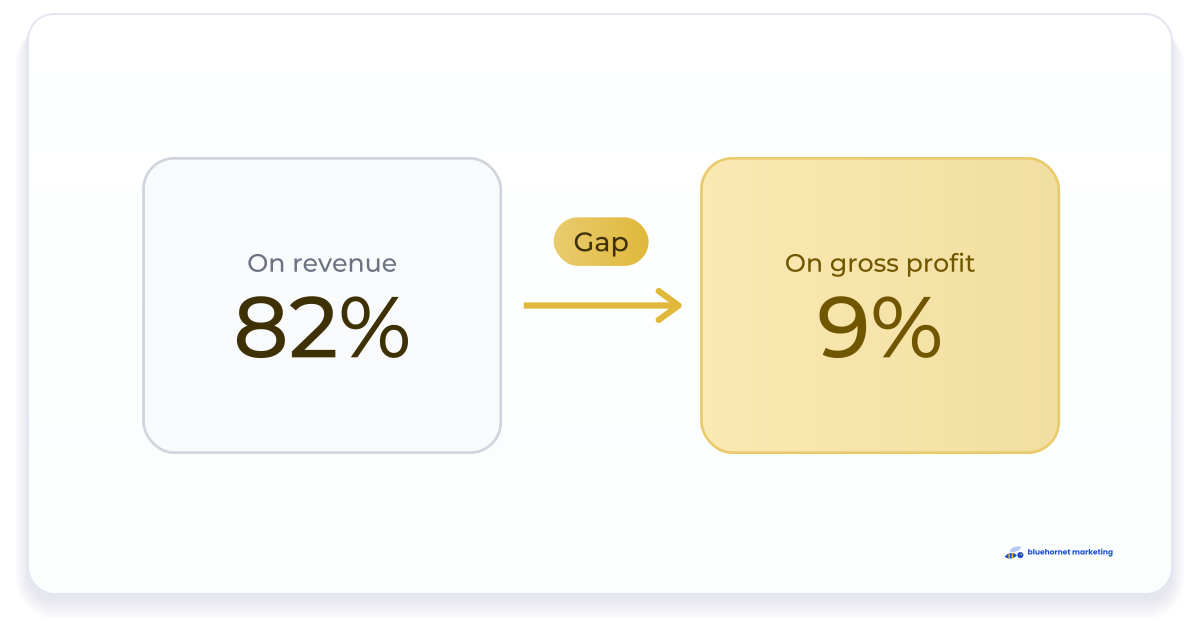
On revenue, ROI is ($162,000 − $89,200) ÷ $89,200, or about 82%. On gross profit it is ($97,200 − $89,200) ÷ $89,200, or about 9%. Same program, two very different stories. I use gross profit when I show a result to a finance lead, because it answers the question they actually ask.
Now add the second year. The content built in year one keeps ranking, so the content cost may drop by a third while the customer count grows. That is where inbound separates itself from paid media, and why single-year ROI sells the model short.
When to Expect Payback
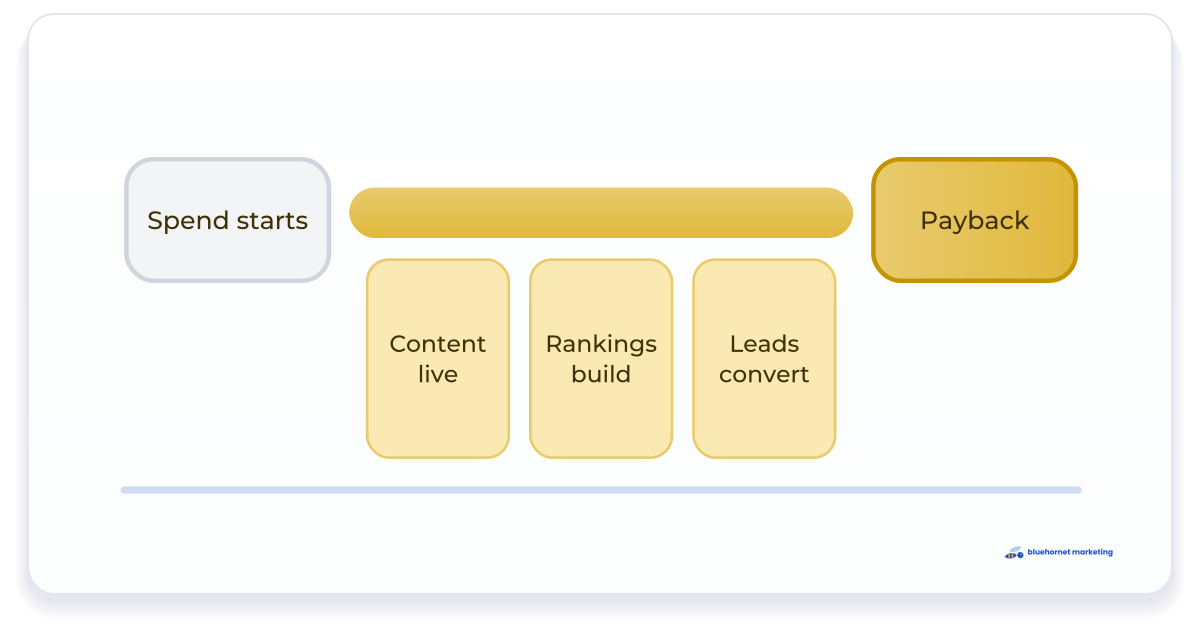
Payback depends on three things: how fast your content starts earning traffic, how quickly visitors turn into leads and how long your sales cycle runs. The ranges below come from my own client work and shift with niche and competition.
| Phase | Typical window | What you see |
|---|---|---|
| Setup and first content | Months 1 to 3 | Cost with almost no return; early rankings on low-competition terms |
| Traffic building | Months 3 to 6 | First leads, low volume; conversion tests pay off here |
| First revenue | Months 6 to 9 | Early customers; return still below cost |
| Break-even | Months 9 to 14 | Cumulative revenue passes cumulative cost |
| Compounding | Month 14 and beyond | Older content keeps bringing leads at lower marginal cost |
A short sales cycle pulls every phase forward. A long one, such as enterprise software with a nine-month evaluation, can push break-even past month 18. Set that expectation before you start, or the first budget review will turn into a fight.
How to Track Inbound Revenue Without Fooling Yourself
Good tracking is where most ROI claims fall apart. Three habits keep your numbers honest.
Use cohorts instead of monthly snapshots
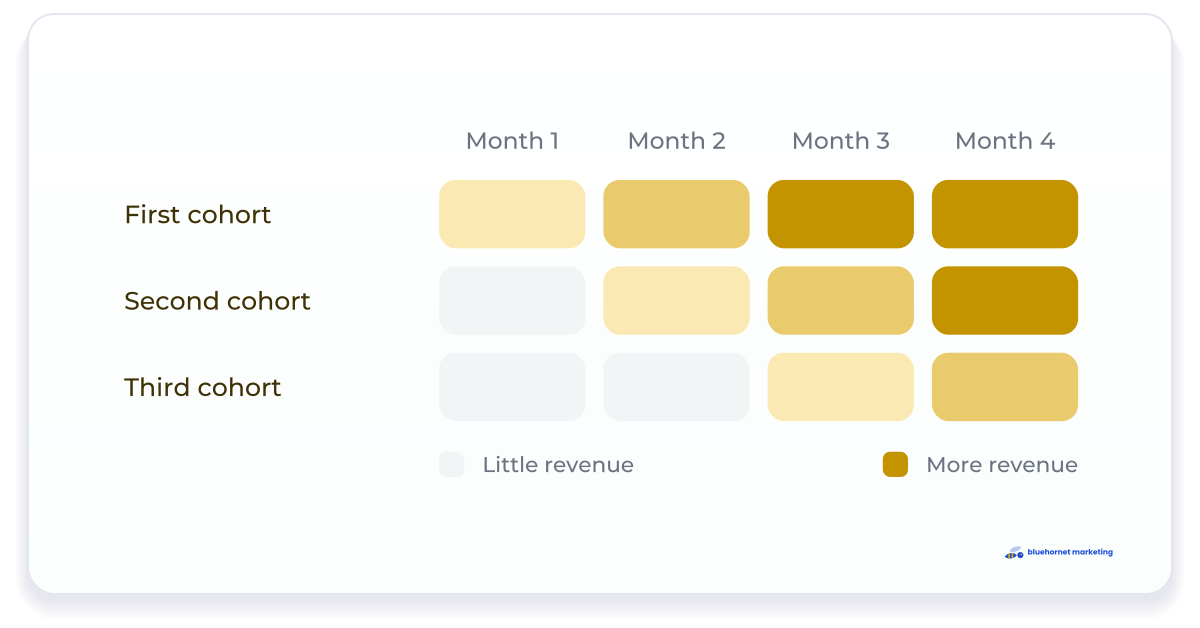
Group all leads created in one month and follow them until they close or go cold. Compare that cohort's revenue with the cost of the same month. This stops you from matching this month's spend with revenue from deals that started in the spring.
Agree on source rules before you measure
Decide whether a lead who first read a blog post, then clicked a paid ad and finally booked after an email counts as inbound. I recommend first-touch for budget planning and a multi-touch view for optimization, as long as you pick one and stay with it. A full inbound marketing checklist includes the tracking setup you need before the first article goes live.
Keep lead quality in the report
Lead count alone rewards the wrong behavior. Track the share of inbound leads that become sales-qualified and the share that close. A program that doubles leads and halves quality has not doubled its return.
HubSpot's 2026 State of Marketing survey of more than 1,500 marketers found short-form video named as the top-ROI format by 48.6% of respondents, ahead of long-form video at 28.6%. Treat that as a signal of what peers believe, not a promise for your niche, and test formats against your own cohort data. Source: HubSpot
Four Levers That Move Your Return
When the number disappoints, resist the urge to publish more. In the audits I run, the return usually improves faster by fixing one of these four places.
- Conversion rate. A page with 2,000 monthly visitors and a 1% form rate brings 20 leads. At 2%, it brings 40 with no extra traffic. Offers, page layout and form length are the cheapest levers you have.
- Lead-to-sale rate. Slow follow-up kills good leads. Teams that reply within an hour tend to close more than teams that reply the next day, so fix routing and scoring early. My inbound marketing examples show how stronger performers handle this step.
- Content mix. Posts written for buyers close more deals than posts written for readers. Move budget toward pages that answer comparison, pricing and fit questions.
- Cost per asset. Cheaper production helps only if quality holds. Reusing one strong piece across email, social and sales decks lowers cost per lead without lowering standards.
If your team is small, these levers matter even more. My notes on inbound marketing for small business cover how to pick two of them and ignore the rest for a quarter.
Four Ways ROI Reports Go Wrong
I have reviewed enough inbound reports to know the errors repeat. The first is counting every customer who ever visited the blog as inbound revenue. Visitors who came through a sales call and then read a post are not inbound wins, and finance will notice within one review.
The second is ignoring sales cycle length. A program six months old, measured against a 120-day cycle, has only two months of closed deals to show. Judge it on pipeline created and lead quality until the first cohorts mature.
The third is mixing channels. Paid promotion of a blog post, an email to a purchased list and organic search are three different economics. Report them in separate lines, or an expensive channel will hide inside a cheap one.
The fourth is chasing a single number. ROI tells you whether the program pays, and it says nothing about why. Pair it with cost per lead, lead-to-customer rate and payback month, so you can see which part of the funnel to fix.
| Sales cycle | Typical first revenue | What to judge early |
|---|---|---|
| Under 30 days | Month 4 to 6 | Leads, close rate, cost per customer |
| 30 to 90 days | Month 6 to 9 | Qualified leads, pipeline value |
| Over 90 days | Month 9 to 15 | Sales-qualified leads, deal stage movement |
Use the table to set the review dates in advance. A review at month four for a 120-day cycle can only measure leading signals, and everyone in the room should agree on that before it starts.
Setting an ROI Target Before You Spend
Pick a target backwards from what the business needs. Start with the revenue you want inbound to add in year two, divide by your average deal value to get the customer count and use your lead-to-customer rate to find the leads required. Then multiply by the traffic-to-lead rate to find the visitors you need.
If the traffic number looks impossible for your niche, you have learned something cheap. Either the target is too high, the offer converts poorly or the channel is wrong. I would rather you find that in a spreadsheet than in the third quarter of a program.
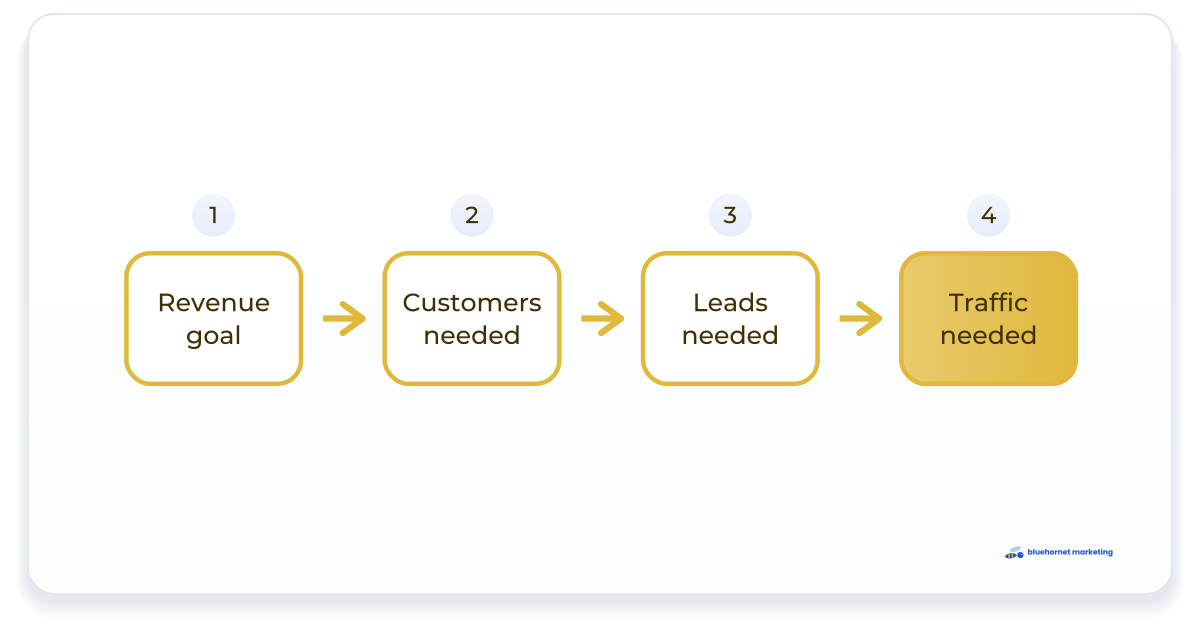
Share the target with finance and sales at the start. When the two teams helped set the numbers, they tend to defend the program in the budget meeting. When they did not, they tend to question every figure in it.
What to Use for Measurement
You do not need a large stack. A CRM that records the lead source and deal value, an analytics tool and a spreadsheet are enough for a first ROI report. When you outgrow that, my ranking of inbound marketing tools covers the platforms I see working in practice.
Whatever you use, make one person responsible for the numbers. In my experience, ROI reporting that belongs to no one is dead within two quarters, usually right before the budget review.
How to Decide Whether Your Inbound ROI Is Good Enough
A single percentage rarely settles that question. Check the following before you make a budget decision:
- Cumulative revenue is rising each quarter, even if it has not passed cumulative cost yet.
- Lead-to-customer rate is stable or improving, not falling as volume grows.
- Cost per lead is falling as older content keeps earning.
- Your report uses gross profit and includes staff time.
If three of those four hold, the program is working and needs patience. If two or fewer hold after month nine, change the plan before you spend more. A second pair of eyes helps here, and a short audit usually finds the leak in one session.
Questions About Inbound Marketing ROI
What Is a Good ROI for Inbound Marketing?
There is no single number, because it depends on your margin, sales cycle and starting point. In my client work, programs that are still paying back less than they cost after 12 months usually have a conversion problem, not a traffic problem. A healthy program shows rising returns each quarter, and it passes the break-even test in the table above well before month 18.
How Long Does Inbound Marketing Take to Pay Back?
Most programs take 6 to 12 months to cover their cost and longer to show a clear profit, because search traffic and email lists build slowly. Services with a short sales cycle pay back faster. If your deals take six months to close, expect the revenue to land that much later than the traffic.
Should I Count Brand Awareness in ROI?
I would keep it out of the headline number. Track it separately through branded search and direct visits, and calculate ROI only on leads and revenue you can trace. Otherwise the figure becomes impossible to defend when someone asks you to prove it.
How Do I Calculate Inbound Marketing ROI with a Long Sales Cycle?
Use a cohort view. Take all leads created in one month and follow them until they close or die, then compare their revenue with the cost of that month. This avoids the trap of comparing this month's cost with revenue from deals that started a year ago.
Which Costs Should I Include?
Include agency or freelancer fees, staff time, software, design, paid promotion of your content and the cost of the sales time spent on inbound leads. Leaving out staff time is the most common mistake, and it can make a weak program look profitable.
Is Inbound Marketing ROI Better than Paid Ads?
Over a long window it often is, because content and search traffic keep working after you stop paying. Over a short window paid ads usually win, since they start on day one. Most businesses I advise run both and measure them side by side.
What If My ROI Is Negative?
Find where the funnel leaks before cutting the budget. Check traffic quality first, then conversion from visitor to lead, then lead to sale. A negative ROI at month six with growing lead quality is a different story from one with flat results at month eighteen.
Disclaimer: This article is for general information only and isn’t legal, financial or tax advice. Treat figures as estimates from typical work and confirm details with your providers before you act.
Was this guide helpful?
Thanks for your feedback.
Warren Albright
Warren leads the Blue Hornet editorial team and works with the consultants to turn real client projects into practical guides on content, paid media, marketing automation, CRM and analytics. He comes from content and demand generation work, edits every article before a working marketing consultant reviews it, and draws on strategies, channel plans and audits from client projects to keep the advice grounded in real numbers.