Quick Summary
- Define your buyer and set measurable goals before you publish anything.
- Foundations come first: website, tracking and one clear service page per offer.
- Offers, email follow-up and a quick sales handoff turn visitors into customers.
- Review leads and revenue by source every month.
This inbound marketing checklist covers nine areas in the order I work through them with clients. Use it to audit a program you already run or to plan one from scratch. If you want an expert to work through it with you, inbound marketing consulting covers the same ground in a structured audit.
Each point lists what should be in place and a note from my experience. You can tick the items as you go, and anything you cannot tick is your to-do list.
The Nine Checkpoints in Brief
| Checkpoint | Done when |
|---|---|
| 1. Define Your Buyer and Their Questions | One written description of your best customer, with the problem that sends them looking |
| 2. Set Goals You Can Count | A baseline for leads, qualified leads and customers by source |
| 3. Fix Your Website Foundations | Pages that load in a few seconds on a phone |
| 4. Plan Content Around Real Searches | A keyword list grouped by intent: learning, comparing and deciding |
| 5. Build Offers That Match Each Stage | One lead magnet tied to your main service, such as a checklist or buyer guide |
| 6. Set Up Email Follow-Up | A welcome email that delivers the offer and sets expectations |
| 7. Connect Marketing and Sales | A service level for response time, for example within one business hour |
| 8. Add Proof and Trust Signals | Two or three client stories with measurable results and permission to publish |
| 9. Measure, Check and Improve | A dashboard with leads, qualified leads and customers by source |
The Nine-Point Inbound Marketing Checklist
Work through the points in order. The first three are foundations, the next four make the engine run and the last two keep it honest. If you are choosing software for any step, see my comparison of inbound marketing tools.
1. Define Your Buyer and Their Questions
Every inbound program starts with who you want to attract. A vague audience produces vague content, which attracts nobody. Spend an afternoon writing down who buys, what triggered their search and what they asked you before signing. Use real conversations as your source, not assumptions.
- One written description of your best customer, with the problem that sends them looking
- A list of at least 20 questions buyers ask before they buy
- Three buyer stages mapped to those questions: learning, comparing and deciding
- A note on the words buyers use, which often differ from your industry terms
Teams skip this step because they feel they already know their customers. Then they write about what interests them. I have seen strong programs improve simply by replacing internal jargon with the buyer's own wording.
2. Set Goals You Can Count
Inbound produces plenty of numbers that feel good and mean little. Pick goals that connect to revenue and set a starting point before you begin. A good first-year goal looks like 'ten qualified inquiries per month from organic search', not 'more traffic'.
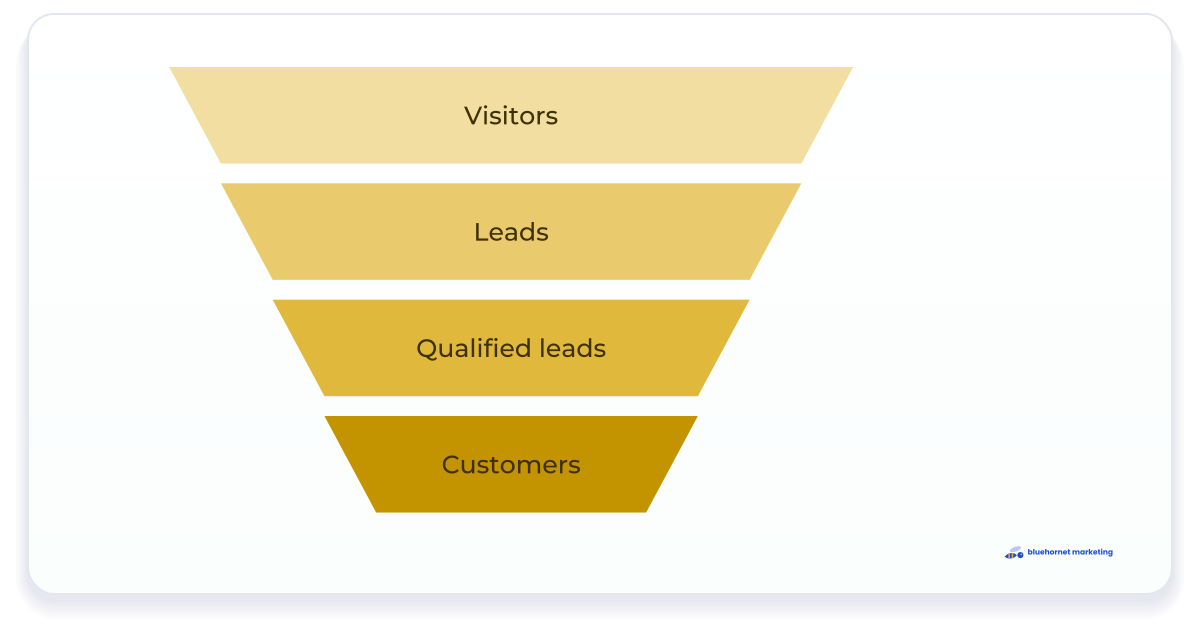
- A baseline for leads, qualified leads and customers by source
- One primary goal and two supporting goals, each with a number and a date
- A definition of a qualified lead that sales and marketing agree on
- A monthly reporting date and a named owner
If you cannot define a qualified lead, you cannot tell whether inbound is working. Agree on it before you publish anything.
3. Fix Your Website Foundations
Inbound sends people to your site, so weak pages waste every visit. Check that service pages load quickly, read well on a phone and tell visitors what to do next. A clear structure also helps search engines understand what you offer.
- Pages that load in a few seconds on a phone
- One clear service page for each main offer, with a single call to action
- A visible phone number and a short contact form
- Basic technical setup: indexing, a sitemap, clean URLs and secure browsing
- Analytics installed and tested, with conversions recorded
Test your forms yourself. I often find forms that silently fail, sending leads nowhere for weeks.
4. Plan Content Around Real Searches
Choose topics from search demand and buyer questions, not guesses. Group them by stage and decide which service each page supports. Quality and relevance beat volume, so plan fewer pages and make them better than anything already ranking.
- A keyword list grouped by intent: learning, comparing and deciding
- A calendar for the next quarter, with one owner per page
- A rule for what every page needs: a direct answer, proof and a next step
- Plans to refresh the five best pages every six months
A realistic pace for a small team is two to four strong pages per month. Anything faster usually lowers quality.
5. Build Offers That Match Each Stage
Not every reader is ready for a sales call. Give early readers a useful guide or tool, and give later readers a demo, audit or quote. Each page needs a next step that fits the reader's stage, or visitors leave without a trace.
- One lead magnet tied to your main service, such as a checklist or buyer guide
- A middle-stage offer, such as a webinar, template pack or comparison sheet
- A decision-stage offer, such as a free audit or consultation
- Forms that ask for the minimum information needed
Gate only what is truly valuable. Thin content behind a form creates unhappy leads.
6. Set Up Email Follow-Up
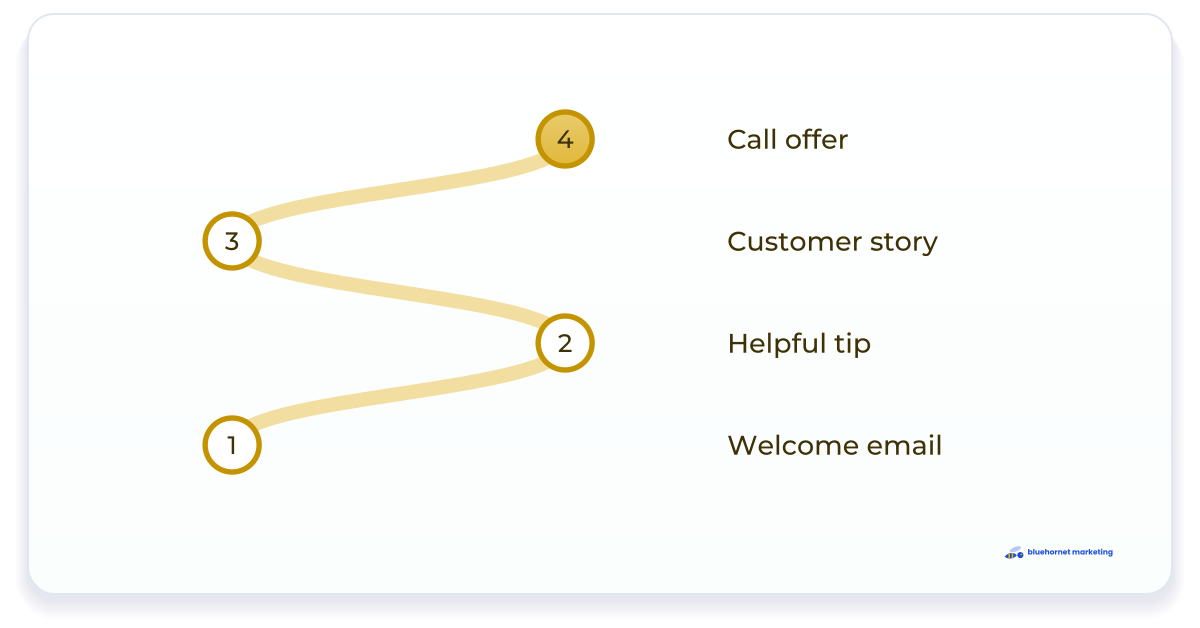
Most visitors are not ready to buy on their first visit. Email keeps you in front of them. Plan a welcome message, a short nurture sequence and a way to move interested people to sales.
- A welcome email that delivers the offer and sets expectations
- A three to five message sequence, each with one helpful point
- Segments by interest, such as the guide downloaded
- A trigger that alerts sales when someone visits pricing or contact pages
Keep emails short and specific. The ones that get replies read like a person wrote them.
7. Connect Marketing and Sales
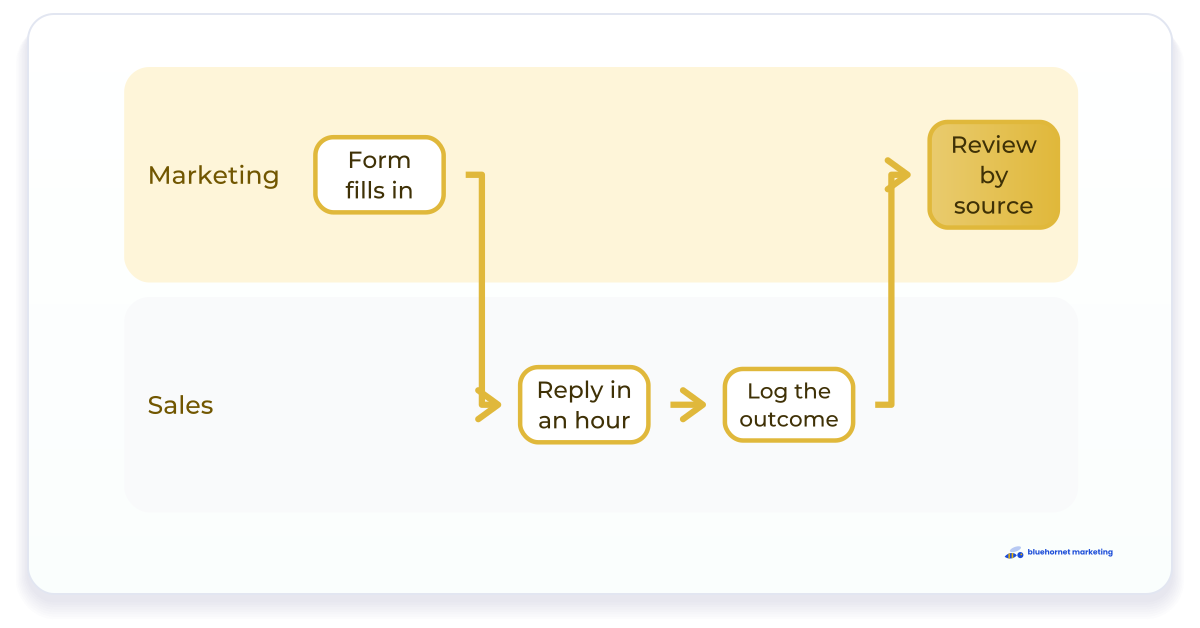
Inbound produces leads that sales needs to handle quickly and well. Agree on who follows up, how fast and what happens to leads that are not ready. Without this, even good leads go cold.
- A service level for response time, for example within one business hour
- A shared view of lead source and content viewed
- A path for leads who are not ready, such as nurture email
- A monthly meeting where sales shares what leads were like
The CRM does not have to be expensive. It must record the source of every lead and be used by everyone.
8. Add Proof and Trust Signals
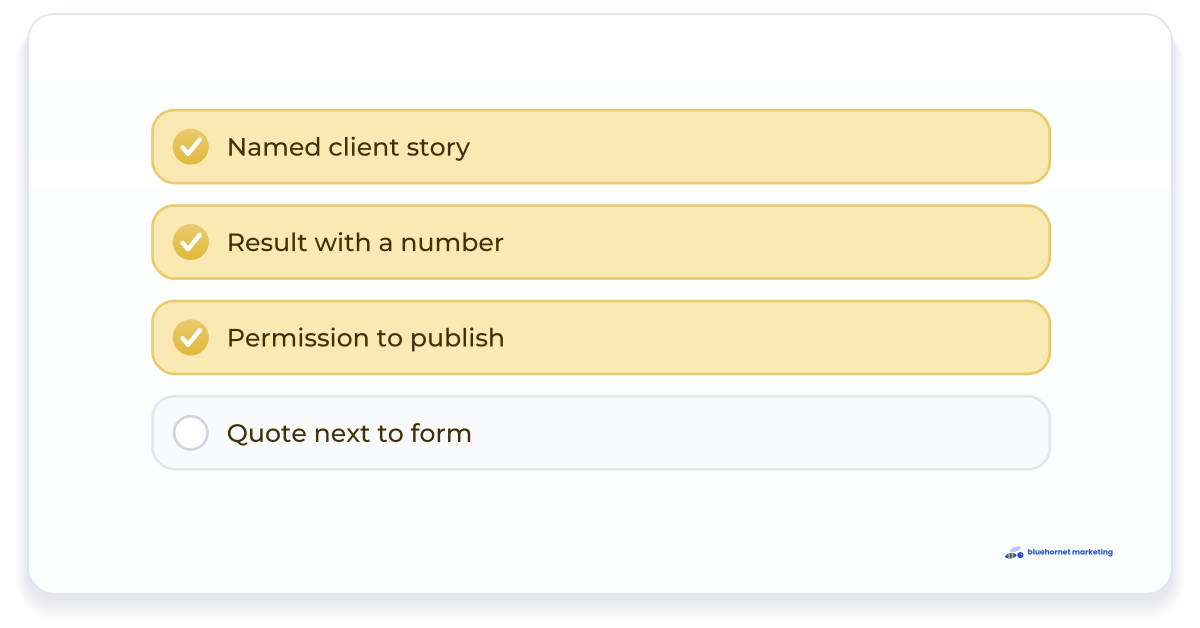
Buyers who have found you through content still check whether to trust you. Put proof where decisions happen: on service pages and next to forms. Real stories with numbers beat adjectives.
- Two or three client stories with measurable results and permission to publish
- Reviews on your Google profile and relevant directories
- Visible credentials, partners or awards you can verify
- A clear description of the team behind the work
Proof is the cheapest improvement for most inbound sites, because it raises conversion on traffic you already have.
9. Measure, Check and Improve
Inbound improves through steady review. Each month, check leads, qualified leads and customers by source and by page. Each quarter, update weak pages, double down on the winners and retire what does not work.
- A dashboard with leads, qualified leads and customers by source
- A monthly list of the best and worst pages
- A quarterly review of content, offers and follow-up
- A written record of tests and what you learned
- A plan for how you will calculate return on spend
Revenue per source is the number that matters most. My explanation of return on inbound shows how to calculate it.
How to Score Yourself
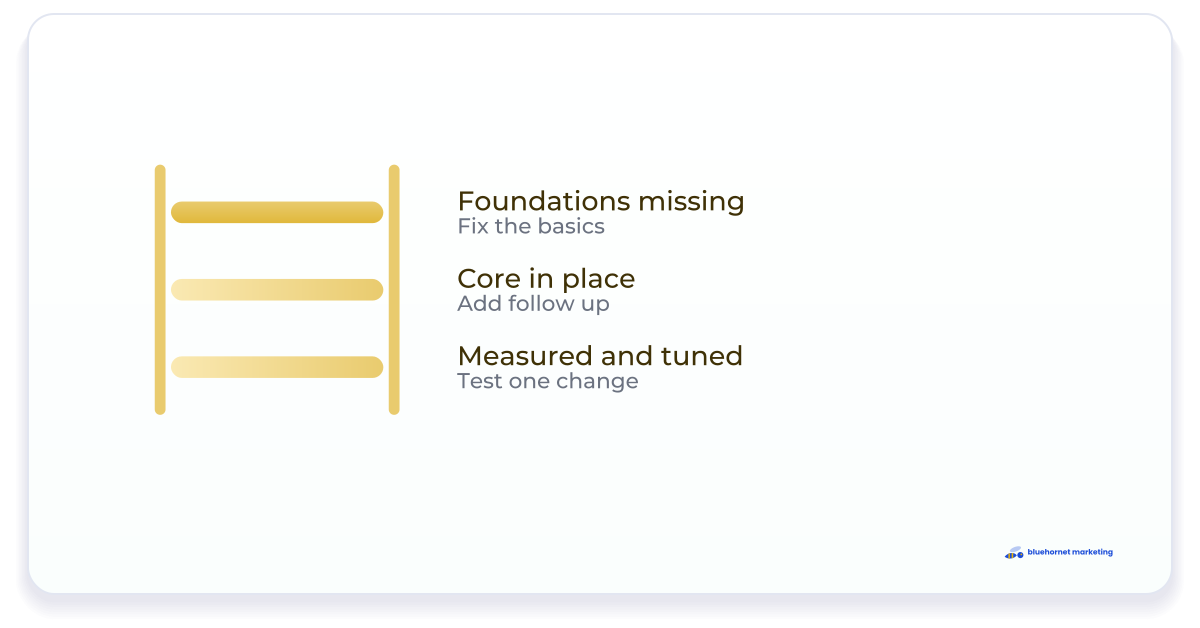
Give yourself one point for each checkpoint where you can tick at least three of the items. A score of seven to nine means your program is sound and you should focus on improving results. A score of four to six means key pieces are missing, and filling them will raise performance without extra spend. Below four, pause new content and fix the foundations first.
Do not be discouraged by a low score. Most small and mid-sized programs I audit score between three and six on their first pass. The value of the checklist is knowing where to start. If your company is small, my notes on inbound marketing for small business show which points to tackle first.
Pitfalls When Working Through the Checklist
Three habits slow teams down. The first is treating the checklist as a one-off audit. Programs drift, so a quarterly pass catches problems such as broken forms, outdated offers or emails that no longer match the page that sent people to them. The second is ticking items without evidence. If you say tracking is in place, open the report and confirm that last week's form fills appear in it. The third is working on the later points while the early ones are weak. A polished nurture sequence cannot rescue a page that nobody finds.
What to Do After the Checklist
Turn every unticked item into a task with an owner and a date. Start with the one that blocks the most others, which is usually tracking or the buyer description. Then review the checklist again in 90 days. Examples of how other teams applied these steps are in my inbound marketing examples, and the way to prove the payback sits in my guide to inbound marketing ROI.
Who Should Own Which Checkpoint
A checklist fails when everyone owns it. Give each point to one person. The founder or head of marketing usually owns goals and buyer definition. A writer or agency owns content and offers. Sales owns follow-up and feedback. An analyst or the same marketer owns measurement. If one person does everything, space the checkpoints out over a quarter rather than rushing them.
Questions About the Inbound Marketing Checklist
What Should an Inbound Marketing Checklist Include?
At minimum: a defined buyer, measurable goals, a sound website, a content plan based on real searches, offers by stage, email follow-up, a marketing-sales handoff, proof and a monthly review. The nine points above cover all of them.
How Often Should I Review My Inbound Marketing?
Review leads and sources every month and do a larger review each quarter. Update your best content every six months, because search results and buyer questions change.
What Is the First Step in Inbound Marketing?
Defining your buyer and the questions they ask before buying. Everything else, from content to offers, depends on it.
How Many Blog Posts Do I Need for Inbound Marketing?
There is no fixed number. A smaller set of strong pages aimed at real searches beats many weak posts. Many small teams aim for two to four good pieces per month.
Do I Need a CRM for Inbound Marketing?
You need a way to record leads and their source, and to follow up. A basic CRM or even a well-kept sheet works at first, but a real CRM saves time as volume grows.
How Do I Know If My Inbound Marketing Is Working?
Look at qualified leads and customers by source, and compare cost with revenue. Traffic and downloads show early momentum, but sales prove it.
Can I Use This Checklist for a Small Business?
Yes. Smaller teams should handle checkpoints 1 to 3 first, then pick one offer and one nurture sequence, and expand once those run well.
Disclaimer: This article is general information, not legal, tax or financial advice. Prices, ratings and platform features change, so check current details with each provider before you decide.
Was this guide helpful?
Thanks for your feedback.
Warren Albright
Warren leads the Blue Hornet editorial team and works with the consultants to turn real client projects into practical guides on content, paid media, marketing automation, CRM and analytics. He comes from content and demand generation work, edits every article before a working marketing consultant reviews it, and draws on strategies, channel plans and audits from client projects to keep the advice grounded in real numbers.