Quick Summary
- Small businesses can run inbound with a few pages, one email habit and a way to track leads.
- Start with your Google profile, three search-led service pages and one useful download.
- Inbound is slower than ads, so keep a short-term tactic running while it builds.
- Measure leads and customers by source, not traffic.
Inbound marketing for small business has a reputation for needing a big team and a long runway. It does not. A small company with one person on marketing can run a lean version that brings in steady leads. If you want the full approach built around your market, inbound marketing consulting can set up the plan, and the sections below show you the starting points I suggest.
I wrote this for owners who have little time and a tight budget. You will see what inbound means at your size, what to do first and what to ignore until later.
What Inbound Marketing Means When You Are Small
Inbound marketing means attracting customers who are already looking for help, then guiding them toward a decision with useful content and good follow-up. For a big company, that can mean dozens of writers and several tools. For a small business, it means a handful of well-chosen pages, one email habit and a way to track who becomes a customer.
The difference from outbound is where the effort goes. Outbound pays each time you reach someone. Inbound puts the effort into assets that keep working: a page that ranks, a guide people download, an email list you own.
| Inbound marketing | Outbound marketing | |
|---|---|---|
| How it works | Customers find you through search, content and referrals | You reach out through ads, calls and cold email |
| Speed | Slower, builds over months | Faster, starts when you spend |
| Cost pattern | Upfront effort, then lower cost per lead over time | Cost stays tied to each campaign |
| Lead quality | Often warmer, because people sought you | Varies; needs strong targeting |
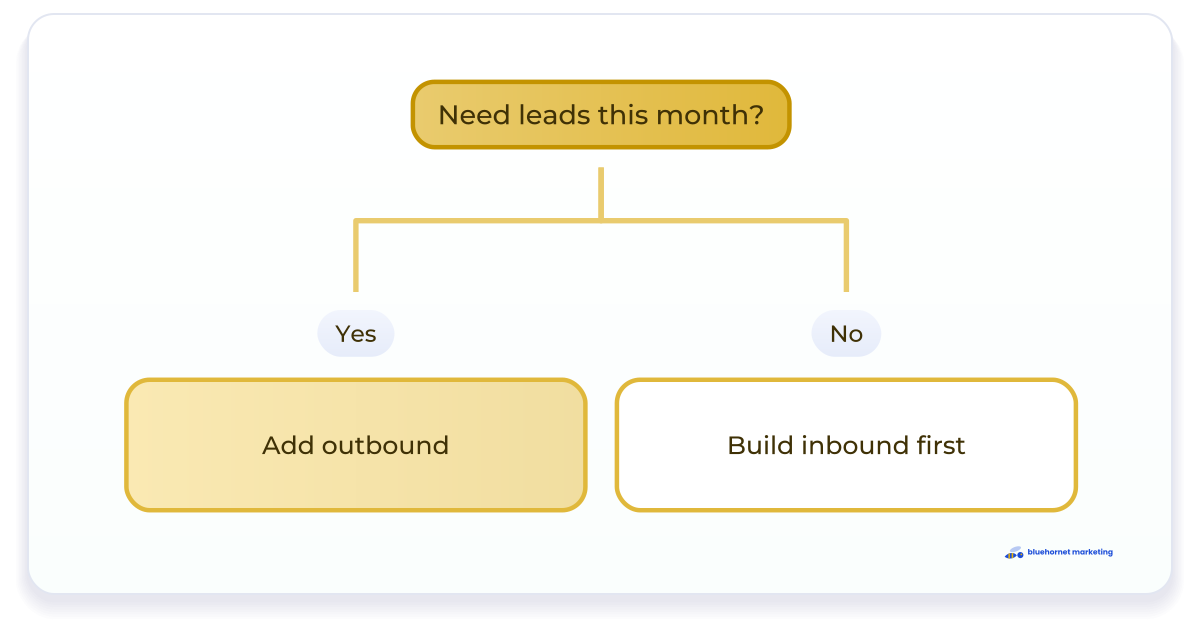
| Best for small business when | Customers research before buying | You need leads this month |
Most small businesses need both. Inbound is the base, and a bit of outbound, such as a small ad test or follow-up calls, fills the gaps while the base grows.
Six Simple Wins to Start With
Do not try to build a full program in the first month. These six assets cover the basics, they cost little and each one has a clear job.
| Simple win | Time to set up | What it does for you |
|---|---|---|
| Claim and finish your Google Business Profile | 2 hours | Puts you in local search and maps |
| Three service pages built around real searches | 1 to 2 weeks | Catches people ready to hire |
| One useful download plus a welcome email | 3 to 5 days | Turns visitors into contacts |
| A monthly email to past customers | 2 hours per month | Brings back repeat and referral business |
| One case study | 1 day | Gives hesitant buyers proof |
| Review request after every job | 1 hour | Builds trust and local ranking |
Each one fits in a week or two. Start with the first three and add the others as the basics work. You can see how businesses of your size put these together in my set of inbound marketing examples.
Your First 90 Days
Here is the order I use with small clients, built around a few hours per week.
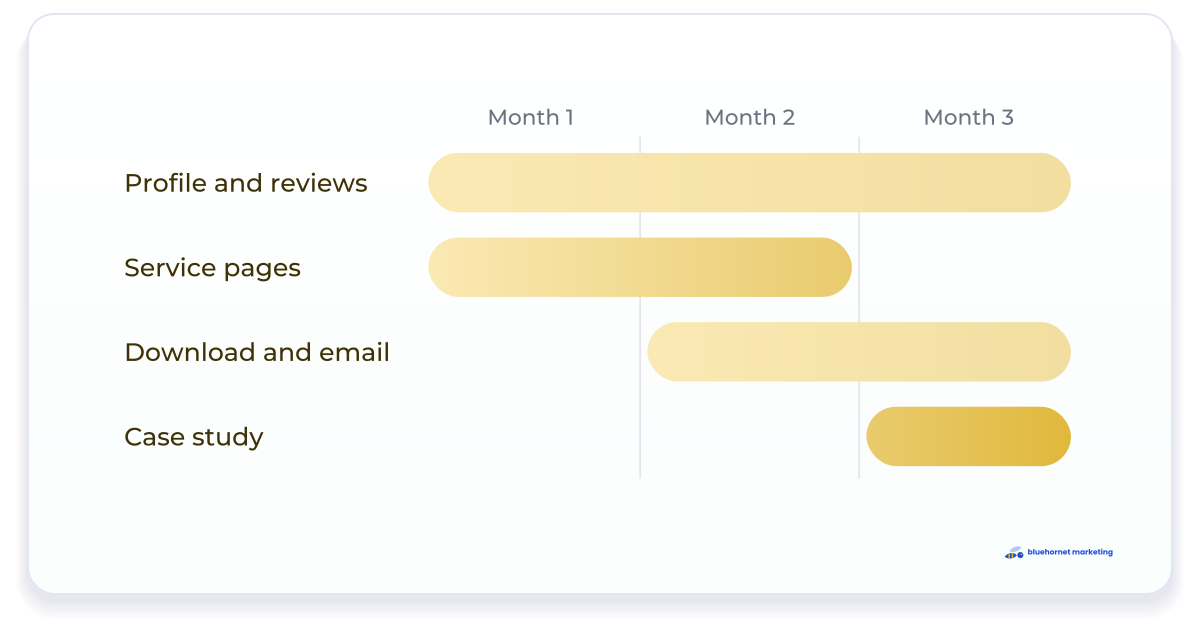
Month one is for foundations. Write down who your best customer is and what they search for. Complete your Google Business Profile. Choose three searches that show buying intent and build or improve one page for each. Add a simple form and a phone number that shows on every page.
Month two is for capture. Create one useful download tied to your main service, such as a pricing guide or a checklist. Set up a welcome email and one follow-up. Start asking for reviews after every job. Add a question to your form asking how people found you.
Month three is for proof and follow-up. Write one detailed customer story. Send your first monthly email to past customers. Review the numbers: visits to your three pages, form fills, calls and new customers. Decide what to fix, what to keep and what to add.
Before you start, work through the inbound marketing checklist, which covers the setup steps in order.
Finding Topics Your Buyers Already Search For
Small teams cannot afford to guess. You need topics that real people type into a search box and that connect to something you sell. Three sources give you plenty without any paid research tool.
The first is your own inbox. Open the last 30 emails from prospects and list every question they asked before hiring you. Those questions are exactly what other buyers search for, in similar words. The second is search suggestions. Type your main service into Google and note the completed phrases and the questions under "People also ask". The third is your competitors' pages. Look at how they name services and what they leave out, because gaps are chances.
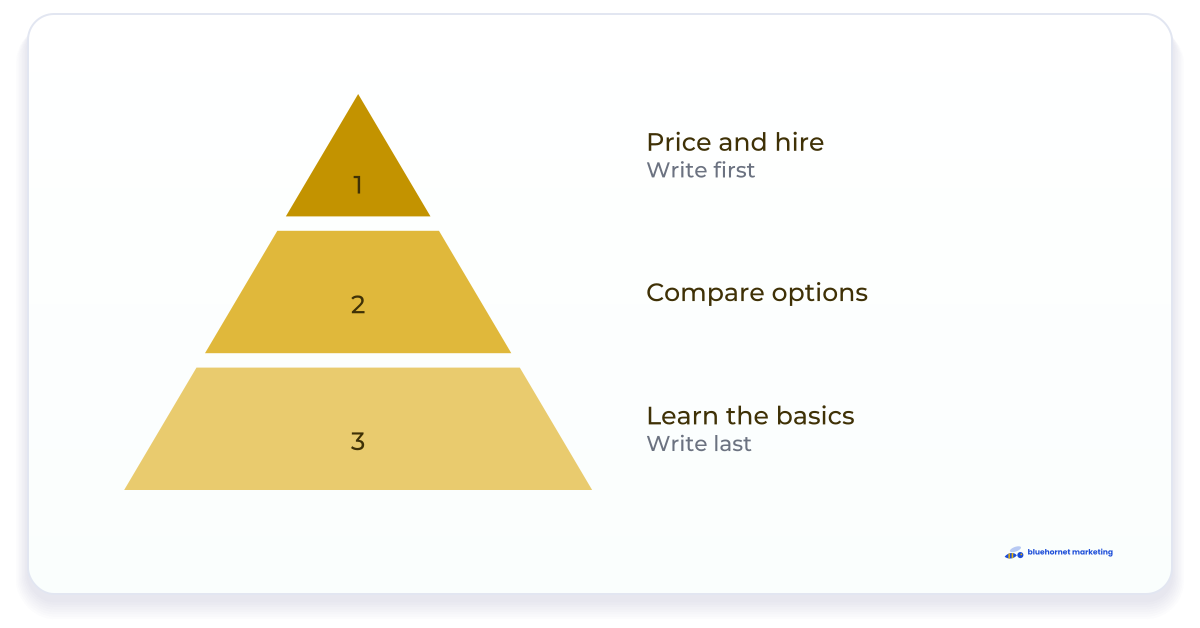
Then sort the list by buying intent. A phrase such as "how much does a kitchen remodel cost" comes from someone close to a decision. A phrase such as "kitchen design history" does not. Start with the first kind. In my client work, small firms that begin with five to ten high-intent pages see leads sooner than those that begin with a blog calendar.
What a Small Business Service Page Needs
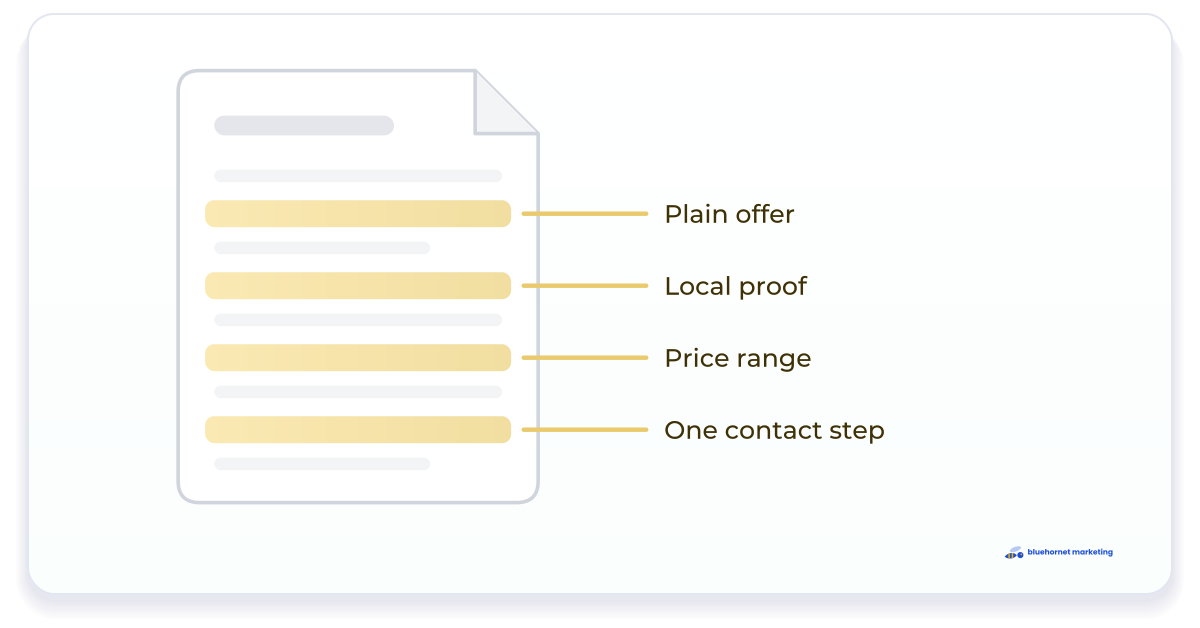
Your service pages do most of the converting, so they deserve the most care. A page that works for a small business answers five things in order. What do you do and who is it for? What does the process look like? What does it cost, even as a range? What proof do you have? What should the visitor do next?
Keep the language plain. Visitors skim, so short paragraphs and clear headings help. Put your phone number and a short form where people can find them without scrolling. Add two or three questions and answers that handle the objections you hear on calls, such as timing, price and what happens if something goes wrong. Pages written this way tend to turn a higher share of visitors into inquiries than pages that only list services.
One more habit helps: keep a running file of every question a customer asks you. After a month you will have more topics than you can write, and each one is proof that someone, somewhere, is searching for the same answer. That file is the cheapest research tool a small business can own, and it keeps your pages tied to what buyers say, not what marketers assume.
A Four-Hour Weekly Routine
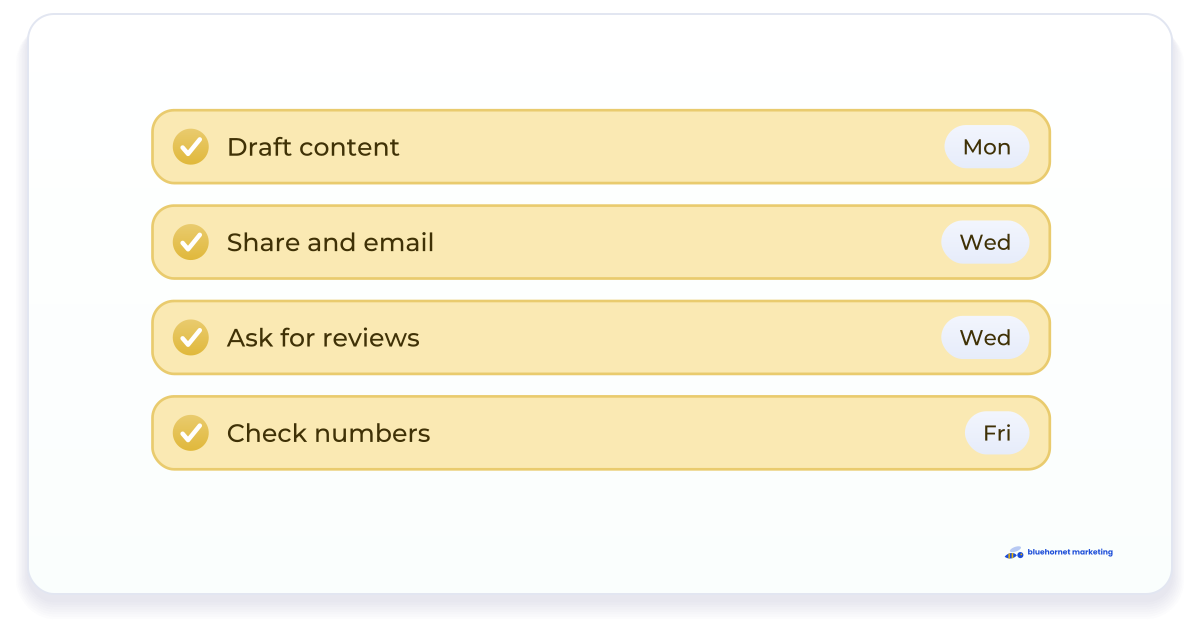
Consistency matters more than volume. This routine fits most small business schedules and keeps the program moving.
- One hour: write or improve one page or one email, based on a real customer question
- One hour: follow up with every new lead and ask recent customers for reviews
- One hour: share the new asset with your email list and on the one social channel your customers use
- One hour: check the numbers, including form fills, calls and sources of new customers, and note one change to try
If you can only spare two hours, drop the third and keep the rest. Following up and checking numbers should never be the parts you skip.
What It Costs and What to Spend First
Inbound for small business can start with very little cash, because much of the work is your time. A basic website, a free Google profile and a free or low-cost email tier cover the tools. The main cost is writing and design. If you hire a freelancer for three pages and one download, expect a one-off project cost rather than a retainer, and plan on a modest monthly cost for email software and tracking.
The honest warning is time. Search-led content often needs several months before it ranks. Keep a few paid or direct tactics running so leads continue while the base grows. When you ask whether the program is paying back, use the method in my guide to inbound marketing ROI, which compares cost with revenue by source.
The Small Business Toolset
You need five things: a website you can edit, an email platform, analytics, a way to record leads and a way to ask for reviews. Many tools combine several of these. HubSpot, for example, offers a free CRM and free tools, and paid plans for larger needs. Choose the simplest setup that works, and do not pay for features you do not use. My ranking of inbound marketing tools compares options with live ratings and pricing.
Mistakes I See Small Businesses Make With Inbound
- Publishing blog posts with no next step, so readers leave without a way to contact you
- Writing about topics that interest you rather than what buyers search for
- Giving up after two months, before search and email can show results
- Skipping follow-up, so leads who downloaded a guide never hear from you again
- Tracking traffic and ignoring leads and customers
Avoiding these puts you ahead of most competitors your size.
How to Decide If Inbound Fits Your Business
Honest fit matters, because inbound takes patience. A business that needs ten new customers next month will do better with calls, referrals or ads first, and inbound running alongside. A business that can wait a quarter or two for compounding results will usually be glad it started early.
Inbound works best when people research before they buy: services, B2B products, health and home projects, anything with a considered decision. It works less well for impulse purchases or businesses where customers never search. Ask whether your customers search online before buying, whether they compare options and whether you can describe their problem in plain terms. If you answer yes to two or three, inbound fits.
Questions About Inbound Marketing for Small Business
Is Inbound Marketing Worth It for a Small Business?
Usually yes if your customers research before they buy. It costs mostly time at the start and keeps producing leads afterward. It is slower than ads, so keep a short-term tactic running while it builds.
How Much Does Inbound Marketing Cost for a Small Business?
You can start with low cash costs: a website, free profiles and a modest email tool. The larger cost is writing and design, either your time or a freelancer. Costs rise when you add paid promotion or agency support.
How Long Does Inbound Marketing Take to Work for a Small Business?
Early signals often appear in three to four months, and meaningful lead volume often takes six to twelve. Email and reviews pay back sooner than search content.
What Should a Small Business Do First for Inbound Marketing?
Complete your Google Business Profile, build one page for each of your top services around real searches and add a simple way to capture contacts. These three steps cover most of the basics.
Can I Do Inbound Marketing Myself?
Yes, if you can spare a few hours per week. Many owners run the first three months alone and bring in help for writing, design or strategy once they see what works.
Do Small Businesses Need a Blog for Inbound Marketing?
Not at first. Service pages, a lead magnet and follow-up matter more. Add articles later to answer the questions buyers ask before they contact you.
Which Inbound Tools Are Best for Small Businesses?
The best ones are simple: an easy website platform, a basic email tool, analytics and a CRM with source tracking. Free tiers are often enough at the start.
Disclaimer: This article is general information, not legal, tax or financial advice. Prices, ratings and platform features change, so check current details with each provider before you decide.
Was this guide helpful?
Thanks for your feedback.
Warren Albright
Warren leads the Blue Hornet editorial team and works with the consultants to turn real client projects into practical guides on content, paid media, marketing automation, CRM and analytics. He comes from content and demand generation work, edits every article before a working marketing consultant reviews it, and draws on strategies, channel plans and audits from client projects to keep the advice grounded in real numbers.