Quick Summary
- The strongest examples publish useful help first, from named clinicians, on a steady schedule.
- Reported results come mostly from the organizations or from third-party roundups, so treat the numbers as indicators and not audited proof.
- Strong ideas carry across channels: SickKids VS and St. Jude’s annual campaign each repeat one message.
- You can copy the discipline of each program at a small scale, without copying the budget.
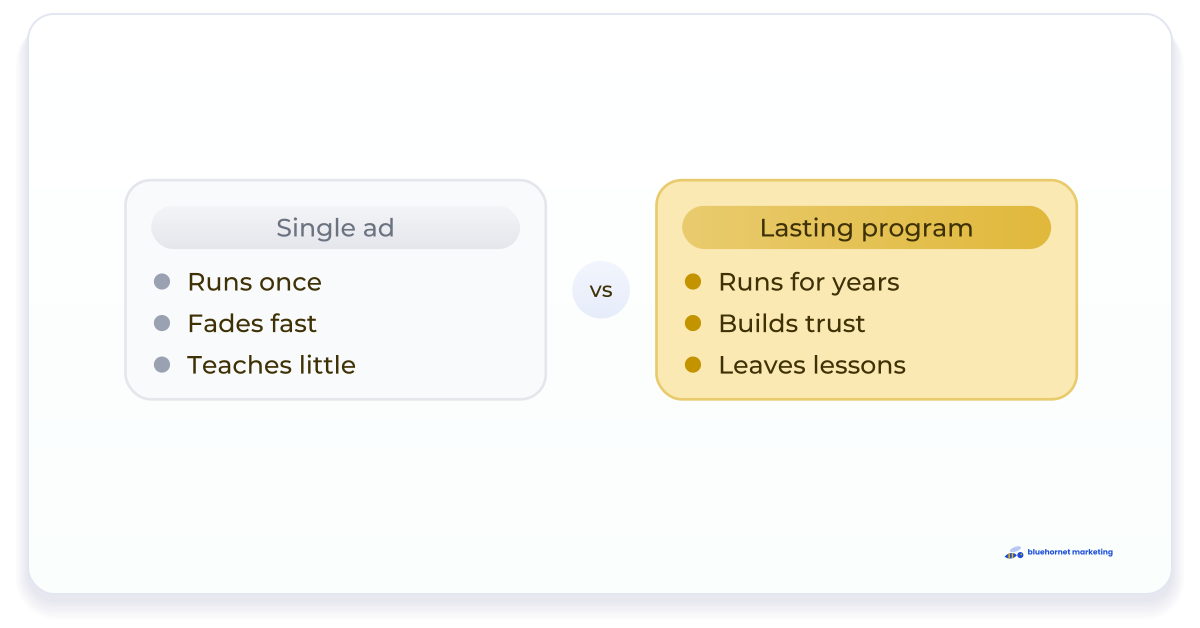
Most lists of healthcare marketing examples show a nice ad and stop. I picked programs that ran for years and left something to learn from. If you want help turning one of them into a plan for your organization, that is the work I do with providers in healthcare marketing consulting.
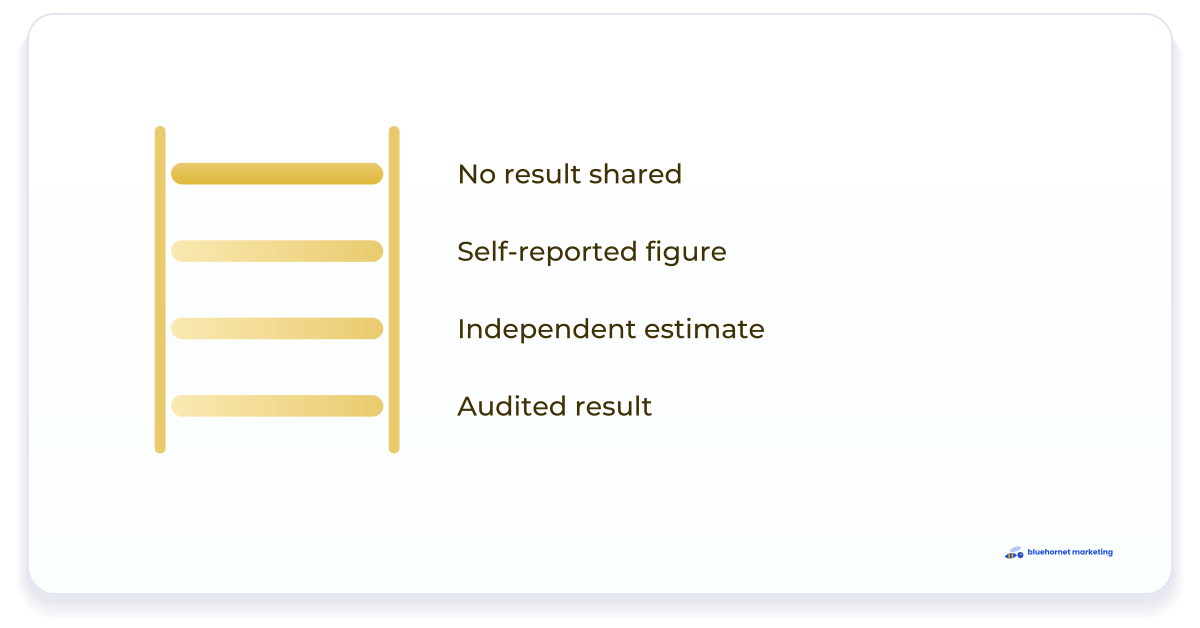
A word on evidence. Many hospitals do not publish results, so the figures below come from the organizations or from third-party roundups, and I say which. Where no number exists, I describe what the program did and what I think made it work, labeled as my reading.
| Example | Format | Reported result |
|---|---|---|
| 1. Cleveland Clinic Health Essentials | Health blog | 200K to 3.2M monthly visits, per Embarque |
| 2. Mayo Clinic Center for Social Media | Social media program | Top health information website in a 2013 survey |
| 3. Nationwide Children’s On Our Sleeves | Free resource hub | 11M+ people used resources by Oct 2023 |
| 4. St. Jude Thanks and Giving | Annual fundraising campaign | $118M+ in 2018, per ALSAC figures |
| 5. Geisinger Fresh Food Farmacy | Community health program | Reported lower A1c and ER use, no figures |
| 6. Johns Hopkins Medicine Ask the Expert | Expert video series | No measured result reported |
| 7. SickKids VS | Fundraising platform | $57.9M in three months, self-reported |
Seven Healthcare Marketing Examples and What Made Them Work
Each example below follows the same pattern: what the organization did, why I think it worked and the steps you can take at your own scale. Pay attention to the shared traits. All seven give people something of value, and all seven stay with one idea for years. My healthcare marketing tips turn those traits into a checklist.
Cleveland Clinic Health Essentials
Cleveland Clinic turned a knowledge hub into a consumer health blog in 2012, and according to an account from the SEO agency Embarque, monthly visits grew from about 200,000 to 3.2 million within roughly 18 months. The same source reports more than 7 million visits a month today. I treat those as the agency’s figures and not independently audited ones, and the scale is still striking for a health system.
What worked, in my reading, is discipline. The team removed Cleveland Clinic branding from content that readers did not need it on, published several times a day, had about 40 physicians contribute at least monthly and had a medical expert review every post. Each article answered one specific patient concern, which is the same test I apply to any health page.
What You Can Copy from It
- List the 20 questions patients ask most before an appointment.
- Assign one clinician to each topic area as a named contributor.
- Write each answer plainly, with one concern per page.
- Have a clinical reviewer sign off every page before it goes live.
- Publish on a fixed schedule and refresh the best performers every year.
Tools for a Content Program
A shared editorial calendar and a review workflow matter more than any single tool. A keyword tool such as Semrush helps you find the questions patients search.
Mayo Clinic Center for Social Media
Mayo Clinic created its Center for Social Media in 2010 to coordinate social media across the organization. MIT Sloan Management Review described Mayo as the most popular provider of medical information on YouTube at the time, and its website was named the top health information website in the 2013 Harris Poll EquiTrend survey ahead of WebMD.
The center worked because it tied social media to the mission of helping people find reliable information, and because leadership backed it. Mayo also experimented in small ways: it showed a video of a doctor inviting new patients to ask questions online, so people felt familiar with him before the first visit. Director Lee Aase made the case that patients want in-depth, great content and not interaction for its own sake.
How to Adapt the Approach
- Write down the patient outcome your social channels support.
- Get one executive sponsor to approve the plan.
- Train clinicians to post and reply, with simple guardrails.
- Start with one video from a named doctor and ask for questions.
- Review which posts lead to calls or bookings, and repeat those.
Tools for a Social Program
A scheduling tool such as Hootsuite handles approvals across accounts. Keep a short written policy on what clinicians may and may not say online.
Nationwide Children’s On Our Sleeves
On Our Sleeves is a children’s mental health movement from Nationwide Children’s Hospital that offers free resources powered by nearly 1,000 hospital professionals and researchers. A roundup of hospital programs reports that more than 11 million people had used the resources by October 2023.
It succeeds because the free material is useful before anyone becomes a patient. Parents and teachers get lesson plans and conversation starters, and the hospital becomes the name behind help for a hard topic. In my work, that is the strongest form of healthcare content marketing: giving away expertise that people already want.
Steps to Build a Resource Hub
- Pick one problem your community raises again and again.
- Gather clinicians who can speak to it with authority.
- Create free guides and short videos people can use at home.
- Offer the material through schools, employers and local groups.
- Track downloads and referrals, then update the hub twice a year.
What You Need to Run It
A well-organized resource section on your own site and an email list for updates carry most of the load. A downloadable guide needs a design tool such as Canva and a clinician’s review.
St. Jude Thanks and Giving
St. Jude Children’s Research Hospital runs an annual holiday fundraising campaign with celebrity endorsements, retail partnerships and patient stories. ALSAC figures cited in a hospital marketing roundup say the 2018 campaign raised more than $118 million, and that the program has passed $1 billion raised overall.
The reason it works is repetition and partners. The campaign returns every year in the same season, so donors know when to expect it, and retail partners bring it to customers who would never visit the hospital’s website. The hospital also lets patient stories carry the emotion while the ask stays simple.
How the Model Translates
- Pick one annual moment and own it every year.
- Recruit partners who already reach your audience.
- Tell one patient story with consent, and keep the ask short.
- Offer a single, easy way to give or take part.
- Report back to supporters on what the funds achieved.
Tools for Campaign Work
A donation platform and an email tool are the core of the campaign. Plan consent and privacy for any patient story with your compliance team.
Geisinger Fresh Food Farmacy
Geisinger Health System treated food access as a clinical intervention for chronic disease patients with its Fresh Food Farmacy program. A roundup of hospital programs reports reductions in Type 2 diabetes A1c levels and emergency room use, though it gives no figures, so I cannot quote numbers.
As a marketing example, it shows what happens when the service itself is the story. People talk about a program that changes their health, and local media pick it up. The communications work then explains the program and lets patients and partners tell their own versions.
What to Take from It
- Find the service in your organization that you are proudest of.
- Collect outcomes and permission for patient stories.
- Explain it in plain language on a dedicated page.
- Invite local partners and press to see it in action.
- Share updates as results come in, with the real numbers.
Tools to Support It
A dedicated landing page and a simple outcomes report are the minimum. Keep patient-level data out of marketing files.
Johns Hopkins Medicine Ask the Expert
Johns Hopkins Medicine publishes video question and answer sessions with named clinicians across several specialties and distributes them across its website, social channels and partner outlets. A hospital marketing roundup lists it among programs that compound over time and reports no measured result.
The format works for a simple reason. A named expert answering a real question is credible, fast to watch and easy to reuse in many places. One recording becomes a page, a clip, a quote and an email, so the cost of each piece falls with every use.
How to Run a Q&A Series
- Collect questions from your front desk and your reviews.
- Book a clinician for a 20-minute recording.
- Cut the recording into answers of under two minutes.
- Publish each answer on its own page with a transcript.
- Share the clips and measure which questions draw views.
Tools for a Q&A Series
A phone with a decent microphone is enough to start. Use a transcription tool for the captions and a video host that lets you embed on your own pages.
SickKids VS
SickKids Foundation reframed hospital patients as fighters in a platform called SickKids VS, which funded a new building. A roundup of hospital programs reports a $1.3 billion goal and $57.9 million in donations from October to December 2016, and notes that the figures are self-reported.
It stands out because the idea carried the campaign, and because agency partners worked at discounted or pro bono rates. A strong idea gave people a reason to share, and the foundation kept the message consistent across channels. Hospitals without a fundraising arm can still learn from it: one clear idea beats ten messages.
Steps to Build a Campaign Idea
- Write the single sentence you want people to repeat.
- Test it with patients, families and staff.
- Build every channel around that sentence.
- Recruit partners who believe in it enough to discount their work.
- Measure results against the goal at fixed points.
Tools for Campaign Planning
A creative brief and a shared calendar keep a campaign on track. Pair them with a dashboard that shows progress against the goal.
What the Seven Programs Share
Read the examples side by side and four habits repeat. The first is consistency: a recurring campaign or publishing rhythm that people learn to expect. The second is authority, with named clinicians or researchers behind the message. The third is usefulness, in the form of answers, resources or a clear cause. The fourth is a single idea repeated across channels.
The weakest point is measurement. Few of these programs publish results tied to patient volume, and the ones that do are mostly fundraising. For a provider that wants patients, I would pick the metric before the project starts, as I describe in my healthcare marketing trends outlook. It also helps to see which tools support the work, covered in my list of healthcare marketing tools.
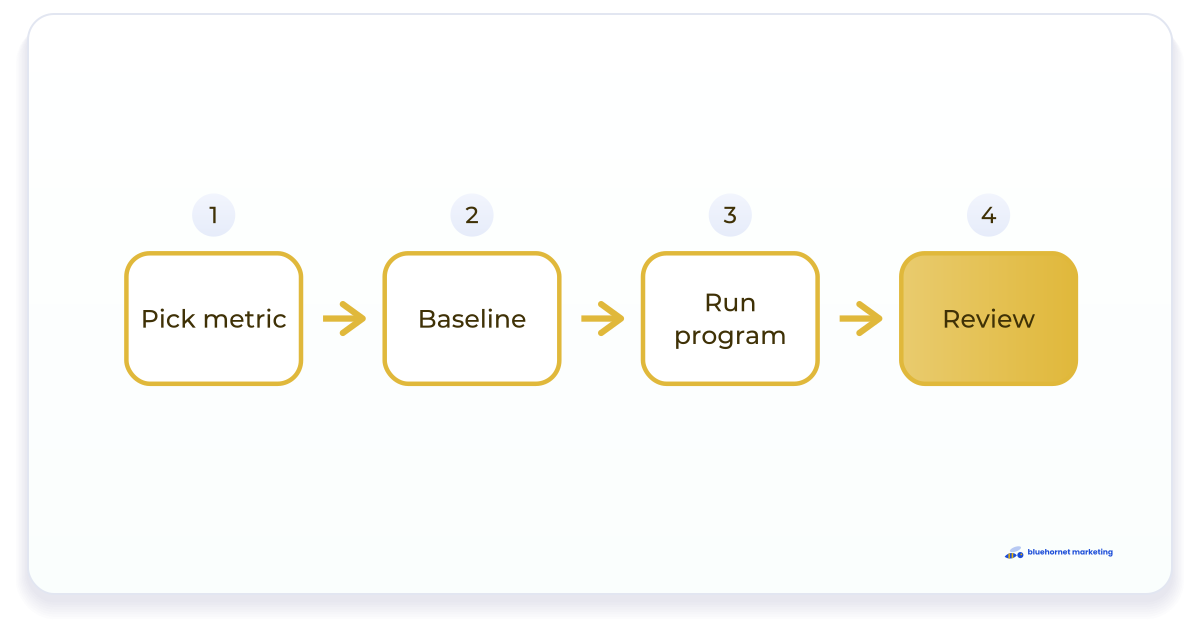
How to Choose the Example to Copy First
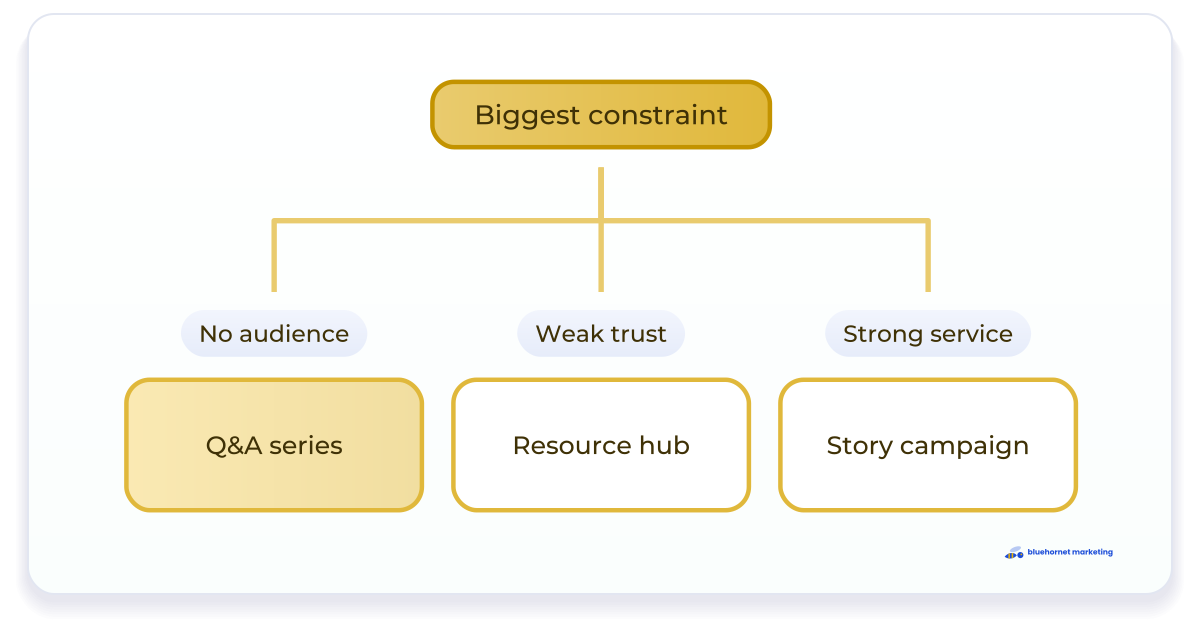
Match the example to your biggest constraint. If you have clinicians with time but no audience, start with a Q&A series. If you have an audience but weak trust, build a resource hub. If you have a strong service line, tell its story the way Geisinger did. If you run a foundation, borrow from the two fundraising campaigns.
- Which patients or donors do you want to reach in the next six months?
- Which clinician or leader can commit a few hours a month?
- What can you measure within a quarter?
- What will compliance need to approve, and how long does it take?
Whatever you pick, expect friction with approvals and staffing, which I cover in my guide to healthcare marketing challenges. I would run one program for six months before adding a second. If you want a second opinion on which one fits, a short call will usually settle it.
Questions About Healthcare Marketing Examples
What Is the Best Example of Healthcare Marketing?
Cleveland Clinic’s Health Essentials is the one I point to most, because it shows a repeatable system: named clinicians, clear answers and a steady schedule. The right example for you is the one that fits your audience and your capacity.
Do These Examples Work for a Small Clinic?
The principles do, even where the budget does not. A small clinic can run a short Q&A series, a resource page for one local concern and a review routine. Copy the discipline, not the scale.
How Do I Get Patient Stories Without Breaking Privacy Rules?
Ask for written authorization before you share any patient’s story or image, and keep it on file. Your compliance team should approve the wording, and the patient should be able to withdraw. Without that, use composite scenarios clearly labeled as such.
How Much Do These Programs Cost?
Costs vary too widely for one number. A content program needs clinician time and an editor, and a campaign needs creative and media. Start with the smallest version, measure what happens and add budget where the result is clear.
How Do I Measure Healthcare Marketing Success?
Choose a number tied to patients: booked appointments, inquiries by service line or program sign-ups. Reach and views are useful signals, though they only matter if they lead to those numbers within a few months.
How Long Before Content Marketing Works in Healthcare?
Expect months, not weeks. Cleveland Clinic’s blog took more than a year to reach its scale according to the account above, and it had a large brand to start with. A smaller organization should plan for six months to a year before judging it.
Should Every Healthcare Organization Run Social Media?
Not necessarily. Pick the channels where your patients are and where you can reply fast, and drop the rest. A clean website, a complete maps listing and strong reviews come first for most providers.
Sources
- How the Health Essentials Blog Grew From 200K to 3.2 Million Monthly Visits, Embarque
- Mayo Clinic Leads Social Conversations About Healthcare, MIT Sloan Management Review
- Hospital Marketing Examples: 12 Programs That Compound, Everything PR
Disclaimer: This article is for general information only and isn’t legal, financial or tax advice. Treat figures as estimates from typical work and confirm details with your providers before you act.
Was this guide helpful?
Thanks for your feedback.
Warren Albright
Warren leads the Blue Hornet editorial team and works with the consultants to turn real client projects into practical guides on content, paid media, marketing automation, CRM and analytics. He comes from content and demand generation work, edits every article before a working marketing consultant reviews it, and draws on strategies, channel plans and audits from client projects to keep the advice grounded in real numbers.