Quick Summary
- Before product-market fit, growth work means talking to buyers and tightening the offer, not buying traffic.
- Pick one channel where you can reach buyers directly and give it eight to twelve weeks.
- Count a few numbers weekly and read trends over four weeks, because small samples are noisy.
- Fix early retention before you scale, since extra spend on a leaky product only deepens the loss.
Startups do not have a small version of a big company's marketing problem. They have a different problem: little data, a short runway and a product that is still changing. Growth marketing consulting for early-stage teams looks very different from the enterprise version, and this guide covers the parts that matter most in the first year.
I am writing this for founders who handle marketing themselves or lead a team of one or two. You will find a stage-by-stage view, a first-channel decision method, a budget table and a short list of habits that keep early growth honest.
Three Stages That Need Different Work
Growth advice goes wrong when it ignores the stage. A company with ten customers and a company with a thousand need nearly opposite priorities.
| Stage | Main question | Focus | Avoid |
|---|---|---|---|
| Before product-market fit | Does anyone badly need this? | Interviews, a sharp offer, manual sales | Paid ads, big content programs |
| Early traction | Which channel can bring the next hundred customers? | One channel, tracking, onboarding | Five channels at once |
| Scaling | Can we spend more and keep the payback? | Experiments, lifecycle, a second channel | Ignoring churn |
Be honest about which row you are in. In my client work, the most expensive mistakes come from founders who act like they are in the third row while the product still sits in the first.
What to Do Before Product-Market Fit
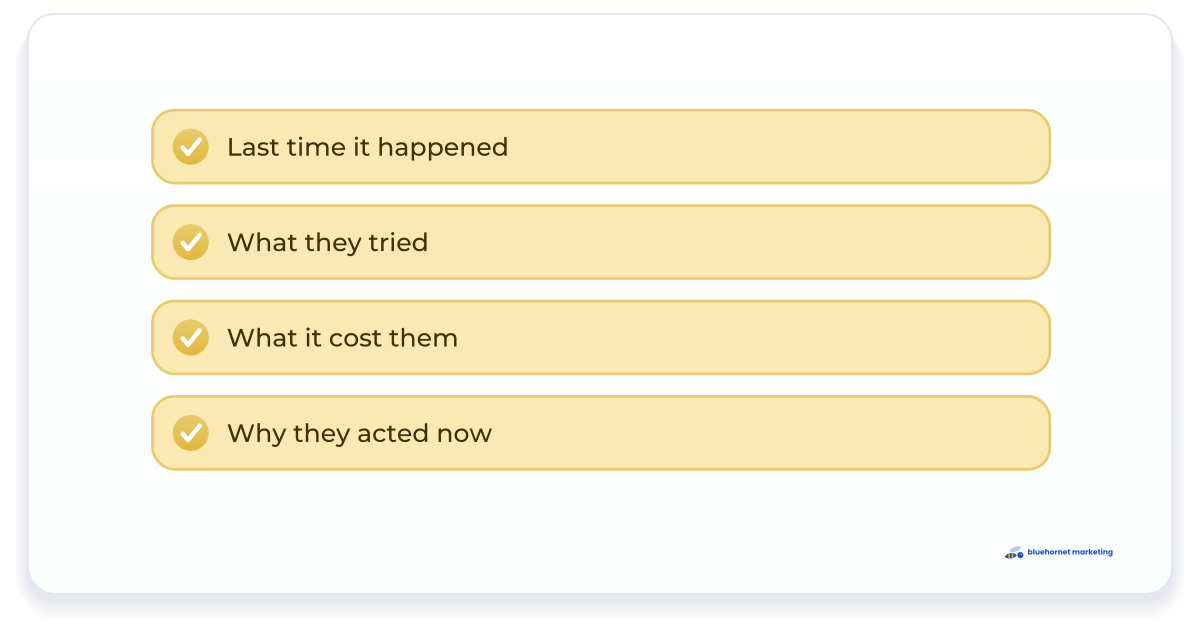
Your best growth tool at this point is a conversation. Talk to twenty people who fit your target customer, and ask how they handle the problem today, what it costs them and what they have already tried. Record the exact words they use. Those words become your headline, your email subject lines and your ad copy later.
A useful check comes from the Sean Ellis question that Superhuman made famous: ask users how they would feel if they could no longer use the product. Teams often use 40 percent answering "very disappointed" as the sign of fit. If you are far below it, more marketing will not fix the gap, and your time is better spent on the product and the offer.
Choosing Your First Channel
Pick one channel, and make it the one where you can reach a buyer directly. Use three tests: can you reach them without paying for each contact, can you tell within a few weeks whether it works and does it fit how your product is bought? A company selling to finance teams may start with outbound email and a handful of useful articles. A consumer product may start in a community where its buyers already talk.
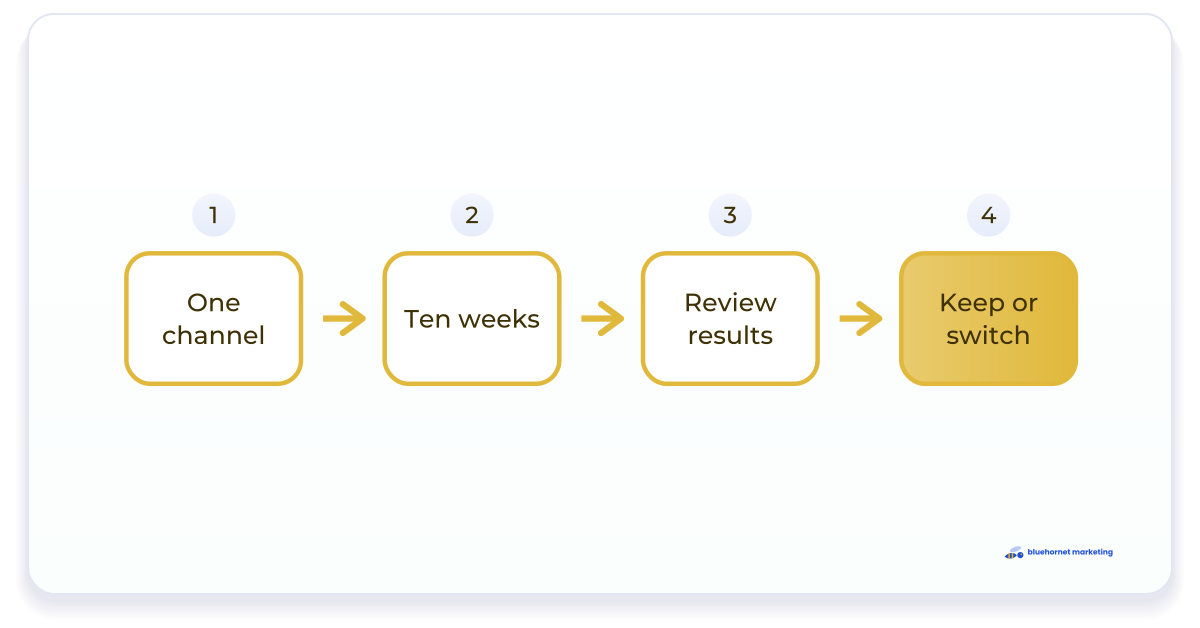
I would rather see a founder run one channel for ten weeks than five for two. A single channel gives you enough volume to see a pattern, and the discipline of working it teaches you what your buyer responds to. Once the first channel is producing, use the steps in the growth marketing framework to keep tests organized as you add a second.
| Channel | Best for | Time to first signal | Cost profile |
|---|---|---|---|
| Founder-led outbound | B2B with a defined buyer | 2 to 4 weeks | Time plus a small tool budget |
| Search content | Products people look for by name of the problem | 3 to 6 months | Mostly writing time |
| Communities and partnerships | Niche products and services | 4 to 8 weeks | Time and goodwill |
| Paid social or search | Products with clear demand and fast checkout | 1 to 3 weeks | Direct spend |
| Email to an owned list | Any business with a small audience | 1 to 2 weeks | Low |
Tracking When the Numbers Are Small
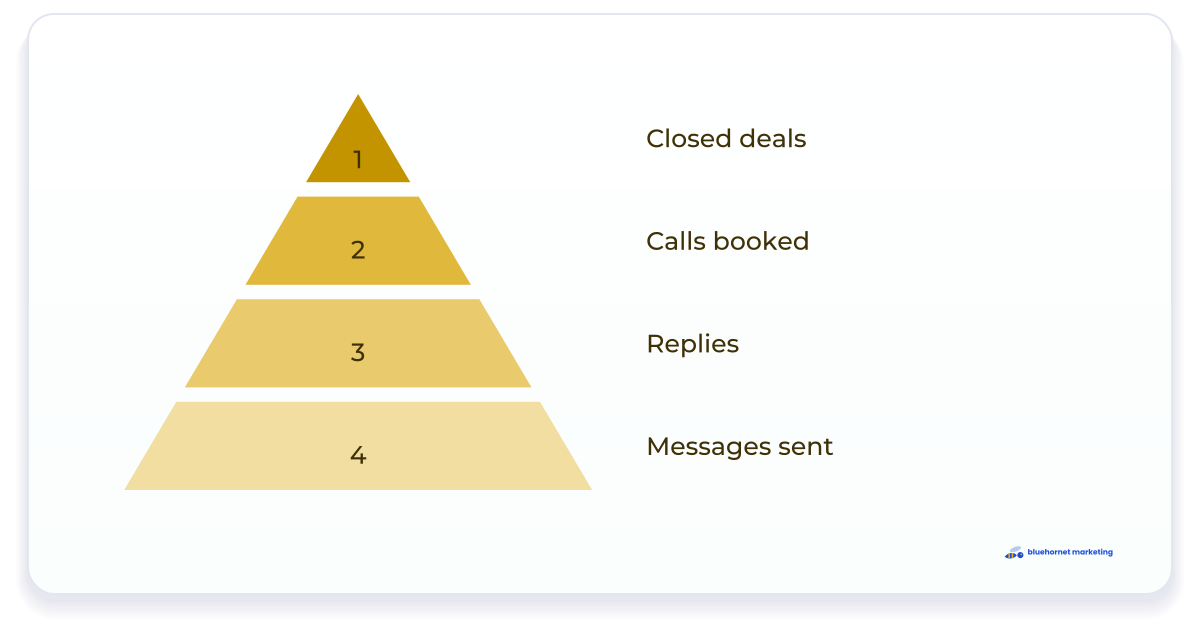
With fifty leads a month, conversion rates swing wildly. Do not read a 20 percent change in a week as a trend. Count the same five things every week: new leads, conversations booked, trials started or purchases made, activated users and customers still active after thirty days. Plot them on a single sheet and look at four-week averages.
Set up the plumbing early, because retrofitting it is painful. Use one analytics tool, one CRM or a simple sheet, and consistent UTM tags on every link you send. If you later add tools, the ones compared in growth marketing tools are the likeliest upgrades. Many of them have free tiers suited to startups.
Experiments That Fit a Tiny Team
You cannot run clean A/B tests with a few hundred visitors, so use the methods that fit. Change one thing, run it for two to four weeks and compare with the previous period. Test messages on small audiences first: send two subject lines to a few hundred people, or two headline versions in ads with a small budget. Interview a few people who did not convert.
Pick tests that teach you about your buyer, such as which pain point triggers a reply or which price anchors work. Copying a famous tactic is tempting, so measure it against your own funnel first. The write-up of growth marketing examples shows how big companies adapted tactics, and which parts are worth borrowing at a small scale.
One habit helps across all of these experiments: write down what you expect before you run the test. Founders who note "I expect replies to rise from 4 to 8 percent" learn faster than those who look at the result and explain it afterward. The prediction exposes your assumptions about the buyer, and the gap between guess and result is where the learning sits. Keep the notes in the same sheet as your weekly counts.
A Starting Budget Split
Think in hours and dollars together. A founder's time has a cost, and early on it is the biggest line. A sample first-year split for a company with a small budget looks like this:
| Area | Share of effort | Examples |
|---|---|---|
| Customer conversations and offer work | About 30% | Interviews, pricing tests, a sharper homepage |
| First channel | About 35% | Outbound, content or one paid test |
| Tracking and onboarding | About 20% | Analytics, CRM fields, welcome emails |
| Second channel and experiments | About 15% | One small bet at a time |
These shares reflect patterns I see across early-stage clients, not a formula. Set a ceiling on paid spend that you can lose without risking your runway, and raise it in steps only after a channel pays back.
Sharpen the Offer Before You Spread It
A weak message wastes every channel you add. Before you spend on traffic, rewrite your homepage headline in the words your interviewees used, state who the product is for and name the one result they get. Then test the message on a small audience: send two versions of an outreach email to fifty people each, or run two headlines in a small ad test, and compare replies.
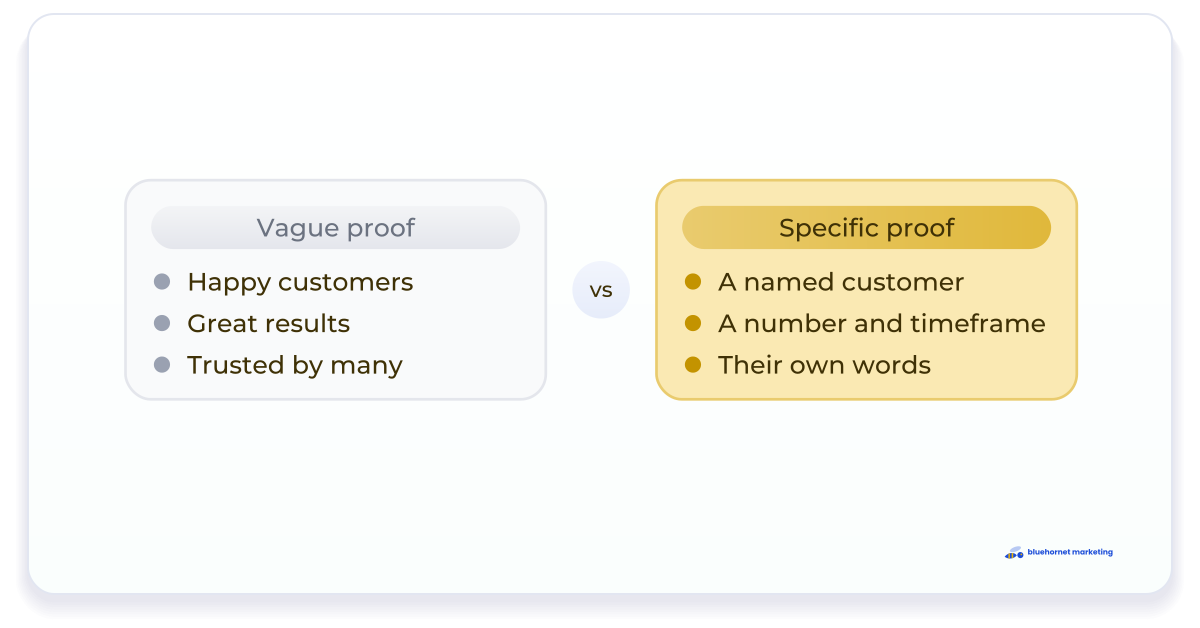
Proof matters more than polish. One named customer with a specific result beats a page of adjectives. If you have no customers yet, offer a few pilot users a steep discount in exchange for a written outcome and permission to quote them. This also gives you the stories that every later channel will lean on. For a priority order that puts messaging, tracking and channels in sequence, see the growth marketing strategy playbook.
Pricing belongs in this conversation too. Early prices are often too low, because founders fear rejection. When three buyers in a row say yes without hesitation, test a higher price on the next ten. A price that feels slightly uncomfortable usually signals a product people value, and the extra margin pays for the channel tests you want to run.
Fix Early Retention Before You Scale
Acquisition gets the attention, but retention decides whether growth lasts. Watch the share of new customers still active at thirty and ninety days. If it is low, call the customers who left and ask why. The answers are usually specific and fixable, such as a confusing setup step or a feature that nobody found.
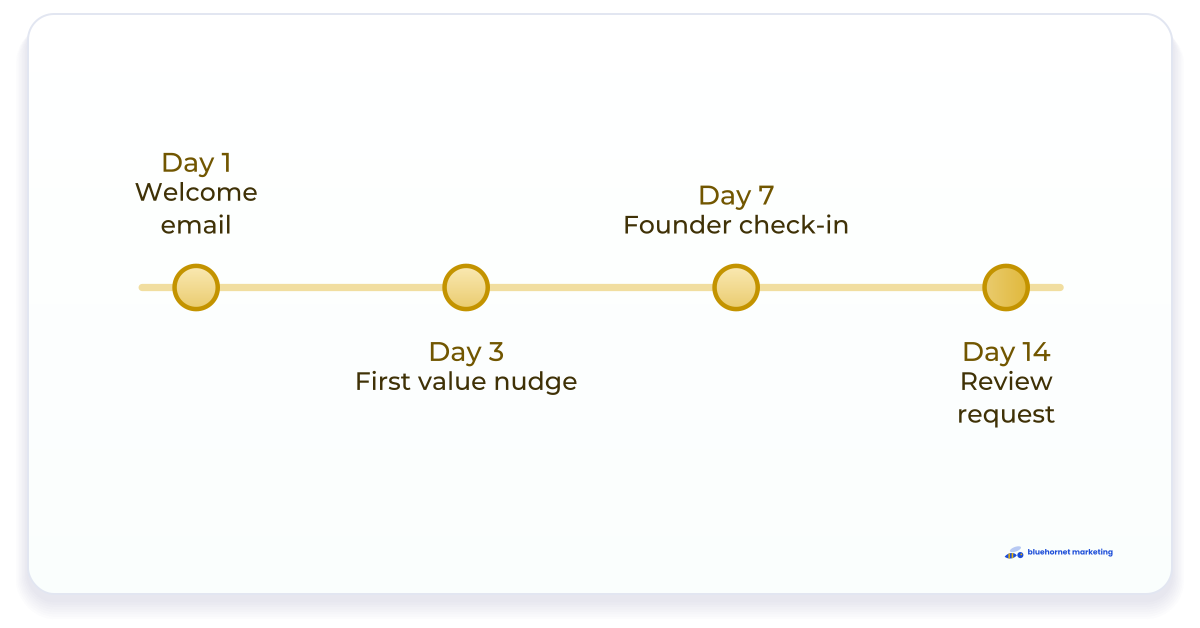
Add a short welcome sequence and a check-in after the first week. These are cheap, they run on any email tool and they often lift early retention more than a new ad campaign would lift signups. When retention holds, a technology plan helps you carry the growth without drowning in manual work, and the marketing technology roadmap shows how to phase that in.
How to Decide What to Do This Month
Run through this short list. If you answer no to the first item, stop there.
- You have spoken to at least twenty target buyers in the last quarter.
- Some customers clearly value the product and would be upset to lose it.
- You have picked one first channel and set an end date to judge it.
- You track five weekly counts in one sheet.
- You know your thirty-day retention.
If you pass this list and your channel works, widen carefully. If you cannot answer several items, a short working session with someone who has seen many early funnels can save a quarter of wasted effort.
Questions From Founders About Early Growth
When Should a Startup Start Growth Marketing?
Start talking to buyers from day one, and start running structured growth experiments once you have a product that some customers clearly value. Spending heavily on acquisition before that point usually buys churn. A few dozen happy customers is a better signal than any survey.
How Much Should a Startup Spend on Marketing?
There is no honest universal figure. Set a test budget you can lose without harming runway, and tie each spending step to a payback target. Many early teams I work with spend more hours than dollars in the first six months, then add paid media after a channel shows a repeatable return.
Which Channel Should a Startup Try First?
Choose the channel where you can reach a buyer directly and cheaply. For B2B that is often outbound email and founder-led content. For consumer products it is often a single social platform or a community. Pick one and give it eight to twelve weeks before you judge it.
Is SEO Worth It for an Early-Stage Startup?
It can be, with patience. Search content compounds, but it takes months to rank, so it suits companies that can wait. I would start with pages aimed at buyers who already know their problem, and skip broad topics where established sites dominate.
How Do I Measure Growth Before I Have Much Data?
Track a handful of counts weekly: new leads, conversations booked, activated users and customers who return. Small numbers are noisy, so look at trends over four weeks and talk to the people behind the numbers instead of relying on percentages.
Should a Startup Hire a Growth Marketer or an Agency?
If you can afford one person, hire a generalist who can run tests end to end. Bring in an agency or consultant for a specific gap, such as tracking setup or a first paid channel. Be wary of any partner who promises results before they have seen your funnel.
What Is the Biggest Growth Mistake Startups Make?
Trying to scale before retention works. If new customers leave within a few months, each new signup costs more than it returns, and extra spend makes the hole deeper. Fix activation and early retention first, then step on the gas.
Disclaimer: This article is for general information only and isn’t legal, financial or tax advice. Treat figures as estimates from typical work and confirm details with your providers before you act.
Was this guide helpful?
Thanks for your feedback.
Warren Albright
Warren leads the Blue Hornet editorial team and works with the consultants to turn real client projects into practical guides on content, paid media, marketing automation, CRM and analytics. He comes from content and demand generation work, edits every article before a working marketing consultant reviews it, and draws on strategies, channel plans and audits from client projects to keep the advice grounded in real numbers.