Quick Summary
- The strongest growth plays are built into the product or service, so growth happens as people use it.
- Copy the mechanism behind an example, not the surface tactic, and test it on a small group first.
- Pair every test with a guardrail metric such as unsubscribes or churn so a win is not a hidden loss.
- Match the example to your biggest funnel gap before you spend a week building it.
Famous growth stories are usually told as one clever trick. In practice they were a mechanism, a lot of measurement and a few years of tuning. If you plan to learn from them, growth marketing consulting is mostly about picking the mechanism that fits your funnel and then running it with discipline.
Below are seven examples I return to when I explain growth to clients. Each one shows how the play works, the steps to adapt it and the tools you need. Figures for the large companies are as they have been reported publicly, so treat them as illustrations, not promises.
The Seven Plays Side by Side
| Example | Mechanism | Funnel stage it moves |
|---|---|---|
| 1. Dropbox Referral Program | Two-sided reward | Acquisition |
| 2. Hotmail Signature Link | Product carries the message | Acquisition |
| 3. HubSpot Website Grader | Free tool that earns a lead | Lead capture |
| 4. Zapier Integration Pages | Pages built for specific searches | Acquisition |
| 5. Superhuman Product-Market Fit Survey | Survey that sharpens positioning | Activation and messaging |
| 6. Duolingo Streaks and Reminders | Habit loop | Retention |
| 7. Calendly Booking Links | Product use creates exposure | Acquisition |
Seven Growth Plays You Can Adapt
Read them with your own funnel next to you. If you do not yet know which stage limits your growth, my guide to growth marketing strategy shows how to find it before you pick a play.
Dropbox Referral Program
Dropbox rewarded both sides of an invitation with extra storage, and the founders have said the program lifted signups by around 60 percent. I like this example because the reward was the product itself. Nobody had to be paid in cash, and the cost of a referral was a few gigabytes of storage that cost the company very little.
The lesson for you is the shape of the offer, not the storage. A referral works when the reward is something your customer already wants more of, and when the invite takes one click. Most referral programs I audit fail on the second point: the share flow takes six steps and sits on a page nobody visits.
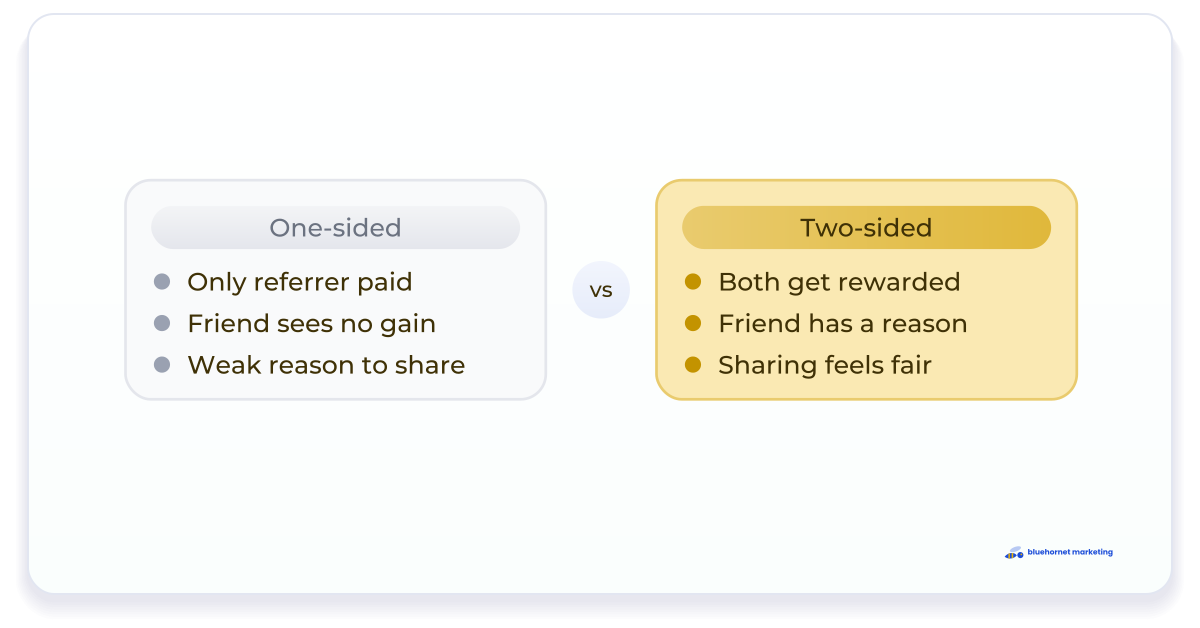
How the Loop Runs
- List what your customers would happily get more of, such as credits, seats, reports or support hours.
- Reward the invited person as well as the sender, so the message does not feel like a favor request.
- Put the invite prompt right after a moment of success, such as a first completed project.
- Make the share link one click, with the message pre-written and editable.
- Track invited signups separately and compare their retention with other sources.
Tools for a Referral Loop
Referral tools such as ReferralCandy or a built-in feature in your billing platform can run the mechanics. Many teams start with a unique link in a CRM and a simple spreadsheet before they pay for software.
Hotmail Signature Link
In 1996 Hotmail added a short line to the bottom of every outgoing email inviting the reader to get a free account. The company reached millions of users within about a year and a half, and it sold to Microsoft in 1998. The distribution cost was close to zero because the product carried its own advertisement.
The same mechanic still works wherever your product creates something other people see. Think shared reports, booking pages, proposals, forms and invoices. I have added a small "made with" line to client documents and watched it become a steady source of signups within a few months, though the effect was modest compared with Hotmail's.
Steps to Adapt It
- Find the outputs of your product that outsiders see, such as emails, reports or booking pages.
- Add a short, tasteful line with a link to a landing page built for that audience.
- Tag the link with a source parameter so you can count the visits.
- Offer a way to remove the line on a paid plan, which doubles as an upgrade reason.
- Review the opt-out rate every month to make sure the line does not annoy people.
Tools for Product-led Visibility
Your product's own templates carry this tactic, with UTM parameters and web analytics counting the clicks. If you sell a service, the same idea works in email signatures and shared proposal pages.
HubSpot Website Grader
HubSpot built a free tool that scored any website and then asked for an email address to send the report. The tool attracted exactly the people who were thinking about their marketing, and it fed the sales team with leads that already had a reason to talk. It is one of the cleanest examples of a free tool acting as a lead magnet.
What makes it work is the match between the tool and the product. A person who cares about a website score is likely to care about inbound marketing software. When I help clients plan this kind of asset, I ask which small question their ideal buyer asks before buying, and whether a calculator, grader or checker can answer it in under a minute.
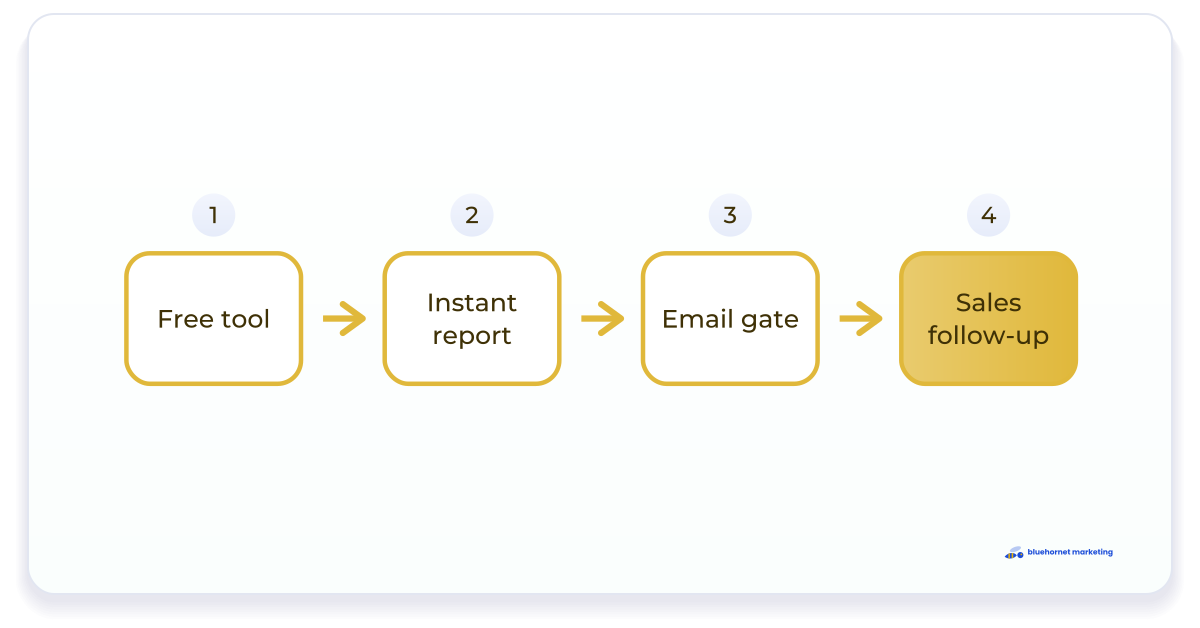
From Idea to Lead
- Write down the question your buyer asks one step before they need your service.
- Build the smallest tool that answers it, such as a calculator, scorecard or checker.
- Show part of the result immediately and send the full report after an email address.
- Route each lead to a follow-up email that explains the result in plain words.
- Compare the close rate of tool leads with leads from other sources before you invest more.
Tools for Building a Free Tool
A no-code form builder or a spreadsheet-driven calculator can launch the first version in a week. If it gets traction, a developer can rebuild it with proper scoring logic and CRM integration.
Zapier Integration Pages
Zapier created a page for each combination of apps its customers wanted to connect, such as one tool talking to another. Each page answers a specific search and leads straight into a working template. The pages multiply because the supply of app pairs is large, and each one targets a very specific need.
The risk with this pattern is thin content. It works when every page offers something real, such as a working template or a useful explanation, and falls apart when pages are copies with a swapped name. If you are tempted to copy it, start with ten pages you would be proud of, check how they rank and convert, and only then widen. My view is that most small companies should cap this tactic at a few dozen strong pages.
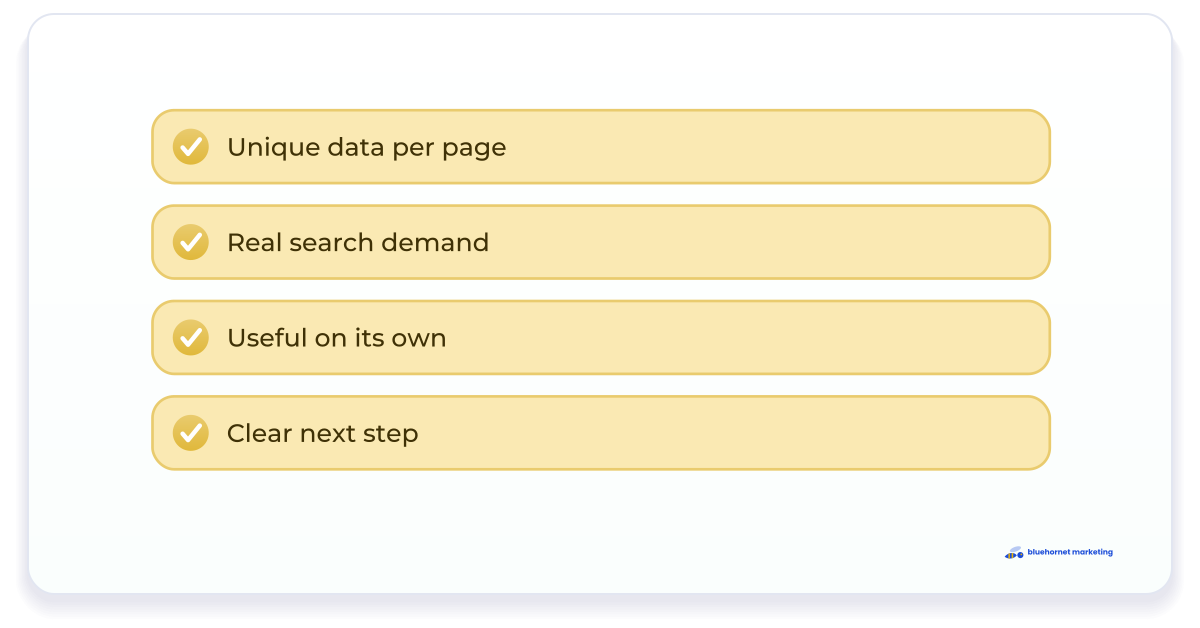
Building the Pages
- List the combinations your customers search for, using search data and sales calls.
- Draft one page template with a real working element, such as a sample setup.
- Write the first ten pages by hand and give each a unique angle.
- Link the pages from a hub and from related pages so crawlers and readers find them.
- Review rankings and conversions after two months before you add more.
Tools for Scaled Landing Pages
A keyword research platform finds the combinations, and a CMS with custom fields builds the pages. Keep a human review step so thin or duplicate pages never go live.
Superhuman Product-Market Fit Survey
Superhuman, the email app, asked users how they would feel if they could no longer use the product, and tracked the share who answered very disappointed. The benchmark many teams use for this question is 40 percent. The founders then focused on the users who gave that answer and on the changes that would move the others over.
I find this example useful for marketing because it points the whole funnel at the right audience. If your best-fit customers say they love a specific feature, that feature belongs in your headline, your ads and your onboarding. You stop guessing about messaging and start repeating what satisfied customers already told you.
Running the Survey
- Send a one-question survey to customers who have used the product for a few weeks.
- Calculate the share who would be very disappointed without it.
- Read the open answers from that group and note the benefits they name.
- Rewrite your homepage and ads using those words.
- Repeat the survey every quarter and watch the number move.
Tools for the Survey
A simple form tool or in-product survey is enough. The valuable part is reading the answers yourself and grouping them, which a spreadsheet handles well.
Duolingo Streaks and Reminders
Duolingo built its retention around a streak counter, friendly reminders and small rewards for daily practice. The company has talked publicly about how much of its growth comes from keeping existing learners active instead of buying new ones. The streak turns a vague intention into a visible habit that people do not want to break.
You do not need a consumer app to learn from this. Any business with repeat use can make progress visible: a coach with weekly check-ins, a software tool with a usage streak, a service with a milestone tracker. The caution is that pressure can backfire. I would test reminders on a small group first and watch unsubscribe rates, since a tactic that retains users while annoying them is a short-term win.
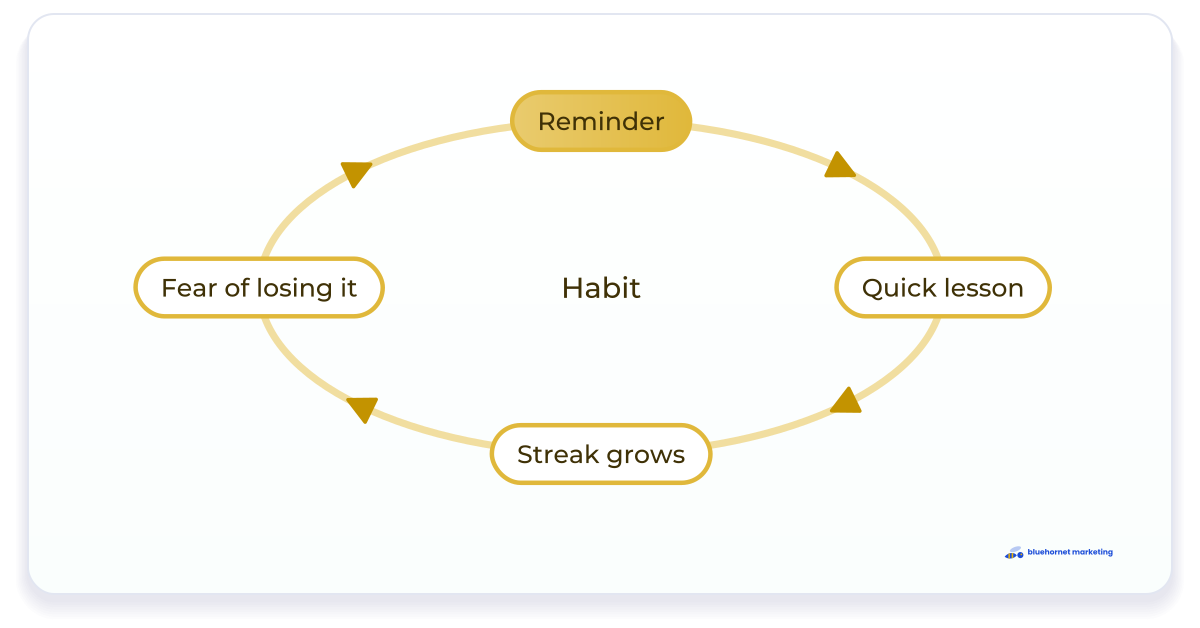
How the Habit Forms
- Pick the single repeat action that predicts long-term retention in your product.
- Show progress toward it in a place customers see every time they log in.
- Send reminders at the time of day when people usually act.
- Add a gentle recovery option, so a missed day does not end the habit.
- Track retention at 30 and 90 days, and unsubscribe rates, for the tested group.
Tools for Lifecycle Messaging
Lifecycle email and push platforms such as Customer.io, Braze or Klaviyo handle timing and segments. A basic version can run from your email tool with a segment of active users.
Calendly Booking Links
Every time a Calendly user sends a booking link, the recipient sees the product at work and often creates an account of their own. The product spreads through its normal use, and the people who receive it are professionals who have scheduling problems too. Growth happens inside the work, with no separate campaign needed.
For a service business, the equivalent is anything a client sees that carries your name and makes the next step easy: a booking page, a proposal portal, a clean report. When you design these touchpoints, treat them as marketing assets, with a clear next step and a link that is easy to share forward.
Where the Exposure Happens
- Map every point where a customer or prospect sees something you created.
- Make the next step obvious, with one clear action.
- Add a light mention of how the recipient can get the same thing.
- Measure how many new leads trace back to these touchpoints.
- Improve the touchpoint with the highest volume first.
Tools for Embedded Touchpoints
Scheduling tools, proposal software and shared dashboards all create these moments. Attach UTM tags to every link so your analytics show which touchpoint produced each lead.
What a Test Costs Before You Commit
Before you build any of these, put a price on the first test. Take the hours your team will spend, multiply by an internal hourly cost, add software and any rewards, and compare the total with the value of the customers you hope to win. If one new customer is worth $4,000 and the test needs ten customers to pay back, you know the target before you start.
| Play | Build effort | Time to first signal | Main risk |
|---|---|---|---|
| Referral offer | Medium | 4 to 8 weeks | Reward seekers who never become customers |
| Product signature | Low | 2 to 6 weeks | Annoying users |
| Free tool | Medium to high | 6 to 10 weeks | Traffic that never buys |
| Scaled landing pages | High | 8 to 16 weeks | Thin pages that fail to rank |
| Customer survey | Low | 1 to 3 weeks | Small sample, wrong audience |
| Streaks and reminders | Medium | 1 to 3 months | Unsubscribes |
| Embedded touchpoints | Low to medium | 4 to 8 weeks | Weak next step |
These timings come from projects I have worked on and vary a lot with traffic volume. The tools that run most of these plays are compared in my list of growth marketing tools, and the sequence for running them is laid out in the growth marketing framework.
How to Choose Your First Play
Choose with three tests. Does the mechanism fit how your customers already behave? Can you build a first version in under three weeks? Can you measure the result with the tools you have? A play that fails any of these tests belongs further down the list.
- You know the funnel stage the play should improve.
- You have one primary metric and one guardrail metric.
- A first version fits in two or three weeks of work.
- You have set an end date and a decision rule in advance.
Early-stage companies have less data and fewer people, which changes the order. If that is you, read how to pick plays with limited resources in growth marketing for startups before you start.
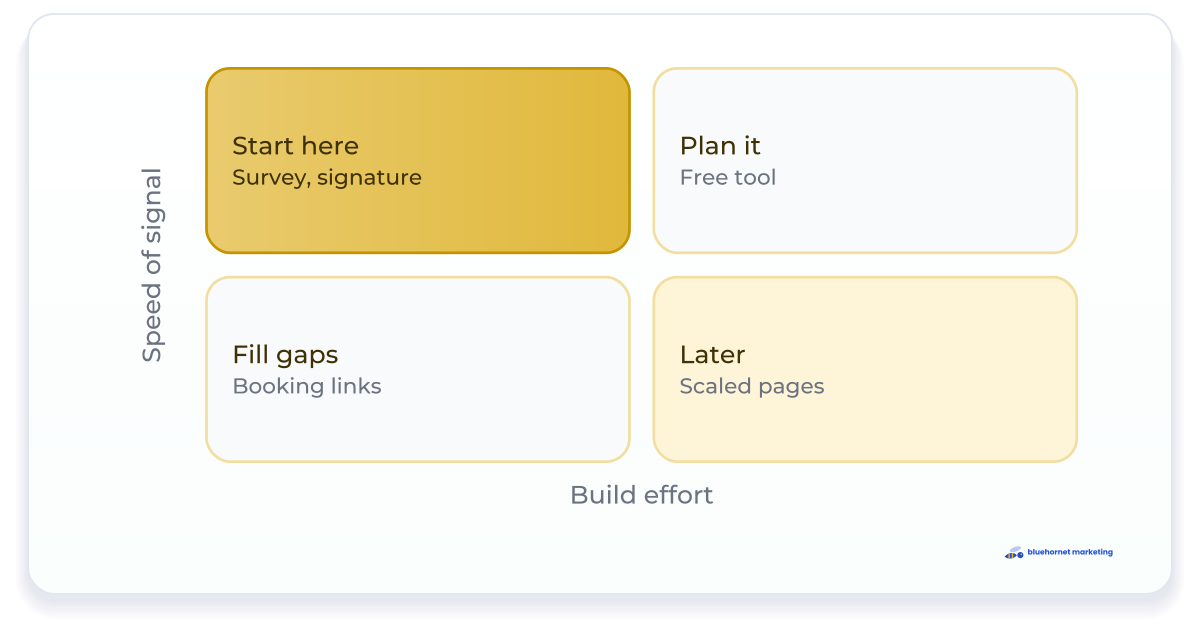
Questions About Growth Marketing Examples
What Is a Good Example of Growth Marketing?
The Dropbox referral program is the one I use most often. Both the sender and the invited person got more storage, the reward cost the company little and the invite took a click. It shows how a good growth tactic lines up the reward with the product itself.
Do These Examples Work for Small Businesses?
The mechanics do, but the scale does not. A small company will not get Dropbox-sized results from a referral offer. You can still run the same loop with a few dozen customers and learn whether the idea fits your market before spending more.
How Do I Choose Which Example to Copy First?
Pick the one that matches your biggest funnel gap. If strangers do not find you, look at scaled content or a free tool. If customers leave early, look at lifecycle messaging. Test one idea for a month before you add a second.
How Long Does It Take to See Results from a Growth Tactic?
Referral offers and landing page changes can show a signal in four to six weeks if you have enough traffic. Retention tactics need at least a quarter, because you have to wait for cohorts to age before you can compare them.
Are There Risks to Growth Tactics?
Yes. Aggressive reminders can raise unsubscribes, scaled pages can look thin to search engines and referral rewards can attract people who only want the reward. Define a guardrail metric for each test, such as unsubscribe rate or churn, and stop when it moves the wrong way.
What Should I Measure in a Growth Experiment?
Pick one primary metric tied to revenue, such as qualified leads or paid conversions, and one guardrail metric such as unsubscribes or refunds. Write down the expected change and the end date before launch, so you cannot move the goalposts afterward.
Do I Need Special Software to Run Growth Experiments?
Not at the start. A web analytics tool, your CRM and a spreadsheet for the experiment log cover most early tests. Add an experimentation or product analytics tool when your traffic is high enough to run clean A/B tests.
Disclaimer: This article is for general information only and isn’t legal, financial or tax advice. Treat figures as estimates from typical work and confirm details with your providers before you act.
Was this guide helpful?
Thanks for your feedback.
Warren Albright
Warren leads the Blue Hornet editorial team and works with the consultants to turn real client projects into practical guides on content, paid media, marketing automation, CRM and analytics. He comes from content and demand generation work, edits every article before a working marketing consultant reviews it, and draws on strategies, channel plans and audits from client projects to keep the advice grounded in real numbers.