Quick Summary
- Start with patient value and chair capacity, since they set how much you can sensibly spend.
- Choose a few treatments to grow rather than marketing everything at once.
- Local search, reviews and a fast phone response are the base. Ads come after.
- Track new patients and cost per new patient monthly, and review the plan every quarter.
A dental marketing strategy is a short written plan that connects the treatments you want to grow with the channels that reach patients and the numbers that prove it works. I build one in nearly every dental marketing consulting project, and the practices that keep theirs updated are the ones that stop feeling at the mercy of slow months.
The framework below has seven steps. Each step has a clear output, so you can tell when you are done and move on.
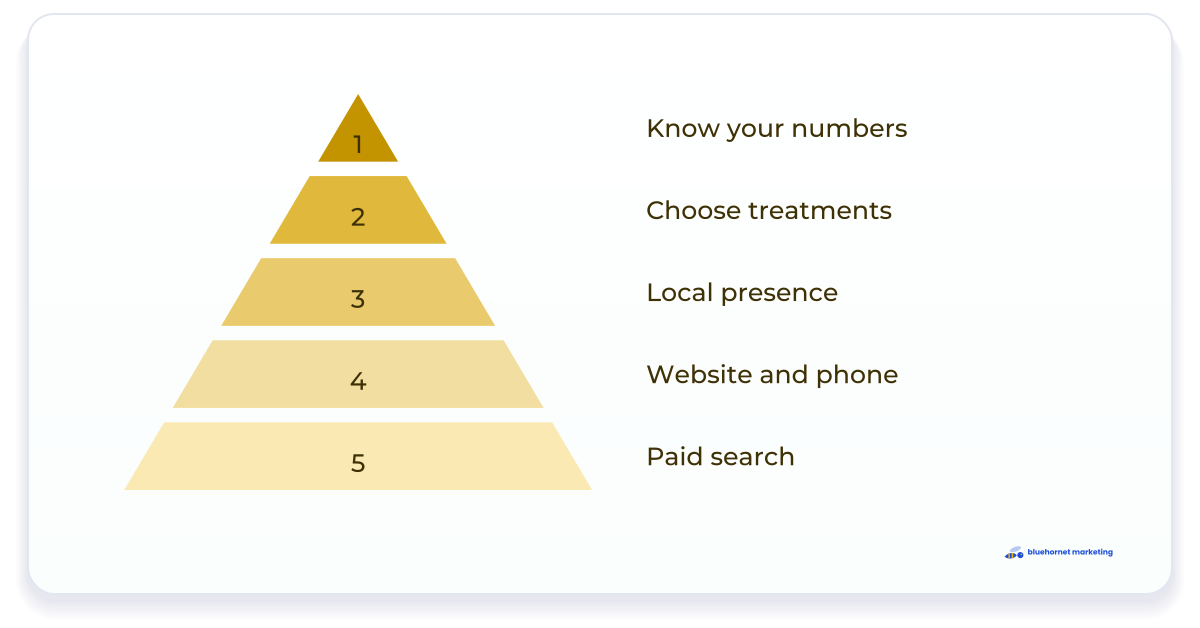
The Seven Steps at a Glance
| Step | Priority | Output you should have |
|---|---|---|
| 1. Know your numbers | First | Patient value, capacity and a new patient target |
| 2. Choose treatments | First | Two or three treatments to grow this year |
| 3. Build local presence | High | A complete profile and a steady review routine |
| 4. Fix the website and calls | High | Treatment pages, tap-to-call and a call script |
| 5. Add paid search | Medium | A small test campaign with call tracking |
| 6. Keep your patients | Medium | Recall, reactivation and referral messages |
| 7. Measure and review | Ongoing | A monthly report and a quarterly plan review |
Step 1: Know Your Numbers
Before you choose any channel, work out three numbers: what a new patient is worth, how many new patients you can treat and what you can afford to pay for one. Without them, every marketing decision is a guess.
Here is a worked example with round, invented numbers. Say a new patient is worth $1,800 in revenue over two years and your margin after direct costs is 40%. Each new patient then contributes about $720. If you are willing to spend up to a third of that to win one, your ceiling is roughly $240 per new patient. Replace each figure with your own.
| Number | Example | Where to find yours |
|---|---|---|
| Value of a new patient (2 years) | $1,800 | Practice software, revenue by new patient |
| Margin on that revenue | 40% | Your accountant or practice manager |
| Contribution per new patient | $720 | Value times margin |
| Maximum acquisition cost | About $240 | One third of contribution, as a starting rule |
My guide to dental marketing ROI goes deeper into this calculation and shows how to include recall visits and referrals.
Step 2: Choose the Treatments and Patients You Want
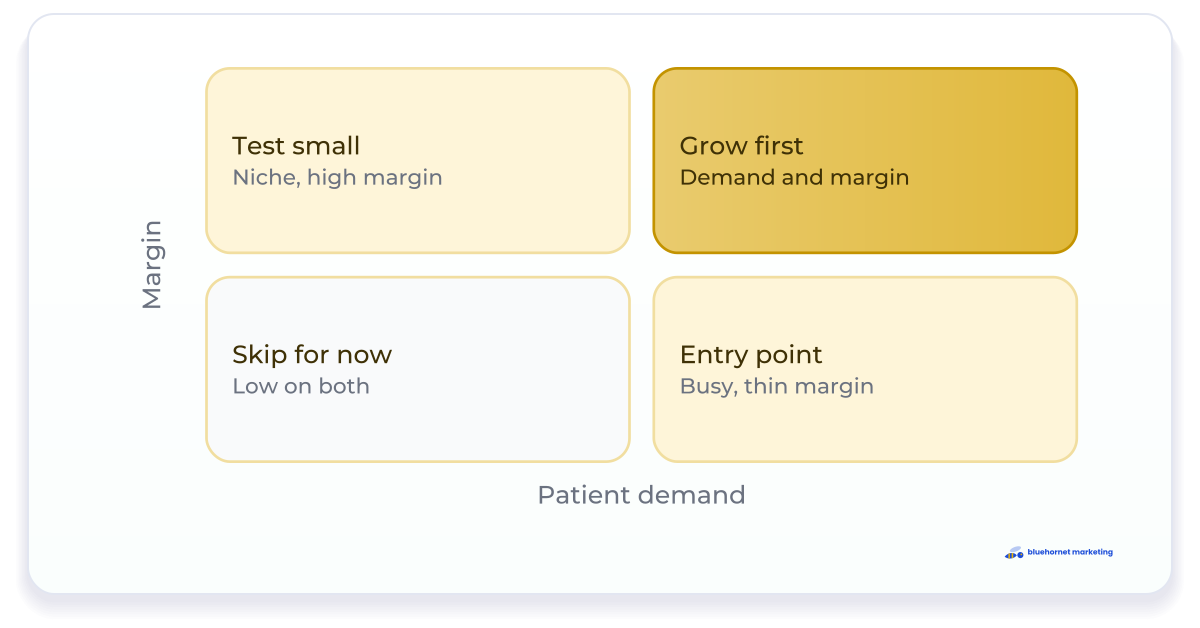
Trying to promote everything produces a vague message. Pick two or three treatments that fit your capacity, your margin and your interests, and decide who you want to reach for each: families, patients who want cosmetic work or people with urgent pain.
Check each choice against demand. Search a few treatment terms with your town name and see how many practices appear and how they describe themselves. Where competitors are strong and look identical, a clear angle, such as same-week appointments or a calm approach for anxious patients, helps you stand out.
Step 3: Build Your Local Presence
This is the base of dental marketing. A complete Google Business Profile with the right categories, services, photos and hours is often the first thing a patient sees. Add a routine for asking for reviews each week and for replying to all of them.
Keep name, address and phone number the same everywhere they appear. Small differences confuse both patients and search engines. My list of nine dental marketing tips includes a short routine for profile and reviews you can set up in an afternoon.
Step 4: Fix the Website and the Phone
A website for a practice has one job: help a patient decide to call or book. Create a page for each treatment from step two. Explain the visit in plain words, show your team and your office and put a tap-to-call button and a booking form on every page.
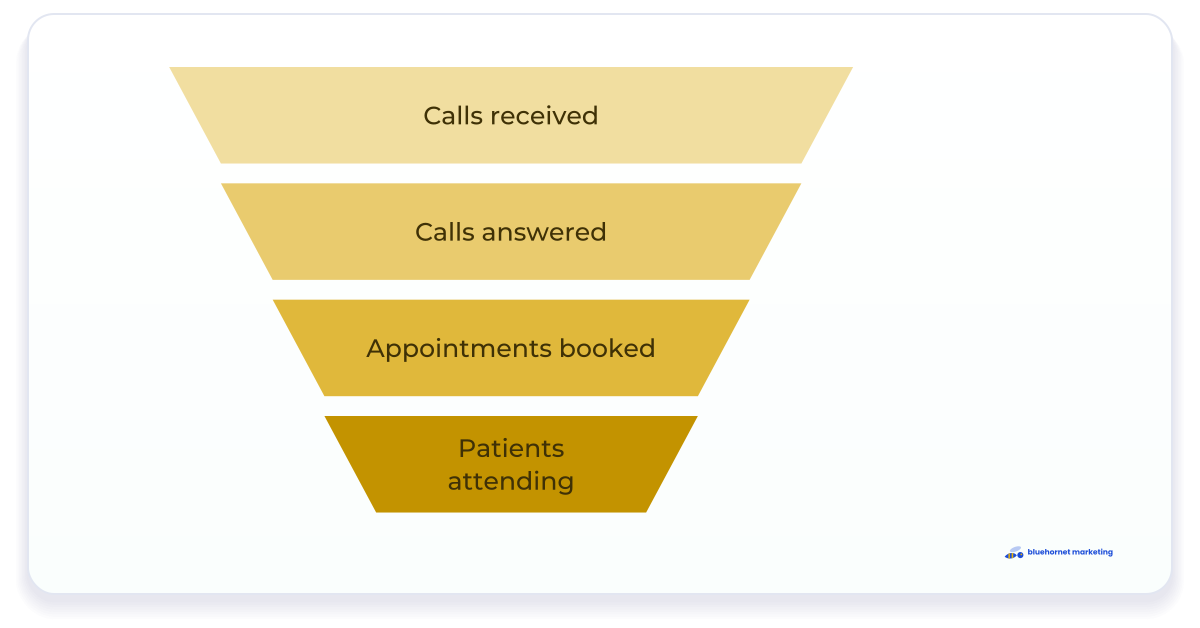
Then fix the phone. Marketing brings calls, and the front desk turns them into patients. Give the team a short script, track missed calls and set a time limit for returning messages. A patient who calls two practices will usually book with the first to answer.
Step 5: Add Paid Search With Tracking
Paid search suits dentistry because patients look for a dentist at the moment they need one. Start with a small budget on one or two treatments, a tight area around the practice and call tracking that records which ad produced each call. Send each ad to the treatment page, not the homepage.
Review the results after a month. If the cost per new patient is under your ceiling from step one, increase the budget slowly. If it is above, look at the keywords, the page and the call handling before you spend more. Tools for call tracking and reporting are compared in my ranking of dental marketing tools.
Step 6: Keep the Patients You Win
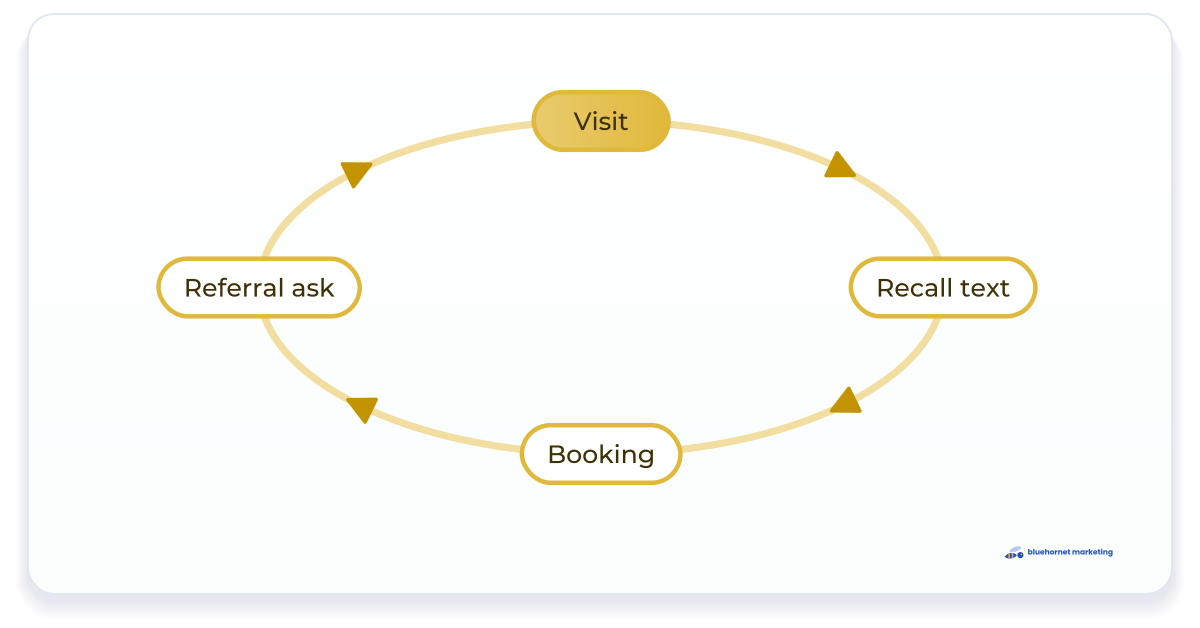
Keeping a patient costs far less than winning a new one. Set up recall messages for hygiene visits, short check-ins after treatment and a reactivation message for patients who have not visited for a long time. Ask happy patients for referrals at the right moment, such as after a good result.
Keep the tone warm and short, and make opting out easy. Track bookings from each message type, and keep the ones that work. To see how patient expectations and channels are shifting, read my overview of dental marketing trends.
Step 7: Measure and Review
Set up one simple monthly report with four numbers: new patients, cost per new patient, calls answered and reviews gained, each by source. Add a short note on what you will change next month.
- Review the report with the front desk, since they see call quality first.
- Compare tracking with what new patients say on their intake form.
- Once a quarter, cut one tactic and move its budget to a channel that works.
- Once a year, rewrite the plan from the review, not from scratch.
A Sample First-Quarter Plan for a Single Practice
A framework is easier to follow with a calendar. Here is how I would schedule the first 90 days for an independent practice with one location, a small front desk team and a modest budget. Adjust the order if your starting point differs.
| Weeks | Focus | What gets done |
|---|---|---|
| 1 to 2 | Numbers and treatments | Calculate patient value, set a new patient target and pick two treatments to grow |
| 3 to 4 | Profile and reviews | Complete the Google profile, start the weekly review request and reply to old reviews |
| 5 to 8 | Website and phone | Write the treatment pages, add tap-to-call, set call tracking and train the front desk |
| 9 to 10 | Ads test | Launch a small search campaign for one treatment and check calls weekly |
| 11 to 12 | Review and adjust | Build the first monthly report, compare cost per new patient with the ceiling and decide what to scale or stop |
Notice that ads come late. By week nine you have a profile worth clicking, pages worth landing on and a phone that gets answered. The same ad budget then works harder, because the rest of the chain no longer leaks patients.
Mistakes I See in Practice Marketing Plans
After many practice audits, the same few errors show up again and again. Checking for them is often faster than building anything new.
- Spending on ads while the Google profile lists old hours or a wrong number.
- Sending every ad click to the homepage instead of a page for that treatment.
- Counting form fills and clicks, but never asking which calls became booked visits.
- Letting an agency own the website, ad accounts or profile, so the practice cannot leave.
- Promoting a treatment the team has no capacity to deliver this quarter.
- Changing everything at once, so nobody knows what caused a change in results.
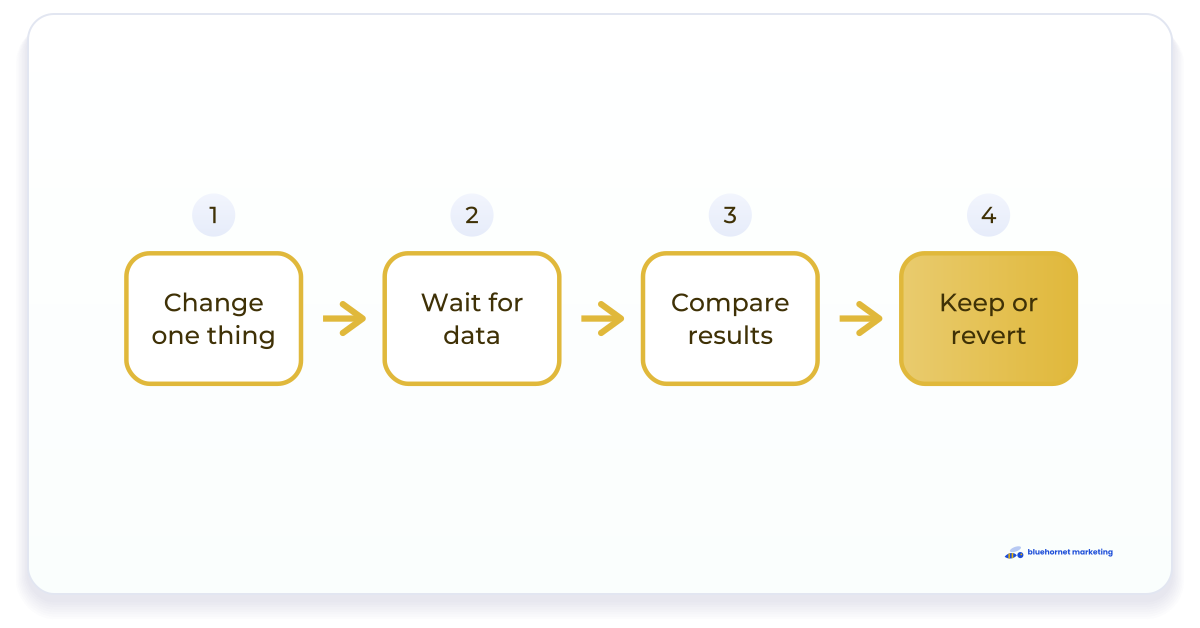
The last one deserves extra emphasis. When a practice changes its ads, website and offer in the same month, a rise or fall in calls cannot be explained. Change one thing at a time where you can, write the date down and compare the next month’s numbers with the previous ones.
How to Prioritize When Time and Money Are Tight
If you cannot do everything, follow the order of the steps. Know your numbers, choose treatments, fix your profile and reviews, fix your website and phone, and only then add ads. A practice that skips to ads usually pays to send patients to a weak profile and an unanswered phone.
If you are short on time, give each step a single owner and one hour a week. If you are short on money, spend on tracking and the website before ads. Free actions, such as a complete profile and asking for reviews, usually come first for good reason.
Getting Your Team Behind the Strategy
A strategy lives or dies at the front desk. Share the plan in a short team meeting, explain why call speed and review requests matter and show the monthly numbers. When the team sees that a fast reply turned into a booked visit, the habits stick. Ask for their ideas too, because they hear the patient questions your marketing should answer.
Questions About Dental Marketing Strategy
What Is a Dental Marketing Strategy?
It is a written plan for how your practice attracts, converts and keeps patients. It covers which treatments to grow, who you want to reach, which channels you will use, what you will spend and which numbers you will track. A good one fits on a few pages and is reviewed every quarter.
How Is Dental Marketing Different from Other Marketing?
Patients choose close to home, compare reviews and decide within minutes of a search, often when they have a problem. Trust and convenience matter more than brand awareness, and the phone is still the main conversion point. That makes local search, reviews and call handling central.
How Do I Decide Which Treatments to Promote?
Look at margin, chair time and demand together. Promote treatments that you enjoy, that fit your capacity and that patients search for in your area. Avoid promoting anything you cannot deliver well this quarter.
How Much of My Budget Should Go to Ads?
It depends on the competition around you and what a patient is worth. Many practices start with local search and reviews and add a modest ads budget for specific treatments, then scale only when call tracking shows a return. Set a three-month test budget and review it before you raise it.
How Do I Know Whether Marketing Is Working?
Track new patients by source, cost per new patient, calls answered and bookings from calls. Ask each new patient how they found you, and compare answers with your tracking. Trends over three months matter more than any single week.
Should I Market to Existing Patients Too?
Yes. Recall reminders, check-ins and referral requests cost little and often bring more booked visits than new acquisition. Keep messages short, honor opt-outs and track bookings from each message.
How Often Should I Update My Strategy?
Review it every quarter and rewrite it once a year. Change it sooner if your capacity changes, a competitor opens nearby or a channel stops delivering. The written plan keeps your team aligned while you adapt.
Disclaimer: This article is for general information only and isn’t legal, financial or tax advice. Treat figures as estimates from typical work and confirm details with your providers before you act.
Was this guide helpful?
Thanks for your feedback.
Warren Albright
Warren leads the Blue Hornet editorial team and works with the consultants to turn real client projects into practical guides on content, paid media, marketing automation, CRM and analytics. He comes from content and demand generation work, edits every article before a working marketing consultant reviews it, and draws on strategies, channel plans and audits from client projects to keep the advice grounded in real numbers.