Quick Summary
- Generic output and wrong facts are the two biggest quality risks, and a named reviewer is the best defense.
- Poor conversion data makes ad AI chase the wrong goals, so fix tracking first.
- Without a baseline you cannot prove return, and AI budgets are the first to be cut.
- Set a one-page rule set for data, tools and review before you scale.
Most AI marketing projects fail for ordinary reasons: unclear goals, poor inputs and no one checking the output. If you want help finding which of these hit your team hardest, AI marketing consulting starts with exactly that diagnosis.
Below are the seven challenges I see most in client work, in the order they tend to appear. Each one has the cause, a short fix list and tools to start with. Skim the table, then read the ones that sound familiar.
The 7 Challenges at a Glance
| Challenge | Area | Usual first fix |
|---|---|---|
| 1. Generic Output That Sounds Like Everyone Else | Brand voice drift | Write a one-page voice guide with five approved examples |
| 2. Facts, Claims and Statistics That Were Never Checked | Accuracy and compliance risk | Mark every statistic, price and legal or health claim in the draft |
| 3. Tool Sprawl and Overlapping Subscriptions | Software cost creep | List every AI subscription, owner and monthly cost |
| 4. Poor Data Feeding the AI | Data quality | Audit which events count as conversions in each ad platform |
| 5. Unclear Return and No Baseline | Measurement | Choose two or three tasks to measure |
| 6. Team Resistance and Uneven Skills | Adoption | Ask the team which tasks they would hand off first |
| 7. Data Privacy and Platform Rules | Privacy and governance | Write a one-page list of what may and may not be pasted |
7 AI Marketing Challenges and How to Fix Them
The first two are about quality, the next two about setup, and the last three about people and process. Start where your pain is greatest.
Generic Output That Sounds Like Everyone Else
The first thing I notice in teams new to AI is sameness. Blog intros, email subject lines and ad headlines start to share the same rhythm and the same phrases, because the model averages what it has seen. Buyers sense it, and engagement drops quietly rather than all at once.
The cause is usually a thin brief. A prompt such as "write a post about CRM" gives the model nothing specific. When you add your audience, a point of view, real examples and a few paragraphs of your best past work, drafts improve sharply.
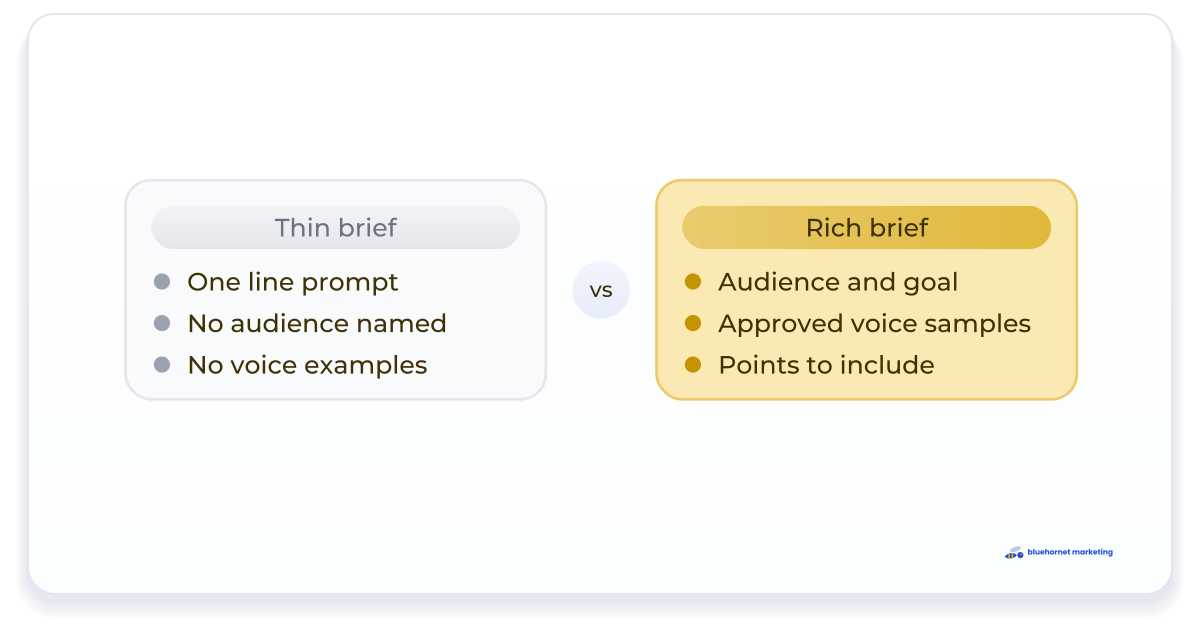
Why drafts sound alike
- Write a one-page voice guide with five approved examples.
- List phrases your brand never uses.
- Add a real customer example or number to every brief.
- Ask for three angles before any draft.
- Edit the opening and closing yourself.
Supporting Tools
Use a custom GPT or project to store your voice guide, and a style tool such as Jasper's brand voice feature if several people write. Keep a shared document of examples that performed well.
Facts, Claims and Statistics That Were Never Checked
AI states wrong numbers with the same confidence as right ones. I have seen a draft cite a study that did not exist and a product claim that legal would never approve. One slip like that can cost more than months of saved time.
In regulated areas such as healthcare, finance and security, the stakes are higher. A review step is the only dependable defense, and it needs an owner, a checklist and a rule that no AI-written number goes live without a source link.
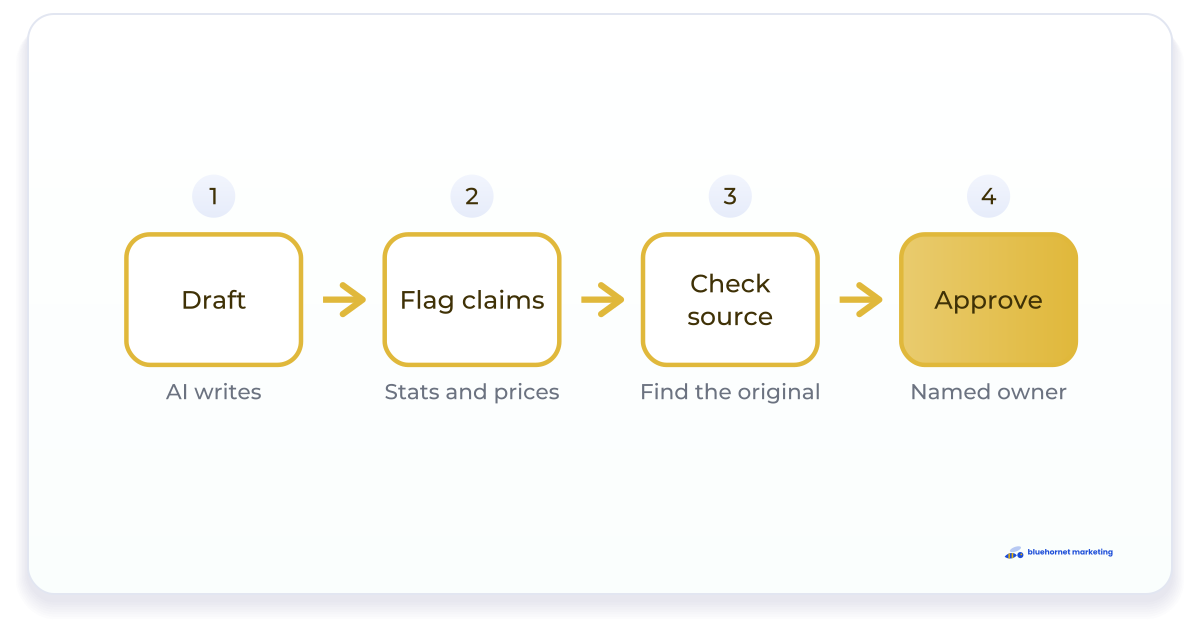
How to protect accuracy
- Mark every statistic, price and legal or health claim in the draft.
- Trace each one to a source you opened yourself.
- Remove claims you cannot verify.
- Add a named approver for regulated content.
- Keep a log of corrections to spot repeat errors.
Where I Start
Use a plain checklist in your project tool and a shared source list. For fact lookups, rely on primary sources instead of asking the model to cite its own output.
Tool Sprawl and Overlapping Subscriptions
Each team member finds a favorite tool, expenses it and moves on. Six months later you are paying for three writing assistants, two image generators and a video tool that nobody opened since the trial. The spend is small per seat, but it adds up.
The deeper problem is that no two people follow the same process, so nobody can compare results. Consolidation helps both cost and consistency, and it makes training easier.
How to rein in the stack
- List every AI subscription, owner and monthly cost.
- Mark what each tool is used for and how often.
- Pick one primary tool per job.
- Cancel or downgrade the rest at renewal.
- Require approval before new tools are added.
Tools and Setup
A simple spreadsheet works. See my ranking of the best AI marketing tools for which plans overlap and which tools cover several jobs.
Poor Data Feeding the AI
AI features in ad platforms and CRMs rely on the signals you give them. If conversion tracking counts newsletter sign-ups as sales, the system learns to find more sign-ups. Many accounts I audit have this problem, and the AI works hard on the wrong goal.
Messy CRM records create a similar issue for lead scoring and segmentation. Duplicates, missing fields and inconsistent stages produce unreliable recommendations, and teams stop trusting the tool.
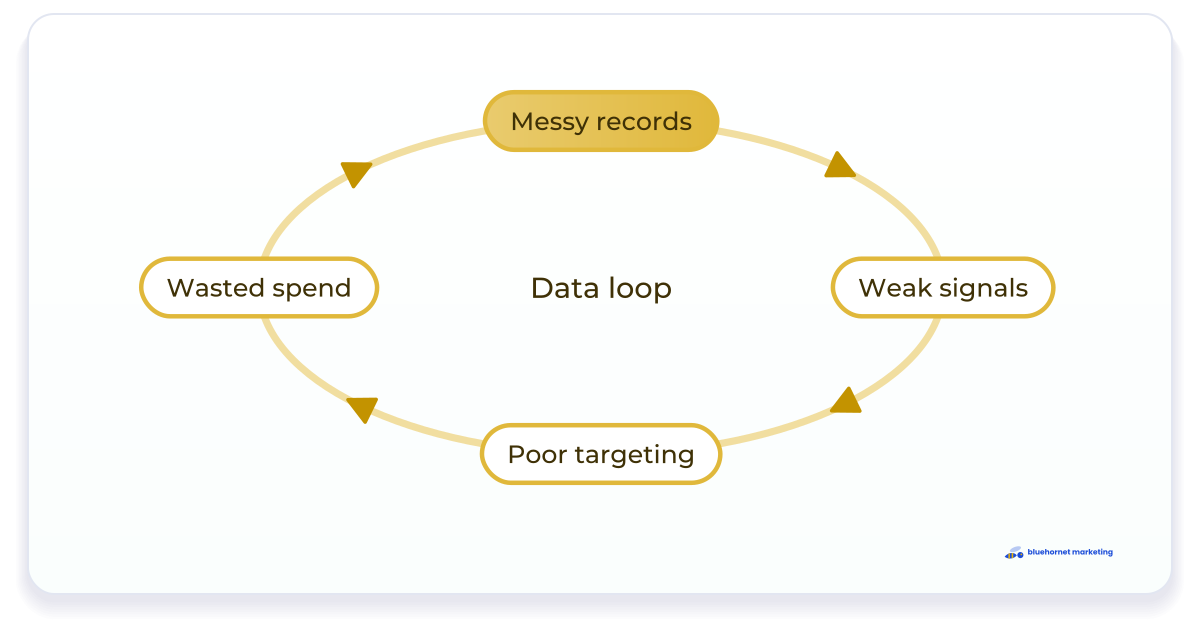
Fix the inputs first
- Audit which events count as conversions in each ad platform.
- Match conversions to revenue-linked actions.
- Clean duplicate and stale records in your CRM.
- Standardize lifecycle stages and required fields.
- Re-check data quality every quarter.
What to Use
Use your analytics tool's debug features and the platform's conversion diagnostics. A consultant-led AI marketing checklist review often finds these gaps in a day.
Unclear Return and No Baseline
Many teams adopt AI because it feels faster, and a year later cannot say whether it helped. Without a before figure, a manager sees only a new line in the budget. When cuts come, the program is first to go.
The solution is to measure before you start. Time per task, cost per lead and output per week are enough. I walk through the full method in my piece on AI marketing ROI.
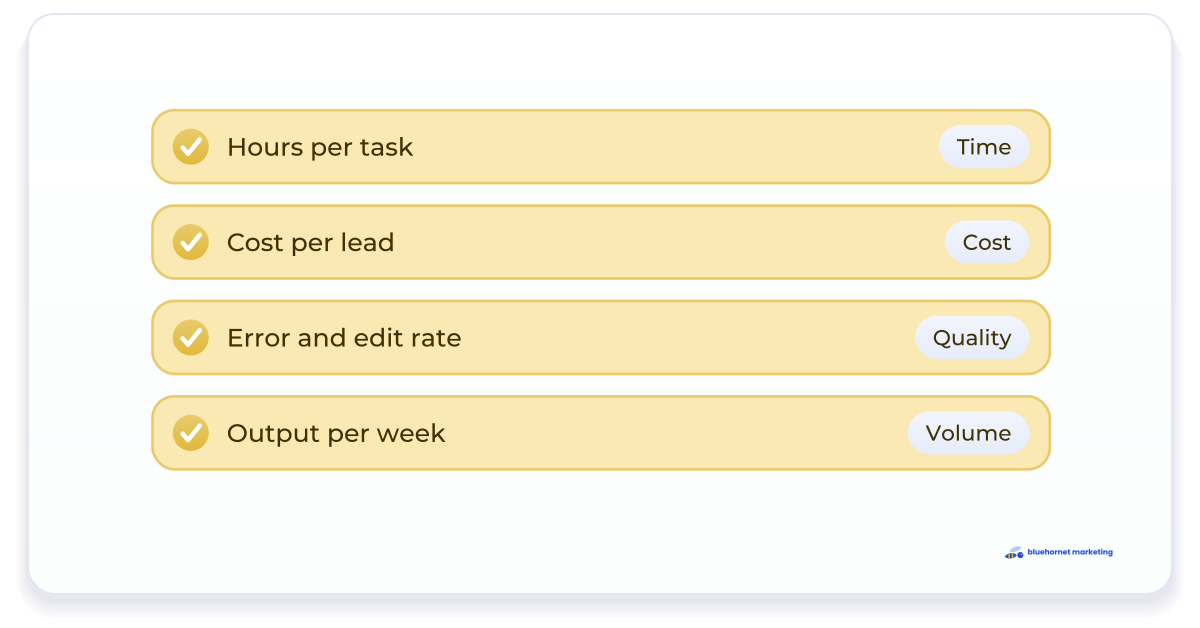
How to build a baseline
- Choose two or three tasks to measure.
- Time them for two weeks before using AI.
- Record cost per lead for the channels involved.
- Run the AI workflow for four weeks.
- Compare results, including review time.
Helpful Resources
A shared timesheet or the time tracking in your project tool is enough. Pull cost per lead from your ad platform and CRM.
Team Resistance and Uneven Skills
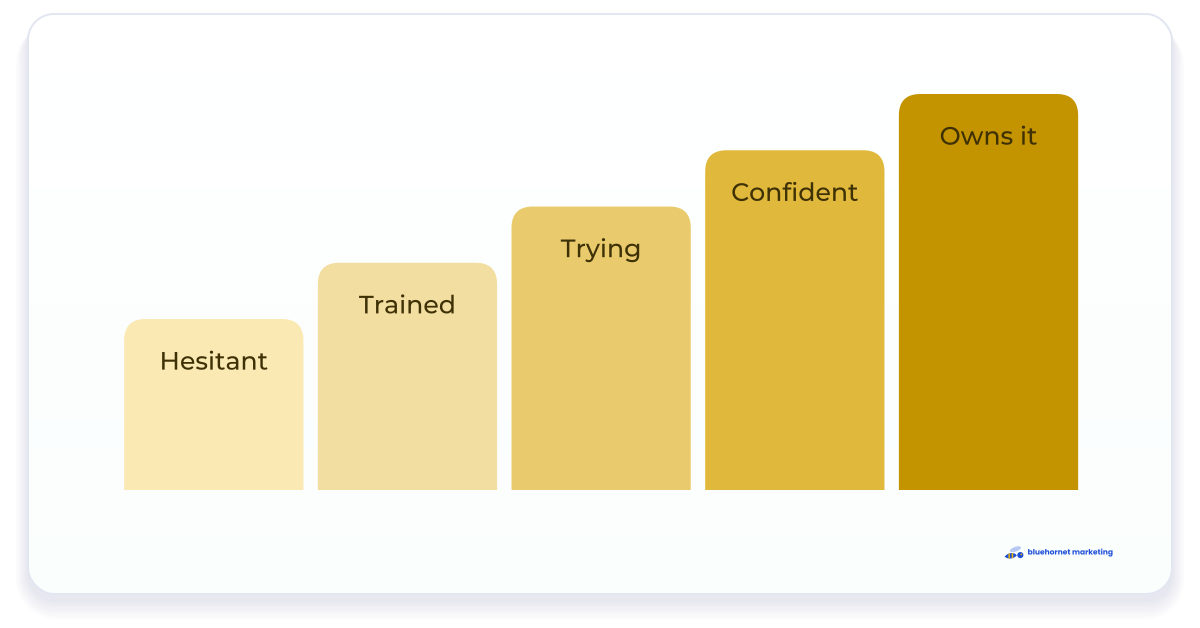
Some people use AI all day, and others avoid it for fear of mistakes or of being replaced. The gap creates uneven output and quiet friction. Writers worry about their craft, and managers worry about quality.
Training and clear rules lower the temperature. When people know what AI is for, what stays human and how their work is judged, adoption improves. Involve the team in choosing the first workflow, and share the saved hours as time for better work.
How to bring the team along
- Ask the team which tasks they would hand off first.
- Run a short hands-on session with real work.
- Publish rules on what may be pasted into tools.
- Name a go-to person for questions.
- Review results together after four weeks.
Training Ideas
Record short walkthroughs in your internal wiki. Pair experienced users with newcomers for the first two weeks.
Data Privacy and Platform Rules
Teams paste customer lists, call notes and draft contracts into AI tools without thinking about where the data goes. Some tools use inputs for training, and others store them. A single careless upload can violate your own customer promises.
Ad platforms also have rules for AI-generated creative and disclosures, and those rules change. I am not a lawyer, and you should check current requirements with your legal team and each platform's policy pages before relying on any of this.
How to set safe rules
- Write a one-page list of what may and may not be pasted.
- Choose business plans with data controls.
- Switch off training on your inputs where possible.
- Mask personal data before sharing.
- Ask legal to review the policy once a year.
Controls to Use
Use enterprise or team plans with admin controls. Keep a register of tools and what data each can see.
Across all seven, the pattern is the same: the technology works, and the surrounding process does not. A tool amplifies whatever system it joins. A clear brief and a careful reviewer get better output, and a vague brief with no reviewer gets faster mistakes.
Which Challenge to Fix First
If you can only fix one thing this month, fix measurement. A baseline makes every other challenge visible, because it shows where time and money go. After that, address accuracy, since one public mistake costs more than any saving.
Teams that are still choosing software should read the steps in my guide to AI marketing implementation, which orders the work to avoid the delays that cause many of these problems.
How to Judge Whether You Are Ready to Scale
Before you add more workflows, check where you stand:
- You have a baseline for at least one workflow.
- Every AI output has a named reviewer.
- You know which tools you pay for, and why.
- Your conversion tracking matches real business results.
- Your team knows what data may go into which tool.
If three or more are missing, pause and fix them before expanding. If you want a second opinion on your setup, a short call is a quick way to find the gaps.
Questions About AI Marketing Challenges
What Is the Biggest Challenge in AI Marketing?
The most common is output that is generic or wrong, followed closely by an unclear return. Both come from missing process: thin briefs, no review step and no baseline. Fixing those two covers most of the damage.
How Do I Keep AI Content from Sounding Generic?
Give it specifics: a voice guide, approved examples, your audience and a real point of view in every brief. Then edit the opening and closing by hand. Generic drafts usually mean generic inputs.
Is AI-Generated Marketing Content Risky?
It can be, mainly through wrong facts, unsupported claims and privacy slips. A named reviewer, a source check for every number and clear rules on what data goes into tools reduce the risk to a manageable level.
Why Do My AI Ad Tools Underperform?
Often the cause is bad conversion data. If the platform learns from low-value events, it finds more of them. Check which actions count as conversions and match them to revenue-linked outcomes.
How Do I Get My Team to Use AI?
Let them choose the first workflow, train them on real tasks and publish simple rules. Explain what stays human. Share the time saved as room for better work, not as a reason to cut staff.
Do I Need a Policy for AI Use in Marketing?
Yes, a short one. One page covering what data may be pasted into tools, who reviews output and which tools are approved is enough. Have legal check it, and review it once a year.
When Is It Time to Get Expert Help?
When you have several tools in use with no shared process, when results are unclear or when your team lacks time to build workflows. A consultant can run an audit, set the baseline and train your team.
Disclaimer: This article is for general information only and isn’t legal, financial or tax advice. Treat figures as estimates from typical work and confirm details with your providers before you act.
Was this guide helpful?
Thanks for your feedback.
Warren Albright
Warren leads the Blue Hornet editorial team and works with the consultants to turn real client projects into practical guides on content, paid media, marketing automation, CRM and analytics. He comes from content and demand generation work, edits every article before a working marketing consultant reviews it, and draws on strategies, channel plans and audits from client projects to keep the advice grounded in real numbers.