Quick Summary
- Start with the channels you own, email and your donation page, before you add anything new.
- New donors are the weakest link: M+R found only 24% of new donors gave again, against 66% of prior donors.
- Build the plan backward from your fixed giving dates, with year-end as the anchor.
- Measure a few numbers every month, and review the whole plan once a quarter.
Most nonprofit marketing plans fail in the same way: they list a dozen channels and assign them to one person. A strategy is the set of choices that tells that person what to skip. If you want an outside view while you make those choices, nonprofit marketing consulting can be scoped to a single priority.
The playbook below runs in seven phases, ordered so that early wins pay for later work. I use benchmark figures from M+R's 2026 Benchmarks report where they help you judge your own numbers, and I flag that its averages are medians from 180 participating organizations, so treat them as reference points.
The Seven Phases at a Glance
| Phase | Goal | What you end up with | Typical timing |
|---|---|---|---|
| 1. Audit and Baseline | See what works today | A one-page summary of channels, supporters and gaps | Weeks 1 to 3 |
| 2. Audience and Message | Decide who you are talking to and what to say | Audience profiles and a short message guide | Weeks 3 to 5 |
| 3. Owned Channels | Fix email and the website first | Welcome series, email calendar, site updates | Weeks 5 to 10 |
| 4. Giving Experience | Make giving fast and clear | Revised donation page and monthly giving ask | Weeks 6 to 10 |
| 5. Campaign Calendar | Plan around key giving moments | A 12-month calendar with backward deadlines | Weeks 8 to 12 |
| 6. Reach and Amplify | Add search, social and paid carefully | A small set of tested channels | Months 3 to 6 |
| 7. Stewardship and Review | Keep donors and learn | Thank-you journeys and a monthly dashboard | Ongoing |
The timing is a guide for a small team working alongside a regular job. A bigger team can compress the first phases into a month. If your year-end campaign is close, jump to phases 3 to 5 and come back to the earlier ones afterward.
Phase 1: Audit and Baseline
Before you decide anything, write down where you are. List every channel you use, who runs it, how much time it takes and what it returned in the last twelve months. Add your list size, your donor count, your one-year donor retention and the share of gifts that arrive online.
Expect to find gaps in the data. Many small teams cannot say how many first-time donors gave a second time. That finding is useful, because it tells you the stewardship phase needs attention. Keep the baseline on one page, because a plan nobody can summarize does not get used.
Phase 2: Audience and Message
Most nonprofits serve at least four groups: donors, volunteers, the people you serve and partners or funders. Pick the two that matter most this year and write a short profile for each. What brings them to you, what makes them hesitate and what would they say to a friend about you?
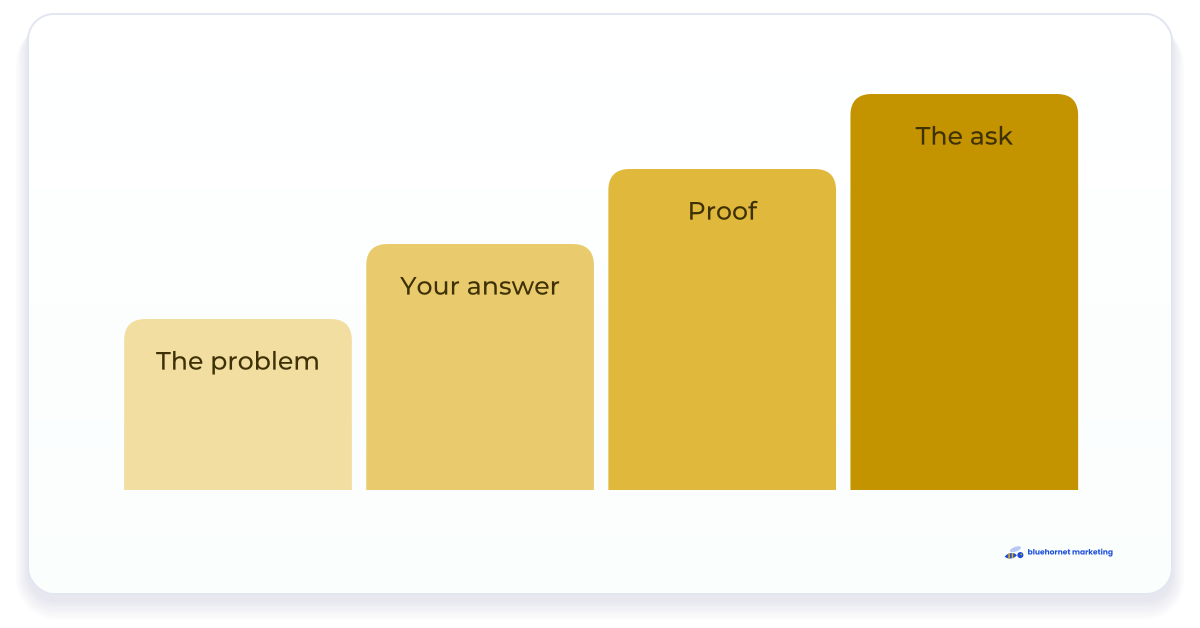
Then write the message guide. It should fit on a page: the problem in one sentence, what you do about it, the proof that it works and the single action you want. Keep proof concrete. Replace "we make a difference" with what one gift buys, how many people were helped last year and where a donor can see the report.
Your message also needs to match your service pages and fundraising materials. If you are planning a larger change, the nonprofit marketing examples I collected show how organizations like charity: water and DonorsChoose state their model in a sentence.
Phase 3: Owned Channels First
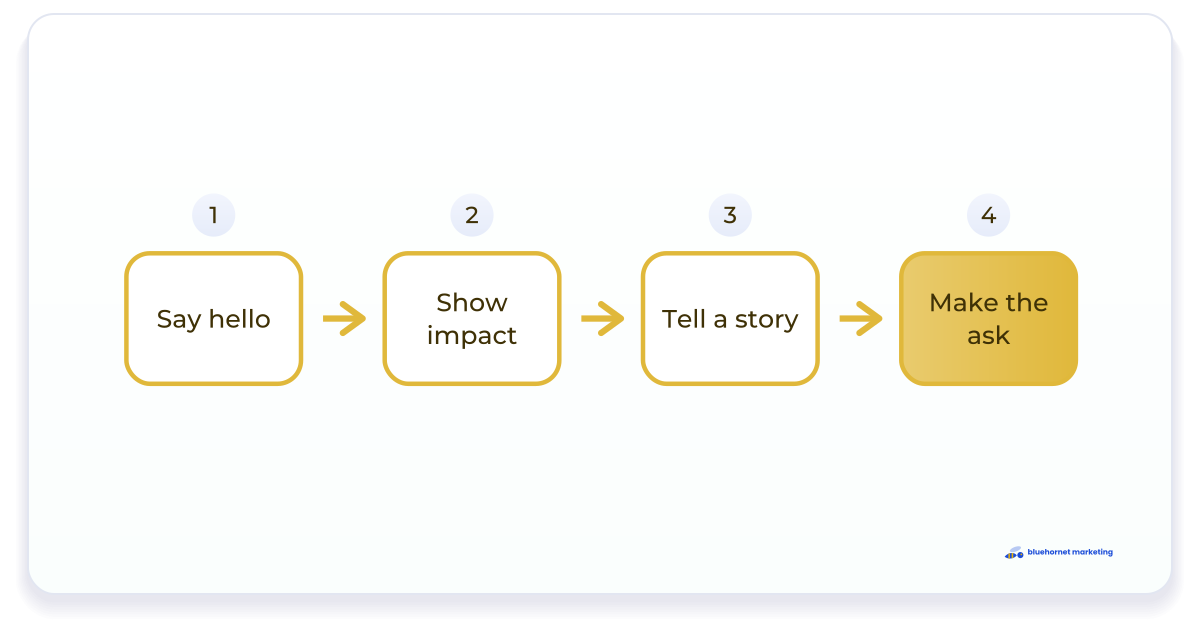
Email and your website are the only channels you fully control. M+R's data shows why email earns its place: it produced 11% of online revenue in 2025, and nonprofits raised $54 per 1,000 fundraising messages sent, with revenue from email up 16% on average. It also shows the cost of neglect. The average list lost 12% of its starting subscribers to unsubscribes and 4% to bounces over the year, so a list that is not growing is shrinking.
Build three things in this phase. A welcome series of three to four emails for new subscribers. A monthly update that tells one story and makes one ask. A basic calendar that tells you what goes out each week. For the website, check the top five pages by traffic and make sure each one has a clear next step.
Organic search matters too. M+R reports that organic search made up 39% of nonprofit website traffic in 2025, though that share declined over the course of the year. Clear page titles, a page for each program and local information such as address and hours help people find you when they need you.
Phase 4: The Giving Experience
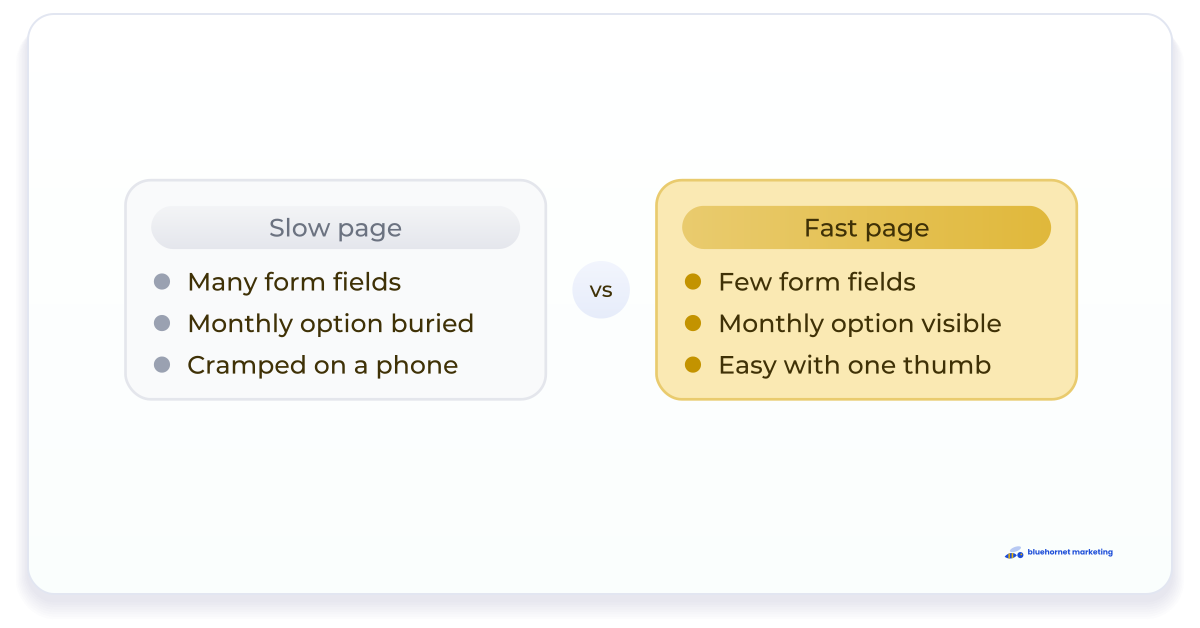
A visitor who clicks Donate is the warmest lead you will ever have. Yet M+R found that 1.6% of website visitors gave, and that of those landing on a primary donation page, 11% of desktop visitors and 8% of mobile visitors completed a gift. More than half of visits, 52%, came from phones and tablets, so the mobile experience is the main one.
Test your own page on a phone. Count the fields. Check that the amount buttons make sense for your cause and that the page loads fast. Make the monthly option easy to find, because monthly giving was 27% of online revenue in the same data, and monthly donors had 71% one-year retention. NonProfit PRO, citing M+R, reports that 64% of nonprofits set their donation pages to default to one-time gifts, which is worth checking on yours.
Phase 5: The Campaign Calendar
December carries a large share of annual giving. In the M+R figures, 37% of annual online revenue arrived in December, and 4% on December 31 alone. That makes year-end the anchor of your calendar, and it means your preparation starts in late summer.
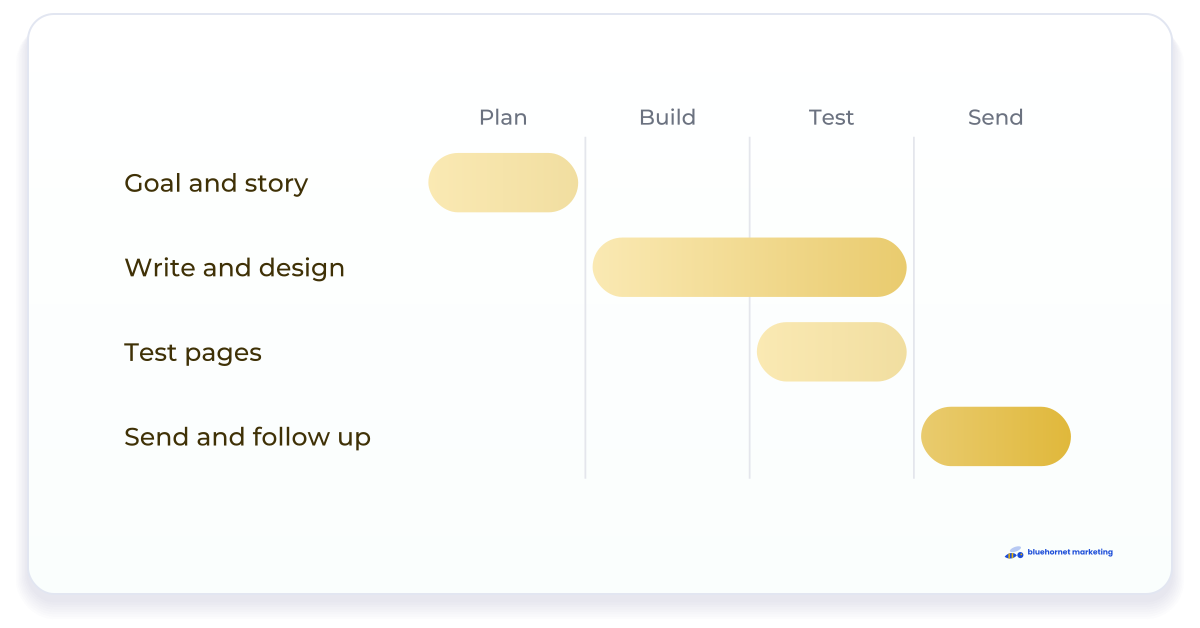
Plan backward from each key date. For year-end, set the goal, the message, the matching gift if you have one, the email series and the page updates, and then set a deadline for each. Add two or three smaller moments, such as a program anniversary or GivingTuesday, which was created in 2012 and is now a global movement. Fill the rest of the year with stewardship and storytelling, so that supporters do not hear from you only when you need money.
Phase 6: Reach and Amplify
Once your owned channels work, adding reach makes sense. Search ads are the most dependable paid channel in the M+R data, with a return on ad spend of $2.48. Google Ad Grants, which offer qualifying nonprofits up to $10,000 per month in search ads, returned $0.17 per dollar of grant spend, with a cost per donation of $793 in the study. That does not make the grant useless, but it suggests using it to drive volunteers, sign-ups and awareness more than direct gifts.
Social media is useful for reach and a poor substitute for email. M+R lists Facebook as the largest platform by average followers at 53,000, with Instagram at 18,000, and says nearly all nonprofits use both. Pick one or two platforms where your supporters already are and post consistently. If your audience is mostly older donors, a Facebook group often beats a new TikTok account.
A short list of tools can make this phase lighter. My ranking of nonprofit marketing tools compares email, design, social and donor platforms by price and fit for small teams.
Phase 7: Stewardship and Review
This is where retention is won. M+R found online donor retention of 48% overall, with 24% for new donors and 66% for prior donors, which means most of your growth gap is in the second gift. A thank-you within a day, a short update after 30 days and a story after 90 days is a simple sequence that costs very little.
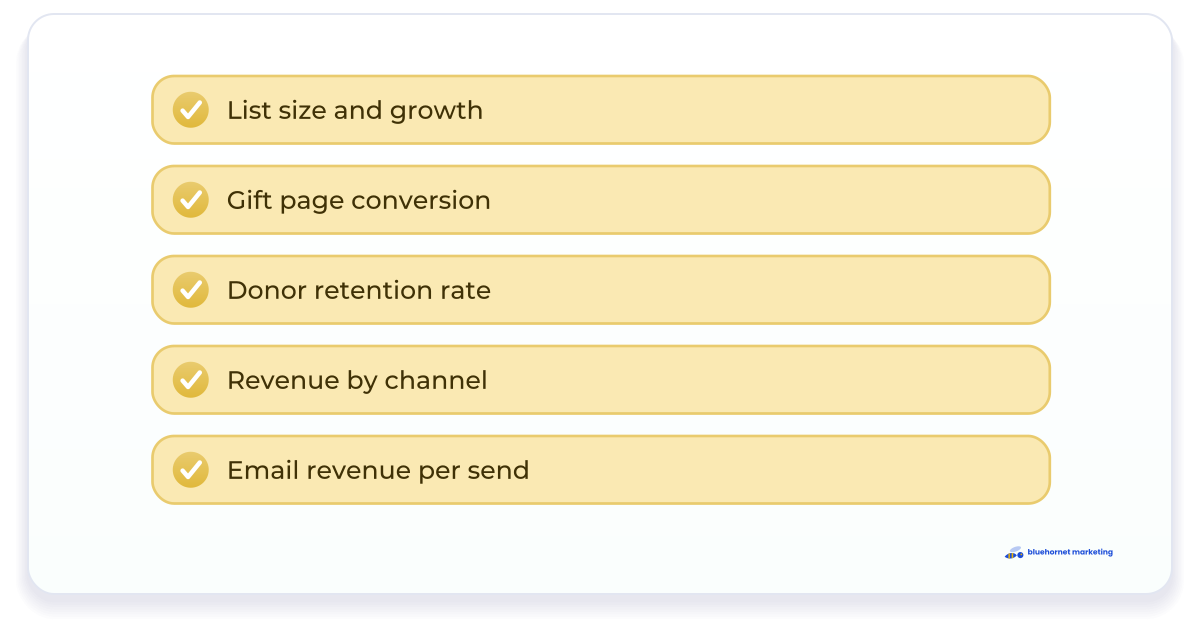
Build a dashboard of five numbers: list growth, donation page conversion, new donor retention, monthly donor count and cost per donor from paid channels. Review it monthly in a short meeting. Once per quarter, ask which channel gets less time and which gets more, based on what the numbers say.
Strategy also needs a few daily habits, so I collected them in nonprofit marketing tips, and the full list of benchmarks sits in my roundup of nonprofit marketing statistics.
How to Choose Your First Priority
You will not do all seven phases at once. Pick the phase where the data shows the biggest gap, and give it a quarter. A short test can settle it:
- If your list is shrinking, begin with phase 3 and fix the welcome series.
- If visitors reach your donation page and leave, begin with phase 4.
- If first-time donors rarely give again, begin with phase 7.
- If everything runs on last-minute effort, begin with phase 5 and the calendar.
Write the choice down along with the number you want to move and the date you will check it. A plan that names one number is far easier to run than a plan that lists ten goals.
Questions About Nonprofit Marketing Strategy
Where Should a Nonprofit with One Marketing Person Start?
Start with the channels you own: your email list and your donation page. Both are cheap to improve, and every other channel sends people to them. Once those work, add search and one social platform where your supporters already spend time. Resist the urge to be everywhere, because a thin presence on six platforms earns less than a steady one on two.
How Much of My Budget Should Go to Marketing?
There is no single right share, and I would not trust anyone who gives you one number. Look at what your channels return today, then fund the ones with a measurable return first. M+R's 2026 Benchmarks report found digital ad spend of about 10 cents per dollar of online revenue across the nonprofits in its study, which gives you one reference point, not a target.
Is Email Still Worth the Effort for a Nonprofit?
Yes. M+R reports that email brought in about 11% of online revenue in 2025, and that nonprofits raised $54 for every 1,000 fundraising emails sent. Email also supports every other channel, because it is the way you thank, update and invite people back.
How Do I Get New Donors to Give a Second Time?
Retention is where most strategies leak. M+R found new donor retention of 24% against 66% for prior donors. A fast thank-you, a short update on what the gift did and a clear next step within the first month are the simplest ways to move that number.
Should We Push Monthly Giving?
In most cases, yes. In the M+R data, monthly giving made up 27% of online revenue and monthly donors had 71% one-year retention. Make the monthly option easy to find, explain what a monthly gift covers and thank those donors in a way that is separate from one-time donors.
How Often Should We Review the Strategy?
Review results monthly and the plan itself every quarter. A full rewrite once a year, ahead of your budget cycle, keeps the document honest. Year-end giving dates are fixed, so work backward from them when you set the quarter's priorities.
Do We Need a Separate Strategy for Each Program or Audience?
You need one strategy with a short section per audience. Donors, volunteers, clients and partners each need different messages and channels, but they should share one story and one calendar so your team is not running four marketing plans at once.
Sources
- M+R Benchmarks, Email Messaging
- M+R Benchmarks, Website Performance
- M+R Benchmarks, Advertising
- M+R Benchmarks, Social Media and Influencers
- Truesense, What the 2026 M+R Benchmarks Reveal
- NonProfit PRO, 12 Revealing Nonprofit Stats From 2025
- GivingTuesday, About
- Google for Nonprofits, Ad Grants
Disclaimer: This article is for general information only and isn’t legal, financial or tax advice. Treat figures as estimates from typical work and confirm details with your providers before you act.
Was this guide helpful?
Thanks for your feedback.
Warren Albright
Warren leads the Blue Hornet editorial team and works with the consultants to turn real client projects into practical guides on content, paid media, marketing automation, CRM and analytics. He comes from content and demand generation work, edits every article before a working marketing consultant reviews it, and draws on strategies, channel plans and audits from client projects to keep the advice grounded in real numbers.