Quick Summary
- The strongest campaigns ask for one specific, easy action and show what it does.
- Transparency about where money goes, such as charity: water and Wikimedia provide, answers the question donors rarely say out loud.
- Shared dates, rituals and partners let a small organization borrow reach it could not buy.
- Every example works better with a follow-up plan, because the first gift is only the start.
Famous campaigns teach the wrong lesson if you only copy the surface. A bucket of ice water will not raise money for your cause. The mechanism underneath, a simple action people could share, is what you can use. If you are weighing where to start, nonprofit marketing consulting can help you match an idea to your team and budget.
I describe each example using the organization's own public pages, add context from my work with small teams and finish each one with steps to adapt it. Where a number comes from a third party, I say so. The plan that ties these ideas together is in my nonprofit marketing strategy guide.
The Nine Examples at a Glance
| Example | Format | What to borrow |
|---|---|---|
| 1. charity: water | Trust-led giving model | A promise donors can verify |
| 2. Movember | Participation campaign | A simple act that starts conversations |
| 3. GivingTuesday | Movement and shared date | A date other organizations can use too |
| 4. DonorsChoose | Marketplace of specific needs | Specific asks and a closing loop |
| 5. The ALS Ice Bucket Challenge | Viral social challenge | Low-effort participation with a built-in call to pass it on |
| 6. St. Jude Thanks and Giving | Retail partnership | Fundraising at the point of purchase |
| 7. Earth Hour | Global symbolic event | A simple, repeatable ritual |
| 8. Wikimedia Fundraising Banners | On-site donation appeal | Tested messages and plain honesty |
| 9. Girl Scout Cookies and Digital Cookie | Product-based fundraiser | An offer that people want in its own right |
Nine Campaigns and What Made Them Work
The examples run from trust-building to participation to partnerships. For tools that support them, such as peer-to-peer pages and email platforms, see my ranking of nonprofit marketing tools.
charity: water
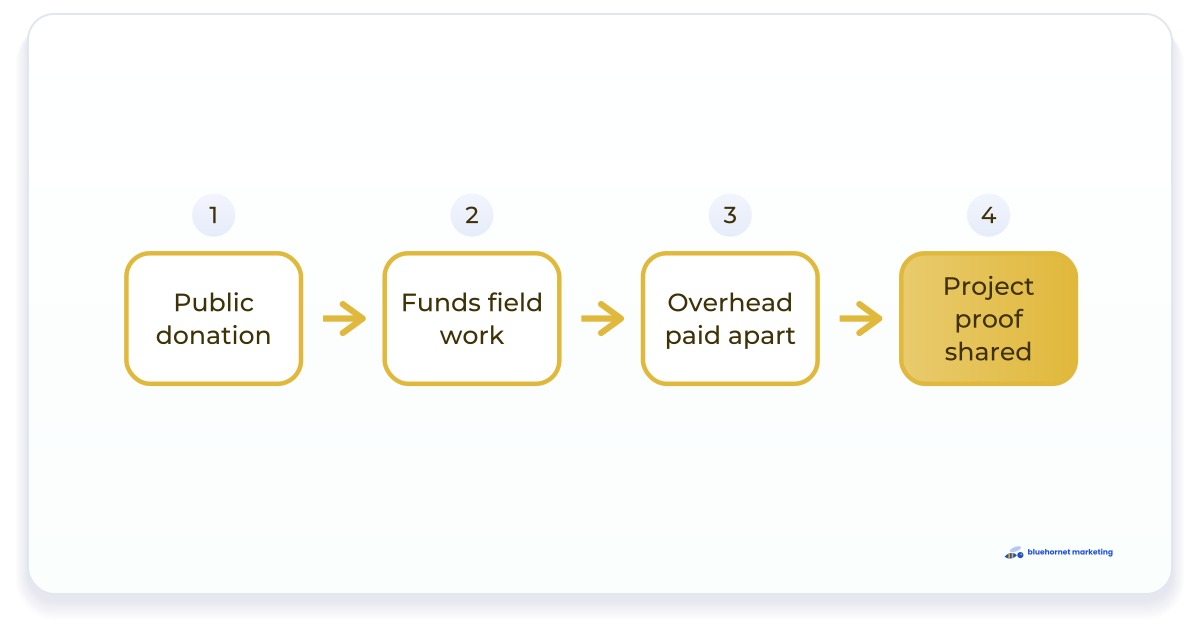
charity: water states a simple promise on its About page: 100% of public donations go directly to fund clean water projects, and private donors cover operating costs. The page also reports that more than 22 million people will be served by funded projects, a figure that updates as partners report.
I find the structure more interesting than the slogan. By splitting where public money and overhead money come from, the organization answers the question many donors quietly ask before they give. A promise only works if it is specific and checkable, and the page links to financials so a skeptical reader can verify the claim.
How to Apply the Idea
- Write down the one concern a first-time donor is most likely to have.
- Find a plain fact that answers it, such as how overhead is funded.
- State the fact in one sentence on your donation page.
- Link the proof, for example your annual report or financials page.
- Keep the claim current, because an outdated number does more damage than none.
What to Prepare
You need up-to-date financial reporting and a page that is easy to update. Involve your finance lead early so the wording is accurate.
Movember
Movember invites people to grow a moustache, move their body or host their own event, and to raise funds for mental health and suicide prevention, prostate cancer and testicular cancer. The foundation's page says its supporters have funded more than AUD $1.8 billion in prevention-focused work over two decades.
The mechanism carries the marketing. A participant's moustache is a visible signal that invites a question, and the answer is the cause. Fundraising happens through each person's own page and network, which turns every participant into a small channel. Movember also gives people more than one way in, which makes joining easy for those who cannot grow facial hair.
Building a Participation Campaign
- Pick one visible action that people can do in a month.
- Give each participant a page they can personalize in minutes.
- Offer two or three other ways to take part.
- Send participants a weekly message with a tip and a thank-you.
- Show a running total so everyone sees the group effort.
Tools for Fundraising Pages
Peer-to-peer fundraising software lets each participant run a personal page. Pair it with a simple email series so participants always know their next step.
GivingTuesday
GivingTuesday was created in 2012 and incubated at the 92nd Street Y and its Belfer Center in New York City. It is now an independent nonprofit with regional hubs across several continents. Its 2025 edition drew 19.1 million donors who contributed $4 billion, according to a Blackbaud Institute and GivingTuesday report cited by NonProfit PRO.
The lesson is about the shape of the idea. A shared date and a shared name gave thousands of organizations a reason to ask on the same day, and each one added its own story. The Blackbaud report also found 65% retention among GivingTuesday donors, compared with 52% for donors who gave earlier in the year, so the day is a good time to start relationships.
Making Use of a Shared Date
- Decide your goal early, such as new monthly donors rather than total dollars.
- Plan a lead-in of two or three emails before the day.
- Tell a single story on the day instead of listing programs.
- Thank every donor the same day.
- Follow up within the month with what the gifts did.
Where the Work Happens
An email platform and a donation page that is ready for traffic cover most of what you need. Test the page on a phone a week before the date.
DonorsChoose
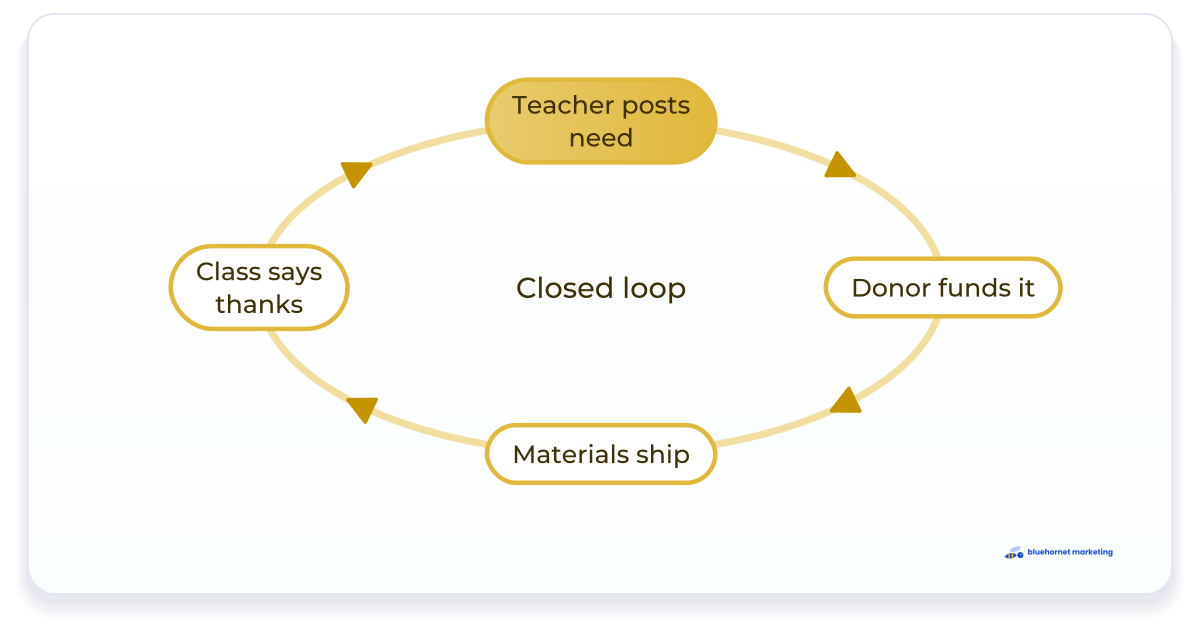
DonorsChoose lets teachers post classroom project requests and lets donors choose which to fund, giving as little as $1. Once a project is fully funded, the organization buys the items and ships them directly to the teacher. Founded in 2000 by Charles Best, a teacher at a Bronx public high school, it reports more than $314 million given to teacher requests.
Each request is specific, so a donor knows exactly what a gift does. The loop is closed too: donors get a thank-you from the teacher and a report of how the money was spent. That feedback is what makes a small gift feel personal, and it is something any nonprofit can imitate without a marketplace.
Copying the Specificity
- List five concrete needs with a price and an outcome.
- Write each one in a sentence a stranger understands.
- Show progress toward each need on the page.
- Send a short update when a need is met.
- Ask donors to pick another need to fund.
What Helps You Do This
A donation form that supports designations or campaign funds lets donors choose a specific need. A basic CRM tag lets you send the right follow-up to each donor.
The ALS Ice Bucket Challenge
In the summer of 2014, the ALS Ice Bucket Challenge raised $115 million for The ALS Association and inspired 17 million people to upload videos, according to the association. Since then it has committed more than $94 million, including over $82 million for research, funding the discovery of four new ALS genes and support for treatment centers.
The challenge spread because the act was easy, visible and came with a nomination that asked a friend to take part. I would not plan on repeating it, as the conditions were unusual. What you can reuse is the structure: a short, shareable action, a clear tie to the cause and a plan for what happens to the attention afterward.
What a Shareable Action Needs
- Make the action possible in under a minute.
- Add a peer ask, such as naming someone to join.
- Prepare the donation link before anything is posted.
- Have a team ready to answer comments and thank participants.
- Plan the follow-up that turns first-time donors into supporters.
Preparing for a Spike
Check that your donation page can handle a sudden jump in traffic. Prepare thank-you and follow-up emails in advance, because a spike moves fast.
St. Jude Thanks and Giving
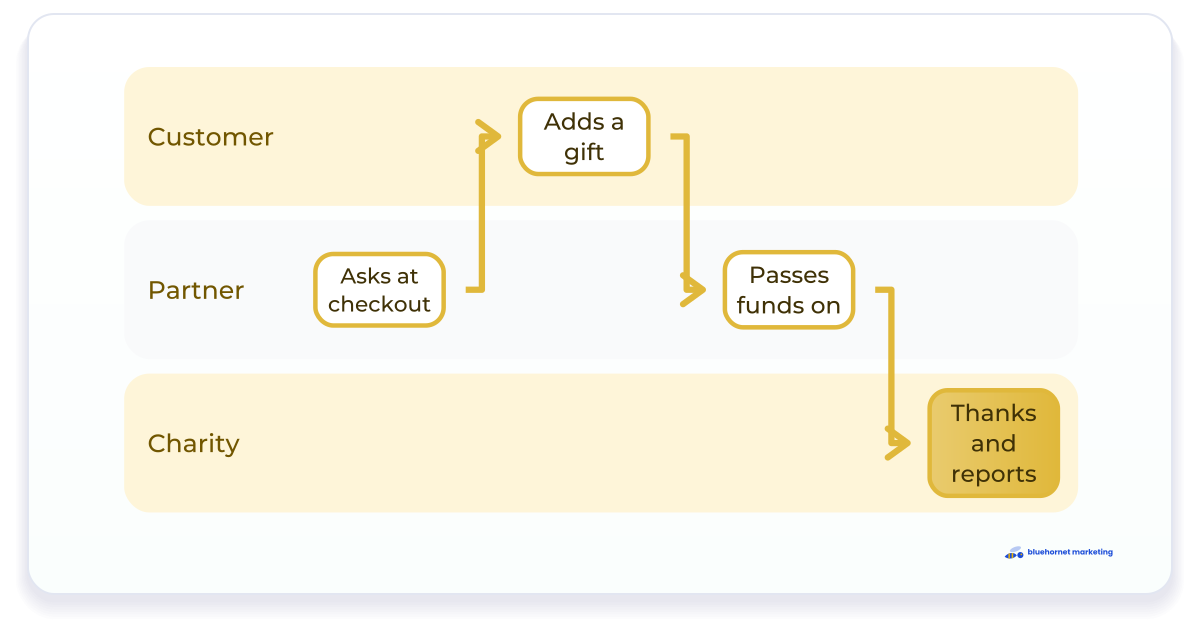
St. Jude Children's Research Hospital has run its Thanks and Giving campaign since 2004. Retailers and restaurants let customers donate at checkout, online or in apps, or buy limited-edition products with proceeds going to St. Jude. In the 20th-year release, HomeGoods gave 50% of the price of certain items and Melting Pot offered a $20 discount for a $10 donation.
A partner's customers become your donors without you paying to reach them, and the partner gets a visible cause. The campaign works because the request appears at a moment when people are already spending. The hard parts are managing many partners and keeping the story consistent in every store and app.
Working with Business Partners
- Start with two or three local businesses that share your audience.
- Offer simple options, such as a round-up or a fixed donation.
- Provide a kit with logos, wording and a short story.
- Agree on reporting so partners can share the result.
- Thank partner staff as well as customers.
Support Materials
A one-page partner guide and a shared folder of images cover most needs. Track each partner's results in your CRM so you can report back.
Earth Hour
Earth Hour began in Sydney in 2007, when more than 2.2 million individuals and 2,000 businesses switched off their lights for one hour. According to WWF, more than 190 countries now take part, on the last Saturday of March, from 8:30 to 9:30 p.m. local time. In 2020 the UK event went fully digital, with online events and live streams.
The ritual is easy to explain and easy to join, so it travels across languages. It also adapted when it had to: the move to online events kept the idea alive. If you run a recurring event, plan how it works for people who cannot attend in person.
Designing a Repeatable Ritual
- Pick a single action that takes one hour or less.
- Fix the date and time so people can plan ahead.
- Give local groups a toolkit and let them lead.
- Offer an online way to take part.
- Share photos and totals after the event to build momentum for next year.
What You Need
An event page, a sign-up form and a short toolkit are enough to begin. A live-stream option keeps the door open for people far away.
Wikimedia Fundraising Banners
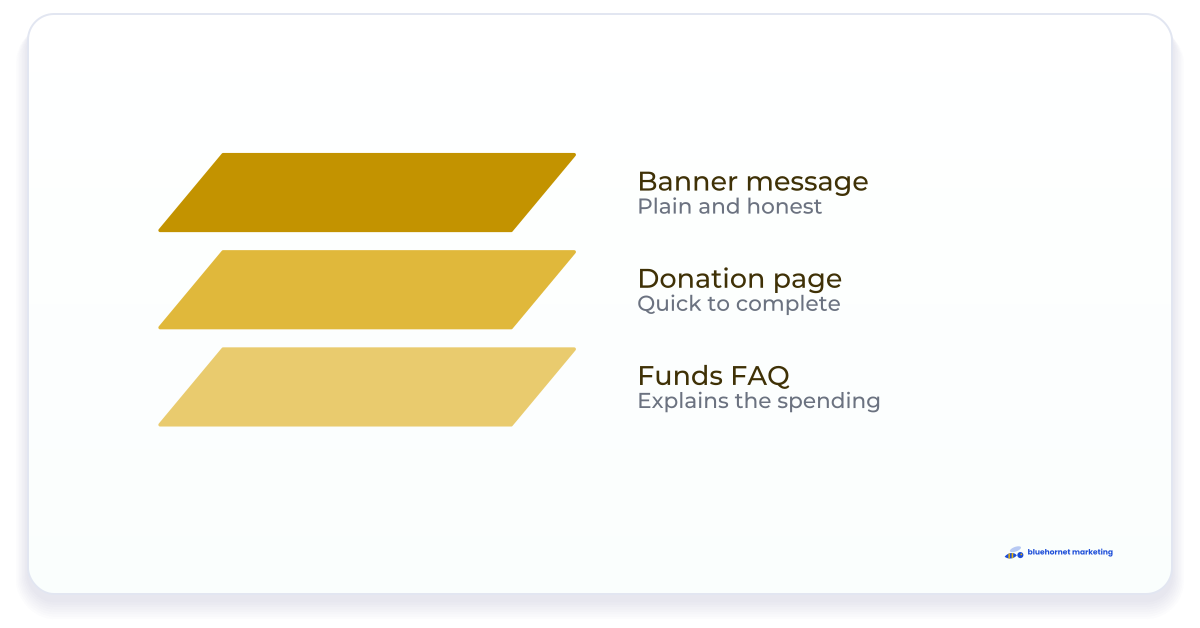
The Wikimedia Foundation asks readers for donations through banners on Wikipedia and contacts previous donors by email. Its fundraising FAQ says most funding comes from a large number of small donors around the world, that the average donation is about $15, and that the team tests hundreds of banner messages each year using surveys, focus groups, social media sentiment and donation rates.
The same FAQ explains how funds are used, with 76% allocated to programmatic work, 10% to fundraising and 14% to general and administrative costs. I like that the organization answers the obvious question on a public page. The approach is also a reminder that testing is a habit, not a one-time project.
A Testing Routine You Can Borrow
- Choose one message element to test, such as the opening line.
- Write two versions and send each to half of the list.
- Compare gifts per recipient, not only opens or clicks.
- Keep a log of what you tested and what you learned.
- Publish a short explanation of how you spend gifts.
Testing Tools
Most email platforms offer A/B testing for subject lines and content. A shared spreadsheet is enough for the test log.
Girl Scout Cookies and Digital Cookie
Girl Scout cookie sales fund local activities, since the organization says net proceeds stay with the originating council and troop. Customers can also order online through the Digital Cookie platform, using links from a Girl Scout or troop, and orders can be shipped across the United States, including Alaska, Hawaii and U.S. territories.
People buy the cookies because they like them, and the cause comes with the purchase. The online platform lets participants reach family and friends who live far away, and the page warns buyers about resale sites where authenticity cannot be guaranteed. That reminder is useful for any product fundraiser: protect the buyer's trust.
Starting a Product Fundraiser
- Choose a product people already buy.
- Explain where the proceeds go in a sentence.
- Give participants a personal link to share.
- Set a short sales window with a clear end date.
- Report the result and what it funded.
Setup and Support
An online store or a fundraising platform with product sales handles orders. Check tax and food or product rules in your state before you start.
What the Nine Examples Share
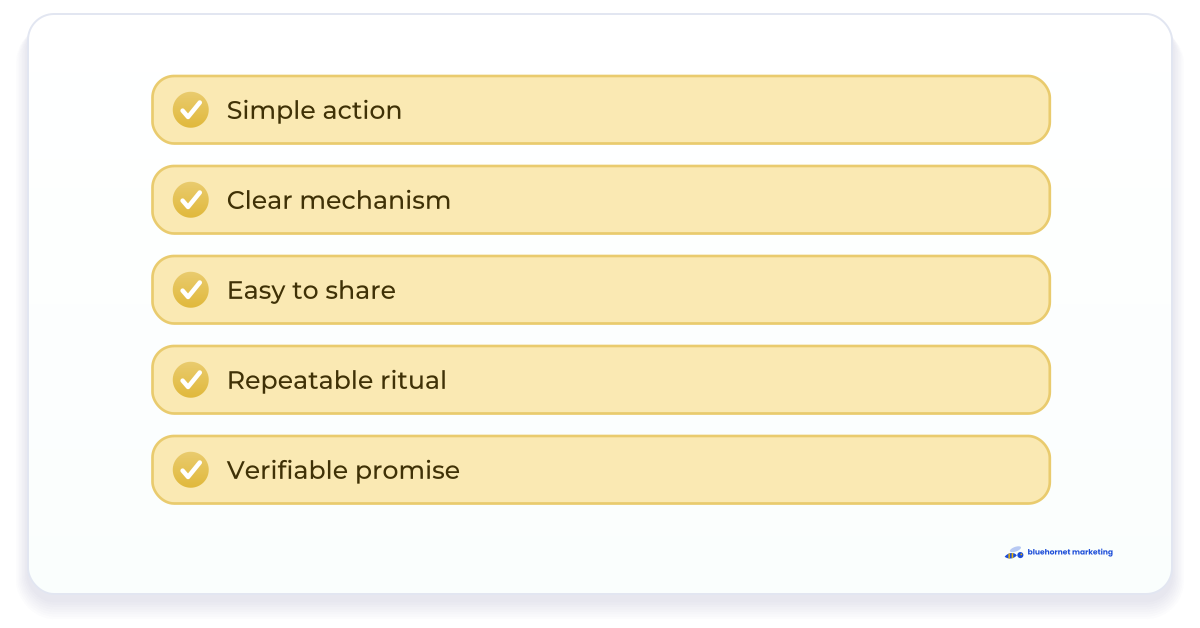
The examples differ in scale and format, and a few habits repeat. Each asks for something specific. Each makes the action simple. Each shows what happened afterward, whether that is a thank-you from a teacher, a running total or a published financial breakdown. These habits cost little, and you can build them into your own program this quarter.
Retention is the part that is easy to miss. The M+R data in my guide to nonprofit marketing statistics shows that only 24% of new online donors gave again, against 66% of prior donors. A campaign that wins first gifts and then goes quiet is wasting its best asset.
How to Choose a Campaign Idea for Your Organization
Look at what you already have, then pick the example that fits. A short checklist can help:
- You have a trusted record and open finances: borrow the transparency approach.
- You have an active community that likes a challenge: borrow the participation approach.
- You have local business relationships: borrow the partner model.
- You have a list of past donors: borrow the testing and thank-you routine.
Start small, run it once, record what you learned and decide whether to repeat it. Everyday habits matter as much as big ideas, which is why I wrote up nonprofit marketing tips for the work between campaigns.
Questions About Nonprofit Marketing Examples
What Makes a Nonprofit Marketing Campaign Successful?
In the examples I reviewed, success came from a clear and specific ask, an easy action and a tie between the action and the cause. Most also had a plan for what happens after the first gift, and that follow-up is what built lasting support.
Can a Small Nonprofit Copy These Campaigns?
Yes, at a smaller scale. A local round-up with three business partners, a single specific need on your donation page or a monthly test of email wording all use the same ideas without a national budget.
Are Viral Campaigns Worth Planning For?
I would not build a plan around one. The ALS Ice Bucket Challenge raised $115 million in 2014, but the conditions were hard to repeat. Prepare for a spike by having your page, thank-you emails and follow-up ready, and treat any viral moment as a bonus.
How Do I Know Which Example Fits My Organization?
Match the example to your assets. If you have a trusted brand, borrow the transparency of charity: water or Wikimedia. If you have many local supporters, look at Movember or Earth Hour. If you have corporate relationships, look at St. Jude.
How Much Does It Cost to Run a Campaign Like These?
Costs vary widely. Many of the mechanisms need little more than a landing page, a good email series and time to prepare. The expensive part is usually the staff hours to run it well, so plan those before you commit.
What Should I Measure During a Campaign?
Track gifts, number of donors, new donors, donation page conversion and the cost of any paid promotion. After the campaign, check how many first-time donors gave again within a year, since that shows whether the campaign built relationships.
How Do I Protect Donor Trust in a Campaign?
Say plainly what gifts do, give financial information on a public page and avoid claims you cannot support. Thank donors promptly and report back on results, which also helps with retention.
Sources
- charity: water, About
- Movember Foundation, About
- GivingTuesday, About
- NonProfit PRO, 12 Revealing Nonprofit Stats From 2025
- DonorsChoose, About
- ALS Association, Ice Bucket Challenge year-end update
- St. Jude, Thanks and Giving 20th anniversary
- WWF UK, 10 facts about Earth Hour
- Wikimedia Foundation, Fundraising FAQs
- Girl Scouts of the USA, Cookie FAQ
Disclaimer: This article is for general information only and isn’t legal, financial or tax advice. Treat figures as estimates from typical work and confirm details with your providers before you act.
Was this guide helpful?
Thanks for your feedback.
Warren Albright
Warren leads the Blue Hornet editorial team and works with the consultants to turn real client projects into practical guides on content, paid media, marketing automation, CRM and analytics. He comes from content and demand generation work, edits every article before a working marketing consultant reviews it, and draws on strategies, channel plans and audits from client projects to keep the advice grounded in real numbers.