Quick Summary
- Give every process one owner, because shared ownership means nobody acts.
- One standard brief and one set of naming rules prevent most rework and reporting arguments.
- Write lead definitions down with sales and review rejection reasons every month.
- Adopt one practice at a time and give it four weeks before you judge it.
Most marketing operations problems are habits, not technology. The same handful of practices separate teams that launch calmly from teams that scramble. When a client asks for help through marketing operations consulting, I usually find that two or three of the seven practices below are missing.
Each practice has a short explanation, a do list and an avoid list. Skim the table first, then read the ones where you recognize your own team.
The Seven Practices and the Mistake They Prevent
| Practice | What it prevents | First step |
|---|---|---|
| 1. Give Every Process One Owner | Work that everyone assumes someone else handles | Put a name next to each workflow |
| 2. Start Every Campaign With One Brief | Rework from unclear goals | Create a single brief template |
| 3. Set Naming and Tracking Rules Once | Reports that never match | Write a one-page naming guide |
| 4. Agree on Lead Definitions With Sales | Arguments about lead quality | Hold one workshop and write it down |
| 5. Keep a Lean Tool Stack | Overlap, wasted licenses and confusion | List every tool and its purpose |
| 6. Document as You Build | Knowledge that leaves with a person | Record each workflow on one page |
| 7. Review the Numbers on a Fixed Rhythm | Drift and surprises | Book a monthly 45-minute review |
Seven Marketing Operations Best Practices With Do and Avoid Lists
The order is deliberate. The first three give you a stable base, the next two connect it to sales and software, and the last two make it last. If you want the full sequence as a build plan, the marketing operations framework puts these into steps.
Give Every Process One Owner
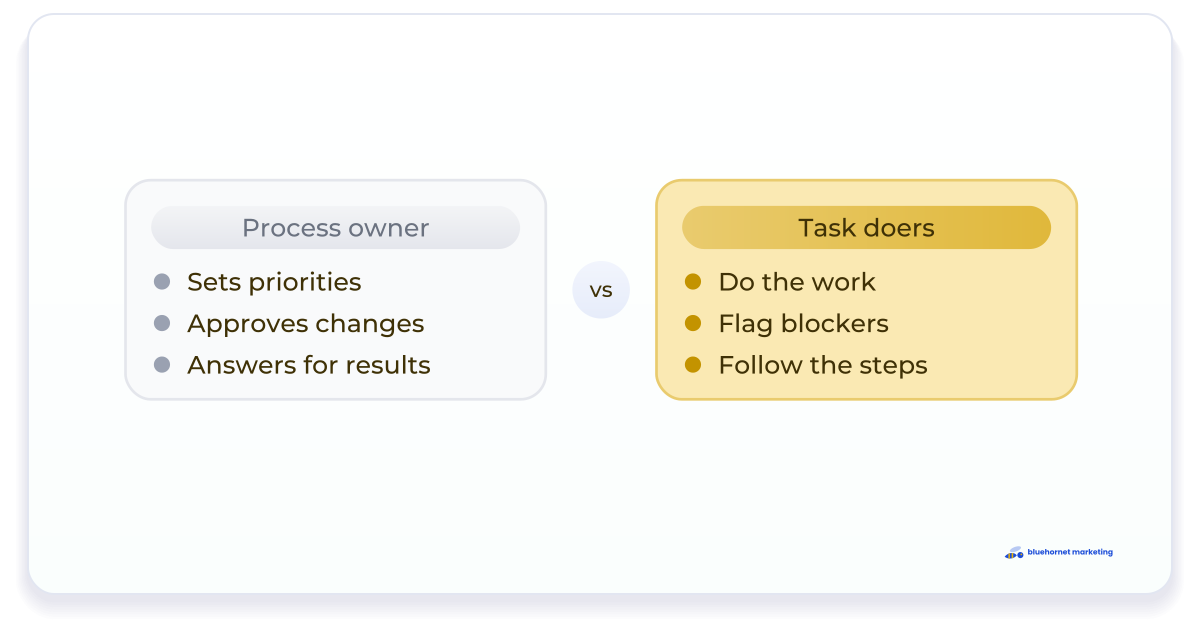
Shared ownership means no ownership. When three people can approve a brief, none of them feels responsible for speed, and the process slows to the pace of the busiest person. A single owner, with a named backup, makes decisions and keeps the process current.
The owner is not the person who does all the work. It is the person who answers when the process breaks and who updates the steps when reality changes. In small teams one person can own several processes, as long as the list is written down.
Do This
- Write the owner and backup next to every workflow, from intake to reporting.
- Give owners authority to change the process within agreed limits.
- Review the ownership list each quarter, and after every hire or departure.
Avoid This
- Assigning a committee as owner.
- Naming an owner without time in their week for the role.
Start Every Campaign With One Brief
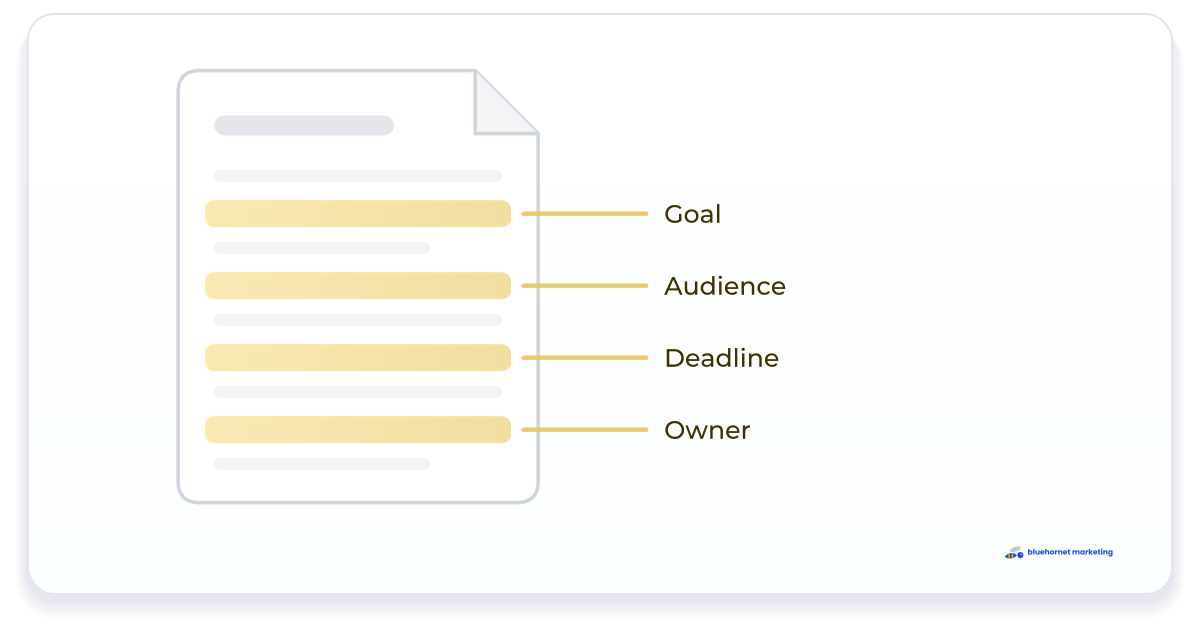
A good brief is short and always the same shape: goal, audience, offer, channels, budget, owner, launch date and how you will measure success. It takes ten minutes to write if the template is clear, and it removes days of back-and-forth later.
The hidden benefit is that briefs become data. After a year you can see which goals you set, which campaigns hit them and where estimates were off. That history improves your planning more than any forecasting tool.
Do This
- Keep the template to one page and require the same fields every time.
- Make the brief the only way to request work, using a form in your project tool.
- Store finished briefs in one searchable place.
Avoid This
- Accepting requests by chat message or hallway conversation.
- Letting the brief grow into a long document nobody reads.
Set Naming and Tracking Rules Once
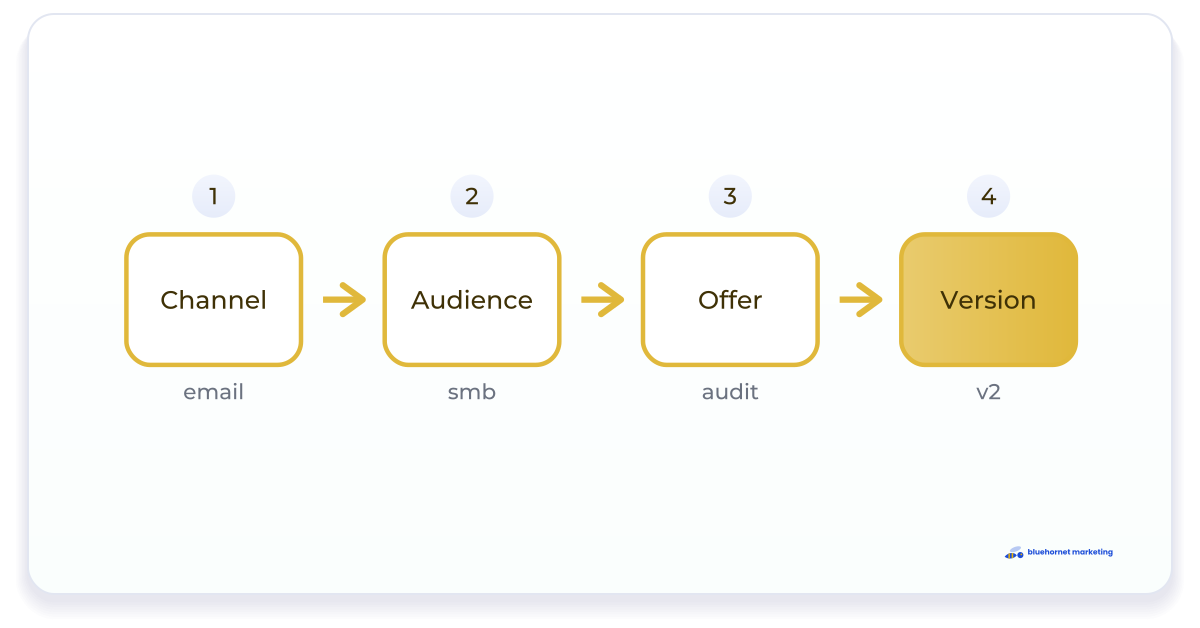
Reports break on small things: a campaign named three different ways, a missing UTM parameter, a source field typed freehand. A one-page guide to naming, UTM parameters and required CRM fields prevents most of it. Decide the rules once, publish them and check them automatically where you can.
Enforcement matters more than elegance. Use dropdowns and validation rules in your CRM so people cannot type free text for fields that drive reporting. The strictest rule is usually the one that saves the most time, which I describe further in my guide to marketing operations metrics.
Do This
- Use a fixed pattern for campaign names, such as channel, goal, audience and month.
- Build UTM links with a shared template instead of by hand.
- Make key CRM fields required and use dropdown lists.
Avoid This
- Letting every team invent its own naming style.
- Adding new fields without removing old ones.
Agree on Lead Definitions With Sales
Marketing and sales argue about lead quality because they never wrote down what quality means. Hold one workshop. Agree on what counts as a marketing-qualified lead, what sales accepts and how fast each side responds. Write it on a single page and sign it off at leadership level.
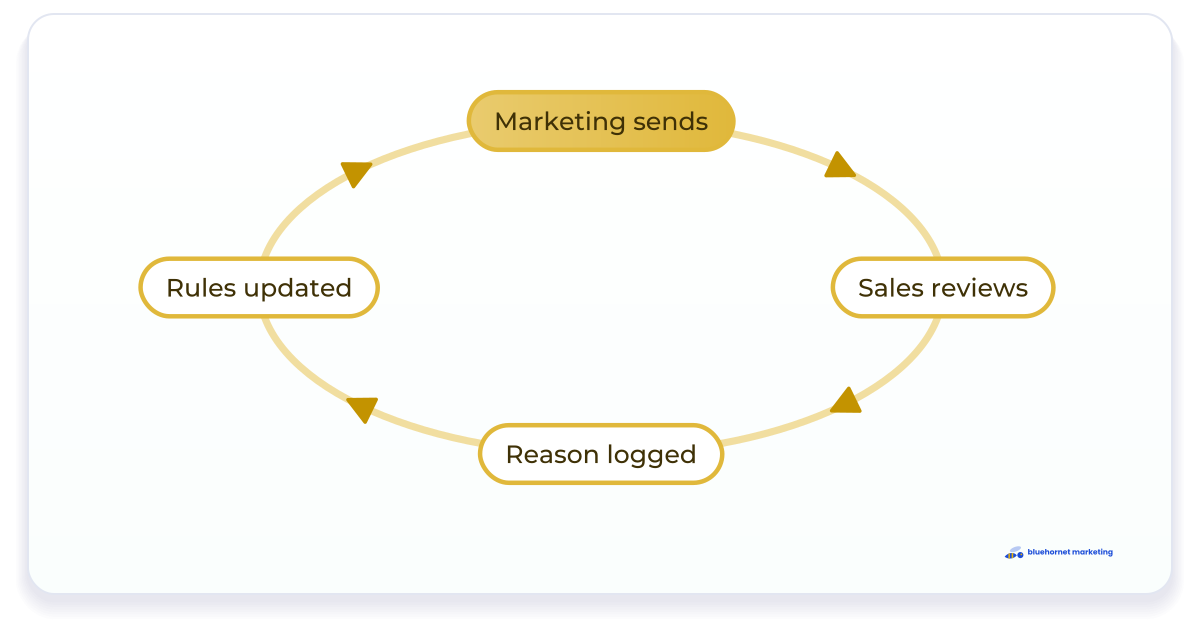
Then add a feedback loop. Sales records a reason whenever a lead is rejected, and marketing reviews the reasons each month. In one engagement, a single rejection reason, wrong company size, explained a third of all rejected leads and led to a targeting fix within two weeks.
Do This
- Define lead stages and response times in writing with both teams.
- Require rejection reasons in the CRM.
- Review lead quality together once a month.
Avoid This
- Scoring leads on activity alone, with no fit criteria.
- Changing the definition mid-quarter without telling anyone.
Keep a Lean Tool Stack
Most teams pay for more software than they use. Every tool adds licenses, logins, training and integrations to maintain. A tool review once or twice a year, listing purpose, owner, cost and usage, nearly always finds something to cancel and something to connect.
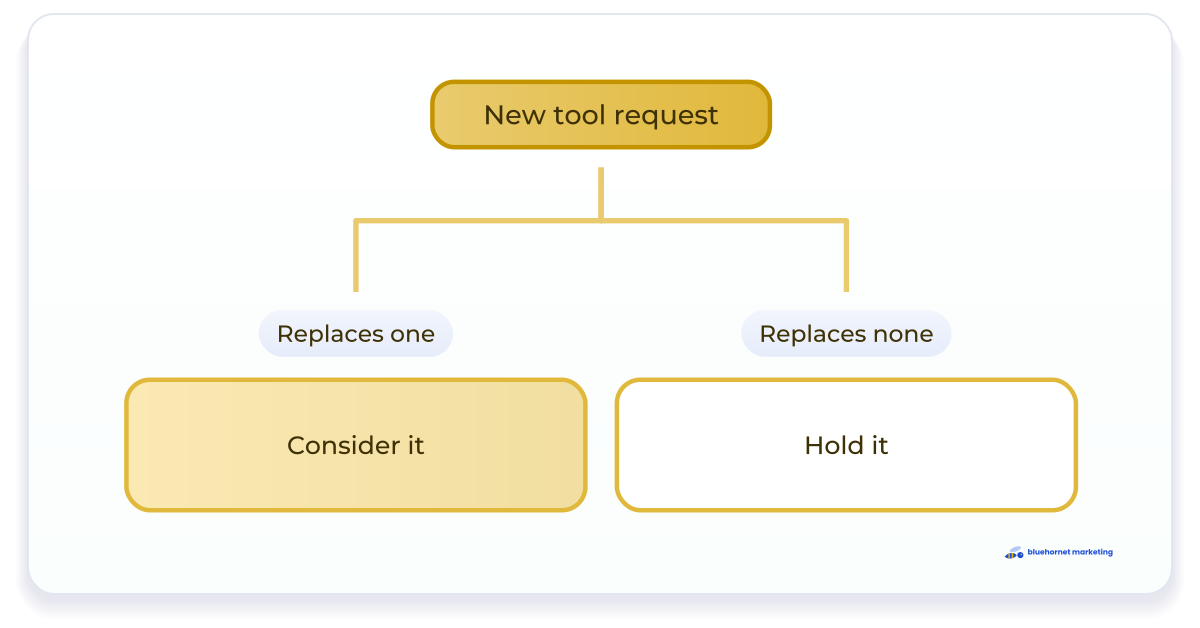
Before adding a new tool, ask what it replaces. If the answer is nothing, check whether an existing tool has the feature. When you do need something new, my ranking of marketing operations tools is a good place to start comparing.
Do This
- Keep a list of every tool, owner, cost and renewal date.
- Cancel or merge tools with overlapping features.
- Run a short trial with real campaigns before you buy.
Avoid This
- Buying software to fix a process problem.
- Letting departments buy tools without a quick review.
Document as You Build
Documentation sounds like extra work until the person who knows how the lead routing works goes on holiday. One page per workflow is enough: purpose, owner, steps, tools, inputs, outputs and what to do when it breaks. A short screen recording often beats a long document.
Keep documentation next to the work, in the same project tool or wiki the team already uses. If it lives in a forgotten folder, it goes stale in a month.
Do This
- Write the page when you build the process, while details are fresh.
- Add a last-reviewed date and a reviewer to each page.
- Use the documents to train new hires in their first week.
Avoid This
- Treating documentation as a project for later.
- Keeping separate versions in several places.
Review the Numbers on a Fixed Rhythm
Operations drifts when nobody looks. A 45-minute monthly review with the same four to six numbers keeps it on track. Look at the trend, ask what changed, and pick one improvement for the next month. A good starting list sits in marketing operations KPIs.
Keep the meeting small and practical. The operations lead, one person from sales, one from marketing and someone from finance if budgets are on the table. End with one decision and one owner, and send notes the same day.
Do This
- Review the same numbers in the same order each month.
- Choose one improvement at a time and test it.
- Record decisions and results in a simple change log.
Avoid This
- Adding a new chart to every meeting.
- Debating attribution models in the review instead of acting.
What the Practices Look Like Together in One Team
A software company with six marketers came to me with the usual signs: campaigns launched about three weeks after kickoff, the monthly report took two days to build and sales ignored half the leads. None of the fixes needed new software.
I started with the brief and an owner for each of four workflows. Within a month, requests arrived through one form and the launch delay dropped to about two weeks. Naming and tracking rules came next, and the report went from two days to an afternoon because the source fields finally matched. The lead workshop took ninety minutes. The two sides agreed on a fit score and a four-hour response time for demo requests, and the share of leads accepted by sales rose steadily over the following quarter.
The tool review found two overlapping platforms, and cancelling one covered most of the cost of the project. The last piece was the monthly review, which kept the gains in place after the consultants left. Your numbers will differ, but the sequence rarely does: ownership, brief, rules, definitions, tools, documents, rhythm.
A Quick Checklist to Score Your Own Team
Give yourself one point for each statement that is true today. Be honest, since nobody else is grading.
- Every workflow has a named owner and a backup.
- All campaign requests arrive through one brief.
- Campaign names and UTM parameters follow one written pattern.
- Marketing and sales share a written lead definition.
- You can list every marketing tool, its owner and its cost.
- Each workflow has a one-page document less than six months old.
- You review the same numbers every month.
Five or more means your base is solid and you can concentrate on speed and measurement. Three or fewer means you will get more from fixing practices than from any new software. Use the marketing operations strategy playbook to put the gaps in order.
How to Choose Which Practice to Adopt First
Start with the practice that removes the most daily friction. In most teams I see that is the single brief, because it improves every later step. If your problem is the sales relationship, start with lead definitions. If your problem is distrust in the numbers, start with naming and tracking rules.
Adopt one practice at a time and give it four weeks before you judge it. Changes that pile up in the same month blur together, and you cannot tell what worked.
Questions About Marketing Operations Best Practices
What Are the Most Important Marketing Operations Best Practices?
Clear ownership, one standard brief, written naming and tracking rules, shared lead definitions with sales, a lean tool stack, light documentation and a regular review. Together they remove most of the waiting and rework in a typical marketing team.
How Do I Get Sales to Agree on Lead Definitions?
Run one workshop with a sales leader and a marketing leader, bring examples of real leads and agree on stages, criteria and response times. Write the result on one page and sign it off. Review rejection reasons together monthly, so the definition improves over time.
How Many Tools Should a Marketing Team Use?
There is no ideal number. Each tool should have a clear purpose, an owner and active users. If two tools do the same job, merge them. Many mid-sized teams run well on a CRM, an email platform, a project tool, an analytics tool and the ad platforms.
How Much Documentation Is Enough?
One page per workflow, covering purpose, owner, steps, tools and what to do when it breaks, is enough for most teams. Update it when the process changes, and add a review date so you can spot stale pages.
What Is the Best Way to Start If My Team Is Overwhelmed?
Choose one practice and one workflow. The standard brief is usually the best first step because it reduces rework across everything else. Give it four weeks, measure cycle time before and after and then pick the next one.
Should Marketing Operations Report to Marketing or to Sales?
Most teams place it in marketing, with a dotted line to sales operations. What matters is that the lead owner has authority over the shared process and that both teams trust the data. In revenue operations models, a combined team can work well too.
How Often Should I Review My Tool Stack?
Review it twice a year, and whenever a major renewal is coming. List each tool with its owner, cost, users and purpose, then cancel, merge or connect what overlaps. Check usage data, because licenses that nobody logs into are the easiest savings.
Disclaimer: This article is for general information only and isn’t legal, financial or tax advice. Treat figures as estimates from typical work and confirm details with your providers before you act.
Was this guide helpful?
Thanks for your feedback.
Warren Albright
Warren leads the Blue Hornet editorial team and works with the consultants to turn real client projects into practical guides on content, paid media, marketing automation, CRM and analytics. He comes from content and demand generation work, edits every article before a working marketing consultant reviews it, and draws on strategies, channel plans and audits from client projects to keep the advice grounded in real numbers.