Quick Summary
- Start from the revenue and lead number, then choose channels that can reach it.
- Fund two or three channels well rather than six thinly.
- Agree on one written lead definition with sales, and review rejected leads monthly.
- Adopt one habit per month, beginning with the lead target, shared definition and scorecard.
Good strategic marketing is mostly a set of habits. If you work with a strategic marketing consulting partner, these eight moves are the ones I push clients to adopt first, because they cost little and show results within a quarter.
Each tip below has a short explanation, a "do this" list and an "avoid this" list drawn from patterns I see repeatedly. Skim the table first, then start with the ones marked low effort.
The 8 Tips at a Glance
| Tip | Effort | When you see a result |
|---|---|---|
| 1. Start From the Revenue Number, Not the Channel | Low | Immediately |
| 2. Interview Five Customers Every Quarter | Medium | 1 quarter |
| 3. Fund Fewer Channels at a Meaningful Level | Low | 8 to 12 weeks |
| 4. Say Something a Competitor Cannot Copy | Medium | 1 to 2 months |
| 5. Get Sales and Marketing to Share One Lead Definition | Medium | 1 to 2 months |
| 6. Build the Scorecard Before You Launch | Medium | First month |
| 7. Test One Thing at a Time With a Stop Date | Low | 4 to 6 weeks |
| 8. Review Quarterly and Change the Plan on Purpose | Low | Each quarter |
8 Strategic Marketing Tips to Put Into Practice
Start From the Revenue Number, Not the Channel
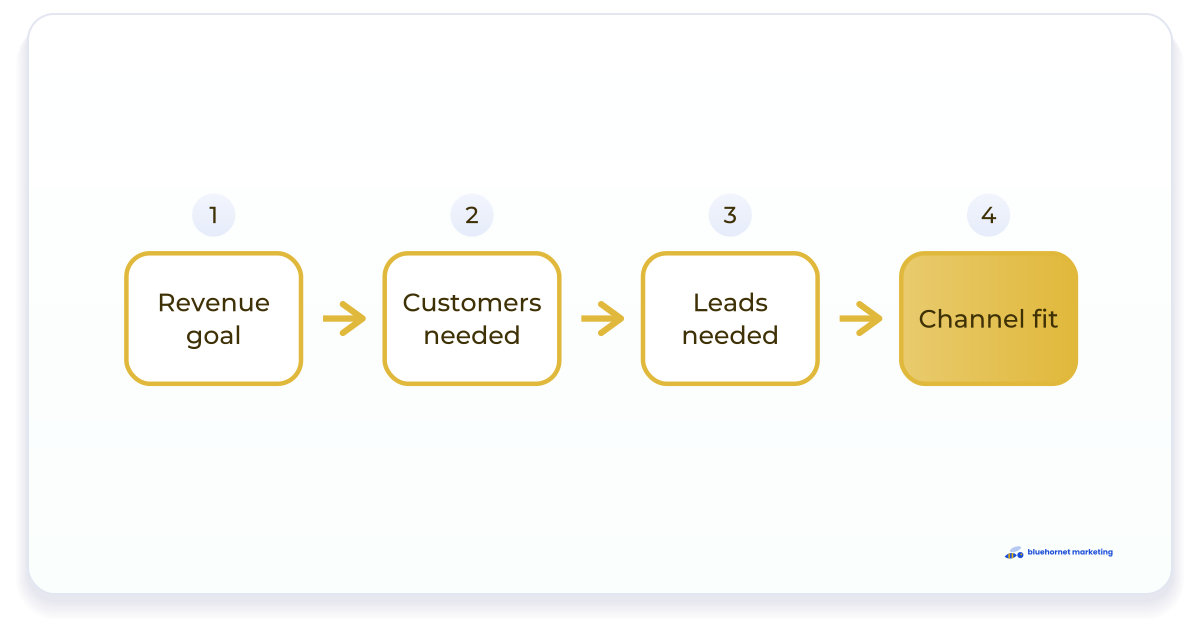
Every plan I review that struggles started with a channel: "we should do LinkedIn" or "let's try video". Start with the number instead. Work out how many customers marketing must help win, and from there how many qualified leads that takes.
Once you have that number, channel ideas get easy to judge. Each one either helps you reach it at a cost you can afford, or it does not. My strategic marketing framework shows the formula in full.
Do This
- Write the lead target at the top of every planning document.
- Check each new idea against it.
Avoid This
- Setting goals in traffic, followers or impressions.
- Letting a channel become a goal.
Interview Five Customers Every Quarter
Dashboards tell you what happened. Customers tell you why. Five 30-minute calls each quarter keep your positioning tied to real language, and they often reveal a trigger event your team never considered.
Ask what was happening before they looked for help, who else they considered and what almost stopped them. You will hear the same phrases repeated. Those phrases belong in your headlines.
Do This
- Ask sales to introduce recent buyers, including a lost deal or two.
- Record calls and tag recurring phrases.
Avoid This
- Interviewing only your happiest customers.
- Asking leading questions about your own features.
Fund Fewer Channels at a Meaningful Level
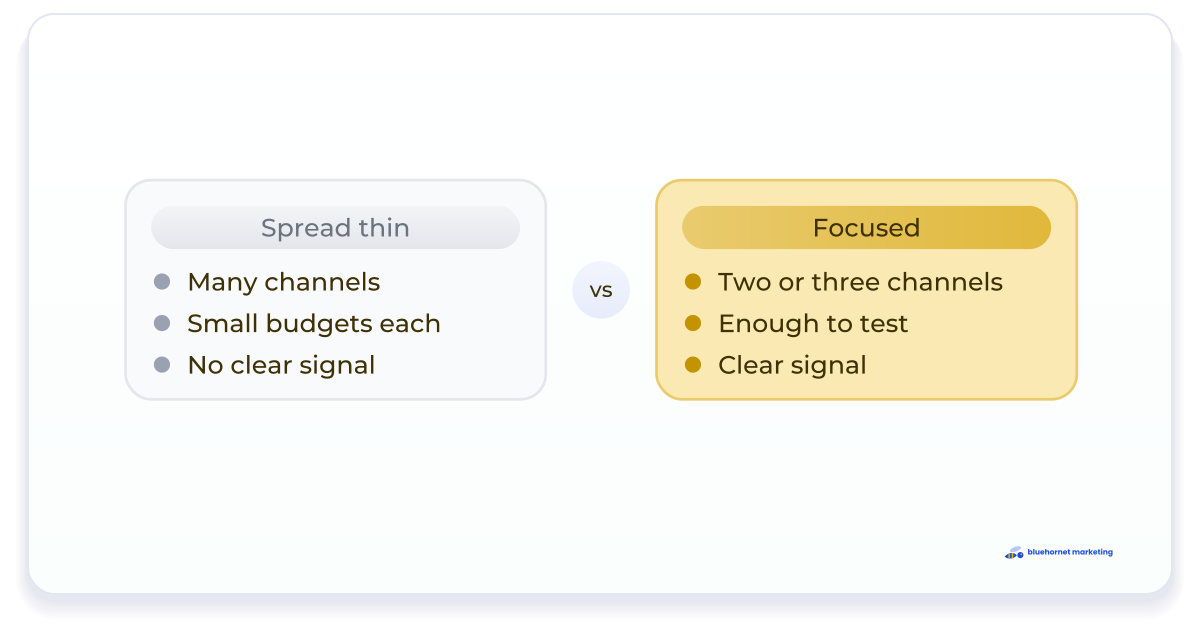
Spreading a modest budget over six channels gives you six sets of thin data. A channel needs enough spend to produce a readable result in eight to twelve weeks. Two or three well-funded channels beat six that never get past a test.
If you feel pressure to be everywhere, keep a "later" list with revisit dates. It shows you have considered the idea without spending on it yet.
Do This
- Pick two or three channels by cost per customer and fit.
- Set a review date for each.
Avoid This
- Adding a channel without removing one.
- Judging a channel after two weeks.
Say Something a Competitor Cannot Copy
Look at your homepage and cover the logo. If a competitor could use the headline, it is not positioning. A useful message names a customer, a problem and a reason you are better, backed by proof.
Proof can be a result from your work, a process you run that others skip or a guarantee you can honor. Avoid superlatives you cannot support, since buyers skim past them.
Do This
- Write your positioning in one sentence and test it on five customers.
- Pair every claim with proof.
Avoid This
- Using words like "innovative" and "best-in-class" as the whole message.
- Changing the message every quarter.
Get Sales and Marketing to Share One Lead Definition
When marketing counts form fills and sales counts meetings, both sides can be right and still disagree. Write down what makes a lead qualified, with two or three concrete criteria, and have both teams sign it.
Then review rejected leads monthly. The reasons sales gives for rejecting leads are some of the best targeting data you have, and they cost nothing to collect.
Do This
- Agree on criteria in writing, and review them each quarter.
- Report on qualified leads and pipeline together.
Avoid This
- Rewarding marketing on raw lead volume.
- Passing leads without context.
Build the Scorecard Before You Launch
Decide what you will measure before the first campaign runs. Choose no more than eight numbers, mixing leading ones such as cost per qualified lead with lagging ones such as pipeline created.
Set a target and an owner for each, and review the scorecard on the same day every month. If a number is off, the owner brings a proposed fix, not an explanation.
Do This
- Add source tags and CRM fields before launch.
- Keep definitions stable through the year.
Avoid This
- Building dashboards with 40 metrics.
- Changing definitions to make a month look better.
Test One Thing at a Time With a Stop Date
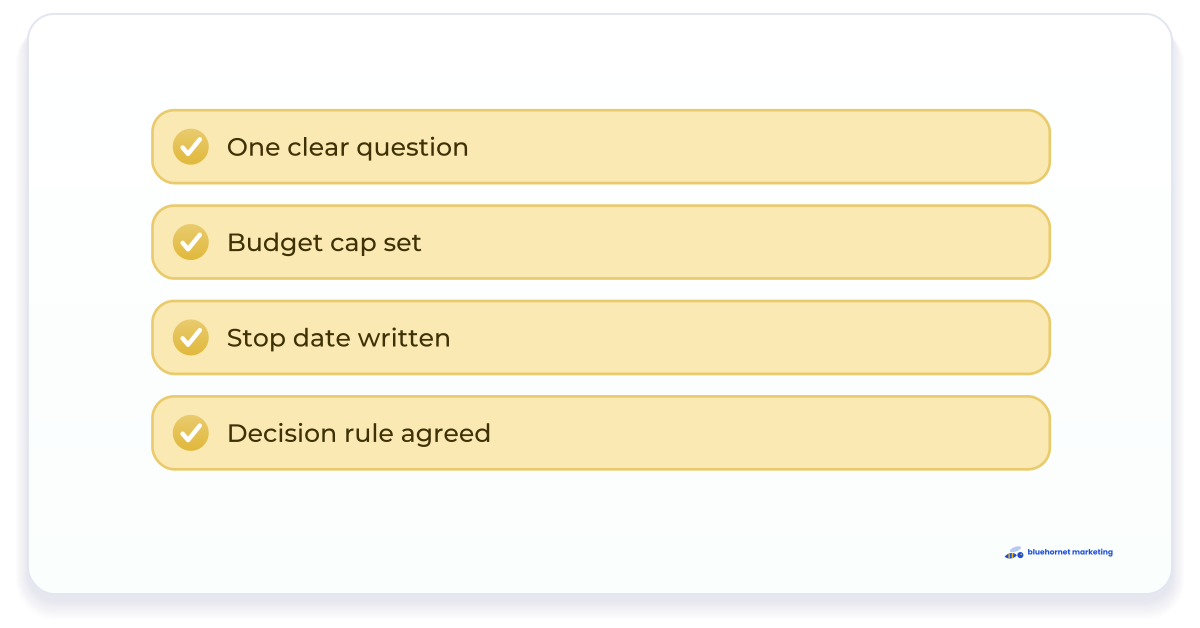
A test needs a question, a budget and a stop date. "Let's try short video" is not a test. "Will short video bring leads under $120 within six weeks on a $3,000 budget?" is one.
Write the result down whatever it is. Failed tests are cheap answers, and a record of them stops the team from repeating the same experiment two years later.
Do This
- Run one new test per channel at a time.
- Keep a shared log of results.
Avoid This
- Changing several variables at once.
- Extending a failing test because of sunk cost.
Review Quarterly and Change the Plan on Purpose
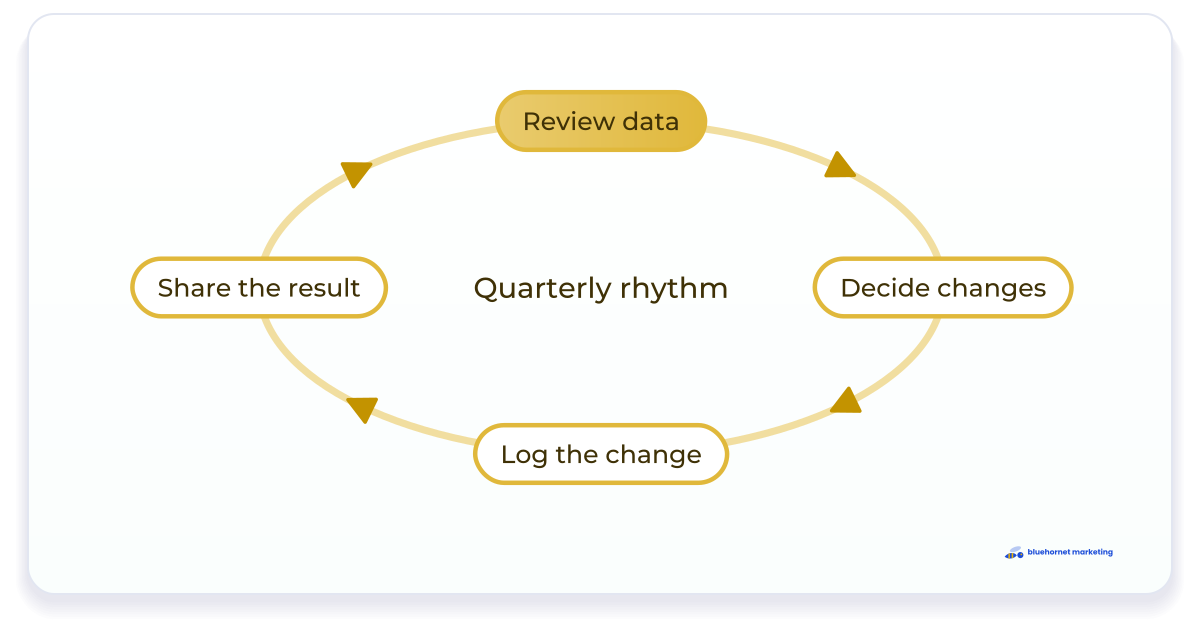
Markets move, so a plan you never revise will drift from reality. Hold a quarterly review where you compare results with the plan, name wrong assumptions and decide what to stop, start and continue.
Change the plan deliberately and in writing. A visible change log builds trust with leadership, since it shows you learn from the numbers. The strategic marketing roadmap I use has a review gate at the end of every phase.
Do This
- Put all four reviews in calendars a year ahead.
- Include sales and finance.
Avoid This
- Skipping reviews in busy months.
- Rewriting the entire plan every month.
Why These Habits Work Better Than New Tactics
Marketing teams love new tactics because they feel like progress. A new platform or format is exciting, and it makes a good slide. Habits are quieter. A written lead definition or a quarterly review does not feel like growth, yet in my experience these habits decide which tactics succeed.
A tactic only works inside a system that can tell whether it worked. Without a target, a tracked source and an owner, even a good idea produces results nobody can read. With those basics in place, you can try almost any tactic cheaply and learn from it quickly. That is what makes the eight tips here a better investment than any single campaign idea.
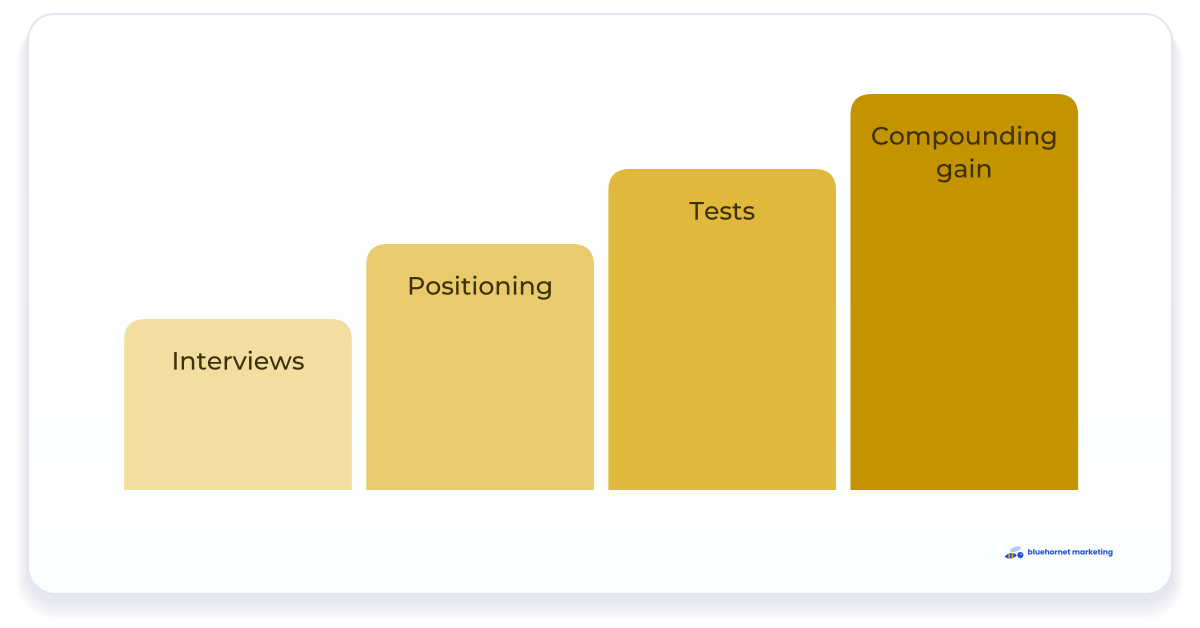
The habits also build on each other. Customer interviews feed positioning, positioning feeds channel choice, and the scorecard tells you whether the choice was right. Break one link and the others weaken. That is why I suggest adding them one per month rather than all at once.
What to expect in the first 90 days
In month one, you will mostly see clearer meetings. Month two brings the first real numbers on cost per qualified lead. By month three, you will have enough history to drop one channel and shift its budget. Do not expect a revenue jump in this period. Expect fewer arguments and better questions.
Which Tips to Start With
You do not need to adopt all eight at once. If you are short on time, begin with tips 1, 5 and 6: the lead target, the shared definition and the scorecard. They take a few days and change how every later decision gets made.
Teams with a settled plan can focus on tips 2 and 4, the customer interviews and positioning, which tend to lift conversion without extra spend. Tip 3 pays off last, since it asks you to say no to channels people are fond of.
A note on small teams
If you are one or two people, all eight tips still apply, only smaller. Your scorecard may hold five numbers, your quarterly review may take an hour and your customer calls may be three instead of five. The discipline matters more than the scale. Small teams also have an advantage: nobody needs to be convinced, so you can change course the day the data says so.
How to Know Which Tips Fit Your Business
Check your current situation against these signs:
- If your leads are plentiful but sales says they are poor, start with tip 5.
- If you cannot say which channel drives customers, start with tips 1 and 6.
- If your site sounds like everyone else's, start with tips 2 and 4.
- If every month brings a new initiative, start with tips 3 and 8.
For a sequence over a full year, see my 12-month roadmap. If you would rather have someone review your plan with you, a free call is a quick way to find the first two moves.
Questions About Strategic Marketing Tips
What Is the Most Important Strategic Marketing Tip?
Start from the revenue number. Work out how many customers and qualified leads you need, and judge every idea by whether it helps you reach that number at an affordable cost. It changes how you choose channels, budgets and messages.
How Many Channels Should a Small Business Use?
Two or three. Each needs enough budget and time to produce readable results. More channels spread a small budget into data too thin to learn from, and you end up unsure which ones work.
How Often Should I Review My Marketing Strategy?
Review results monthly against your scorecard and hold a deeper review each quarter. A yearly review alone is too slow, since a channel can waste a large share of budget before you notice.
How Do I Stop Sales and Marketing from Arguing About Lead Quality?
Write down what makes a lead qualified, with two or three concrete criteria, and get both teams to agree. Review rejected leads monthly and adjust targeting based on the reasons. The argument usually ends once both use one definition.
Do I Need a Big Budget to Apply These Tips?
No. Most of these tips cost time rather than money: customer interviews, a written lead definition, a short scorecard and a quarterly review. They often cut waste, which frees budget you already have.
How Long Before Strategic Changes Show Results?
Some changes, such as a shared lead definition, help within weeks. Channel shifts usually take eight to twelve weeks to read, and positioning changes can take a quarter or more to show up in conversion rates.
When Should I Get Outside Help with Strategy?
Consider it when your team disagrees on priorities, results have flattened or you are planning a major budget change. An outside view helps most when internal habits are hard to see from within.
Disclaimer: This article is for general information only and isn’t legal, financial or tax advice. Treat figures as estimates from typical work and confirm details with your providers before you act.
Was this guide helpful?
Thanks for your feedback.
Warren Albright
Warren leads the Blue Hornet editorial team and works with the consultants to turn real client projects into practical guides on content, paid media, marketing automation, CRM and analytics. He comes from content and demand generation work, edits every article before a working marketing consultant reviews it, and draws on strategies, channel plans and audits from client projects to keep the advice grounded in real numbers.