Quick Summary
- Spend the first quarter on goals, tracking and an audit, because every later decision relies on them.
- Launch one or two channels properly before you add more.
- Review the roadmap every quarter and move budget toward what pays back.
- Keep a test fund, so new ideas never raid the budget of proven channels.
Most marketing plans fail in month three, when the first busy period hits and the plan gets pushed aside. A roadmap fixes that by turning goals into months, owners and review dates. It is the output I build most often in digital marketing strategy consulting projects, and the one clients return to every quarter.
Below is the 12-month structure I use, split into four phases. Take it as a starting point and adjust the order to your sales cycle, team size and budget.
The 12-Month Roadmap at a Glance
The table shows what each phase aims to deliver and how you know it is done. Use it as a one-page summary for your team and leadership.
| Phase | Months | Main focus | Decision gate |
|---|---|---|---|
| 1. Foundations | 1 to 3 | Goals, audience, tracking, audit and quick fixes | Tracking verified and channel shortlist approved |
| 2. Launch | 4 to 6 | Two priority channels, core content and lead handling | First cost per lead and lead quality known |
| 3. Scale | 7 to 9 | More budget to winners, new tests, nurture and automation | Pipeline and cost targets met or revised |
| 4. Optimize and plan | 10 to 12 | Conversion work, retention and next year’s plan | Annual review done and next roadmap signed off |
Phase 1: Lay the Foundations (Months 1 to 3)
The first quarter feels slow, and that is the point. You are building the base that every later decision stands on. If you rush this, you will pay for it with unreliable numbers in the second half of the year.
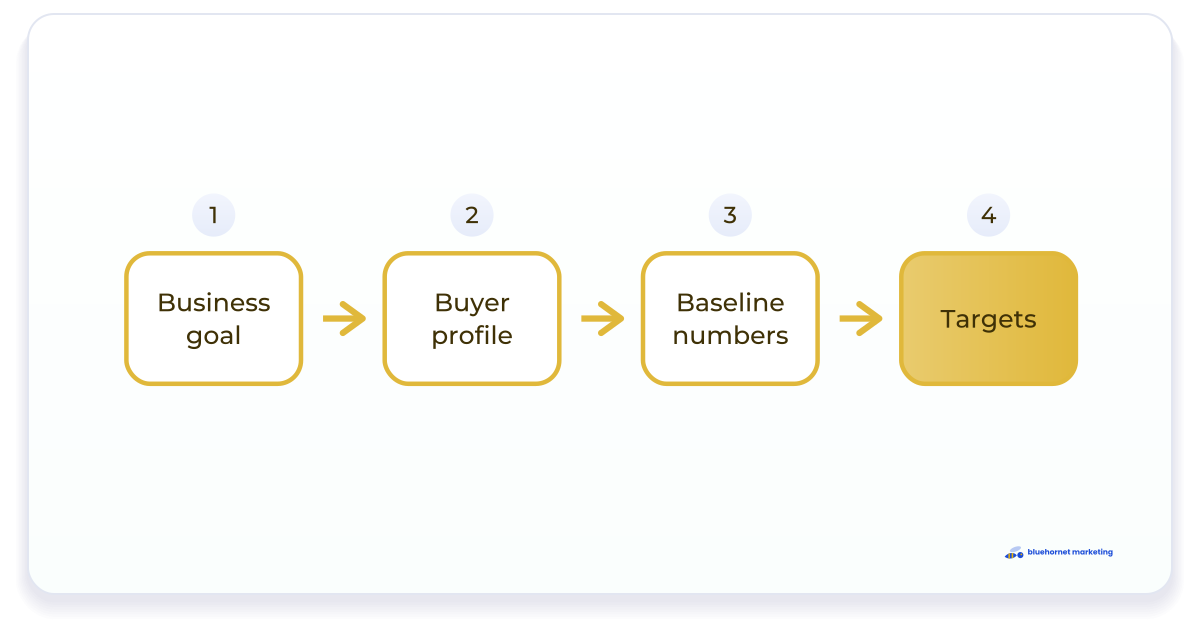
Month 1: Goals, Audience and Baseline
Start with the revenue target and work backwards. How many customers do you need, what does each one pay and how many leads does that take at your current close rate? Write the answer down as a number of qualified leads per month.
Then describe the buyers who make up most of your revenue. Talk to five customers and five lost prospects. In my client work, these ten conversations change the plan more than any report does. Record your current numbers too: traffic, leads, cost per lead and revenue by source, even if they are rough.
Month 2: Tracking and Audit
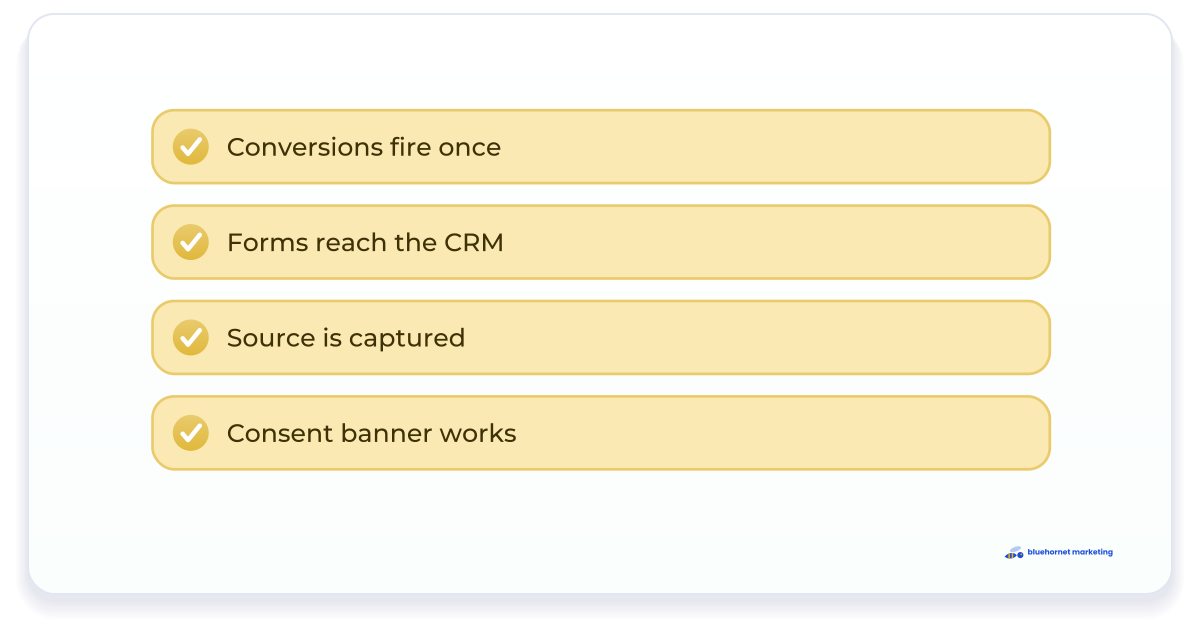
Set up conversion tracking for the actions that matter, such as form submissions, booked calls and purchases. Test every one by completing it yourself. Then audit the channels you run today and mark each as keep, fix or stop. Many of the clients I meet find one channel eating a fifth of the budget with no tracked result.
The audit checklist in my digital marketing strategy checklist covers the items to verify in this month, so nothing slips through.
Month 3: Choose Channels and Fix the Basics
Pick the two channels most likely to reach your buyers at an acceptable cost, and write one page for each: goal, budget, owner, target cost per lead and review date. Fix the quick wins at the same time: a slow landing page, a missing call-to-action or a form that fails on mobile.
Phase 2: Launch Your Priority Channels (Months 4 to 6)
Now you spend money. The goal of this phase is not growth yet. It is learning your real cost per lead and the quality of those leads, so that phase three can be based on facts.
Month 4: Launch the First Channel
Launch the channel with the shortest path to a lead, which is usually paid search or an email campaign to an existing list. Keep the first campaigns small and specific: one audience, one offer, one landing page. Check the numbers every week for the first month, and resist changing three things at once.
Month 5: Start the Slow Channels
Content and organic search take months to show results, so start them now. Publish a small set of pages that target the questions your buyers ask before they buy, and plan a regular publishing rhythm you can sustain. A smaller calendar you keep beats a large one you drop.
Month 6: First Review With Sales
Meet with sales and look at the leads one by one. Which were good, which were not and why? Agree a short definition of a qualified lead and score leads against it. This review often exposes the biggest gap in the whole plan, because leads that look fine in a report can be useless to sales.
Phase 3: Scale What Works (Months 7 to 9)
With half a year of data, you can make real decisions. This is the phase where budget moves, and where the roadmap earns its keep.
Month 7: Shift Budget
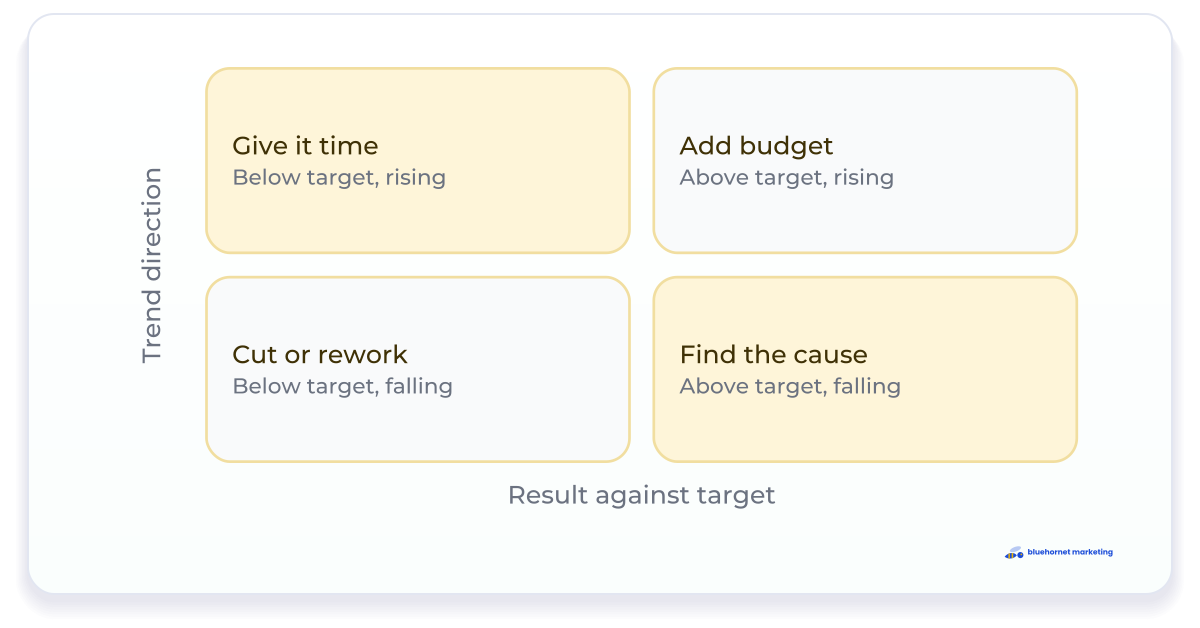
Rank channels by cost per qualified lead and by pipeline. Move budget from the weakest to the strongest in steps of about a fifth at a time, so you can see the effect. If you reserved a test fund, spend part of it on one new idea.
Month 8: Nurture and Automate
Most leads are not ready to buy on day one. Set up a short email sequence that answers the questions they have at each stage, and route hot leads to sales fast. A simple sequence of four or five emails is enough to start with.
Month 9: Mid-Year Plan Check
Compare results against your targets. If you are ahead, ask where extra budget would return most. If you are behind, find which funnel step is weakest and fix that before spending more. Update the roadmap in writing, so the team works from one version.
For benchmarks on how other teams allocate and perform, I keep an updated list of digital marketing strategy statistics that helps put your numbers in context.
Phase 4: Optimize and Plan Ahead (Months 10 to 12)
The last quarter is about squeezing more from what you already have and preparing the next year. Teams often skip it because the holidays are near, and that is a mistake.
Month 10: Conversion Work
Test headlines, offers and forms on your highest-traffic pages. A small lift in conversion rate improves every channel at once, because all of them send traffic to the same pages. Run one test at a time and let each run long enough to give a clear answer.
Month 11: Retention and Referrals
Existing customers are your cheapest source of revenue. Add a simple customer email series, ask for reviews and referrals and look for upsell paths. Even a small program here often returns more per dollar than another acquisition channel.
Month 12: Annual Review and Next Roadmap
Review the year against the goals you set in month one. Write down what worked, what did not and what you would change. Then build next year’s roadmap from that review, not from scratch.
What Usually Derails a Roadmap
I have watched many roadmaps slip, and the causes are consistent. Knowing them in advance lets you protect against them.
Too Many Priorities in the First Quarter
Teams try to fix tracking, launch two channels and redesign the website all at once. Everything finishes late and nothing is tested properly. Limit each quarter to three major projects, and move the rest to the next one without guilt.
Reviews That Never Happen
The quarterly review is the first thing cancelled when work gets busy, and it is the one that keeps the plan alive. Book all four reviews on the calendar now, with the people who can change the budget. If a review slips, reschedule within a week, not at some point.
Results Judged Too Early or Too Late
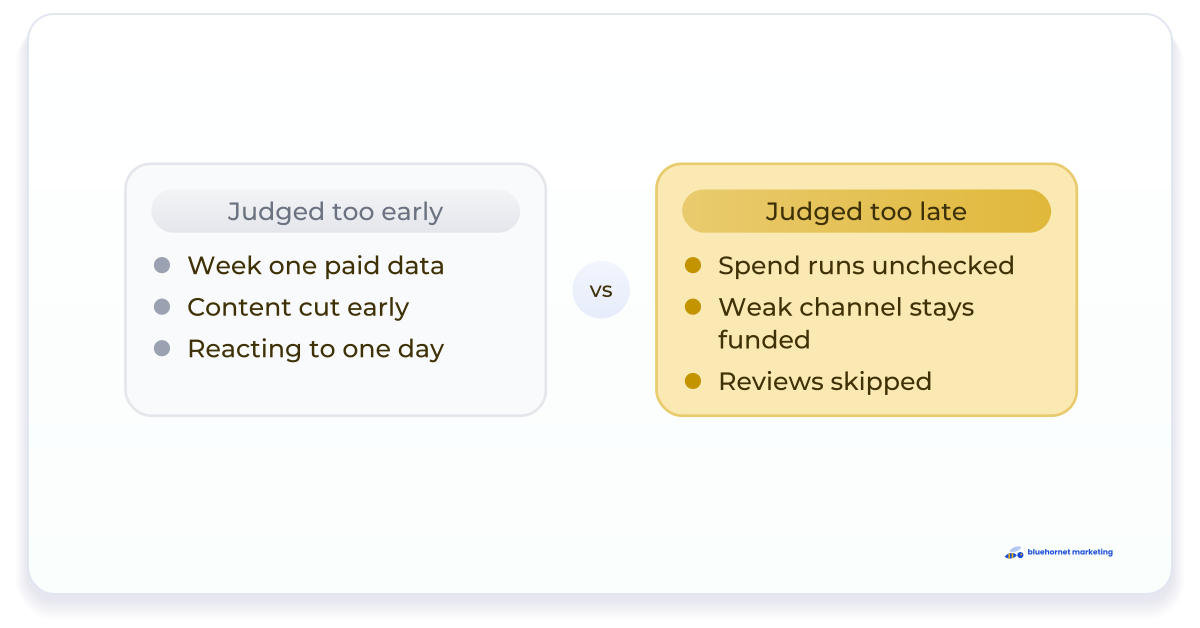
Paid campaigns need a few weeks of data, and content needs months. Judging a content channel after six weeks is unfair, and letting a paid channel run for six months without a decision is expensive. Write the evaluation date for each channel into the roadmap when you launch it, along with the number that decides whether it continues.
A sensible cadence is to review paid channels after four to six weeks, email after two or three campaigns and content after about six months. Treat these as starting points and adjust to your sales cycle.
How to Adapt the Roadmap to Your Budget and Team
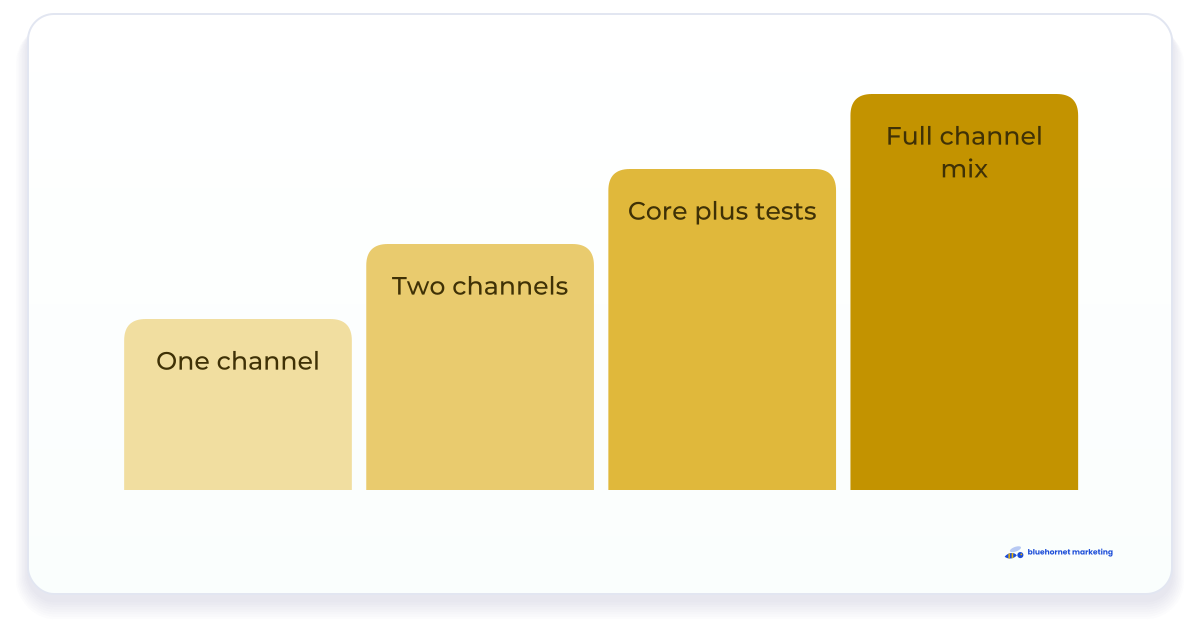
The roadmap above assumes a small team with a modest budget. If your situation differs, change the order, not the logic. Every version still starts with goals and tracking, then launches few channels, then reviews and scales.
- With a very small budget, run one channel in phase two and add the second in phase three.
- With a long sales cycle, bring content and email forward, because paid leads take months to close.
- With a seasonal business, move phase two so your launch lands before your peak season.
- With no in-house marketer, assign each channel to a named owner, inside or outside the company.
Whatever the size, keep each phase to a handful of tasks with an owner and a date. A roadmap with 40 priorities is a wish list.
Questions About a Digital Marketing Roadmap
How Long Should a Digital Marketing Roadmap Cover?
Twelve months works for most businesses, because it is long enough to see compounding channels like search and content pay off and short enough to stay realistic. I plan the first 90 days in detail, the next 90 in outline and review the whole roadmap every quarter.
What Should Be in the First 90 Days?
Goals, tracking, an audit of what you run and one or two channels you can launch properly. In my client work, teams that skip tracking in the first month spend the rest of the year arguing about which campaign worked.
How Many Channels Should I Run at Once?
Two or three for most small and mid-sized teams. Each channel needs a budget big enough to produce a readable result and a person who owns it. Adding a fourth channel before the first two work usually slows all of them.
How Do I Split My Budget Across the Year?
Hold back a share of the budget for the second half of the year, so you can move money to what works. A common pattern is to commit most of the budget to proven channels and keep a smaller test fund for new ideas. Adjust the split after each quarterly review.
What If My Results Are Worse than Planned?
Check the funnel in order: traffic, conversion rate, lead quality and sales follow-up. Fix the weakest step before you spend more. A roadmap is a plan you revise, and each quarterly review is the place to cut, change or double down.
Do I Need a Separate Roadmap for Each Channel?
No. Keep one roadmap with one goal, and let each channel have a short plan inside it. Separate roadmaps make it hard to compare channels or move budget between them.
When Should I Bring in a Consultant?
Bring one in when you cannot tell which channels work, when marketing and sales disagree on lead quality or before a large budget change. An audit and a roadmap are a good first project, because you can run the plan with your own team afterwards.
Disclaimer: This article is for general information only and isn’t legal, financial or tax advice. Treat figures as estimates from typical work and confirm details with your providers before you act.
Was this guide helpful?
Thanks for your feedback.
Warren Albright
Warren leads the Blue Hornet editorial team and works with the consultants to turn real client projects into practical guides on content, paid media, marketing automation, CRM and analytics. He comes from content and demand generation work, edits every article before a working marketing consultant reviews it, and draws on strategies, channel plans and audits from client projects to keep the advice grounded in real numbers.