Quick Summary
- Goals, audience and offer come first. Without them, channels and tracking cannot save a plan.
- Every channel needs a role, a budget, an owner and a target cost per lead.
- Test your tracking by completing each conversion yourself before you spend.
- Review the checklist every quarter, since tracking and budgets drift quickly.
Most marketing plans fail on basics, not on clever tactics. A goal nobody wrote down, an audience described in one line or tracking that quietly broke after a website update can cost months. A checklist catches those problems early, which is why I run one at the end of every digital marketing strategy consulting project and again at each quarterly review.
The eight points below follow the order in which problems show up. Go in order, and do not skip an item because it looks obvious. The obvious ones are the ones I find missing most often.
The Eight Checks at a Glance
| Check | The question it answers | Proof you can show |
|---|---|---|
| 1. Goals | What result must marketing deliver? | A number, a date and a revenue link |
| 2. Audience | Who buys, and why? | Notes from real customer conversations |
| 3. Offer | Why should they choose you? | A clear promise and a next step |
| 4. Channels | Where will you reach them? | A role and target cost for each channel |
| 5. Budget | What will it cost, and when? | A monthly plan with a test fund |
| 6. Tracking | How will you know it works? | Tested conversions in analytics and CRM |
| 7. Team and tools | Who does the work? | Named owners and a short tool list |
| 8. Review rhythm | When will you change course? | Dates in the calendar |
1. Goals Tied to Revenue
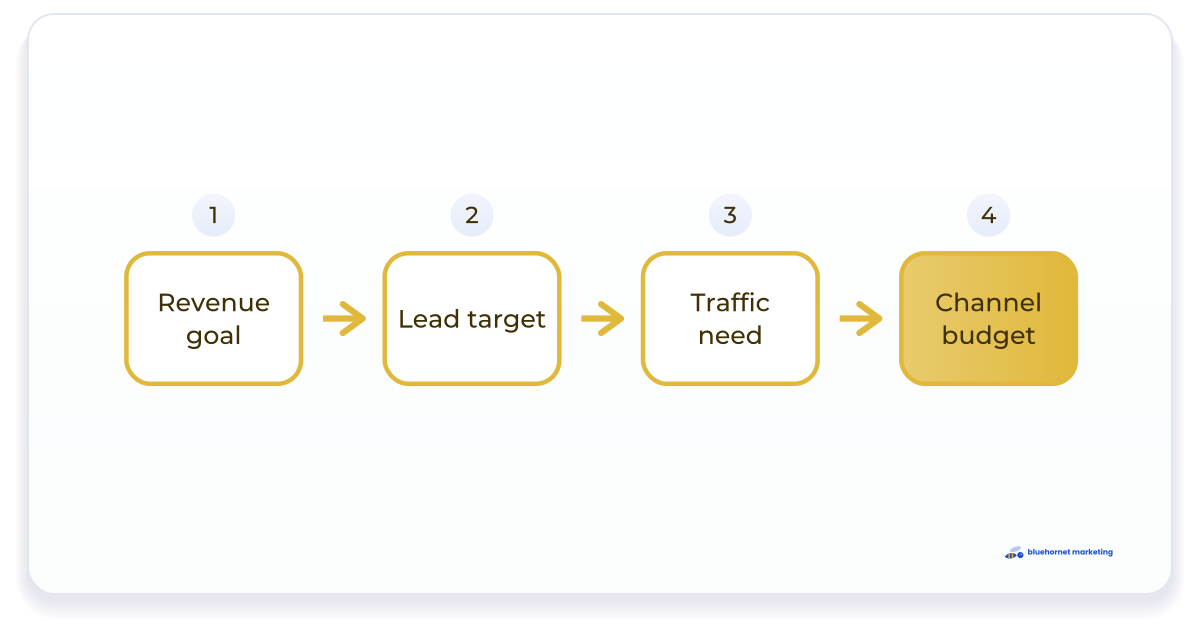
A goal like more awareness cannot fail, which is why it is useless. Write a goal with a number, a date and a link to revenue: for example, 60 qualified leads per month by June, based on a close rate that gets 12 new customers. Work backwards from revenue so the number is not made up.
- One primary goal, with at most two supporting goals.
- A baseline for each goal, even if it is rough.
- Sales has seen and agreed to the lead target.
2. Audience You Have Actually Talked To
Describing your buyer from memory produces a flattering fiction. Talk to five customers and a few people who chose someone else. Ask what triggered the search, what they compared and what almost stopped them. The answers shape your message and your channels.
- A written description of your two or three main buyer types.
- The words buyers use to describe the problem, copied exactly.
- The places they look before buying: search, peers, reviews, social.
3. An Offer and a Next Step
Traffic cannot fix a weak offer. State in one sentence what you do, for whom and why you are different. Then give visitors one clear next step, such as a call, a demo or a quote. Check that every landing page repeats the same promise as the ad or email that sent the visitor.
- A one-sentence promise that a stranger understands.
- One main call to action on each page.
- Proof close to the call to action: reviews, results or logos you may use.
4. Channels With a Role and a Target
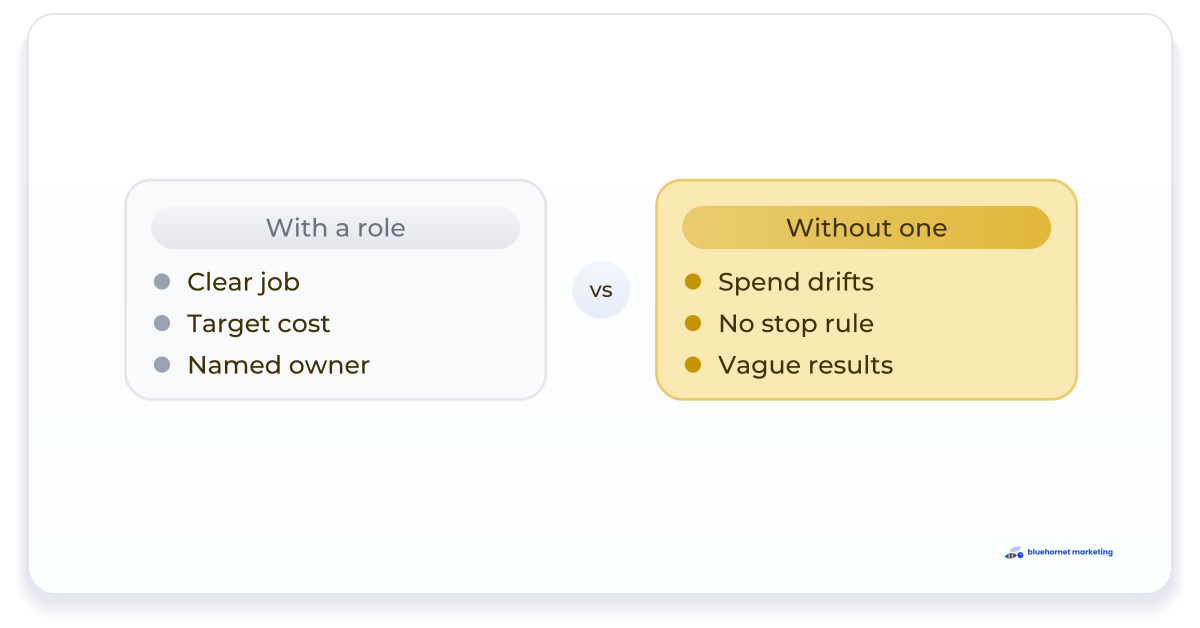
Pick the channels your buyers use, then give each a job. Paid search may capture existing demand, email may nurture, content may build demand over a year. Give every channel a target cost per lead, so you can compare them honestly. If you cannot describe a channel’s job in a sentence, remove it from the plan.
- Two or three active channels for a small team.
- A role, an owner and a target cost for each.
- A reason for each channel you have chosen to leave out.
If you have not chosen tools for those channels yet, my ranking of digital marketing tools shows what each one costs and where it fits.
5. A Budget With a Test Fund
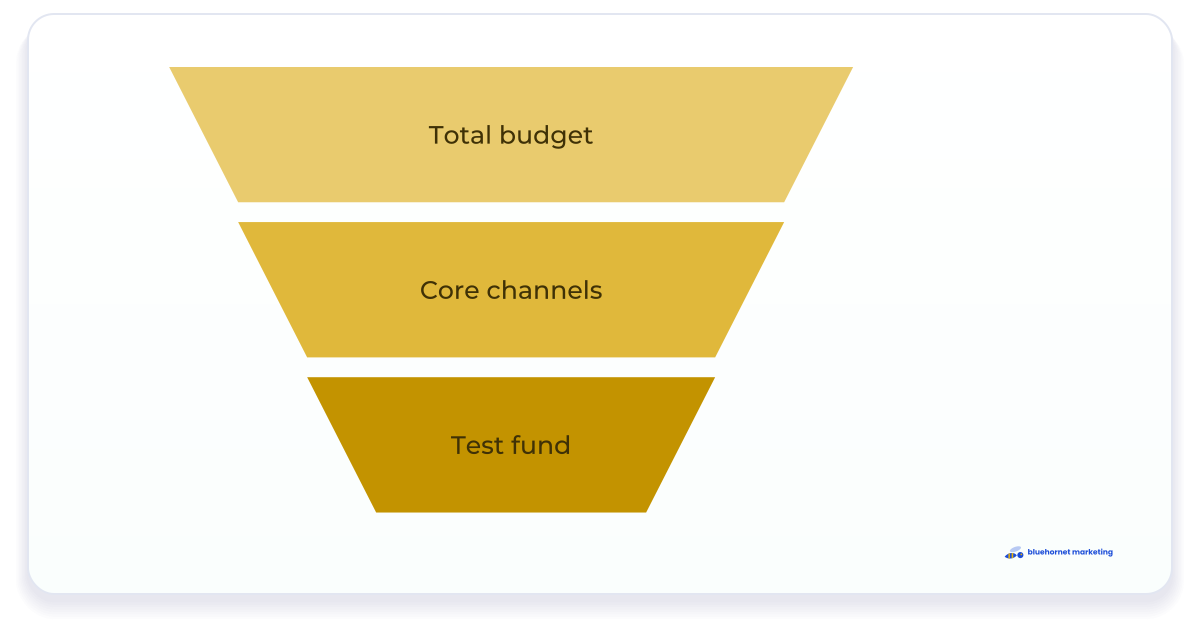
Split the budget by month and by channel, and keep a share for tests. Without a test fund, new ideas steal money from proven channels or never get tried. Allow for people, tools and creative, not only ad spend, since these often take a large part of the total.
- A monthly plan, with the total tied to your lead and revenue goals.
- A test fund of money you are willing to lose.
- A rule for moving money: when a channel misses its target for two months, review it.
The benchmark figures in my digital marketing strategy statistics can help you challenge a number, though your own targets should set the final budget.
6. Tracking You Have Tested Yourself
This is the item I find broken most often. Complete each conversion yourself: submit the form, book the call, buy the product. Then confirm it appears in your analytics and CRM with the correct source. Repeat the test after any website change.
- Conversion events for each goal, tested end to end.
- Campaign links tagged consistently, so sources do not scatter.
- Leads flowing into the CRM with their source attached.
- A monthly check that platform numbers match actual sales.
7. Owners, Capacity and a Short Tool List
A plan without owners is a wish. Assign each channel and each report to a named person and check they have the hours. If a channel needs ten hours a week and the owner has two, shrink the channel or add help.
- A named owner for every channel and report.
- Hours per week agreed with each owner.
- A tool list where each tool has a job and an owner.
8. A Review Rhythm You Will Keep
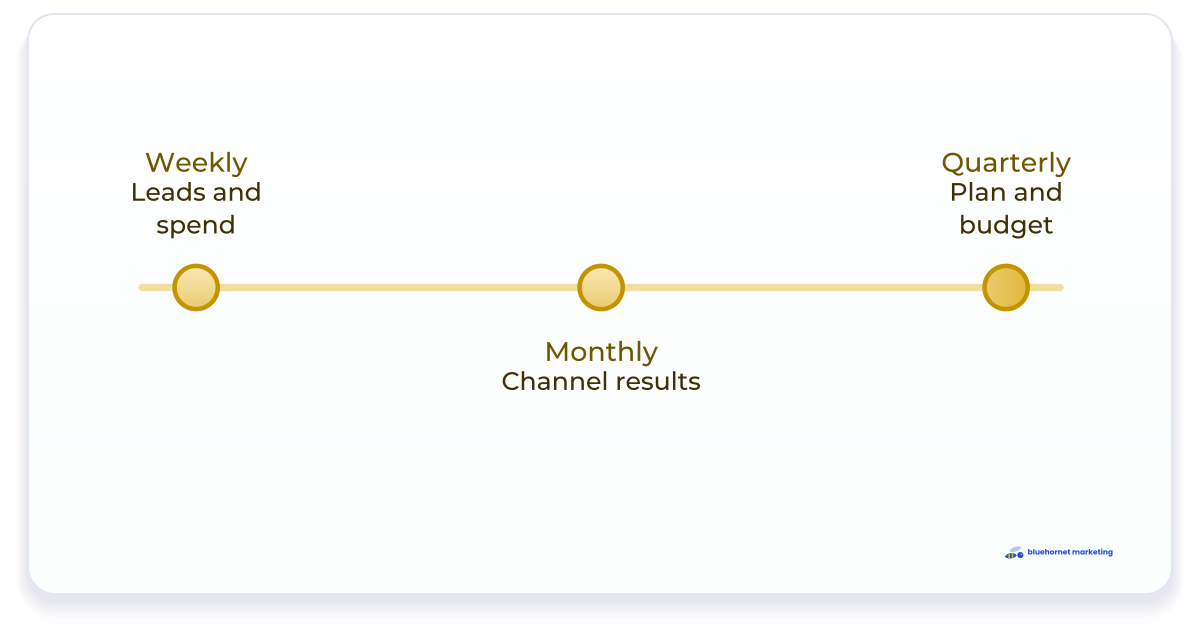
Put review dates in the calendar now: a weekly numbers check, a monthly channel review and a quarterly plan review. At each, ask three questions: what happened, why and what will you change. Write the answers in a short note, so the next review starts from the last one.
- Dates booked for the whole year.
- One shared dashboard that everyone uses.
- A habit of cutting something at every quarterly review.
If you want these reviews arranged as a full year plan, my digital marketing strategy roadmap places each check inside a quarter.
Where Checklists Usually Go Wrong
A checklist helps only if you use it honestly. In my client work, I see three habits that turn it into a formality.
The first is ticking a box because something exists, not because it works. A tracking setup that nobody has tested is not a ticked box. The second is running the list once and never again. Websites change, staff leave and budgets move, so items you passed in January can fail by April. The third is leaving it to one person who is too close to the work. Ask someone from sales or finance to check the proof for goals and tracking, since they will spot gaps you stopped seeing.
A Short Example From a Quarterly Review
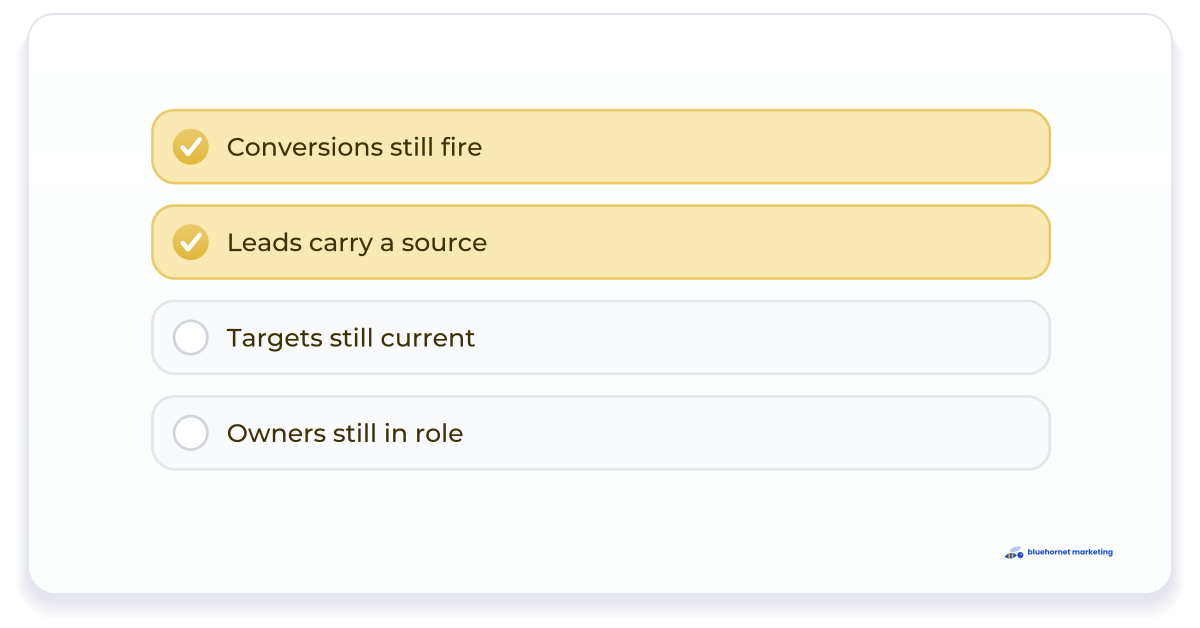
A B2B software client of mine passed items one to four easily. At item six, the tracking check, we completed their demo form and found that the source field arrived empty in the CRM for anything from paid search. Three months of paid leads had no source, so nobody could say which campaigns brought pipeline. The fix took an afternoon. Without the check, the next budget meeting would have cut the best channel on the basis of missing data.
That is the value of the exercise. Most of the items cost little to verify, and one failed item can distort every decision that follows.
Using the Checklist at Different Business Sizes
The eight checks stay the same as you grow, but the proof changes. Here is what I look for at three typical sizes.
| Check | Solo or very small team | Growing team | Larger organization |
|---|---|---|---|
| Goals | One lead target on a single page | Targets by channel and by product | Targets linked to company planning |
| Audience | Five customer calls | Segments with their own messages | Research programs and regular surveys |
| Tracking | Analytics plus a spreadsheet of leads | CRM with source on every lead | Attribution reviewed by finance |
| Reviews | Monthly check by the founder | Weekly numbers, monthly channel review | Weekly, monthly and quarterly layers |
If you are small, do not copy the right-hand column. A spreadsheet and a monthly habit give you most of the benefit. As you grow, add structure only where the lack of it causes real confusion, such as two people reporting different lead numbers.
What to Do After You Finish the List
Write down the three items that scored lowest and assign each an owner and a date. Then rerun only those items after a month. Resist the urge to launch anything new until the gaps in goals, tracking and budget are closed, because new campaigns built on a weak base mostly produce unreliable numbers. When the base is solid, move to the quarter-by-quarter plan and put your channels to work.
Who Should Sign Off Each Check
Pair each check with a person who can say yes with authority. The founder or head of marketing signs off goals and budget, sales signs off lead quality, whoever runs analytics signs off tracking and each channel owner signs off their own role and target. Record the date next to each name. A quick sign-off table keeps the exercise honest and shows at a glance which checks have gone stale since the last review.
How to Score Your Result
Give each check one point if you can show the proof, half a point if it is partly done and zero if not. A score of seven or more means you can launch with confidence. Between four and six, fix the gaps first, starting with the earliest check you missed. Below four, pause new spending until goals, audience and offer are written down.
Questions About a Digital Marketing Strategy Checklist
What Is a Digital Marketing Strategy Checklist?
It is a short list of items you verify before you spend money or launch campaigns: goals, audience, offer, channels, budget, tracking, team and review rhythm. I use it as the last gate before a plan is signed off, and again every quarter.
How Often Should I Run Through This Checklist?
Run it in full when you build the strategy and again every quarter. For a quick check, run items 5 to 8 monthly, since tracking, budget and review rhythm are the ones that slip first.
What If I Can Only Tick Half the Boxes?
Start with the first three: goals, audience and offer. A plan missing those will not be saved by good tracking. Fix the gaps in order, and avoid launching new campaigns until the first five items are in place.
Who Should Own the Checklist?
One named person, usually the head of marketing or the founder in a small business. Several people can complete items, but one person confirms each box is ticked and writes the date.
Does This Checklist Work for Small Businesses?
Yes. The items are the same, and the effort is smaller. A small business may meet the audience item in an afternoon of customer calls and the tracking item with a simple spreadsheet and a free analytics account.
How Do I Know My Tracking Is Correct?
Complete each conversion yourself, such as a form fill or purchase, and check that it appears in your analytics and CRM with the right source. Repeat the test after any change to the website. Compare your platform numbers with real sales monthly.
When Should I Involve a Consultant?
Ask for help when you cannot tick the goal, tracking or budget items on your own, or when your numbers do not match across platforms. An audit against this checklist is a quick, low-risk first project.
Disclaimer: This article is for general information only and isn’t legal, financial or tax advice. Treat figures as estimates from typical work and confirm details with your providers before you act.
Was this guide helpful?
Thanks for your feedback.
Warren Albright
Warren leads the Blue Hornet editorial team and works with the consultants to turn real client projects into practical guides on content, paid media, marketing automation, CRM and analytics. He comes from content and demand generation work, edits every article before a working marketing consultant reviews it, and draws on strategies, channel plans and audits from client projects to keep the advice grounded in real numbers.