Quick Summary
- Buyers build their shortlist before they contact you, so your content has to win the decision while no one from your team is in the room.
- AI assistants are part of how security buyers find vendors, so the facts about your company need to be easy for them to repeat correctly.
- Original research, free tools and plain pricing information earn more trust than fear-based messaging.
- Long buying cycles mean you need leading indicators, not just closed deals, to judge your marketing.
Security marketing has a credibility problem that most other B2B categories do not. Your buyers read threat reports for a living, they can tell when a claim is stretched and they are tired of breach headlines used as sales hooks. If you are working on cybersecurity marketing consulting or planning it in-house, the shifts below shape what is worth your budget this year.
I pulled each trend from published buyer and threat research, and I name the source next to every figure so you can check it. Where the data comes from all of B2B and not security alone, I say so. The nine trends are ordered from how buyers behave to how your team should respond.
The Nine Trends at a Glance
| Trend | What is changing | What to do about it |
|---|---|---|
| 1. Shortlists form before contact | Buyers pick favorites in private | Win the research stage with public proof |
| 2. AI assistants join the shortlist | Vendors are found through chat answers | Publish clear, factual pages that answer buyer questions |
| 3. Original research is the entry ticket | Threat reports set the standard for credibility | Publish data only you can produce |
| 4. Self-serve buying grows | Buyers prefer less contact with reps | Open pricing, trials and technical docs |
| 5. Calm beats fear | Scare tactics lose their effect | Show mechanisms and verified detail |
| 6. A bigger market is a noisier one | Spending keeps rising, so does competition | Narrow your claim to one buyer and one problem |
| 7. Identity and AI agents take center stage | Attack paths shift toward credentials and non-human accounts | Tie messaging to real attack data |
| 8. Practitioner-led programs outperform ads | Buyers trust hands-on experts | Put researchers and engineers in front of the audience |
| 9. Measurement moves upstream | Long cycles hide what works | Track leading signals along with pipeline |
1. Shortlists Form Before You Hear About the Deal
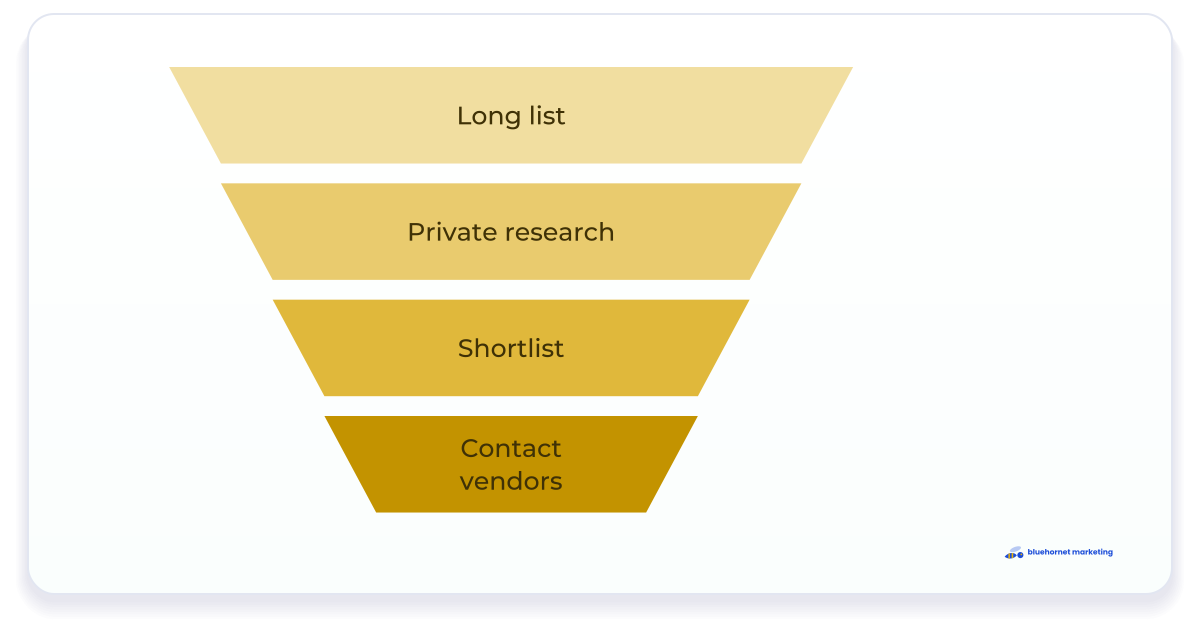
The most useful number in recent buyer research comes from 6sense. In its 2026 B2B Buyer Experience Report, buyers had ordered a shortlist before first contact with any vendor in 91.4% of journeys, and the vendor they favored at that point won about 82% of the time. The buyer's own team started the first contact in 82.2% of cases. These figures cover B2B broadly, but I see the same pattern in security work, where research is handled by technical staff who do not want a sales call.
The practical effect is that your website, your reports and the way other people talk about you do the first round of selling. If a buyer has never heard of you before the shortlist is formed, a good demo will not fix that. The average buyer in the study considered 4.9 vendors, so the room on the list is small.
Fixing this starts with an audit of what buyers can find without contact. I usually look at product pages, integration documentation, security and compliance pages, pricing language and third-party reviews. The weak spot is rarely the homepage. It is usually the unglamorous page a technical evaluator opens at 11 p.m. to confirm one detail.
2. AI Assistants Become Part of Vendor Discovery
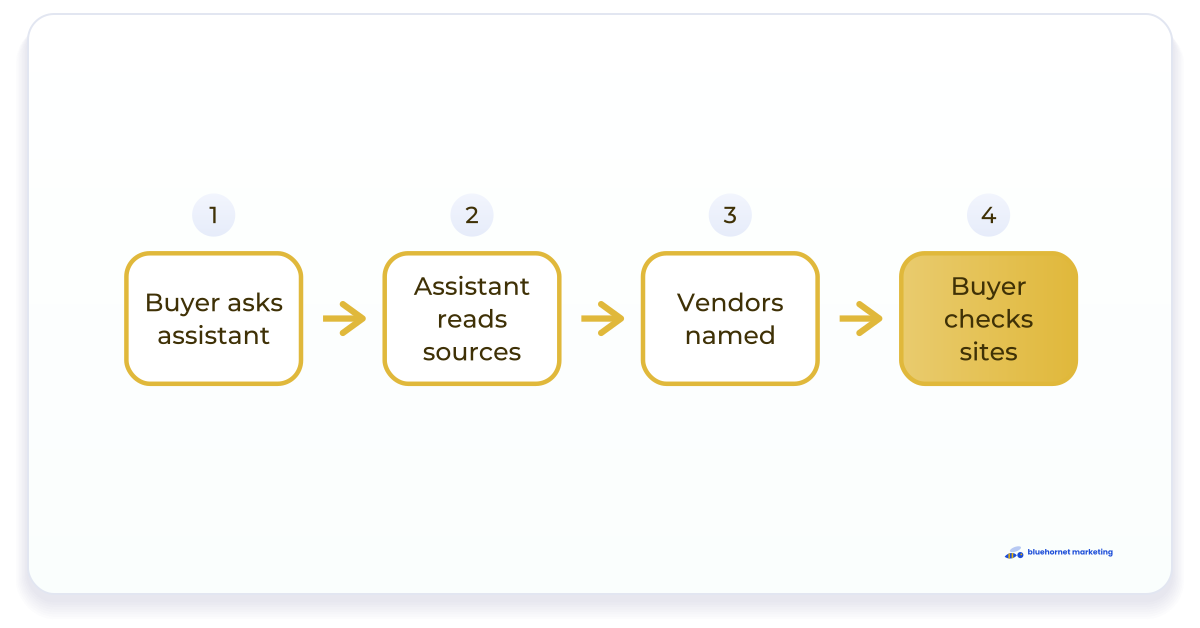
6sense reports that 81% of the buyers it surveyed use large language models, down from 94% the year before, and 26% use them to find new vendors. Another 25.2% said LLMs significantly shaped how they saw a vendor. The decline from last year is worth noting. It suggests buyers are using these tools more selectively, and that the answers they trust are the ones they can check.
For security marketing, that raises a simple question: what does an assistant say about you when asked to compare vendors in your category? I run that test with a client's top five buyer questions and write down what comes back. Errors are common, such as a retired product name, a wrong integration or a competitor's feature credited to you. Most of these trace back to outdated or thin pages that you control.
The fix is plain. Publish pages that answer category questions in full sentences, keep product names and capabilities consistent across your site, and make sure your documentation is public and current. A good cybersecurity marketing strategy includes a quarterly check of what the main assistants say about you, and a list of the pages to update when they get it wrong.
3. Original Research Is the Entry Ticket
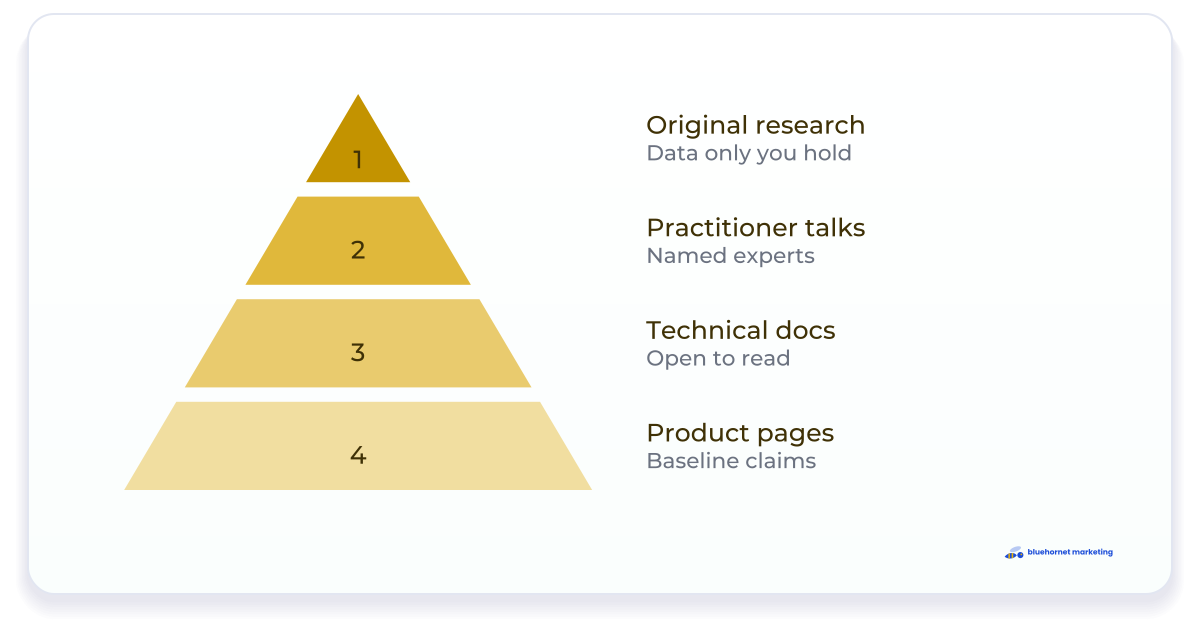
Threat research is the strongest content format in this industry, because it is the one that cannot be faked by a marketing team. CrowdStrike's 2026 Global Threat Report, which reviews activity from 2025, reports the fastest eCrime breakout time on record at 27 seconds, an 89% increase in attacks by AI-enabled adversaries and 82% of detections that were malware-free. Google's Mandiant publishes M-Trends 2026, based on more than 500,000 hours of incident investigations in 2025.
You may not have that data, and you do not need that scale. What you need is a data set only you can see. A smaller vendor might analyze its own telemetry for one narrow attack type, survey two hundred practitioners on a decision they actually face or publish an honest breakdown of an incident response engagement with the client's permission. A narrow, solid finding gets cited. A broad survey with thin methodology does not.
If you want a closer look at how vendors package this kind of work, my breakdown of cybersecurity marketing examples covers research reports, free tools and practitioner programs from companies like CrowdStrike, Snyk and KnowBe4.
4. Self-Serve Buying Experiences Keep Growing
Gartner's 2025 sales survey carries the headline that 61% of B2B buyers prefer a rep-free buying experience. The pattern fits what I hear from security teams: they want to read the docs, try the product and see pricing before they open a conversation. 6sense reached a similar picture from the other side, with 82.2% of first vendor contacts started by the buyer.
For you, self-serve does not mean removing sales. It means moving information earlier. Public documentation, an honest comparison page, a short sandbox or trial and transparent packaging let a buyer qualify you without a call. When they do call, the conversation starts from a higher place, and your reps spend their time on evaluation questions instead of basics.
The hard part is internal. Sales leaders worry that open pricing arms competitors, and legal wants every claim reviewed. In my experience, the vendors that publish more plainly win more trust than they lose in leaked detail. Competitors usually know your prices already.
5. Calm and Specific Beats Fear
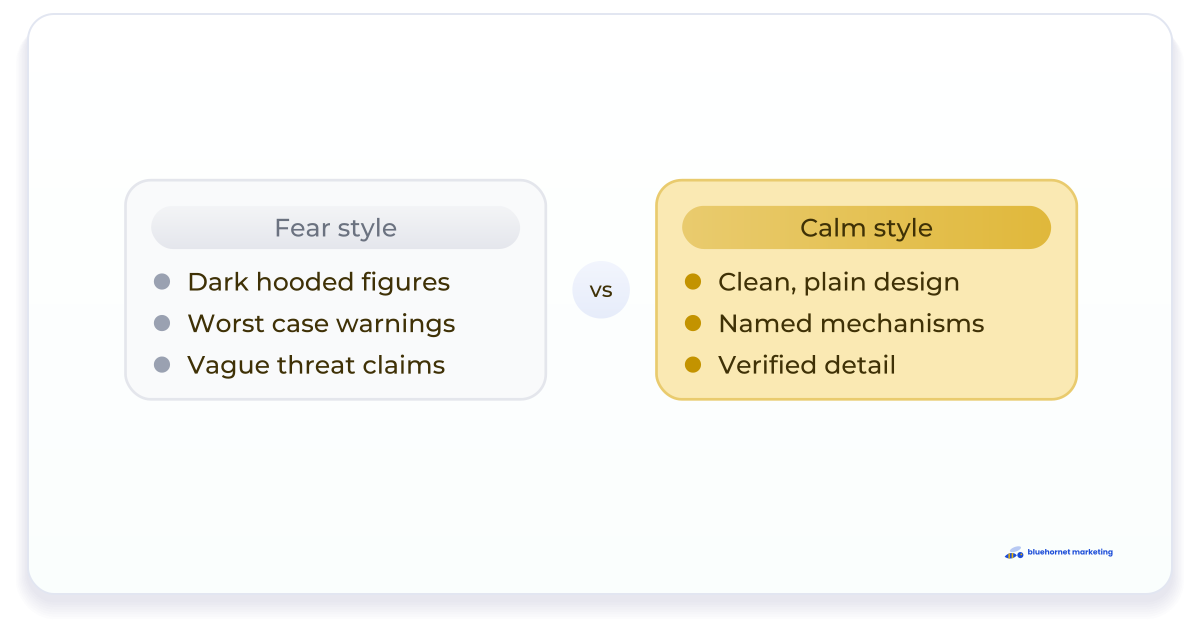
Security buyers have been exposed to every possible breach headline. Fear-based creative asks them to react to something they already worry about, and it blends in with every other vendor's. What holds attention is detail. How does the attack actually work? Where do defenses typically fail? What would the buyer see in their own environment?
The Verizon 2026 Data Breach Investigations Report, for example, says 31% of breaches now start with software vulnerabilities, ahead of stolen passwords, and that 48% of breaches involve ransomware. Numbers like these are useful as context for a mechanism you explain, and they lose force when used as a scare line.
The tone shift also applies to design. Dark backgrounds, hooded figures and red alert icons now look generic. Plain layouts, diagrams that explain a technique and a calm voice read as confident. I have seen a rewrite of a single product page, replacing threat language with a step-by-step explanation of how detection works, lift demo requests from that page, though your results will depend on your starting copy.
6. A Growing Market Is a Noisier Market
Gartner forecasts worldwide end-user spending on information security of about $213 billion in 2025 and $240 billion in 2026, a 12.5% increase for 2026. Rising budgets attract new vendors, and every category from cloud security to identity gets more crowded.
That growth does not hand every vendor more demand. It gives buyers more choices, and shortlists stay near five names. The way through is a sharper claim. A vendor that owns "identity security for mid-market healthcare" is easier to remember and recommend than one that covers "end-to-end cyber resilience."
Pick one buyer, one problem and one place where you can prove you are better. Then repeat that claim in your homepage, your reports, your sales deck and your partner pages until a stranger can say it back. Broader positioning can come after you have earned a foothold.
7. Identity and AI Agents Take Center Stage
Okta's Businesses at Work 2026 report says high-assurance MFA adoption rose from 41% to 58% across its customer base, while 78% of respondents named controlling non-human identity access as a top concern and only 10% had a strategy for it. CrowdStrike's report points the same way, with 82% of detections malware-free, which means attackers are using valid access more than malicious files.
Marketing teams in identity, cloud and endpoint security now have to explain AI agents and machine accounts without hype. The good examples I see start with a specific scenario: a service account with too many permissions, an agent that can reach a finance system. They show what a control looks like and what it prevents.
A caution from my own review work. When a topic is moving this quickly, definitions drift between vendors, and buyers notice. Define your terms on the page, link to your sources and update the page when the category language changes. Dated content on a fast-moving topic hurts more than having no page.
8. Practitioner-Led Programs Outperform Ads
Security buyers trust people who do the work. Huntress runs Tradecraft Tuesday, a monthly livestream where its threat hunters discuss attacker tradecraft with no sales pitch. Palo Alto Networks' Unit 42 publishes threat briefs, group profiles and trend reports. Wiz maintains a public Cloud Threat Landscape database. None of these are ads, and all of them put engineers and researchers in front of buyers.
If you have people who can do this, give them time and cover. A researcher who writes one careful analysis a quarter will be more persuasive than a campaign that uses their job title as a testimonial. Marketing's job is to remove friction: editing, design, distribution, a stable URL and permission from legal.
Paid media still has a place, especially for retargeting readers of a report or inviting registrants to a briefing. Use it to extend work that has already earned attention, not to replace it.
9. Measurement Moves Upstream
With an average B2B cycle of 10.3 months in the 6sense data, and the first vendor contact happening about 59% of the way through that cycle, a pipeline report shows you the end of a story that began a long time ago. If you judge marketing only on closed deals, you will cut the programs that worked before anyone could see them.
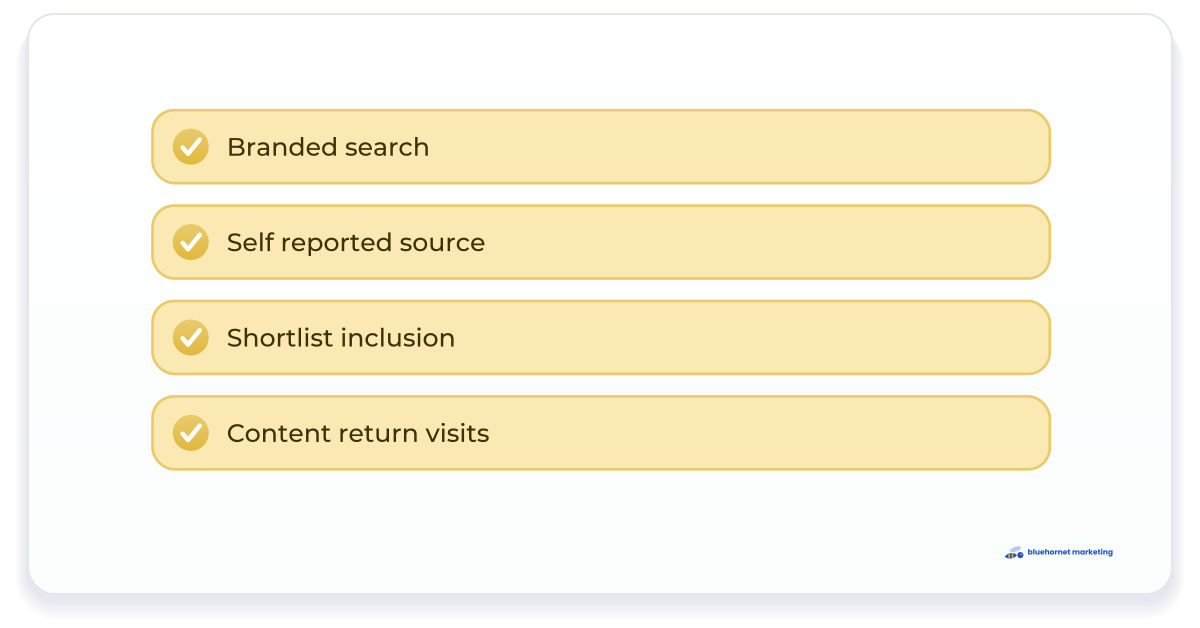
I give clients a short list of earlier signals. Branded search volume, direct visits to key pages, demo requests that name a specific report or tool, the share of won deals that had a marketing touch before the first sales call and answers to the question "How did you first hear about us?" Each one is imperfect, and together they tell a clearer story.
Treat self-reported attribution as a complement to your software, not a replacement. Buyers often forget the podcast, the report or the colleague that first put you on their list, but they usually remember what made them trust you. Both views belong in the same monthly review.
How to Choose Which Trends to Act On
You cannot do all nine at once. I suggest scoring each trend against two questions: how much does it affect your buyers' decision today, and how much of the fix sits inside your own control? A weak product page is cheap to fix and affects every buyer. A research program takes quarters but builds a durable asset.
- Audit what a buyer can learn about you without contacting anyone.
- Ask the main AI assistants your top five buyer questions and log the answers.
- Choose one data set only your company can publish.
- Review pricing, trial and documentation access with sales and legal in the same room.
- Add three leading indicators to your monthly marketing report.
If you would rather have an outside review before you commit budget, a short call can help sort the list by effort and payoff for your category.
Questions About Cybersecurity Marketing Trends
What Is the Biggest Shift in Cybersecurity Marketing Right Now?
Buyers decide earlier and talk to vendors later. In the 6sense 2026 B2B Buyer Experience Report, the shortlist was set before first contact in 91.4% of journeys. For you, that moves the real work to everything a buyer sees before they ever fill in a form.
Should a Security Vendor Still Gate Its Research?
Gate sparingly. A report that earns trust is worth more when the headline findings are free to read, and a form sits only in front of the full download or a tool that gives personal results. If every useful page asks for an email, buyers who are already researching in private simply leave.
How Do Security Buyers Use AI Assistants to Research Vendors?
6sense found that 81% of buyers in its 2026 study use large language models, and 26% use them to find new vendors. I treat that as a prompt to check what the main assistants say about your company, fix the facts they get wrong and publish pages that answer the questions buyers actually ask.
Does Fear-Based Messaging Still Work in Cybersecurity?
It works less well than it used to. Security buyers have seen every breach headline, and many tune out the scare. Specific, verifiable detail about how an attack works and what stops it holds attention longer, and it fits the credibility these buyers expect.
How Long Is a Typical Cybersecurity Buying Cycle?
6sense put the average B2B cycle at 10.3 months in its 2026 report, across industries. Security deals often run long because several teams sign off. Plan your content and measurement for a journey measured in months, not a single campaign flight.
What Should a Small Security Company Do First?
Pick one buyer, one problem and one proof asset. A single piece of original research or a free tool that solves a narrow problem will do more for you than five thin blog posts. Then make sure your website answers pricing, deployment and security questions plainly.
How Do I Measure Marketing When the Cycle Takes Months?
Track leading signals as well as pipeline: branded search, direct visits, demo requests that mention a specific asset and how many deals had a touch before the first sales call. Ask new customers in the sales call how they found you. That answer often points to channels your attribution software cannot see.
Sources
- 6sense, 2026 B2B Buyer Experience Report
- Gartner, Sales Survey Finds 61% of B2B Buyers Prefer a Rep-Free Buying Experience
- Gartner, worldwide end-user spending on information security forecast
- CrowdStrike, 2026 Global Threat Report
- Google Cloud, M-Trends 2026
- Verizon, Data Breach Investigations Report
- Okta, Businesses at Work 2026
- Huntress, Tradecraft Tuesday
- Palo Alto Networks, Unit 42
- Wiz, Cloud Threat Landscape
Disclaimer: This article is for general information only and isn’t legal, financial or tax advice. Treat figures as estimates from typical work and confirm details with your providers before you act.
Was this guide helpful?
Thanks for your feedback.
Warren Albright
Warren leads the Blue Hornet editorial team and works with the consultants to turn real client projects into practical guides on content, paid media, marketing automation, CRM and analytics. He comes from content and demand generation work, edits every article before a working marketing consultant reviews it, and draws on strategies, channel plans and audits from client projects to keep the advice grounded in real numbers.