Quick Summary
- The strongest examples lead with evidence: original research, public data or a free tool that shows a buyer their own risk.
- Practitioners on camera and in print carry more authority than any brand voice.
- One research effort can feed a report, a briefing, a set of graphics and sales material for a year.
- You can copy the principle at a small scale with one data set, one tool or one monthly session.
Security buyers are some of the hardest audiences in B2B. They read research for a living, they distrust hype and they check facts. That is why the best cybersecurity marketing consulting work starts from proof a buyer can use, instead of from a slogan.
Below are ten public programs I find worth studying. I describe only what each company publishes openly, and I checked the figures against the company's own pages. For each, I add how to build a smaller version. The wider shifts behind them are in my review of cybersecurity marketing trends.
The Ten Programs at a Glance
| Example | Format | What to borrow |
|---|---|---|
| 1. CrowdStrike Global Threat Report | Annual research report | One flagship study with satellite content |
| 2. Mandiant M-Trends | Incident-response research | Credibility that comes from fieldwork |
| 3. Wiz Cloud Threat Landscape | Public reference database | A resource people bookmark |
| 4. Cloudflare Radar | Free public data service | Data that journalists and researchers cite |
| 5. Snyk Learn | Free developer education | Teaching the exact people who evaluate your product |
| 6. KnowBe4 Free Tools | Free diagnostic tools | A test that shows a buyer their own risk |
| 7. Proofpoint State of the Phish | Survey and telemetry report | Mixing survey answers with product data |
| 8. Huntress Tradecraft Tuesday | Practitioner livestream | Teaching without a pitch |
| 9. Okta Businesses at Work | Customer-data report | Findings from your own platform |
| 10. Palo Alto Networks Unit 42 | Public threat intelligence hub | A named research team as a brand asset |
Ten Programs and What You Can Learn From Each
I grouped the examples loosely from research to tools to people. You can read them in order or jump to the one closest to the assets you already have. A smaller company will find the plan in my cybersecurity marketing strategy guide useful for picking which to start with.
CrowdStrike Global Threat Report
CrowdStrike publishes an annual Global Threat Report built on its own incident data. The 2026 edition covers activity from 2025 and leads with numbers a security leader can quote: a fastest eCrime breakout time of 27 seconds, an 89% increase in attacks by AI-enabled adversaries and 82% of detections that were malware-free.
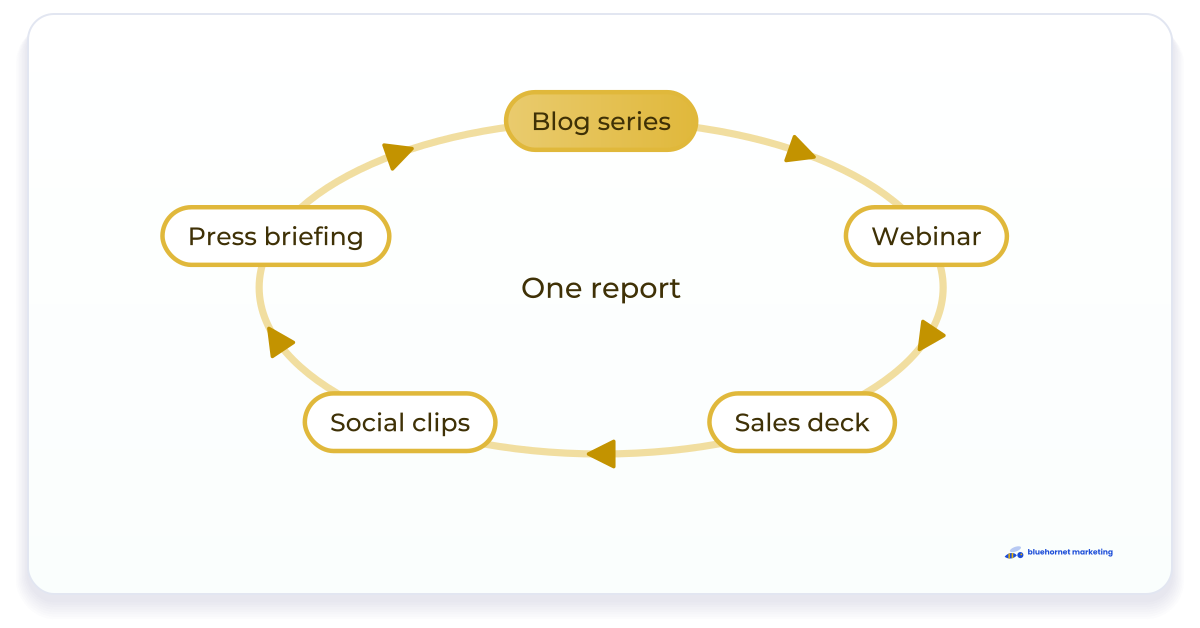
What I notice most is how much content hangs off a single report. There is a downloadable report, a live threat briefing, an adversary hub with profile pages and graphics that pull out single findings. One research effort feeds sales decks, press, social posts and webinars for a year, which is how a mid-sized team can justify the cost.
How to Build Your Own Version
- Pick one data set only your company can see, such as detections, incident cases or customer telemetry.
- Choose five findings a buyer would repeat in a meeting.
- Write the method in plain words on the same page as the numbers.
- Plan the spin-offs before launch: a briefing, an explainer per finding and a one-page summary for sales.
- Refresh on the same date every year so the report becomes a fixed point on the calendar.
What You Need to Run It
You need access to clean internal data, an analyst who can defend the numbers and a designer for the key charts. A simple landing page with a short, optional form is enough for distribution.
Mandiant M-Trends
M-Trends is the annual report from Mandiant, part of Google Cloud. The 2026 edition draws on more than 500,000 hours of incident investigations carried out in 2025, and it covers themes such as the speed of ransomware handoffs, attackers abusing AI inside compromised environments and the targeting of edge devices.
Its power comes from the source: investigators describing what they saw on real engagements. A buyer reading it learns something about their own risk, and learns that the authors have been in the room. If your team does services work, case-based findings written with client permission and anonymized carry that same weight.
What the Process Looks Like
- List the engagements or support cases your team can draw on without breaking confidentiality.
- Tag each case by attack type, industry and outcome.
- Look for a pattern that repeats across at least ten cases.
- Get legal sign-off on how each case is anonymized.
- Publish the pattern with advice a reader can act on this quarter.
Tools and People Involved
A spreadsheet or case-management export is enough to start the tagging. The most important resource is a senior practitioner willing to review the draft line by line.
Wiz Cloud Threat Landscape
Wiz runs a public database of cloud security incidents, threat actors, tools and techniques. Entries are mapped to the MITRE ATT&CK framework, defenses are mapped to MITRE D3FEND and the site offers RSS and STIX feeds that security teams can pull into their own tooling.
A reference site is a different type of content than a report, because people come back to it. It earns links from other researchers and appears in search results for incident names and attack techniques. The risk is upkeep: a database that stops updating looks abandoned, and the page itself shows a last-updated date.
Steps to a Reference Asset
- Pick one topic buyers search repeatedly, such as incident names, regulations or attack techniques.
- Define a fixed structure for each entry so pages look and read alike.
- Map entries to a framework your audience already uses.
- Set an update owner and a review cadence before you publish page one.
- Offer a feed or export for people who want to use the data.
What to Put in Place
A headless CMS or a structured database behind templated pages keeps entries consistent. Plan an editor's time every week, because stale pages cost more trust than they win.
Cloudflare Radar
Cloudflare Radar shows Internet traffic patterns, DNS behavior and network reachability as seen across the Cloudflare network, and it describes itself as independent visibility into Internet traffic and outages. Anyone can browse it to see how traffic changes by region or during an outage.
Radar works as marketing because the data answers questions people already ask, and it makes the company a source when news breaks. The lesson for a smaller vendor is to find the narrow slice of your own data that answers a question your market keeps asking, then publish it openly with a clear explanation.
A Smaller-Scale Approach
- Identify the questions reporters and customers ask you most often.
- Check which of those your internal data could answer in aggregate.
- Remove anything that could identify a customer.
- Publish a small dashboard or monthly data post with a stable URL.
- Tell the people who asked, and add the page to your press kit.
What You Need to Publish Data
A charting library and a data warehouse extract can cover a first version. Have your privacy lead review the aggregation rules before anything goes public.
Snyk Learn
Snyk Learn offers free, developer-first security lessons, grouped into individual lessons and learning paths that cover vulnerabilities across a variety of languages and ecosystems. A second track teaches people to use the Snyk platform itself.
I like this example because it is aimed at the person who will be in the product every day. A developer who learns how an injection flaw works on Snyk's lesson page has also met the brand in a helpful moment. The product training track then helps customers get started, which links marketing to onboarding.
Building a Learning Hub
- Choose a topic your product helps with and list the ten questions a beginner asks.
- Write each lesson around one concept and one example.
- Add a short exercise so readers apply what they learned.
- Group lessons into a path with a clear finish.
- Link the product only where it genuinely helps the learner.
Tools to Build Lessons
A docs platform or learning management system handles lesson structure and progress tracking. Include a developer or practitioner as author, since readers can tell when examples were written by someone who has never run the code.
KnowBe4 Free Tools
KnowBe4 offers a long list of free tools. The Phishing Security Test sends simulated phishing emails to up to 100 users, in 20+ languages, and returns a Phish-Prone Percentage with industry benchmarks in a PDF report. Others include a Weak Password Test, a Domain Spoof Test, an Email Exposure Check and a Ransomware Simulator.
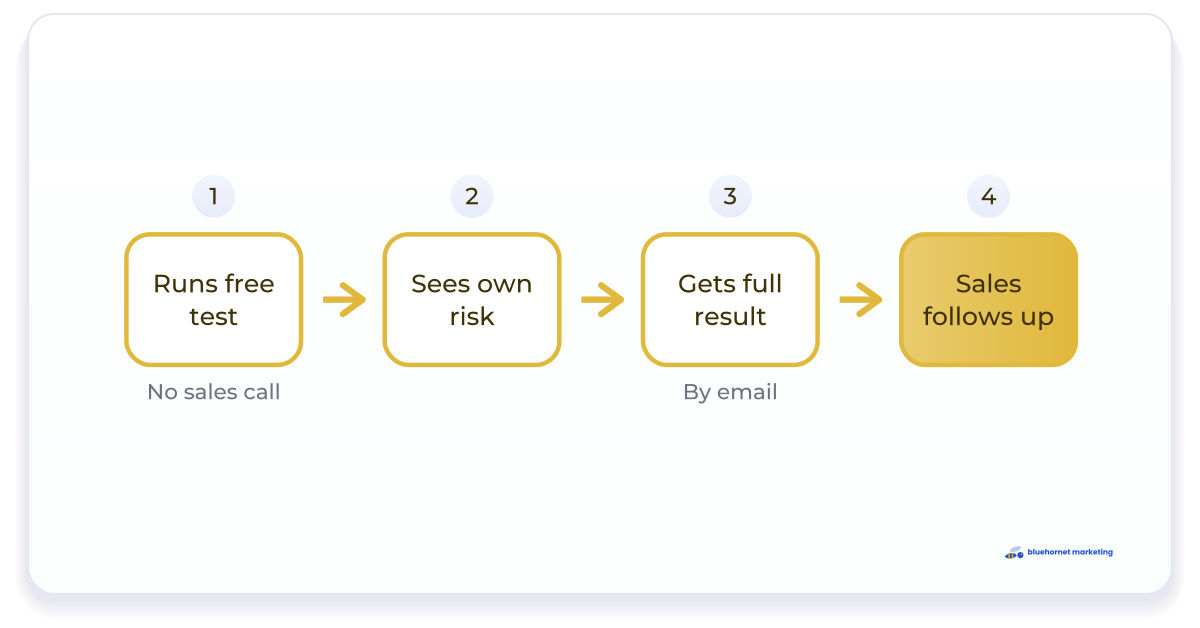
The mechanism is hard to beat. A security lead runs the test, sees an uncomfortable number for their own organization and has a reason to talk to someone. A result tied to your own company convinces more than a statistic about someone else's. Keep the result useful on its own, since a tool that only works as a lead trap earns a lot of skepticism.
From Idea to Launch
- Find a question a buyer has about their own environment that you can answer in minutes.
- Make the result specific: a score, a list or a comparison against a benchmark.
- Send the result by email, with a clear next step for people who want help.
- Set limits so the tool cannot be abused.
- Review what people did after the result and refine the follow-up.
What It Takes to Ship a Tool
You need a developer, a clear data policy and a sales follow-up plan agreed before launch. Many teams start with a form and a manual report before they automate it.
Proofpoint State of the Phish
Proofpoint's State of the Phish combines a survey with real-world data from its products. The 2024 edition I checked surveyed 7,500 end users and 1,050 security professionals, and it also draws on millions of simulated phishing messages and reported malicious emails. Its headline finding was that more than 70% of employees admit to risky behavior that leaves them vulnerable.
The pairing is the clever part. Survey answers show what people say, and telemetry shows what they do, so the report can point out the gap between the two. If you do not have Proofpoint's reach, a smaller panel of customers combined with your own usage data can tell a similar story, as long as you state the sample size.
Running a Survey-Plus-Data Study
- Write the hypothesis first, such as a gap between policy and behavior.
- Survey a defined group of practitioners and keep the question list short.
- Pair each survey claim with something your product data can confirm or contradict.
- Report sample sizes next to every figure.
- Share the headline findings openly and gate only the full report.
Where to Start
A survey tool and a panel provider or your customer list cover the survey side. Ask a data analyst to check the numbers before launch, because an error in a research report spreads quickly.
Huntress Tradecraft Tuesday
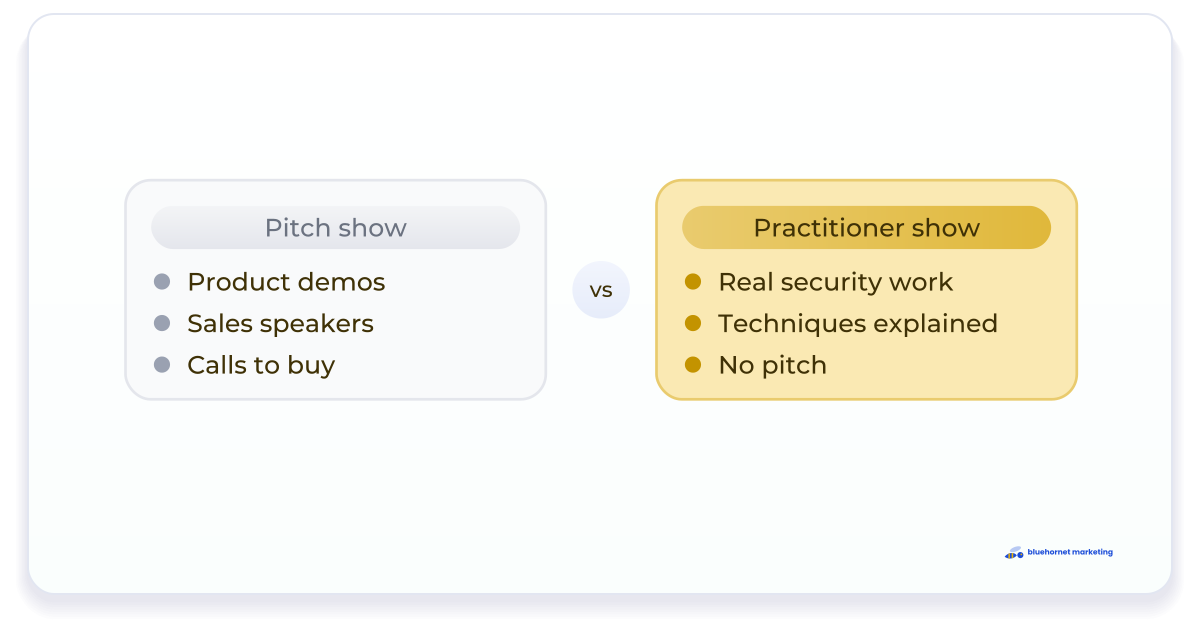
Tradecraft Tuesday is a monthly livestream from Huntress in which its threat hunters and researchers examine attacker tradecraft, including new vulnerabilities and AI-driven attacks. The page describes it as free of sales and product talk, and previous episodes are available on demand.
The people on screen do real security work, so the content has an authority that a presenter from marketing cannot borrow. The audience builds a habit, and the replay library turns each episode into search traffic and sales enablement. A monthly rhythm is also realistic for a small team.
Setting Up a Series
- Choose a format you can repeat monthly, such as a walkthrough of one new technique.
- Give practitioners a producer who handles slides, timing and promotion.
- Keep the pitch out of the session.
- Post replays with a written summary on a permanent page.
- Review the audience that returns and the questions they ask, then plan the next topic around those.
What You Need to Run a Series
A webinar platform with on-demand replays is enough. Budget the host and producer's time first, since that is where these programs usually fail.
Okta Businesses at Work
Okta's annual Businesses at Work report looks at how organizations adopt AI agents and what identity risks follow. The 2026 edition reports that high-assurance MFA adoption rose from 41% to 58%, and that 78% of respondents named control of non-human identity access as a top concern while only 10% had a strategy for governing it.
The report ties a product category to a market conversation. Identity is the thread through AI agent adoption, and the findings give Okta's sales team a reason to start talks about governance. I would copy the framing: pick the topic buyers worry about next and bring evidence from your own customer base.
A Checklist for Your Version
- Choose the market question your category is best placed to answer.
- Aggregate customer data in a way that protects every customer.
- Add a short section on what leaders should do next.
- Publish the same findings as a one-page summary for sales.
- Re-run the analysis each year so you can show change over time.
What to Prepare First
Agree a data-use policy with legal and customer success before you start. A short methods note on the report page answers most reader objections before they are raised.
Palo Alto Networks Unit 42
Unit 42 is the threat intelligence and incident response arm of Palo Alto Networks. Its public site publishes threat research, high-profile threat briefs, profiles of tracked threat groups, opinion pieces from named authors and trend reports such as an annual incident response report, which sits behind a form.
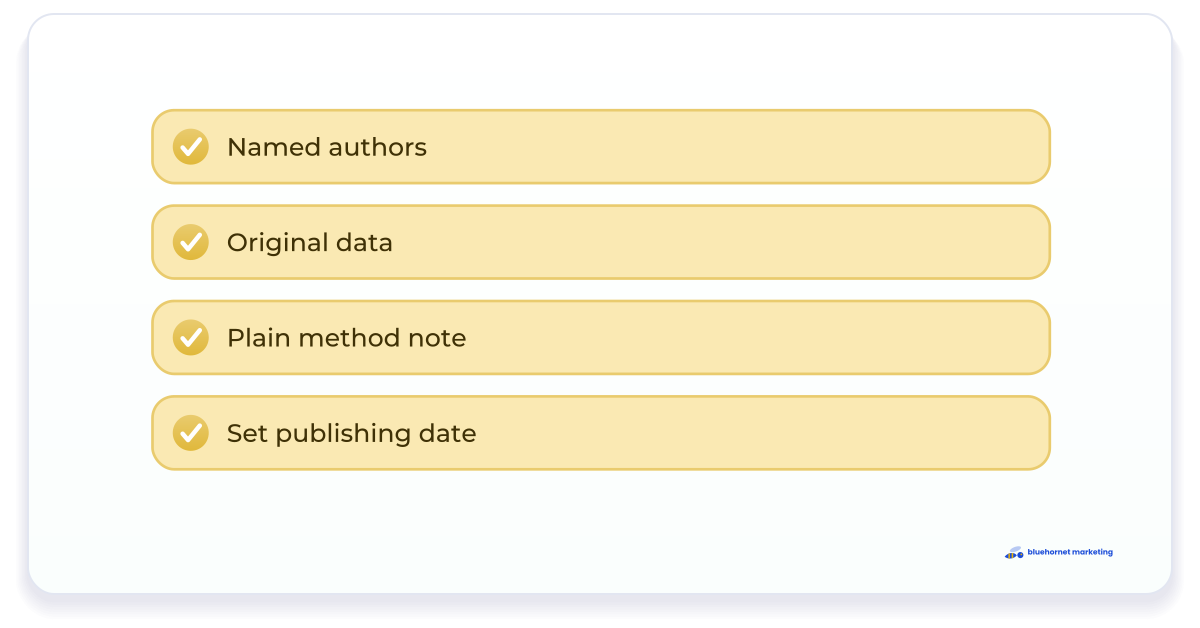
Naming the team and the authors is the core idea. Readers learn who is doing the research, and the site earns links when a new vulnerability breaks. The structure also shows a sensible gating choice: threat briefs and analysis are open, and the larger reports use a form.
A Lean Version of the Hub
- Name your research or response team and give each author a profile page.
- Publish a short brief when a major issue affects your customers.
- Keep a running page of threats or topics you track.
- Gate only the long reports.
- Link every brief to the technical details a practitioner would look for.
What the Setup Needs
A blog template with author pages and tags covers the basics. A review step with a senior researcher keeps speed and accuracy in balance when news is moving.
What the Ten Programs Have in Common
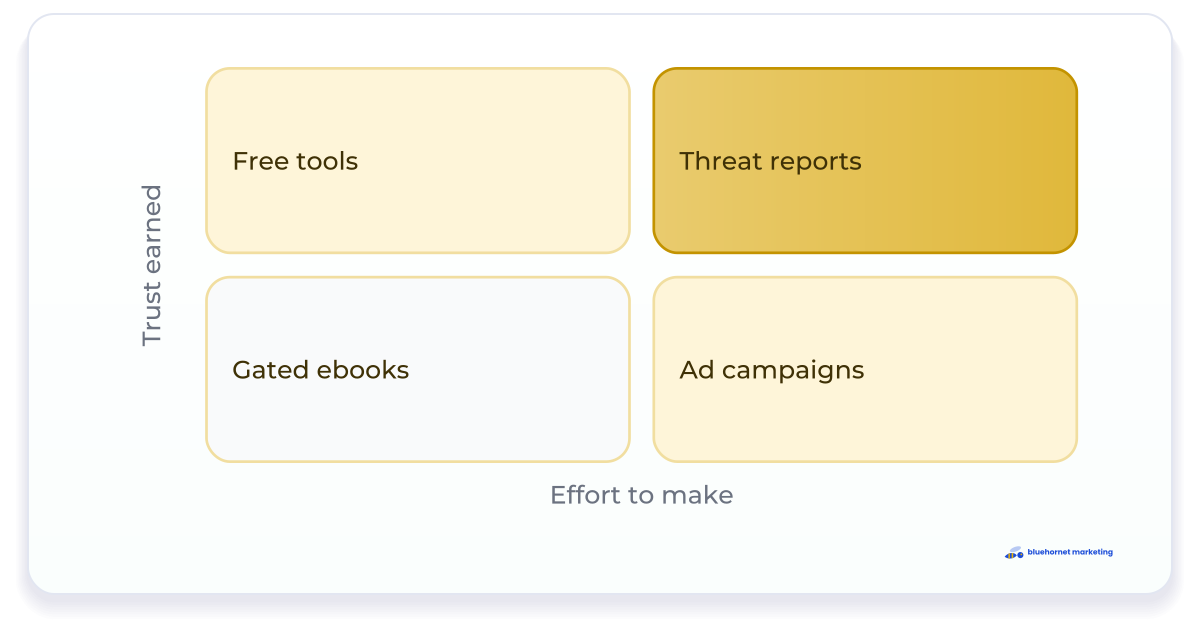
Put side by side, the examples share four habits. Each one publishes something specific enough to be cited. Each one makes it easy to find the method, whether that is a report's sample size or a database's mapping to MITRE. Each one uses named experts, and each one repeats on a schedule that people can predict.
They also differ on gating. CrowdStrike offers a threat briefing with registration, Unit 42 keeps briefs open and puts the large incident report behind a form, and Snyk Learn invites developers to sign up free. There is no single right answer, and your sales team's ability to follow up should guide the decision.
How to Pick the Program to Start With
You do not need ten programs. Start with the asset you already own. Check which of these describes your company best:
- You hold telemetry, case data or customer usage data you could aggregate: start with a research report.
- You have an engineer or analyst who likes to teach: start with a monthly session or a learning path.
- Your buyer wants to know where they stand: start with a free diagnostic tool.
- Your market keeps asking one question: start with a public data page or reference.
Whichever you pick, assign an owner, set a publishing date and decide how sales will follow up before you launch. Programs fail more often from missing owners than from weak ideas.
Questions About Cybersecurity Marketing Examples
What Kinds of Cybersecurity Marketing Work Best?
In the examples I reviewed, the formats that last are original research, free tools, public reference sites and practitioner-led programs. They share one trait: each gives a technical buyer something useful before any sales conversation.
Do I Need a Large Budget to Copy These Examples?
No. A smaller company can publish a narrow data finding, a single free tool or a monthly session led by one engineer. The scale is smaller, and the principle of leading with evidence applies at any size.
Should I Put a Form in Front of My Research?
Gate sparingly. Several of these programs keep their threat briefs, data pages and lessons open and use a form for the full report. Open pages get found in search, and the form catches people who want the complete file.
How Do I Choose Which Example Fits My Company?
Look at what data and people you already have. If you have telemetry or case data, a report fits. If you have an engineer who likes to teach, a livestream or learning hub fits. If you have a tool idea, test it as a free diagnostic.
How Long Before a Content Program Like This Pays Off?
A report or series usually needs several months before search, citations and repeat audiences build, and it keeps working for a year or more. Set expectations with leadership early and track leading signals, not only closed deals.
Can a Services Firm Use the Same Approach?
Yes. Services firms have case experience that a product company often lacks. Anonymized patterns from real engagements, reviewed by legal, make credible research and talks.
How Do I Keep Security Content Accurate?
Have a practitioner review every technical claim, publish your method next to the numbers and correct errors openly and fast. In this field, one visible correction does less damage than leaving an error in place.
Sources
- CrowdStrike, 2026 Global Threat Report
- Google Cloud, M-Trends 2026
- Wiz, Cloud Threat Landscape
- Cloudflare Radar
- Snyk Learn
- KnowBe4, free Phishing Security Test
- Proofpoint, State of the Phish
- Huntress, Tradecraft Tuesday
- Okta, Businesses at Work 2026
- Palo Alto Networks, Unit 42
Disclaimer: This article is for general information only and isn’t legal, financial or tax advice. Treat figures as estimates from typical work and confirm details with your providers before you act.
Was this guide helpful?
Thanks for your feedback.
Warren Albright
Warren leads the Blue Hornet editorial team and works with the consultants to turn real client projects into practical guides on content, paid media, marketing automation, CRM and analytics. He comes from content and demand generation work, edits every article before a working marketing consultant reviews it, and draws on strategies, channel plans and audits from client projects to keep the advice grounded in real numbers.