Quick Summary
- The strongest B2B tactics help a buying group decide, not only a single contact.
- Late-stage content, such as comparisons and proof, often outperforms broad awareness work.
- Account-based campaigns suit small target markets and need sales to agree on the list.
- Measure each tactic against a baseline over at least one sales cycle before you judge it.
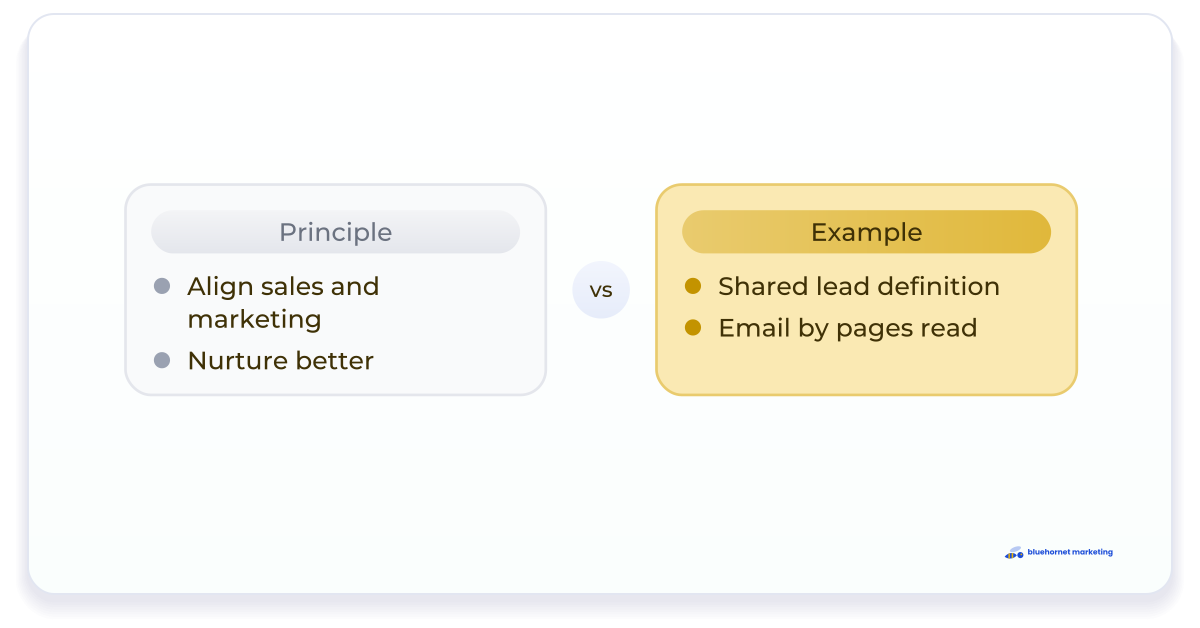
B2B marketing advice is full of principles and short on examples. You read that you should "align sales and marketing" and then get back to work with no idea what that looks like on a Tuesday. The ten tactics below are specific enough to copy.
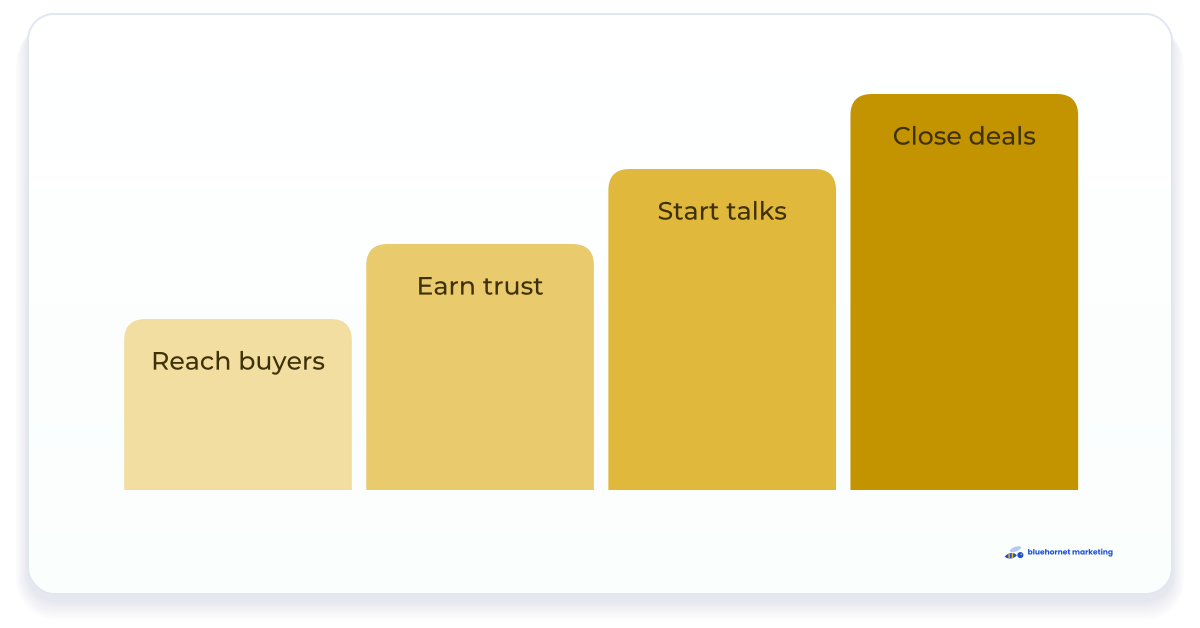
I have grouped them by the job they do, from reaching buyers to closing them. Where I mention results, they come from my client work and are ranges or directions, not guarantees. If you want a plan for your own business, my team covers this in B2B marketing consulting.
The Ten Examples at a Glance
| Example | Best for | Time to first signal |
|---|---|---|
| 1. Comparison pages | Buyers who shortlist vendors | 2 to 4 months |
| 2. Role-based content | Deals that stall in committees | 1 to 2 months |
| 3. Customer proof | Trust gaps late in the cycle | 1 month |
| 4. Expert LinkedIn posts | Specialist services | 2 to 3 months |
| 5. Behavior-based nurture | Teams with a contact list | 4 to 8 weeks |
| 6. Account-based campaigns | Small target markets | 6 to 10 weeks |
| 7. Focused webinars | Complex products | 1 to 2 months |
| 8. Researched outbound | Named account lists | 3 to 6 weeks |
| 9. Search content | Markets that research online | 3 to 6 months |
| 10. Closed-deal reviews | Any team with a CRM | 1 quarter |
Ten B2B Marketing Examples You Can Copy
Each example below has the story, the steps and the tools. To see which numbers show whether a tactic works, read my guide to B2B marketing KPIs alongside this list.
Comparison Pages Aimed at Late-Stage Buyers
If your buyers shortlist two or three vendors, they search for comparisons before they ever fill in a form. A software client of mine published an honest page for each of its three most common rivals, including where the rival is the better pick. Those pages brought fewer visits than the blog but a much higher share of demo requests, because the reader arrived ready to decide.
The honesty is what makes the page work. Buyers can spot a rigged table in seconds, and a page that admits a weakness earns trust that the sales team can build on.
How to Build It
- List the vendors your sales team hears about in late-stage calls.
- Pull the questions buyers ask when they compare.
- Write each page with real strengths and limits for both sides.
- Add a single next step, such as a short demo.
- Review the page every quarter, since rivals change prices and features.
Supporting Tools
Search and call-recording tools show which comparisons buyers ask for. A simple CMS and a table are all the page needs.
Content Built for the Whole Buying Group
Gartner describes a typical buying group for a complex B2B purchase as six to ten decision makers, and says buyers spend only 17 percent of their buying time meeting with potential suppliers. Your content does most of the selling when you are not in the room, so it has to answer questions from finance, IT and the end user, not only the champion.
One consulting client added a short guide for each role to its main product page: what finance will ask, what IT will ask and what the daily user will care about. Champions started forwarding those guides internally, which shortened the stage where deals used to stall.
Steps to Copy
- Map the roles that sign off on a typical deal.
- Collect the top three objections for each role from sales calls.
- Write one short, practical page per role.
- Link the pages from the main product and pricing pages.
- Ask sales to share the right page after each call.
What You Need
Your CRM contact roles and call notes show who is involved in each deal. A shared document tool keeps role pages consistent.
Customer Interviews Turned Into Proof
A good case study answers one question: will this work for a company like mine? The strongest ones I have seen come from a thirty-minute interview with a customer, written up with real before and after numbers the customer approved, in the customer's own words.
Short formats work well. A single page with a quote, three numbers and what changed beats a ten-page document nobody opens. Put the proof where decisions happen, such as pricing and demo pages.
Setting It Up in Order
- Pick customers who match the buyers you want more of.
- Ask permission and agree on which numbers can be shared.
- Interview for thirty minutes about the situation before, the choice and the result.
- Write one page with a quote and the key figures.
- Get written approval before you publish.
Useful Software
A call recorder and transcript tool save hours of note-taking. A simple template keeps every story in the same format.
LinkedIn Posts From Your Own Experts
Company pages reach few people. Posts from your own specialists usually reach more, because readers respond to a person. A B2B firm I worked with had its two engineers post a short lesson each week, written from real projects. After a few months, sales reported that prospects mentioned the posts on first calls.
Consistency beats polish. A short, specific post about one mistake and its fix does better than a general opinion about the industry.
A Simple Starting Plan
- Choose two or three people who enjoy explaining their work.
- Agree on a weekly topic list drawn from customer questions.
- Let them write in their own voice, with light editing.
- Comment on each other's posts to start discussion.
- Review which posts led to conversations, and do more of those.
Tools Worth Using
A scheduling tool helps with timing, and a shared topic board keeps ideas flowing. Native LinkedIn analytics are enough to start.
Email Nurture Based on What Contacts Read
A static newsletter treats everyone the same. A nurture path that reacts to behavior treats a contact who read your pricing page differently from one who read a beginner's article. For one client, I replaced a monthly blast with three short paths by topic, each ending in a clear offer.
The result was fewer emails per person and more replies. When messages match what someone just read, they feel like help instead of pressure.
How the Path Works
- Pick the three topics your content covers best.
- Tag each contact by the topic they engage with.
- Write three to four emails per path, each with one idea.
- End each path with a single offer.
- Remove contacts from the path as soon as they reply or book.
Tooling for This
Any marketing automation platform with behavior triggers can run this. A shared sheet of topics and tags helps keep naming consistent.
Account-Based Campaigns for a Short Target List
When only a few hundred companies can buy from you, mass reach wastes money. Account-based marketing picks named accounts, researches them and coordinates ads, outreach and content for each. A services client with a list of 120 accounts used this approach and booked more meetings from it than from its broader campaigns that quarter.
Sales and marketing must agree on the list. If sales does not believe in the accounts, nobody follows up when an account shows interest.
Running the Pilot
- Build the account list together with sales.
- Add the buying roles you want to reach at each account.
- Run matched ads and outreach to those roles only.
- Track account-level engagement, not only form fills.
- Alert sales when an account shows several signals within a week.
Where to Start
LinkedIn ads can target accounts from an uploaded list, and intent data tools can add buying signals. A simple spreadsheet works for a first pilot.
Account-based work depends on tooling that sits behind the scenes. My ranking of B2B marketing tools compares the platforms for targeting, intent data and email.
Webinars That Answer One Hard Question
General webinars attract registrants who never turn up. A session built around one hard problem, such as how to budget for a migration, draws smaller but better audiences. A client in financial software ran one of these each quarter and followed up with attendees the same day.
The recording matters as much as the live event. Buyers watch it later, often on their own, and share it with colleagues.
Planning the Session
- Choose a question your customers ask often and nobody answers well.
- Invite a customer or outside voice to join you.
- Send follow-up within hours, with the recording and one next step.
- Score attendees by attendance and questions asked.
- Cut the recording into short clips for email and social posts.
Platforms to Consider
Standard webinar platforms handle registration and recording. Your marketing platform can trigger follow-up based on attendance.
Outbound Sequences That Lead With Research
Cold outreach still works when it is specific. Messages that mention something real about the recipient's company, such as a new product, a hiring plan or a public goal, get more replies than generic templates. A small team I worked with cut its list in half and doubled the time spent on research per contact, and booked more meetings.
Keep sequences short, four to six touches over a few weeks, and stop when someone says no. Respect for the recipient protects your brand and your sending reputation.
Writing the Sequence
- Pick a short list of accounts that fit your best customers.
- Find one specific, relevant fact for each.
- Write the first message around that fact and a single question.
- Follow up with value, such as a relevant article, not a reminder.
- Stop the sequence when someone replies or opts out.
Tools for Research
A sales engagement tool schedules the steps. Public company news and job postings are the main research sources.
Search Content Matched to Buying Questions
Search remains where most B2B research begins. The posts that earn pipeline answer a specific question a buyer asks before purchase, such as what something costs or how long it takes. A professional services client rebuilt its blog around fifteen such questions and saw the share of organic leads grow over two quarters.
Write for the buyer, not for a keyword tool. Use real prices or ranges, real timelines and real trade-offs, and link each article to the next logical step.
Turning Questions Into Posts
- Collect questions from sales calls and support tickets.
- Check search results to see who answers them today.
- Write the most useful answer, with specifics.
- Link to related pages and a clear next step.
- Update the article when the facts change.
Helpful Tools
Search console data shows which queries bring visitors. Keyword tools help size demand, and your CRM shows which posts led to deals.
Sales and Marketing Reviews of Closed Deals
The cheapest research is sitting in your CRM. Once a quarter, put marketing and sales in a room and review five won and five lost deals: where did the buyer first hear about you, which content did they read and what stopped the deal? The patterns shape the next quarter's plan better than any benchmark.
One client discovered that nearly all lost deals had no contact beyond the champion. That finding led to the role-based content in example 2 and to a rule that every deal needs two contacts before it moves forward.
Running the Review
- Pick five wins and five losses from the last quarter.
- Pull the contact history and content viewed for each.
- Ask the salesperson why the deal went the way it did.
- Write down three patterns and one change for each.
- Review the changes at the next meeting.
What to Use
CRM reports and call recordings are the main inputs. A shared document holds the patterns so they do not get lost.
How to Tell Which Example Is Working
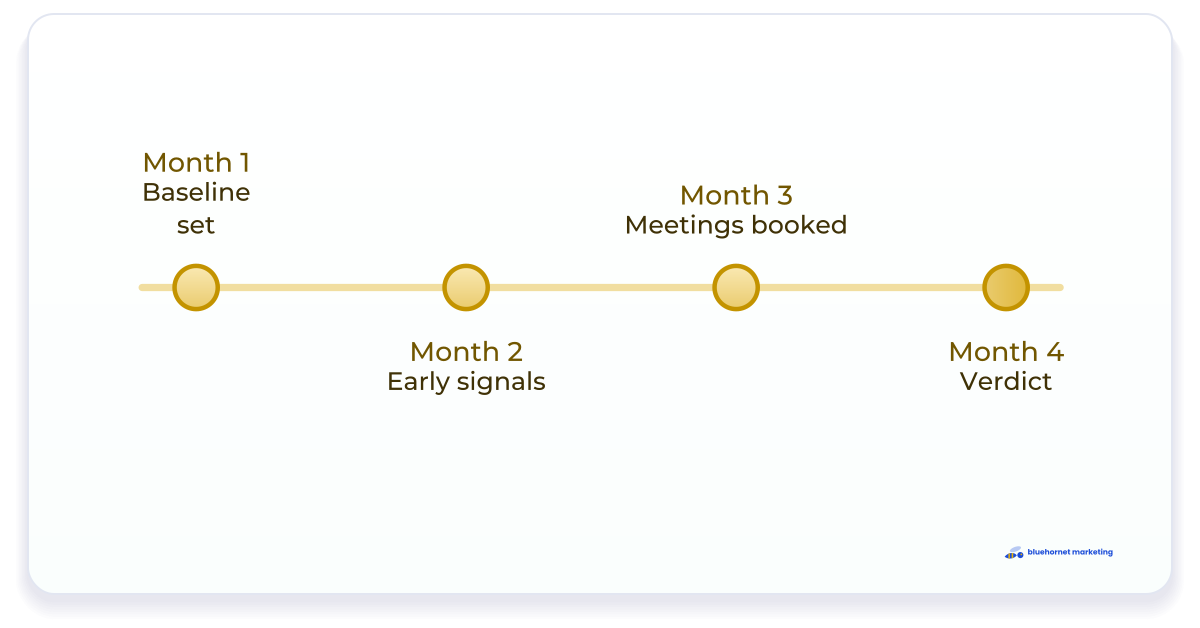
Pick one baseline number per tactic before you start, and write it down. Comparison pages get measured by demo requests from the page. Nurture paths get measured by replies and meetings. Account-based work gets measured by accounts that engage and meetings booked. A longer list of numbers to choose from is in my overview of B2B marketing metrics.
Give each tactic one full sales cycle before you decide. Cutting a channel after four weeks in a market where deals take ninety days is a common and expensive mistake. If a tactic is not working after a fair trial, look at the obstacles first. Many of them are covered in my post on B2B marketing challenges.
| Tactic type | Early signal | Business result |
|---|---|---|
| Content and search | Visits from target queries | Demo requests and organic pipeline |
| Email and nurture | Replies and clicks | Meetings booked |
| Account-based | Accounts engaging | Opportunities in named accounts |
| Outbound | Positive replies | Meetings and opportunities |
How to Choose Where to Start
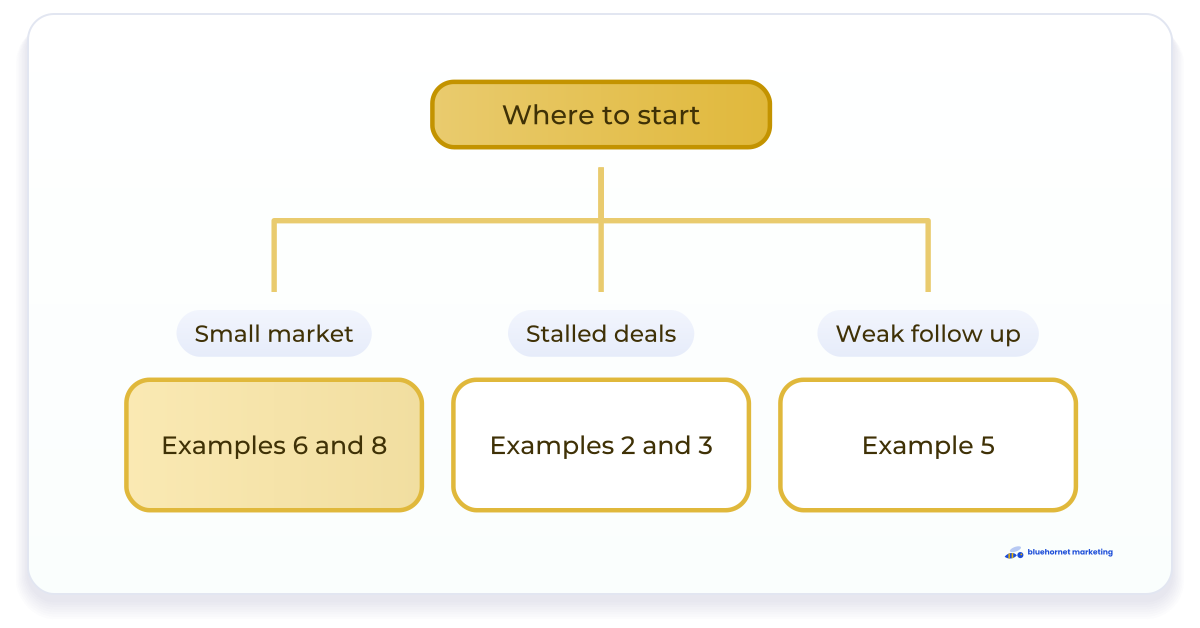
Match tactics to your situation instead of copying the list in order. I ask four questions on every new project:
- How many companies can realistically buy from you?
- How long is your typical sales cycle?
- Where do deals stall most often?
- Which channel already produces any pipeline, even a little?
If the market is small, begin with example 6 or 8. If deals stall with committees, begin with 2 and 3. If you have a list but weak follow-up, begin with 5. If you have nothing yet, the closed-deal review in example 10 costs nothing and shows where to focus.
Questions About B2B Marketing Examples
What Is the Best B2B Marketing Tactic for a Small Budget?
Content that answers late-stage questions, such as comparison pages and pricing explanations, usually gives the best return per dollar. It costs mostly time, it works while you sleep and it reaches buyers who are close to a decision. Pair it with a simple email follow-up so interested visitors do not disappear.
How Long Do B2B Marketing Tactics Take to Show Results?
Email and paid channels can show results within weeks. Search content and thought leadership usually need three to six months before the effect shows in pipeline. Plan for both horizons, so you have something working now while the slower channels build.
Should I Run All of These Examples at Once?
No. Pick two or three that match your buyers and your team's strengths, and run them well. A focused effort that you can measure teaches you more than ten half-finished ones. Add new tactics when the first ones are stable.
How Do I Know Which Example Fits My Business?
Start from your sales cycle and your market size. If few companies can buy, account-based work fits. If many companies search for answers, content and search fit. If deals stall, role-based content and deal reviews help most.
Do These Examples Work for Small Markets?
Yes, with changes. In a small market, direct outreach, account-based campaigns and customer proof matter more than broad reach, because you can name every likely buyer. Measure results account by account.
How Do I Measure Whether an Example Worked?
Compare a baseline before you start to the same numbers after one or two sales cycles. Look at qualified leads, meetings booked and opportunities created, not only clicks. My guide to the KPIs that matter explains which numbers to track.
When Should I Get Outside Help?
When you have tried a few tactics and cannot tell which ones work, or when marketing and sales disagree about lead quality. A consultant can audit your funnel, rank the opportunities and set up the measurement that makes the next decision easier.
Sources
Disclaimer: This article is for general information only and isn’t legal, financial or tax advice. Treat figures as estimates from typical work and confirm details with your providers before you act.
Was this guide helpful?
Thanks for your feedback.
Warren Albright
Warren leads the Blue Hornet editorial team and works with the consultants to turn real client projects into practical guides on content, paid media, marketing automation, CRM and analytics. He comes from content and demand generation work, edits every article before a working marketing consultant reviews it, and draws on strategies, channel plans and audits from client projects to keep the advice grounded in real numbers.