Quick Summary
- Most B2B challenges trace back to unclear measurement and weak alignment between marketing and sales.
- Long sales cycles need leading indicators, not only closed revenue.
- Lead quality improves when you optimize for opportunities, not form fills.
- Fix the problem that blocks decisions first, then work down your list.
Most B2B teams I talk to share the same worries: deals take too long, leads are not good enough and leadership wants proof. If you want help with the biggest ones, B2B marketing consulting is built for exactly these problems.
Below are 11 B2B marketing challenges I see most often in client work, each with what causes it, what to do about it and how to start. Use the table to find the ones that sound like your team.
The 11 Challenges at a Glance
| Challenge | Where it shows up | First fix |
|---|---|---|
| 1. Long Sales Cycles That Hide Marketing's Impact | Revenue reports that lag campaigns by months | Track leading indicators |
| 2. Multiple Decision Makers on Every Deal | Leads stall after the first call | Report on accounts, not just contacts |
| 3. Misaligned Marketing and Sales Teams | Arguments over lead quality | Write a shared lead definition |
| 4. Low-Quality Leads That Fill the Pipeline | High form fills, low pipeline | Send opportunity data to ad platforms |
| 5. Proving ROI to Leadership | Budget requests that get cut | Agree on one attribution view |
| 6. Attribution Across Many Touchpoints | Every report shows a different number | Standardize UTM and source fields |
| 7. Small Budgets Against Bigger Competitors | Spread-thin channel plans | Pick one segment and go deep |
| 8. Content That Does Not Fit the Buyer's Stage | Traffic that never turns into conversations | Fill the mid-funnel content gaps |
| 9. Data Scattered Across Too Many Tools | Reports that do not reconcile | Name a source of truth |
| 10. Slow Follow-Up on Inbound Leads | Demo requests that go cold | Assign owners automatically |
| 11. Standing Out in Crowded, Commodity Markets | Offers buyers cannot tell apart | Use customer language |
11 B2B Marketing Challenges and How to Solve Them
I start with the challenges that show up in measurement and sales alignment, because they shape every other decision, and move toward the ones about people and positioning.
Long Sales Cycles That Hide Marketing's Impact
A B2B deal that closes in nine months makes last quarter's campaigns look useless. Leads you generate in March turn into revenue in December, so a monthly report built on closed deals tells you almost nothing about what to do next. In my client work, the teams that struggle most here judge campaigns on revenue alone and cut the programs that are working but not yet visible.
The fix is to measure leading signals alongside revenue. Pipeline created, stage progression and qualified meetings move within weeks, and they predict closed revenue well enough to steer budget. Agree on those signals with sales before the quarter starts, so nobody renegotiates the scorecard after the results arrive.
How to shorten the feedback loop
- Pick three leading indicators, such as qualified meetings, opportunities created and stage conversion.
- Tag every opportunity with its first and most recent marketing source.
- Review pipeline created by source every two weeks, not just closed revenue.
- Compare cohorts by creation month, so you can see how each batch matures.
- Reset the targets with sales once a quarter.
Tools that help
Your CRM carries most of this once opportunity stages and source fields are clean. A simple cohort report in your CRM or BI tool covers the rest, and my guide to B2B marketing metrics lists the indicators worth tracking.
Multiple Decision Makers on Every Deal
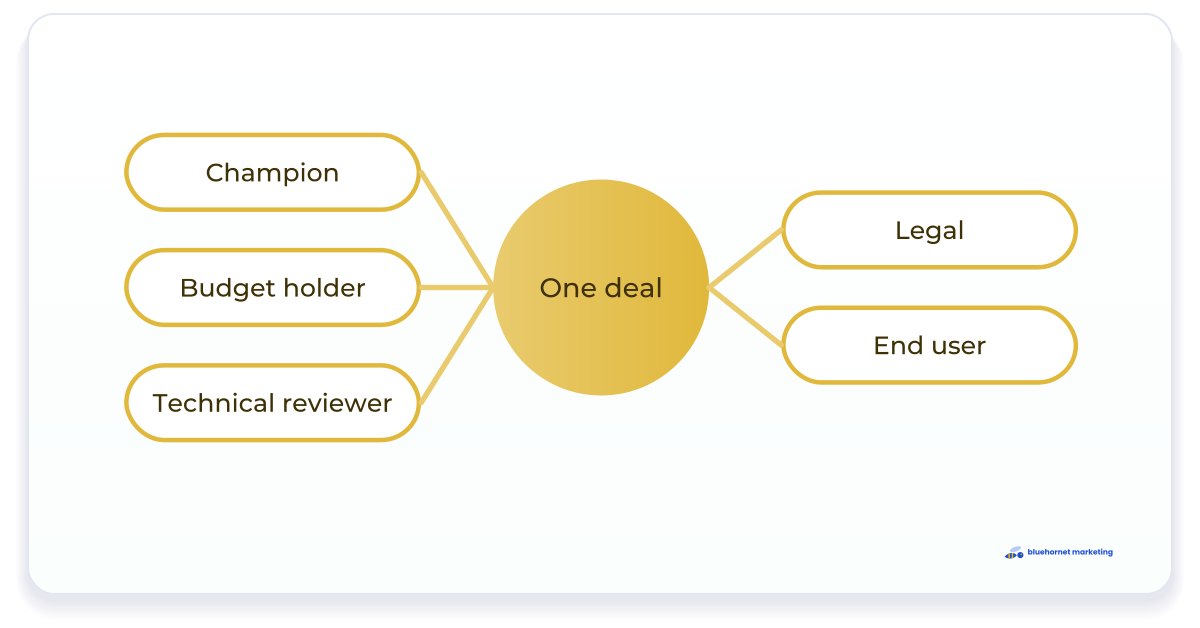
A typical B2B purchase involves an end user, a manager, someone from finance and often IT or legal. Your ads and emails reach one of them, while another one decides. Teams that target only the person who fills in the form end up with a long list of leads that stall in committee.
Account-level thinking helps. Instead of asking how many contacts you generated, ask how many target accounts have at least two engaged people. That view shows you which deals have real momentum and which rest on one friendly contact who cannot sign anything.
How to reach the whole buying group
- List the roles that usually take part in a deal and what each one worries about.
- Write one short piece of content for each role, covering their main objection.
- Add every new contact at a target account to the same CRM account record.
- Report on engaged people per account, not only on lead counts.
- Give sales a short note when a second or third person from an account shows up.
Tools that help
A CRM that supports account and contact roles is enough to start. Account-based platforms add intent and engagement scoring when your target list grows.
Misaligned Marketing and Sales Teams
Marketing says the leads are good, sales says they are not, and both can show a report to prove it. I see this in most B2B teams I audit, and it is almost never about bad people. It comes from two teams using different definitions of a qualified lead and having no shared view of what happens after handoff.
A written service agreement settles most of it. It states what a marketing qualified lead is, how fast sales responds, what happens to leads that are not ready and who owns them next. It takes a workshop and a page of text, and it saves months of blame.
How to align the two teams
- Define a qualified lead together, with examples of good and bad leads.
- Set a response time for sales and track it in the CRM.
- Create a clear recycle path for leads that are not ready yet.
- Hold a short monthly meeting that reviews rejected leads and why.
- Share one dashboard that both teams read.
Tools that help
Your CRM needs lead status and rejection reason fields that people actually fill in. A shared dashboard in the same tool keeps both teams looking at the same numbers.
Low-Quality Leads That Fill the Pipeline
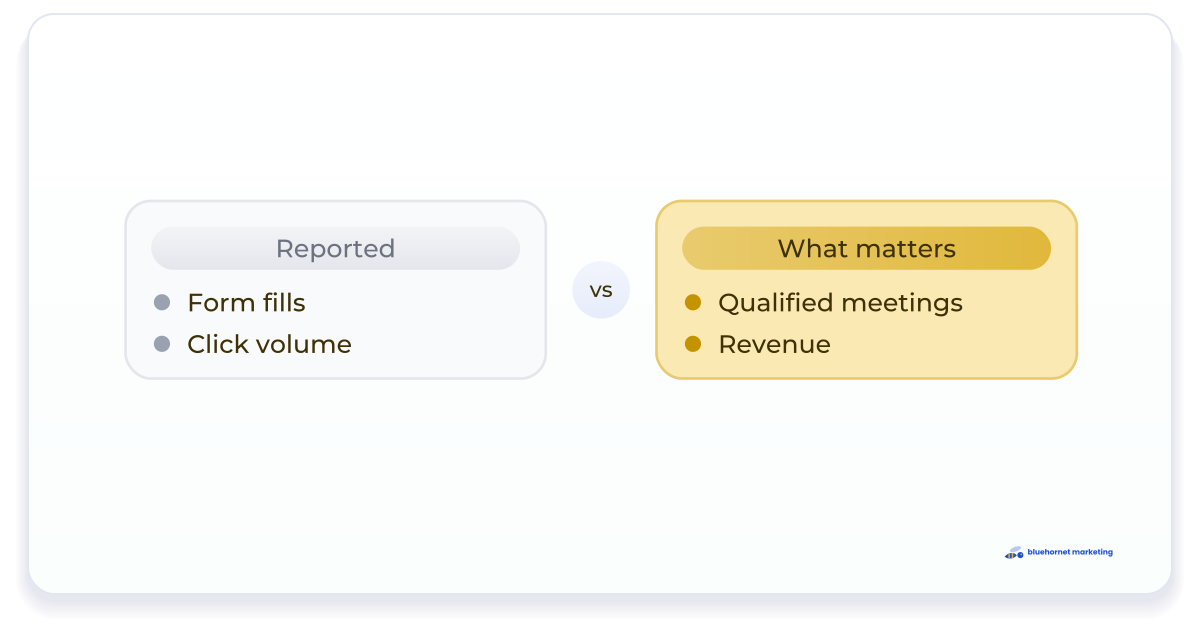
Cost per lead goes down and sales complaints go up. That pattern usually means campaigns are optimized for form fills, so the platform finds the people who like forms. A gated ebook can bring in hundreds of names with no budget, no authority and no project.
Optimize toward what you really want. Send qualified outcomes, such as a meeting booked or an opportunity created, back to the ad platform and tighten the form so it asks the questions sales needs. Lead volume will drop. Pipeline per dollar usually rises.
How to raise lead quality
- Add two or three qualifying fields to your forms, such as company size and timeline.
- Score leads on fit and on behavior, and show the score to sales.
- Feed opportunity data back to your ad platforms as the conversion signal.
- Compare cost per opportunity, not cost per lead, in channel reviews.
- Cut the campaigns that bring volume without meetings.
Tools that help
Most ad platforms accept offline conversions from your CRM. A simple scoring model in your marketing platform is enough at first, and my overview of B2B marketing tools covers the options.
Proving ROI to Leadership
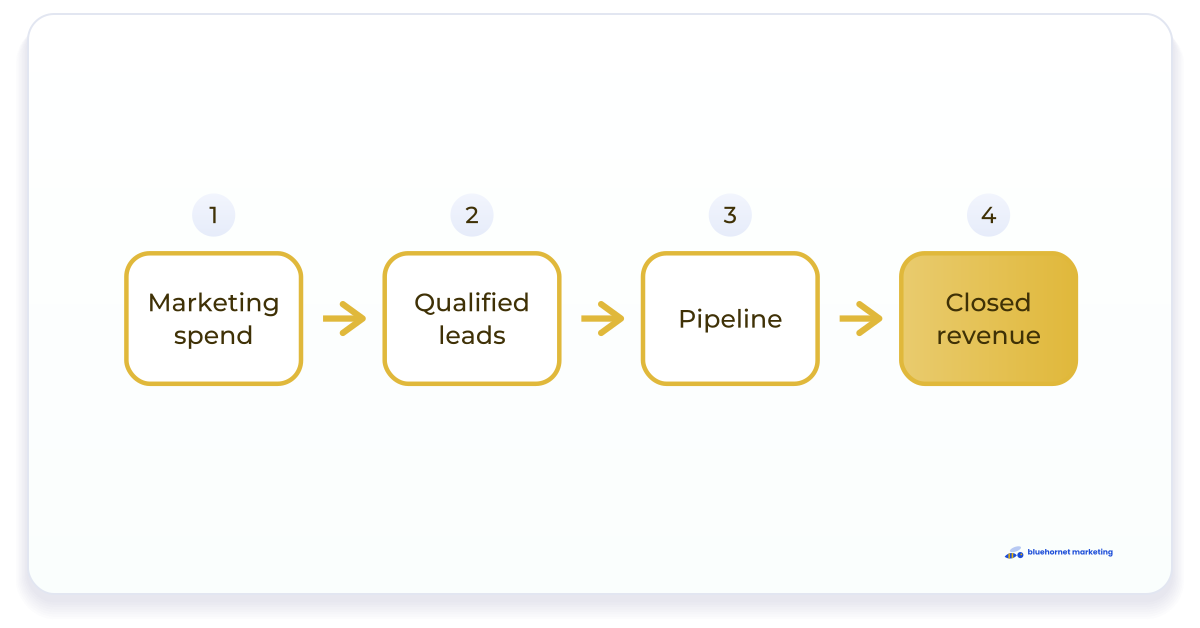
Executives ask what marketing returned, and the honest answer is often a pile of channel metrics. A CFO will not be convinced by impressions and clicks. In my experience the teams that win budget show a short chain: spend, pipeline, revenue, with an honest note about what the model cannot see.
You do not need a perfect attribution model. You need one agreed method, applied the same way every month, with a clear view of trends. Consistency earns more trust than precision does.
How to build a case leadership accepts
- Pick one attribution view and write down how it works.
- Report spend, pipeline and revenue by channel in a single table.
- Show trends over at least two quarters, not single months.
- State what the numbers do not capture, such as word of mouth.
- Agree on targets with finance before the budget cycle.
Tools that help
A CRM with revenue by source and a basic BI dashboard handle the reporting. The B2B marketing KPIs guide shows which numbers leaders usually ask for.
Attribution Across Many Touchpoints
A buyer might read a blog post, see a LinkedIn ad, attend a webinar, open six emails and then book a demo after a colleague mentions you. Last-click credits the demo page, first-click credits the blog and neither tells the full story. Every tool you use reports its own version.
Treat attribution as a set of views. Use first touch to judge what creates awareness, last touch to judge what converts and a simple self-reported question on forms to catch what trackers miss. When the three views point the same way, act. When they disagree, run a test.
How to make attribution workable
- Standardize UTM parameters and write them down in one shared sheet.
- Add a free-text field on forms asking how the person heard about you.
- Report first touch and last touch side by side.
- Review the gaps between the two views every quarter.
- Test changes in budget before trusting any model.
Tools that help
Your analytics tool and CRM can do first and last touch. Dedicated B2B attribution tools join ad, web and CRM data when you run many channels.
Small Budgets Against Bigger Competitors
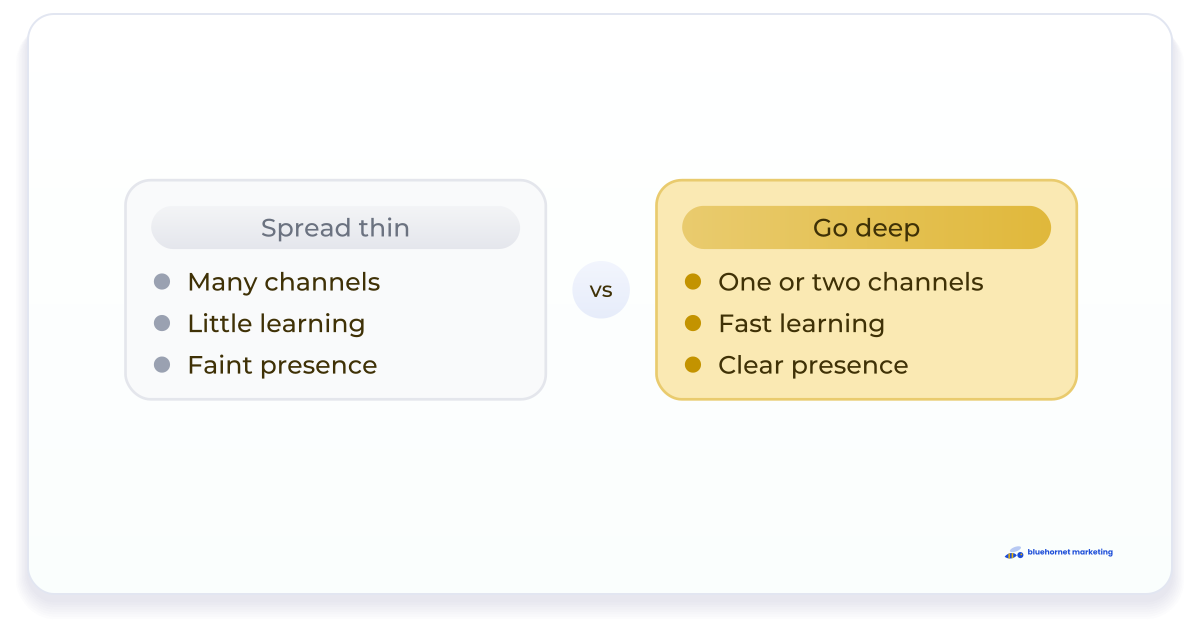
You will not outspend the market leader on search ads or sponsorships. Trying to match them channel for channel leaves you with thin coverage everywhere and no wins anywhere. Smaller B2B teams do better by choosing a narrow segment and being unmistakably useful to it.
I advise picking one or two channels and one buyer type, then going deeper than anyone expects. Specific content for a defined audience ranks, gets shared and earns trust faster than broad campaigns that hope to catch everyone.
How to compete with a smaller budget
- Choose one segment where you win deals more often than average.
- Cut channels that do not produce pipeline within two quarters.
- Build content around the questions that segment asks sales every week.
- Use customer proof from that segment in every asset.
- Reinvest in the channel that shows results before adding a new one.
Tools that help
A free analytics tool, your CRM and a keyword tool cover the basics. Spend on people and content before you add software.
Content That Does Not Fit the Buyer's Stage
Many B2B sites have a lot of top-of-funnel posts and a handful of demo-focused pages, with nothing in between. A buyer comparing options finds nothing that helps them justify a decision internally. The result is traffic with no conversations.
Map what a buyer needs at each stage, from first problem awareness to the final business case, and check where your content is thin. The gaps in the middle, such as comparison pages, implementation guides and cost breakdowns, usually pay back fastest.
How to close the content gaps
- List your existing content by buying stage.
- Interview sales about the questions prospects ask before they sign.
- Write the missing mid-funnel pieces first.
- Link each piece to the next logical step on the buyer's path.
- Review which pages appear in the journeys of closed deals.
Tools that help
Your analytics tool shows which pages appear before conversions. Spreadsheet mapping is enough to find gaps. My roundup of B2B marketing examples shows content that worked at different stages.
Data Scattered Across Too Many Tools
A B2B marketing team often runs a CRM, an email platform, a web analytics tool, three ad platforms and a webinar system. None of them agree on how many leads arrived last month. Someone builds a spreadsheet to reconcile them, and that someone becomes a single point of failure.
Reduce the number of places where a lead is created, and make sure every system passes the same IDs and source fields. A short integration audit usually finds duplicate records and broken syncs that explain half of the disagreements.
How to bring the data together
- List every tool that creates or changes a lead record.
- Choose one system as the source of truth for contacts and companies.
- Standardize field names and source values across tools.
- Automate the sync and test it with a sample of real leads.
- Check duplicate and mismatch rates monthly.
Tools that help
Native integrations between your CRM and email platform cover many cases. A data connector or warehouse helps when reports must combine five or more sources.
Slow Follow-Up on Inbound Leads
A demo request that waits two days for a reply is a demo request that talks to a competitor. Response speed is one of the few things you can improve without budget, and many teams still route leads through a shared inbox that nobody owns.
Assign every lead to a named person automatically, send an immediate confirmation and alert the owner. Then measure time to first contact and make it visible to both teams.
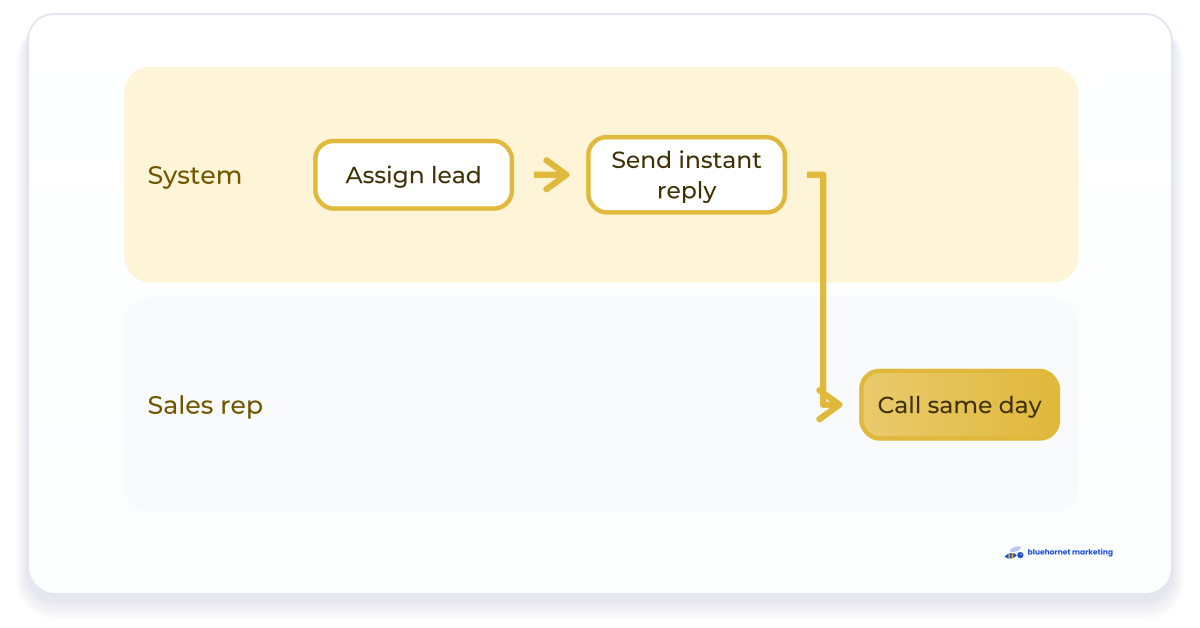
How to speed up your response
- Route leads to an owner by territory, segment or round robin.
- Send an instant confirmation with a clear next step.
- Alert the owner in the tool they already use every hour.
- Track time to first contact as a weekly number.
- Escalate any lead that waits longer than your agreed limit.
Tools that help
Your CRM's assignment rules and notifications are enough for most teams. Scheduling links on the thank-you page let buyers book a time immediately.
Standing Out in Crowded, Commodity Markets
When five vendors describe themselves with the same words, buyers pick on price or familiarity. If your message says you are a leading provider of integrated solutions, it says nothing. I find that most B2B messaging problems are really a lack of specific claims.
Name the customer you serve best, the problem you solve and the proof you have. A specific message turns off some buyers, and that is acceptable, because it also draws the ones who need exactly what you do.
How to sharpen your positioning
- Interview five customers about why they picked you over alternatives.
- Write your message using their words, not internal jargon.
- Replace every vague claim with a number, a name or an example.
- Test the new message on one landing page and one ad group.
- Roll it out wider once conversion improves.
Tools that help
Customer interviews and a call recording tool give you the language. A simple landing page test shows whether the message works before you rewrite everything.
Which Challenge to Tackle First
You cannot fix eleven things at once. Look at where leadership attention is, and start with the problem that blocks decisions: if nobody trusts the numbers, fix measurement before content, and if sales ignore leads, fix alignment before ads. Four checks help you rank your list:
- Which problem costs you the most pipeline or the most time each month?
- Which fix can you finish within a quarter with the people you have?
- Which one will make the others easier, such as shared definitions or clean tracking?
- Who owns the problem, and do they have the authority to change it?
A short outside review often settles the ranking, because the people closest to the problem rarely agree on what it is.
Questions About B2B Marketing Challenges
What Is the Biggest Challenge in B2B Marketing?
In my experience it is proving which activities lead to revenue. Long sales cycles, several decision makers and scattered data all feed into it. Once you can show a clear line from spend to pipeline, most other problems become easier to solve because you can argue for budget with evidence.
Why Do B2B Leads Not Convert?
Usually because the leads do not match your ideal customer, the follow-up is slow or marketing and sales define a good lead differently. Check lead quality, response time and handoff rules in that order, because those three explain most of the drop-off.
How Do I Measure B2B Marketing Success?
Track a short chain: spend, qualified leads, pipeline created and revenue, by channel. Add leading indicators, such as meetings booked, because revenue lags by months. Review the same numbers on the same schedule so trends become clear.
How Long Does It Take to See B2B Marketing Results?
It depends on your sales cycle. Paid campaigns can produce meetings in weeks, while content and search usually need three to six months before pipeline moves. Judge each channel on its own timeline instead of expecting everything to pay back at once.
How Much Should a B2B Company Spend on Marketing?
There is no single right percentage. Budgets depend on your growth goals, margins and sales cycle. Start from the pipeline you need, work back through your conversion rates and then check whether the spend fits your plan.
Should B2B Marketing and Sales Share the Same Goals?
Yes, at least one. A shared pipeline or revenue target stops each team from optimizing its own metric at the expense of the other. Keep team-level metrics too, but make sure both teams answer for the same outcome.
When Should I Hire Outside Help for B2B Marketing?
When a problem blocks growth and nobody in your team has the time or skills to fix it, such as broken tracking or an unclear strategy. A consultant works best with a clear brief and an internal owner who can act on the recommendations.
Disclaimer: Examples and suggestions reflect typical client situations and are not guarantees of results. Check figures and fit for your own business before you act.
Was this guide helpful?
Thanks for your feedback.
Warren Albright
Warren leads the Blue Hornet editorial team and works with the consultants to turn real client projects into practical guides on content, paid media, marketing automation, CRM and analytics. He comes from content and demand generation work, edits every article before a working marketing consultant reviews it, and draws on strategies, channel plans and audits from client projects to keep the advice grounded in real numbers.